Tickets West Virginia Deputies Write for Road Riding
Riding your ATV or UTV in West Virginia is an absolute blast, especially with our amazing trail systems and the growing number of trail-friendly towns. But venturing onto public roads with your machine without understanding the rules can quickly turn a fun day into a frustrating encounter with law enforcement, leaving you with unexpected fines and a major headache. This guide is here to shed light on the common tickets West Virginia deputies write for road riding, helping you understand the regulations, avoid costly mistakes, and enjoy the trails worry-free.
Understanding West Virginia's ATV/UTV Road Rules and Why They Exist
Let's face it, West Virginia has a unique relationship with ATVs and UTVs. They're part of our culture, our heritage, and for many, a way of life and a vital tool for work or transportation in remote areas. However, this doesn't mean every road is fair game for every machine. The state has specific laws designed to balance rider access with public safety, and understanding these is your first line of defense against a ticket.
The Core Conflict: Trails vs. Tarmac
The biggest point of confusion for many riders is the fundamental difference between riding on designated off-road trails and riding on paved public roads. Off-road trails, like those found on the Hatfield-McCoy network or Burning Rock Offroad Park, are specifically designed and managed for ATV and UTV use. They have their own set of rules, often pertaining to permits, helmets, and staying on marked paths, but they generally allow the machines to operate as intended.
Public roads, on the other hand, are built for traditional street-legal vehicles: cars, trucks, and motorcycles. These roads have different safety standards, traffic flow considerations, and legal requirements. Your ATV or UTV, in its typical off-road configuration, simply isn't designed to meet all those same standards. For instance, an off-road tire designed for grip in mud and rocks behaves very differently on asphalt, impacting braking and handling. This core conflict is why special rules exist, and why deputies are vigilant about enforcing them. They're not trying to ruin your fun; they're trying to prevent accidents and maintain order.
Why Enforcement Matters: Safety and Public Order
When deputies pull over an ATV or UTV on a public road, it's often rooted in concerns for safety and public order. An off-road machine without proper lights, turn signals, or even a horn can be incredibly difficult for other drivers to anticipate, especially on winding mountain roads. Imagine a compact car driver rounding a blind curve and suddenly encountering a side-by-side that can't signal a turn or has no brake lights – it's a recipe for disaster. [What to Do After an ATV Crash on a West Virginia Road] delves deeper into the aftermath of such incidents.
Beyond safety, there's also the element of public order. Excessive noise, dust, or reckless operation can disrupt residents and businesses, especially in towns not specifically designated as ATV-friendly. Law enforcement acts as a mediator, ensuring that all road users can share the space safely and respectfully. Ignoring these rules can lead to complaints, which in turn leads to increased patrols and a higher likelihood of tickets being issued. Deputies are often responding to calls from concerned citizens, not just randomly looking for machines to pull over.
Common Tickets Deputies Issue for Illegal Road Riding
It's easy to think, "I'm just going a mile down the road to get gas," or "My buddy's house is right around this bend." But even short trips on public roads can land you a ticket if you're not compliant with West Virginia law. Deputies are well-versed in the various infractions, and ignorance of the law is rarely an excuse that holds up in court.
Operating on Prohibited Roads Beyond the 10-Mile Limit or Restricted Areas
One of the most frequent tickets issued involves simply being on a road where you shouldn't be, or exceeding the limits set by law. West Virginia law allows ATVs and UTVs to operate on certain secondary roads and highways, primarily to connect to trail systems or to access necessary services. However, this access is strictly limited. Generally, you're allowed to travel a maximum of [West Virginia's 10-Mile, 25 mph Road Rule] on specific roads without a centerline or in designated trail towns, and usually at speeds no greater than 25 mph. Any deviation from these rules can result in a ticket.
For example, imagine you're riding the Hatfield-McCoy trails and decide to take a shortcut on a major highway that clearly has a painted centerline, thinking you'll save time. A deputy patrolling that route will likely pull you over. Or perhaps you're in an area not designated as ATV-friendly, and you attempt to cross a state route, exceeding the maximum allowable distance. Even if you're just trying to get from one section of a trail to another, if that connecting piece involves a prohibited road, you're at risk. These restrictions are in place to keep the high-speed, heavy traffic separated from slower-moving, less protected off-road vehicles.
Equipment Violations: Missing Lights, Signals, or Helmets
An ATV or UTV, fresh off the dealer lot or built for pure off-road prowess, often lacks the necessary equipment to be considered "street legal" in the eyes of West Virginia law. This is where many riders get caught out. Deputies will look for a number of items that are mandatory for any vehicle operating on a public road, even if it's only for a short distance or within a trail-friendly town. Failing to have these can lead to multiple tickets for various infractions, not just one blanket "equipment violation."
Think about it: if your machine doesn't have working headlights and taillights, especially after dark, you're a significant hazard. [Equipment West Virginia Requires on a Road Ride] details these requirements, which often include brake lights, turn signals (front and rear), a rearview mirror, and a horn. Many aftermarket parts, like those offered by companies such as SuperATV, can help you retrofit your machine to meet these requirements, but you must ensure they are installed and functioning correctly. For instance, a basic off-road UTV might not come standard with turn signals, making it impossible to legally signal lane changes or turns on a public road. Also, while adults technically aren't always required to wear helmets on all public roads in West Virginia (outside of specific SPV rules), riders under 18 absolutely are, and failing to ensure they're wearing one will result in a ticket. [West Virginia Helmet Rules for Riders Under 18] outlines these critical safety requirements.
Age and Licensing Infractions
Riding an ATV or UTV on a public road isn't just about the machine; it's also about the operator. West Virginia has clear rules regarding who can drive these machines on public roads, and these rules are different from simply riding on private land or a closed trail system. One of the most common issues deputies encounter is underage operators or individuals operating without the proper license.
For example, if you're 15 years old and riding your quad on a county road to get to the store, even if you're an experienced trail rider, you're likely to get a ticket. Generally, you need a valid driver's license to operate an ATV or UTV on any public road in West Virginia. [Driver's License Rules for West Virginia Road Riding] clarifies these requirements. This means even if you're old enough to get a trail permit, you're not necessarily old enough or licensed to ride on the road. Deputies are especially vigilant when they see youth operating machines on public roads, as this is a major safety concern. It’s also crucial to remember that if you have a special purpose vehicle (SPV) plate, there are still age and licensing requirements that apply.
Penalties and Consequences of an ATV/UTV Road Ticket
Getting a ticket while enjoying the scenic roads of West Virginia is more than just a minor inconvenience. The repercussions can hit your wallet hard, affect your ability to drive, and even cause serious long-term headaches with your vehicle. It’s important to understand that these aren’t just slaps on the wrist; they are legal citations with real consequences.
Fines and Court Costs
The most immediate impact of an ATV/UTV road ticket is the financial burden. Fines for violations can vary widely depending on the specific offense, whether it's a first offense, and the discretion of the issuing deputy or court. While specific amounts aren't fixed and can change, expect fines to be substantial enough to make you think twice about breaking the rules again. For instance, a ticket for operating on a prohibited road could easily cost you hundreds of dollars. Add to that court costs and administrative fees, and a single mistake can quickly escalate into a significant expense. [West Virginia ATV Ticket Costs] provides more general information on what these fines might look like.
Consider a scenario where you're cited for multiple infractions in one stop: riding on a prohibited road, no turn signals, and an underage passenger not wearing a helmet. Each of these could be a separate offense, resulting in multiple fines stacked on top of each other. That quick trip to the gas station suddenly looks like an extremely expensive proposition. These fines are often designed to be a deterrent, and they certainly get your attention when they show up in your mailbox.
Impact on Driving Privileges and Insurance
While an ATV or UTV might not be a car, a ticket for operating it illegally on a public road can still affect your standard driver's license. Many violations, especially those related to reckless driving, operating under the influence, or significant safety infractions, can result in points being added to your driving record. Accumulating too many points can lead to the suspension or revocation of your driver's license, which then impacts your ability to drive your car or truck. This is a severe consequence that many ATV riders don't anticipate.
Furthermore, your insurance rates could be affected. If you're involved in an incident or receive a moving violation on an ATV that's linked to your driver's license, your auto insurance provider might view you as a higher risk, potentially increasing your premiums. If you have specific ATV insurance, a claim or citation might also lead to higher rates on that policy. It's a ripple effect: a seemingly minor ATV infraction can lead to higher costs for all your insured vehicles. If you have an [Insurance Required for a West Virginia SPV Plate], a citation could also affect your rates for that specialized coverage.
Vehicle Impoundment and Recovery Headaches
In more severe cases, especially for repeat offenders, operating an unregistered or improperly equipped machine, or certain types of reckless behavior, deputies have the authority to impound your ATV or UTV. This is perhaps one of the most frustrating and costly consequences. When your machine is impounded, you're not just facing fines; you're also dealing with towing fees, storage fees that accrue daily, and the hassle of arranging for its release. This can turn an already bad situation into a logistical nightmare.
Imagine your side-by-side gets impounded several hours from your home. Not only do you have to pay the impound fees, but you then need to find a way to get back to the impound lot, possibly rent a trailer, and transport your machine home. These recovery costs can quickly add up to hundreds, if not thousands, of dollars, far exceeding the original fine. It's a stark reminder that deputies are serious about enforcing road rules, and they have the tools to make it a very unpleasant experience if you don't comply. This is particularly true if you were caught riding on a road specifically prohibited for ATVs, like a major interstate or [West Virginia Rules for Divided Highways].
What to Do If You Get Pulled Over or Receive a Citation
So, you're riding along, maybe a little too close to the painted centerline, and you see those blue lights in your rearview mirror. Your heart sinks. It's a scenario no one wants, but knowing how to react can make a significant difference in the outcome and how smoothly the situation proceeds.
Remaining Calm and Knowing Your Rights
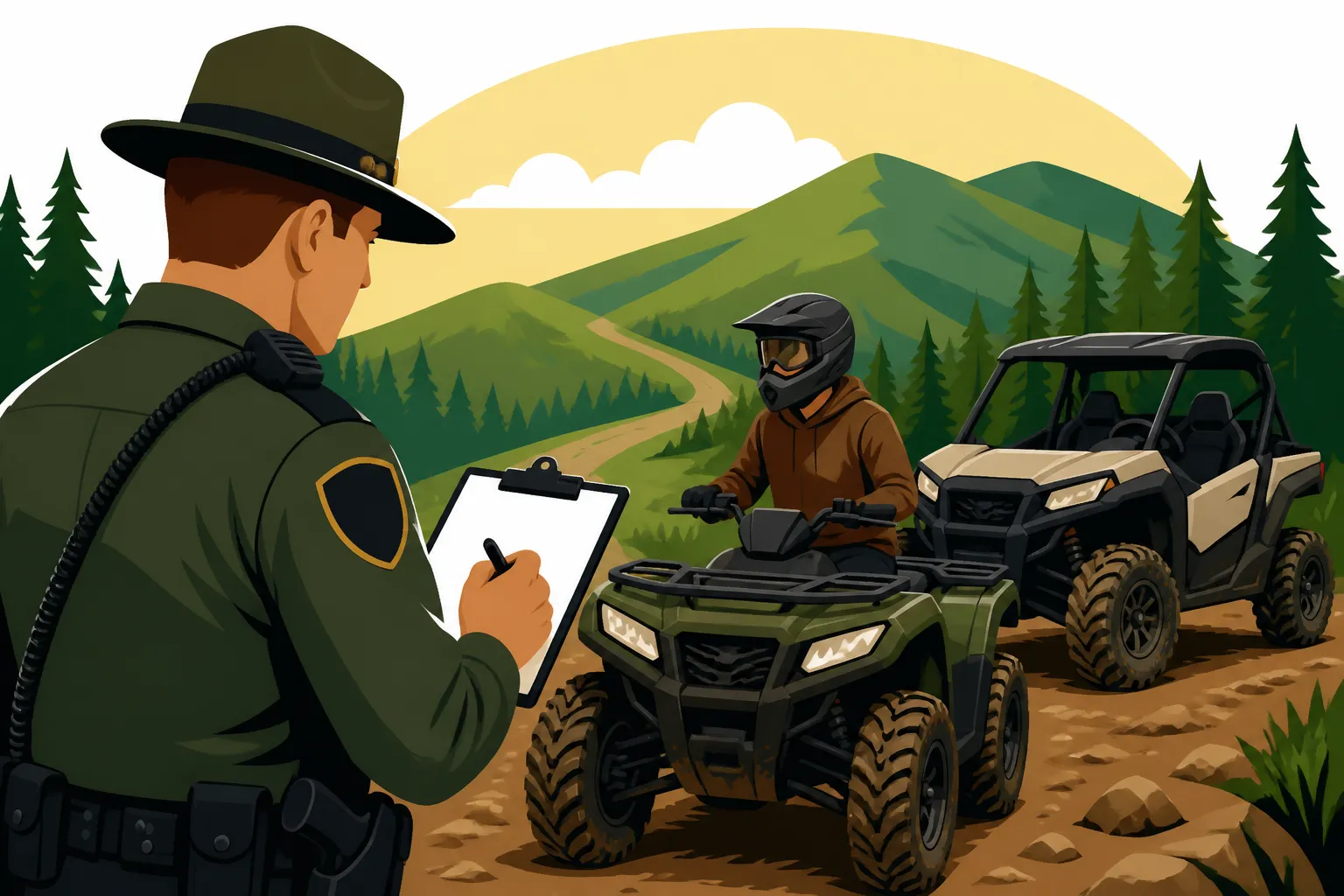
The absolute first thing to do if a deputy signals you to stop is to remain calm. Pull over safely to the side of the road, turn off your engine, and keep your hands visible. Fumbling for your registration or getting argumentative will only escalate the situation. Remember, the officer is trying to ensure everyone's safety, including their own. Be polite, cooperative, and answer their questions truthfully, but you are not obligated to offer information beyond what's legally required.
You have the right to remain silent, but it's often best to provide your identification, registration, and any necessary permits (like your trail permit or SPV plate documents). If you're unsure whether you're required to answer a specific question, you can politely state that you'd prefer not to answer without legal counsel. Remember, whatever you say can potentially be used against you. Don't admit guilt, but don't be disrespectful. A calm and cooperative demeanor can sometimes lead to a warning instead of a ticket, or at least a less stressful interaction. Also, make sure you have proof of ownership for a West Virginia ATV Title and any other necessary documents.
Contesting a Ticket and Seeking Legal Advice
If you believe you've been unfairly ticketed, or if the circumstances surrounding the stop were questionable, you absolutely have the right to contest the ticket in court. This means pleading "not guilty" and requesting a court date. Before you do this, gather all your evidence: photos of the road conditions, your machine's equipment, any relevant signs, or witness statements. Review the specific law you're accused of violating to understand its nuances.
Seeking legal advice from an attorney specializing in traffic or ATV law in West Virginia is often a very smart move, especially if the ticket carries significant fines or could affect your driving privileges. An attorney can review the details of your case, advise you on your chances of success, and represent you in court. They can help navigate the complexities of local ordinances and state statutes, potentially getting the charges reduced or even dismissed. Don't just pay the fine if you truly believe you're innocent or if there are legal grounds to challenge the ticket; explore your options. [Fighting an ATV Ticket in West Virginia] might offer additional insights.
Preventing Tickets: Riding Legally and Safely
The best way to avoid a ticket is simple: don't give deputies a reason to issue one. This means understanding and adhering to West Virginia's laws for ATV and UTV operation on public roads, and embracing responsible riding practices. It's about respecting the law, other road users, and the communities you ride through.
Mastering West Virginia's Street-Legal SPV Plate
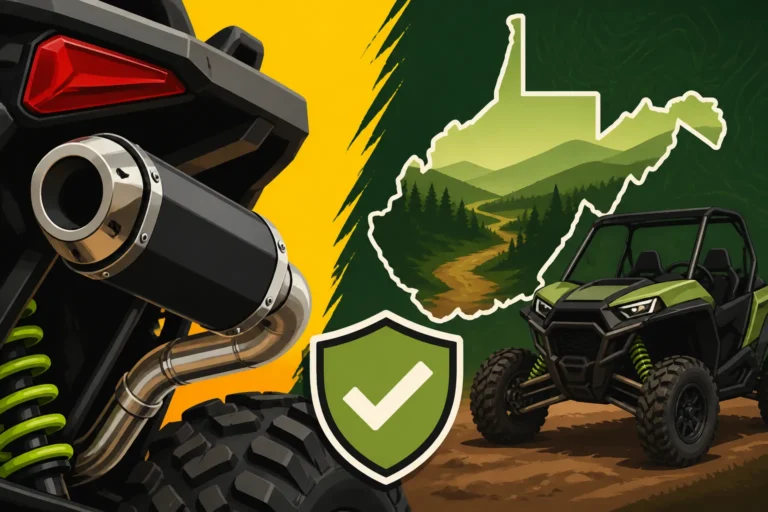
For those who genuinely need or want to ride their ATV or UTV on public roads for more than just crossing a non-centerline road or within a designated trail town, West Virginia offers the [West Virginia's Street-Legal Special Purpose Vehicle Law]. Obtaining an SPV plate legally transforms your off-road machine into a street-legal vehicle, opening up more road access, though still with some limitations like [West Virginia's 20-Mile Centerline Limit for an SPV]. This process involves ensuring your machine meets specific equipment requirements – often needing upgrades like DOT-approved tires, turn signals, mirrors, a horn, and proper lighting. Companies like SuperATV specialize in aftermarket parts and conversion kits that can help you meet these stringent requirements.
Going through the SPV process is an investment, both in time and money, but it's the only way to truly unlock broader road access for your UTV or ATV and avoid the common equipment tickets. It’s also crucial to remember that even with an SPV plate, you still need to follow all traffic laws, carry specific insurance, and adhere to speed limits. It's not a free pass to ride anywhere; it's a permit to ride more places under strict conditions.
Smart Riding Practices and Trail Town Etiquette
Even if you have an SPV plate or are riding within the limited allowances, adopting smart riding practices and exhibiting excellent trail town etiquette is paramount. Speeding, weaving through traffic, revving your engine unnecessarily, or creating excessive noise will quickly draw unwanted attention from both law enforcement and residents. These actions not only put you at risk of a ticket for reckless operation or noise violations, but they also give all ATV and UTV riders a bad name, potentially leading to stricter regulations in the future.
When you're in a trail town, remember you're a guest. Slow down, be courteous to pedestrians, park appropriately, and be mindful of noise levels. These towns, like Gilbert, Man, or Williamson, have embraced ATV tourism, and it's up to riders to ensure that relationship remains positive. Staying on marked routes, adhering to posted speed limits (like the [The 25 mph Cap on a West Virginia Road Ride]), and always wearing appropriate safety gear, even when not legally required for adults, demonstrates responsibility. Consider taking a [West Virginia DMV ATV Safety Awareness Course] to refresh your knowledge and reinforce safe practices. By riding responsibly and respectfully, you not only ensure your own safety and avoid tickets, but you also help preserve and expand access for all riders in the Mountain State.
Disclaimer
This article is for general informational purposes only and does not constitute professional advice. Laws, prices and regulations vary by location and change over time. Consult a qualified professional for guidance on your specific situation.