West Virginia ATV Rules on a Town Street
There's nothing quite like the freedom of tearing up a trail on your ATV or UTV, but let's be honest, sometimes you just want to cruise into town for a burger, grab some gas, or pick up a forgotten item without having to load your machine back onto a trailer. The thought of riding your quad or side-by-side directly from the dirt trails onto a paved street in a West Virginia town can bring on a mix of excitement and anxiety. It's a common dilemma for riders in our beautiful Mountain State: where exactly can you take your off-road machine on a public street without getting into trouble? This guide is here to untangle the often-confusing web of West Virginia's ATV and UTV rules when it comes to riding on a town street, helping you understand what's legal, what's not, and how to enjoy those trail town amenities responsibly.
The Basics of West Virginia's Road Riding Laws for ATVs
Navigating the rules for riding ATVs and UTVs on public roads in West Virginia can feel like trying to find a hidden trail marker in thick fog. It's a common point of frustration for riders who just want to understand where they can and can't go. The core issue is that, generally speaking, your off-road machine isn't designed or licensed for regular street use. However, West Virginia, being the true outdoor enthusiast's paradise that it is, has carved out some very specific exceptions that make limited road travel possible in certain circumstances.
The General Prohibition and Its Exceptions
At its heart, West Virginia law states that ATVs and UTVs are not street-legal vehicles. This means you can't just hop on your quad and ride down Main Street like it's a car. This blanket prohibition is in place for a few very good reasons: ATVs typically lack certain safety features required for highway use, like full enclosed cabins, automotive-grade tires, and comprehensive lighting systems. They handle differently than cars, and their presence on busy roads can create significant safety hazards for both the ATV operator and other motorists.
However, the lawmakers recognized the unique needs of our state, especially with our vast network of trails and the communities that support them. So, they created specific, limited exceptions to this general rule. The most well-known of these exceptions often revolves around the idea of crossing a public road or traveling a short distance on a road that doesn't have a painted center line. These exceptions are typically for accessing trails, crossing from one trail section to another, or getting to a service area nearby. You're generally limited to a maximum speed of 25 mph and a travel distance of no more than 10 miles. It's not a free pass to cruise all day, but a practical allowance for trail connectivity. Understanding these nuances is key to staying legal and safe. You'll find these rules are carefully balanced to allow for limited utility while still prioritizing safety for everyone on the road.
How "ATV-Friendly" Towns Come into Play
While the state law provides those limited exceptions for road travel, many of us dream of more direct access – imagine riding directly from the trail into a charming West Virginia town for lunch! This is where the concept of "ATV-friendly" towns becomes incredibly important and truly changes the game for riders. Individual towns and municipalities in West Virginia have the power to enact their own local ordinances that specifically permit ATVs and UTVs on certain designated public streets within their corporate limits. This is a huge deal, as it allows for a more integrated riding experience, directly benefiting local businesses and giving riders the convenience they crave.
These "trail towns" have become beacons for off-road enthusiasts. Towns like Gilbert, Man, and Williamson are fantastic examples, embracing their role in the trail economy by opening up their streets to responsible riders. However, it's absolutely crucial to remember that "ATV-friendly" doesn't mean a free-for-all. Each town will have its own specific rules, designating which streets are open, often marking them clearly with signage, and sometimes imposing additional local speed limits or hours of operation. It’s not uncommon to find a town map indicating the approved ATV routes, guiding you from the trailhead directly to local restaurants, gas stations, and shops. Always check with the local visitor center or municipal website before you venture off the trail and into town. [West Virginia's ATV-Friendly Towns and What You Can Ride] is a great resource to explore to understand these local dynamics better.
Specific Rules for Riding Your ATV on Town Streets
So, you've found an ATV-friendly town, or you're looking to use one of the limited state-sanctioned road-riding exceptions. That's great! But before you even think about putting tires to pavement, there are some very important rules about your machine and yourself that you absolutely need to follow. These aren't just suggestions; they are legal requirements designed to keep you and everyone else safe. Ignoring them can lead to citations, fines, and even a spoiled trip.
Equipment Requirements for Town Street Riding
When you're riding an ATV or UTV on any public road in West Virginia, even within the confines of an ATV-friendly town, your machine needs to be equipped in a way that prioritizes visibility and safety. This isn't just about what the law says, but about common sense, especially when you're sharing space with cars, trucks, and pedestrians. First and foremost, you absolutely need proper lighting. This means a functional headlight, taillights, and brake lights that are clearly visible. If you're going to be out near dusk or after dark, this becomes even more critical for your safety.
Beyond lighting, personal protective equipment is non-negotiable. A DOT-approved helmet and appropriate eye protection are mandatory for all riders under 18, and highly, highly recommended for adults. Think about adding turn signals and mirrors to your machine if you don't already have them. While these might not be explicitly required for the most basic, limited road crossings under state law, many ATV-friendly towns expect them for better integration with street traffic. They greatly enhance your ability to signal intentions and be aware of your surroundings, making you a much safer and more predictable presence on the road. Companies like SuperATV offer fantastic conversion kits that include turn signals, mirrors, horns, and other street-legal accessories, making it easier to equip your machine for these situations. Investing in these upgrades isn't just about compliance; it's about protecting yourself and improving the overall riding experience when you transition from trail to town street. For a full rundown on what your machine needs, check out [Equipment West Virginia Requires on a Road Ride].
Rider Licensing, Age, and Passenger Rules
Beyond the machine itself, the person operating it and any passengers riding along must meet certain qualifications when on public roads. This is where a lot of riders sometimes get caught off guard, assuming that trail rules automatically transfer to town streets. They don't. When you hit a public street, even in an ATV-friendly zone, you're entering a different regulatory environment.
For starters, if you're operating an ATV or UTV on a public road or street in West Virginia, you generally need to possess a valid driver's license. This means you can't be riding on a learner's permit or without any license at all, as might be permissible in very specific, limited circumstances on private property or designated trails. When you're on a town street, you're expected to be a licensed driver, just like someone operating a car. Secondly, age restrictions are paramount. While there are rules for youth riders on private property and trails, riding on public streets usually aligns with standard motor vehicle age limits. For operators, this typically means being old enough to hold that driver's license. As for passengers, while your UTV might have multiple seats, you must strictly adhere to the manufacturer's recommendations and the vehicle's design for passenger capacity. Never carry more people than your machine is designed for, and ensure all passengers, especially minors, comply with helmet and eye protection laws. [Driver's License Rules for West Virginia Road Riding] provides more details on operator requirements, and [Passengers on a West Virginia Road Ride] can help you understand the rules for those riding with you. Safety is always the priority, and these rules are in place to prevent serious accidents.
Navigating "Trail Towns" and Understanding Local Ordinances
West Virginia's trail towns are a rider's dream, offering direct access from the trails to local amenities. But as much as these towns welcome off-road enthusiasts, they do so with specific rules in place. Understanding and respecting these local ordinances isn't just about avoiding a ticket; it's about being a good visitor and ensuring these towns continue to embrace ATV and UTV tourism for years to come.
Finding Out Which Town Streets Are Open
You've pulled off the trail and see the welcome sign for a town like Gilbert, Man, or Williamson. Fantastic! But don't just point your machine down the first paved road you see. The key to successful and legal town riding is knowing which streets are designated for ATV/UTV use. Most ATV-friendly towns go to great lengths to make this clear. Look for specific signage at town entrances and along streets, often with a green ATV symbol indicating approved routes. Many towns also provide maps, either online through their tourism or municipal websites, or in physical form at local visitor centers, gas stations, or even at trailhead kiosks. These maps are invaluable; they often highlight direct routes to gas, food, and lodging, guiding you away from restricted areas.
A prime example is riding into Gilbert, where specific routes are laid out to connect riders from the Rockhouse Trail System directly to the vibrant downtown area. [Riding Through Gilbert on an ATV] offers a great look at this experience. It's not just about getting to your destination; it's also about where you can park. Designated ATV parking areas are common, so don't just leave your machine anywhere a car might park. Always prioritize safety and stay on the marked routes. Straying onto non-designated streets, even by accident, can quickly lead to a friendly chat with a local deputy, or worse. The goal is to make your visit smooth and enjoyable for everyone, and that starts with knowing the local layout. For more general insights into how these communities operate, take a look at [How a West Virginia Town Becomes ATV-Friendly].
Common Mistakes and How to Avoid Penalties
Even with the best intentions, it's easy to make mistakes if you're not fully aware of the local rules. The biggest pitfalls often involve speed, going off the marked path, and alcohol consumption. While the thrill of the ride is undeniable, town streets mean slower speeds, often much slower than you're used to on the trails. Many towns enforce a strict 15 or 25 mph limit on their ATV-friendly routes, and deputies are usually present to ensure compliance. Speeding, even a little, is a quick way to get pulled over. [Fines for Speeding on an ATV in West Virginia] can give you an idea of the costs involved.
Another common mistake is venturing off the designated ATV routes. Sometimes, riders mistakenly believe that if they can see a restaurant down a side street, it's okay to take it, even if it's not marked. Always stick to the roads explicitly approved for ATV traffic. The temptation to "just quickly run to the store" down an unmarked road can lead to unnecessary fines. Lastly, and perhaps most critically, never, ever operate your ATV on a public street, even in an ATV-friendly town, while under the influence of alcohol. West Virginia has very strict DUI laws, and they apply to ATV operators on public roads just as they do to car drivers. A DUI on an ATV can carry serious consequences, including significant fines and potential loss of your driver's license. [Alcohol Limits for West Virginia ATV Operators] outlines these important rules. Remember, local law enforcement wants you to have a good time, but they also have a duty to ensure public safety. A little bit of awareness can save you a lot of hassle and help avoid those frustrating [West Virginia ATV Ticket Costs].
The Street-Legal Special Purpose Vehicle SPV vs. Standard ATV Road Use
When we talk about riding ATVs and UTVs on West Virginia's roads and town streets, it's important to differentiate between using a standard off-road machine under limited exceptions and operating a properly titled and equipped Street-Legal Special Purpose Vehicle (SPV). While both can find themselves on pavement, their legal standing and the extent of their road access are vastly different. Understanding this distinction is crucial, especially if you're dreaming of more extensive road travel with your side-by-side or quad.
The Benefits and Requirements of an SPV Plate
A standard ATV or UTV can, under specific state laws, utilize public roads without a center line for limited distances (up to 10 miles) and at limited speeds (up to 25 mph), or on designated routes within ATV-friendly towns. This is primarily for utility, trail access, or connectivity. It's a conditional privilege, not a right to roam. On the other hand, obtaining a West Virginia Special Purpose Vehicle (SPV) plate fundamentally transforms your UTV (and in some cases, certain ATVs) into a vehicle with significantly expanded road-riding privileges. [West Virginia's Street-Legal Special Purpose Vehicle Plate] explains this concept in detail.
The biggest benefit of an SPV is the extended freedom to travel. With an SPV plate, your machine can access many more public roads, including some with center lines, and often without the strict 10-mile or 25 mph limitations, provided you adhere to the specific SPV laws. This means greater flexibility for getting to town, accessing remote areas, or simply enjoying scenic drives on secondary roads. However, this increased privilege comes with stringent equipment requirements. To qualify for an SPV plate, your machine must be outfitted with a comprehensive list of safety features that typically include: DOT-approved tires, a windshield with safety glass, wipers, a horn, mirrors (left, right, and rearview), turn signals, proper headlights and taillights, and a license plate light. Many riders find conversion kits from companies like SuperATV incredibly useful for meeting these extensive requirements, as they provide all the necessary components in one package. It's a significant investment in time and money, but for those who want true street legality, it's the only way to go. You can learn more about the specific items needed by looking at [Equipment a West Virginia SPV Must Carry].
Practical Considerations for SPV Owners on Town Streets
While an SPV plate offers far greater flexibility, it doesn't mean you can throw caution to the wind on town streets. There are still practical considerations and rules to adhere to. First off, having an SPV plate typically means you'll need to carry specific liability insurance, just like a car. This is a critical legal and financial protection. While standard off-road insurance might cover you on trails, a different level of coverage is usually required for a street-legal machine operating on public roads. It's always wise to check with your insurance provider to ensure you have the correct policy in place. [Insurance Required for a West Virginia SPV Plate] dives deeper into this topic.
Additionally, even with an SPV plate, there are still some limitations, such as the 20-mile centerline rule, which dictates that SPVs cannot be operated on public roads or highways with a posted speed limit greater than 55 mph, and on certain roads with a centerline, there might be a 20-mile limit from your residence or the nearest designated trail access point. This isn't universally applied to all streets, but it's important to be aware of the nuances. [West Virginia's 20-Mile Centerline Rule for Street-Legal Machines] provides clarity on this particular regulation. When in town, parking regulations will apply, and you'll be expected to conduct yourself as any other motor vehicle operator. The SPV designation is a fantastic option for riders seeking expanded freedom, but it comes with the responsibility of understanding and fully complying with a different set of rules and requirements compared to traditional off-road use.
ATV/UTV Road Use Comparison
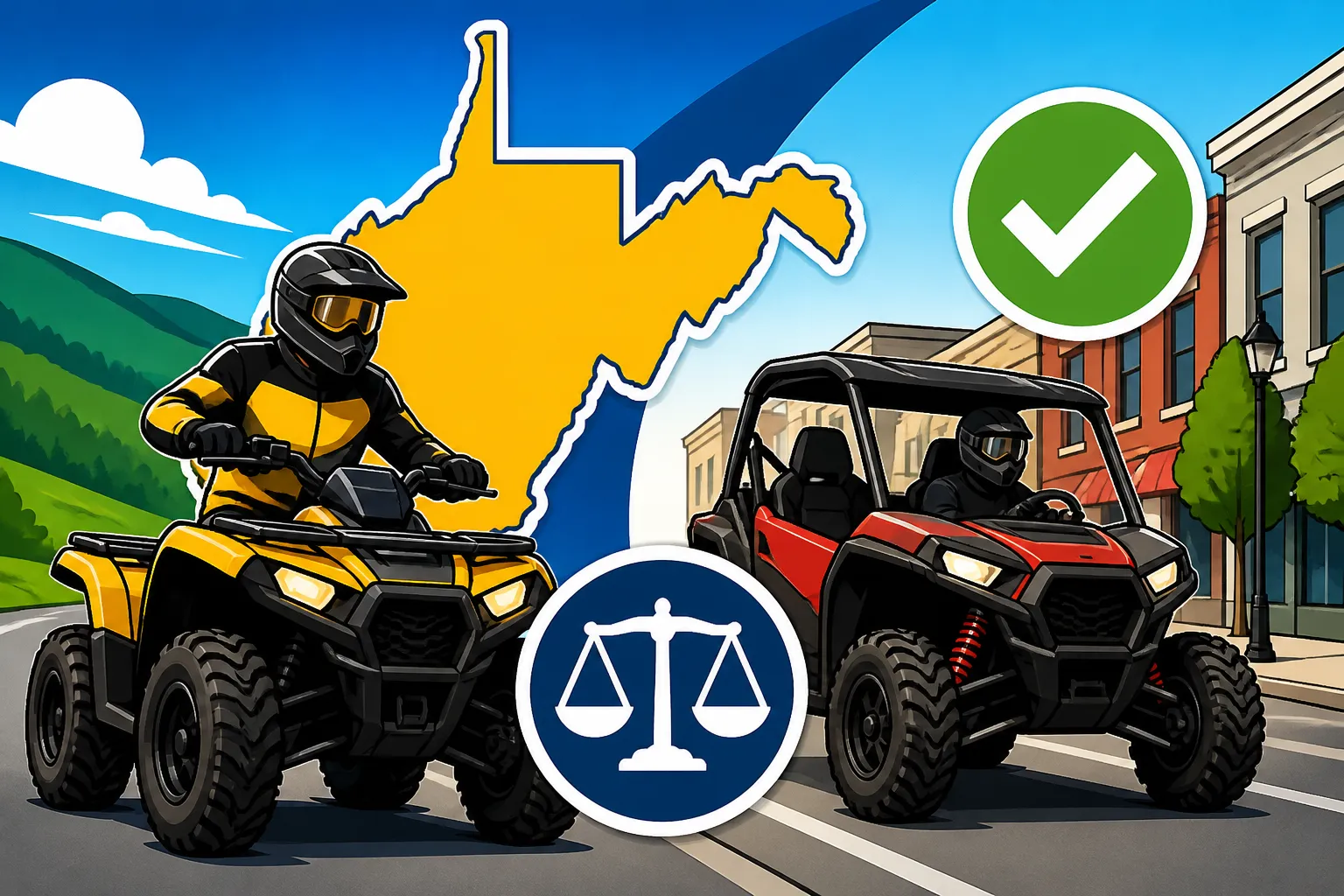
Here's a quick look at the key differences between standard ATV/UTV limited road use and owning a Street-Legal Special Purpose Vehicle (SPV) for town street access in West Virginia:
| Feature | Standard ATV/UTV Limited Road Use | Street-Legal Special Purpose Vehicle (SPV) |
|---|---|---|
| Primary Use | Off-road recreation, limited trail access on roads | On-road and off-road capability |
| Road Access | Very limited: no centerline roads, 10-mile limit, 25 mph speed | Much broader: most roads with speed limit ≤ 55 mph, designated routes |
| Town Street Access | Only on designated routes in ATV-friendly towns | Generally greater access, subject to local ordinances and SPV rules |
| Speed Limit | 25 mph maximum | Posted speed limits apply (up to 55 mph road limit for SPVs) |
| Required Equipment | Helmet (under 18), eye protection, basic lights | Full DOT-approved lights, turn signals, horn, mirrors, windshield, DOT tires, etc. |
| Licensing (Operator) | Valid driver's license generally required on roads | Valid driver's license required |
| Vehicle Title/Plate | Off-road title, no special road plate | Special "SPV" plate issued by DMV |
| Insurance | Off-road policy (check for limited road coverage) | Auto liability insurance specific to SPVs often required |
| Inspections | No routine safety inspection | May be subject to safety inspection for registration |
| Registration Process | Off-road title only | Title, registration, and SPV plate application at DMV |
Disclaimer
This article is for general informational purposes only and does not constitute professional advice. Laws, prices and regulations vary by location and change over time. Consult a qualified professional for guidance on your specific situation.