Riding an ATV Through a West Virginia Tunnel
The thought of exploring every scenic route and hidden gem in West Virginia on your ATV or UTV is incredibly exciting, but sometimes you'll encounter an unexpected challenge: a tunnel. These dark, enclosed passages often leave riders scratching their heads, wondering if it's even legal to pass through, and what safety precautions are absolutely essential. This comprehensive guide is designed to cut through that confusion, giving you a clear roadmap for safely and legally navigating tunnels with your off-road machine in the Mountain State.
The Legal Landscape: When Can Your ATV Hit a Tunnel?
Before you even think about entering a tunnel, whether it's a short culvert or a longer, winding passage, you need a solid grasp of West Virginia's regulations regarding ATV and UTV use on public thoroughfares. Tunnels, by their very nature, are usually part of a road system, which brings specific rules into play. You can't just assume that because a road is quiet or rural, it's open season for your machine.
Public Roads Versus Designated Trails
This is perhaps the most crucial distinction to make. Many of the tunnels you might encounter in West Virginia are actually on designated trail systems, like the expansive [The Hatfield-McCoy Trails, West Virginia's 1,200-Mile Network]. These tunnels are part of the intended riding experience, often old railroad grades converted for recreational use. On these trails, if your machine meets the permit and safety requirements for the trail system, riding through a tunnel is generally expected and perfectly legal. You'll typically find them well-marked, and your permit is your golden ticket.
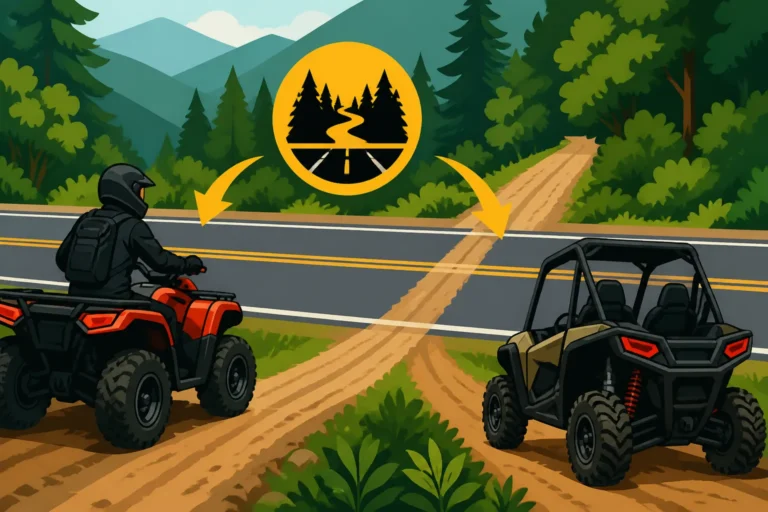
However, the moment you leave a designated trail and enter a public road, even a seemingly deserted one that happens to pass through a tunnel, an entirely different set of rules applies. West Virginia law is very clear about where ATVs and UTVs are permitted on public roads, and it's far more restrictive than many riders realize. Ignoring these distinctions can lead to citations, fines, and even losing your riding privileges, which is a major headache you definitely want to avoid.
West Virginia's General Road Riding Rules
For the most part, standard ATVs and UTVs are not permitted on West Virginia's public roads. There are very limited exceptions, primarily for crossing purposes, or for specific stretches in designated ATV-friendly towns under strict conditions. For instance, you might be allowed to ride a short distance on a public road to connect two trail sections, often subject to a [West Virginia's 10-Mile, 25 mph Road Rule]. This means your machine must be capable of signaling, braking, and generally being visible and controllable, and you're limited in how far and how fast you can go.
It’s easy to get confused, especially when you see others bending the rules, but those riders are taking a risk. Tunnels on state highways, county routes, or even many local roads are typically off-limits to non-street-legal ATVs and UTVs. The dangers associated with limited visibility, confined spaces, and mixed traffic in a tunnel amplify the reasons behind these restrictions. Always err on the side of caution and understand [Riding an ATV on the Road in West Virginia] before you put a tire on the pavement.
The "Street Legal" Option and Tunnels
If you truly want to ride your UTV or ATV through tunnels that are part of the public road network in West Virginia, your most reliable path is to make it a "Street-Legal Special Purpose Vehicle" (SPV). This isn't a simple fender flare and a horn; it involves a significant conversion to meet specific Department of Motor Vehicles (DMV) requirements. Once your machine is titled and registered as an SPV, it essentially becomes a low-speed vehicle that can legally operate on many public roads, including those that pass through tunnels, within certain limitations.
This conversion means adding a long list of safety equipment: DOT-approved tires, windshields, mirrors, turn signals, brake lights, a horn, and often a robust lighting system capable of illuminating dark tunnels. Companies like SuperATV offer a wide array of parts and kits specifically designed to help riders achieve street-legal status, from wiring harnesses for turn signals to full glass windshields. Getting an SPV plate allows you to travel beyond the typical "trail to trail" connectors and truly integrate into the local road network in permitted areas. Without this specialized plate, accessing public road tunnels with your off-road machine is largely a no-go. You can learn more about [West Virginia's Street-Legal Special Purpose Vehicle Law] and the detailed steps involved in [Making a UTV Street Legal in West Virginia].
Essential Gear for Safe Tunnel Transit
Even when it's perfectly legal to traverse a tunnel, whether on a designated trail or as a street-legal SPV, the unique environment of a tunnel demands extra attention to your machine's equipment. Darkness, echoing sounds, and potential moisture make tunnels different from open-air riding. Your machine needs to be up to the task of ensuring you can see and be seen.
Lighting Up the Dark: Headlights and Taillights
This might seem obvious, but it's astonishing how many riders venture into tunnels with inadequate lighting. Inside a tunnel, ambient light disappears, and you're plunged into darkness. Standard ATV headlights are designed for trail riding, which can be sufficient for short, well-maintained trail tunnels. However, for longer, darker, or public road tunnels, you need serious illumination. Your headlights must be strong enough to pierce the gloom, revealing obstacles, dips, or even debris on the tunnel floor. Consider upgrading to brighter LED headlights if your stock lights feel weak.
Just as important as seeing is being seen. Your taillights are crucial for anyone behind you, especially if the tunnel has a curve or a rise. Many stock taillights are quite dim, primarily meant to indicate braking. For tunnels, you want bright running lights that are constantly visible. If you're riding an SPV, then bright [West Virginia Headlight Rules After Sunset] and [West Virginia Taillight and Brake Light Requirements] are not just recommendations, they are legal necessities. A quality light bar or additional auxiliary lights can make a massive difference in both your visibility and your comfort when entering a dark passage. SuperATV, for example, has a range of auxiliary lighting options that provide excellent spread and intensity for these challenging conditions.
Visibility Beyond Lights: Mirrors and Reflectors
Tunnels are enclosed spaces, and you never know what's coming or going. Good mirrors are absolutely essential. Whether it's another ATV, a side-by-side, or even a maintenance vehicle, you need to be able to see behind you without turning your head. Many ATVs come with minimal mirrors, if any, and UTVs often have small side mirrors. Upgrading to larger, more stable mirrors, or adding a wide-angle rearview mirror to your UTV, dramatically improves your situational awareness. This is especially true if you are on a public road where cars might be present.
Reflectors, while seemingly minor, play a huge role in passive visibility. Your machine likely has some stock reflectors, but consider adding more, particularly on the sides and rear. These don't require power, but they catch any light from other vehicles, making your presence known even if your own lights dim or fail. This added layer of safety is cheap, effective, and can be a lifesaver in a dark tunnel where every bit of visibility counts.
Other Road-Legal Equipment
If you are riding an SPV, a tunnel is just one of many scenarios where your full complement of street-legal gear comes into play. Beyond lights and mirrors, a functional horn is a must to alert others, especially when approaching blind curves within a tunnel. Turn signals, required for an SPV, are vital for communicating your intentions if you encounter other traffic or need to change position. A windshield, ideally DOT-approved, protects you from debris, dust, and potential water drips inside the tunnel, maintaining clear vision.
Remember, the purpose of all this equipment, which is detailed in [Equipment West Virginia Requires on a Road Ride], is not just to comply with the law. It's about enhancing your safety and the safety of everyone else around you. Cutting corners on equipment, especially for tunnel riding, is simply not worth the risk. Many riders find that a full street-legal conversion kit from a reputable brand like SuperATV streamlines the process of getting all these components correctly installed and wired.
Tunnel Riding: Safety and Best Practices
Entering a tunnel isn't like riding on an open trail. The enclosed environment, potential for low visibility, and presence of other traffic create unique hazards. Being prepared and knowing how to react is key to a safe passage.
Navigating Low Visibility and Confined Spaces
When you plunge into a dark tunnel, your eyes need time to adjust. Even with excellent lighting, the transition from bright daylight to pitch black can be jarring. Reduce your speed before entering the tunnel. This gives your eyes a chance to adapt and provides more reaction time. Keep your head up, focusing on the center of your lane or the designated path, rather than staring directly at your front tire.
The confined space of a tunnel can also play tricks on your senses. Sounds echo, and the walls can feel like they're closing in. Stay calm, maintain a steady speed, and resist the urge to rush through. If you're riding with a group, ensure everyone has their lights on and maintains a safe following distance. This is not the place for reckless riding or showing off. Remember, the tighter the space, the less room you have for error. You definitely don't want to receive [West Virginia Penalties for Reckless Riding] here.
Encountering Other Traffic
This is where the distinction between a trail tunnel and a public road tunnel becomes critically important. On a well-maintained trail system, you're likely to encounter other ATVs and UTVs. Maintain a courteous speed, pass only when safe and clearly visible, and expect other riders to be doing the same. Signal your intentions if you're turning or stopping, even if it's just a hand signal.
On public road tunnels, however, you might encounter full-size vehicles like cars and trucks. This is a much more dangerous scenario. Their speeds are higher, their braking distances are longer, and they might not expect to see an ATV or UTV. If you're riding a street-legal SPV, always hug the right side of your lane, give ample room, and be prepared for airflow turbulence from passing vehicles. If the tunnel is single-lane or particularly narrow, consider waiting for clear passage before entering. It's far better to delay your journey by a few minutes than to risk a collision. Always be aware of [West Virginia Rules on Bridges and Tunnels] and the specific implications these narrow passages hold.
Preparedness for Unexpected Stops
What happens if your machine breaks down inside a tunnel? Or if you encounter an obstacle, like a downed tree or rockfall? Being prepared can turn a major crisis into a manageable inconvenience. First, always carry a small toolkit and know basic troubleshooting. Second, ensure your phone is charged, though signal can be spotty inside tunnels. Third, and perhaps most importantly, carry a flashlight or headlamp separate from your machine's power. If your electrical system fails, you'll still have light to assess the situation or signal for help.
If you must stop, try to get as far to the side as possible, out of the main path of travel. Activate any hazard lights you have. If you're on a multi-lane public road tunnel, use flares or reflective triangles if you carry them, but only if it's safe to deploy them. The best practice, however, is to ensure your machine is well-maintained before setting out, reducing the likelihood of a breakdown in the first place. A pre-ride inspection before any journey, especially one that includes tunnels, is a small investment of time that can save you a lot of trouble.
The Different Kinds of Tunnels You'll Encounter
West Virginia's topography is riddled with hills, mountains, and hollers, leading to a variety of tunnels both natural and man-made. Understanding the type of tunnel you're approaching can help you anticipate conditions and ensure you're riding appropriately.
Short Underpasses and Culverts
These are the most common "tunnels" you'll likely encounter. Often, they're simply concrete or corrugated metal pipes that allow small creeks or drainage to pass under a road or trail. On trail systems, riding through these is usually part of the fun. They might be wet, muddy, or have standing water, which can test your machine's traction. For these, good tires are more important than advanced lighting. Always proceed slowly, check for depth, and be aware of any debris that might have washed in.
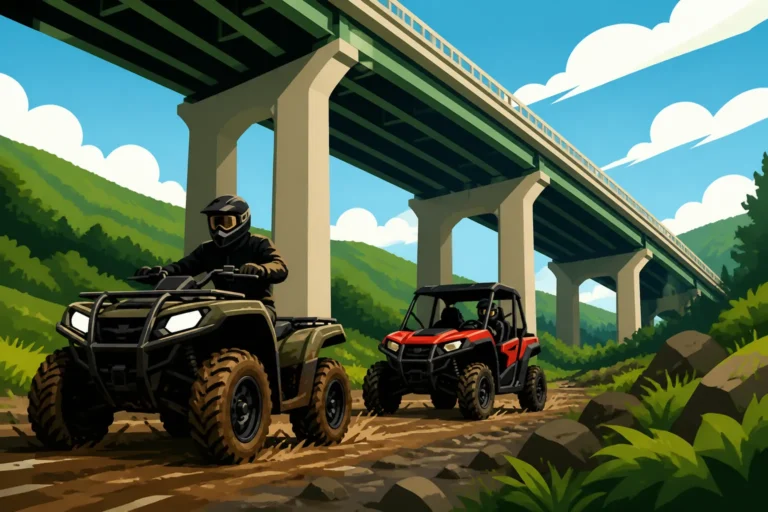
On public roads, you might find similar, slightly larger culverts or short concrete underpasses. If your machine is street-legal, treating these like any other road section, but with extra caution due to potential darkness and moisture, is appropriate. If your machine is not street-legal, and this culvert is part of a public road, then you should not be on it in the first place, unless it's an approved crossing zone.
Longer Historic Railroad Tunnels on Trails
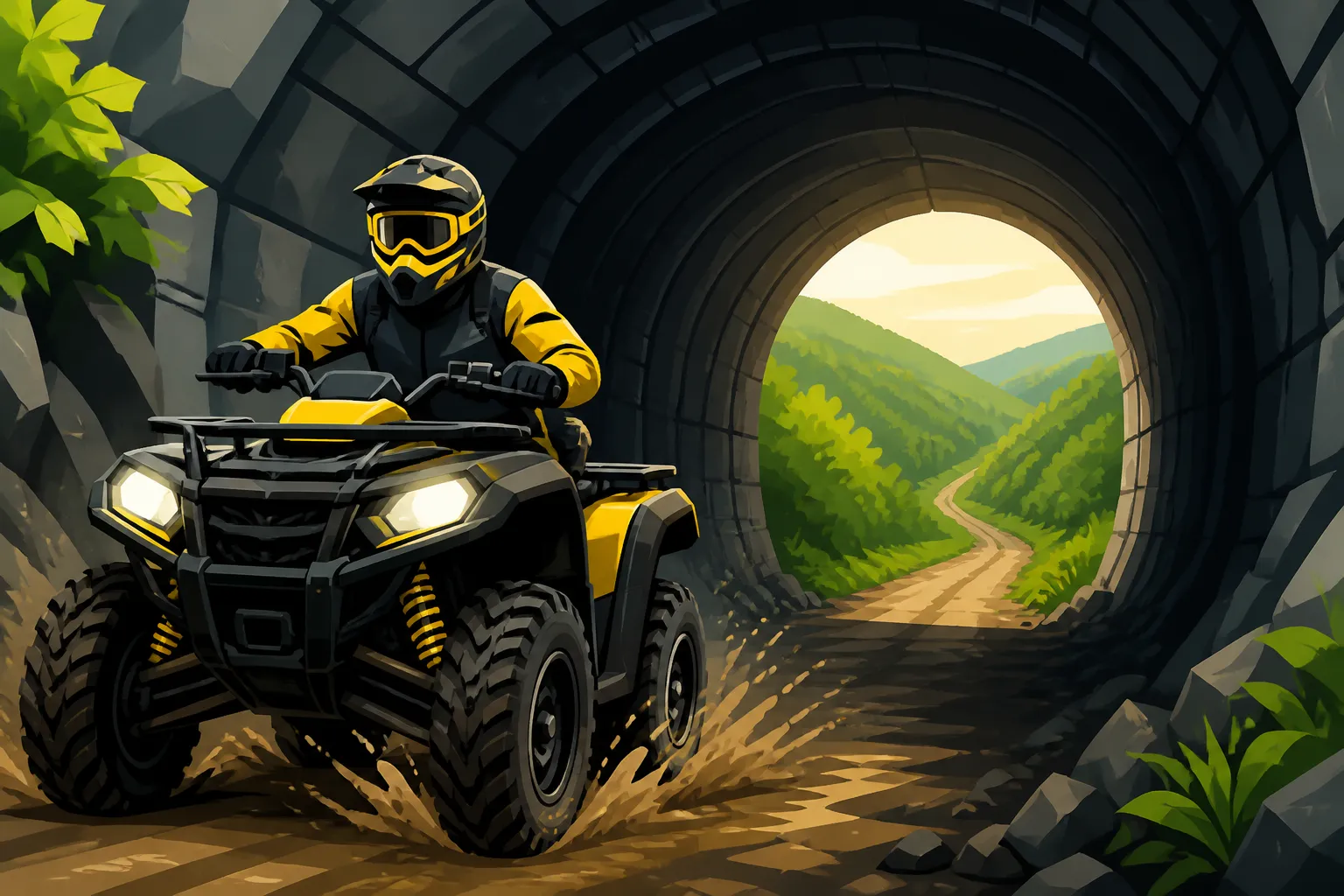
Many of West Virginia's acclaimed trail systems, like parts of the Hatfield-McCoy network, utilize old railroad grades. These often feature impressive, long, dark tunnels carved through mountains. These are specifically designed for trail traffic, and riding through them is a highlight for many. However, they are often unlit and can be quite long, sometimes hundreds of feet. In these, the importance of powerful headlights and taillights cannot be overstated.
The ground within these tunnels can be rocky, uneven, or wet, with standing water from seepage. The air might be damp and cool, even on a hot day. Proceed slowly, watch for track ties that might remain, and be mindful of other riders. The echoing acoustics can be disorienting, so avoid excessive noise. These tunnels offer a fantastic experience, a glimpse into the state's industrial past, but they demand respect and proper preparation. Always remember that even on trails, [West Virginia Trail Rules for Night Riding] generally prohibit riding after dark, so plan your tunnel crossings during daylight hours.
True Road Tunnels in West Virginia's Mountains
West Virginia has several true road tunnels that carry public traffic through mountains, such as the memorable Memorial Tunnel on the West Virginia Turnpike (though ATVs would not be permitted there). These are fully engineered, often lit, and part of the main highway system. For the vast majority of ATVs and UTVs, riding through these is strictly prohibited. The only way you would ever legally navigate such a tunnel is if your machine is a fully compliant Special Purpose Vehicle, which would need to meet strict federal and state highway standards, and even then, often only on specific routes where SPVs are allowed.
The risks associated with high-speed traffic, exhaust fumes, and the sheer scale of these tunnels make them entirely unsuitable for standard off-road machines. Always assume these are off-limits unless you have explicit confirmation and the correct licensing for your machine to be on that specific road. Trying to sneak through is dangerous and will undoubtedly lead to severe legal repercussions.
| Tunnel Type | Typical Location | Legal for Standard ATV/UTV | Lighting/Gear Priority | Key Risk Factor |
|---|---|---|---|---|
| Short Underpass/Culvert | Trail or Public Road | Yes (Trail), No (Road) | Traction, Depth Check | Water depth, Debris |
| Historic Rail Tunnel | Designated Trail System | Yes | Powerful Headlights & Taillights | Darkness, Uneven ground, Other riders |
| True Road Tunnel | Public Highway System | No (Unless SPV on specific routes) | Extreme Lighting, Full Road-Legal Kit | High-speed traffic, Fumes, Law enforcement |
Ultimately, riding an ATV or UTV through a tunnel in West Virginia can be a thrilling part of your adventure, especially on the state's incredible trail systems. But like all aspects of off-road riding, it requires awareness, preparation, and strict adherence to the rules. Know your machine, know the law, and ride safely.
Disclaimer
This article is for general informational purposes only and does not constitute professional advice. Laws, prices and regulations vary by location and change over time. Consult a qualified professional for guidance on your specific situation.