Riding Under a West Virginia Interstate Bridge
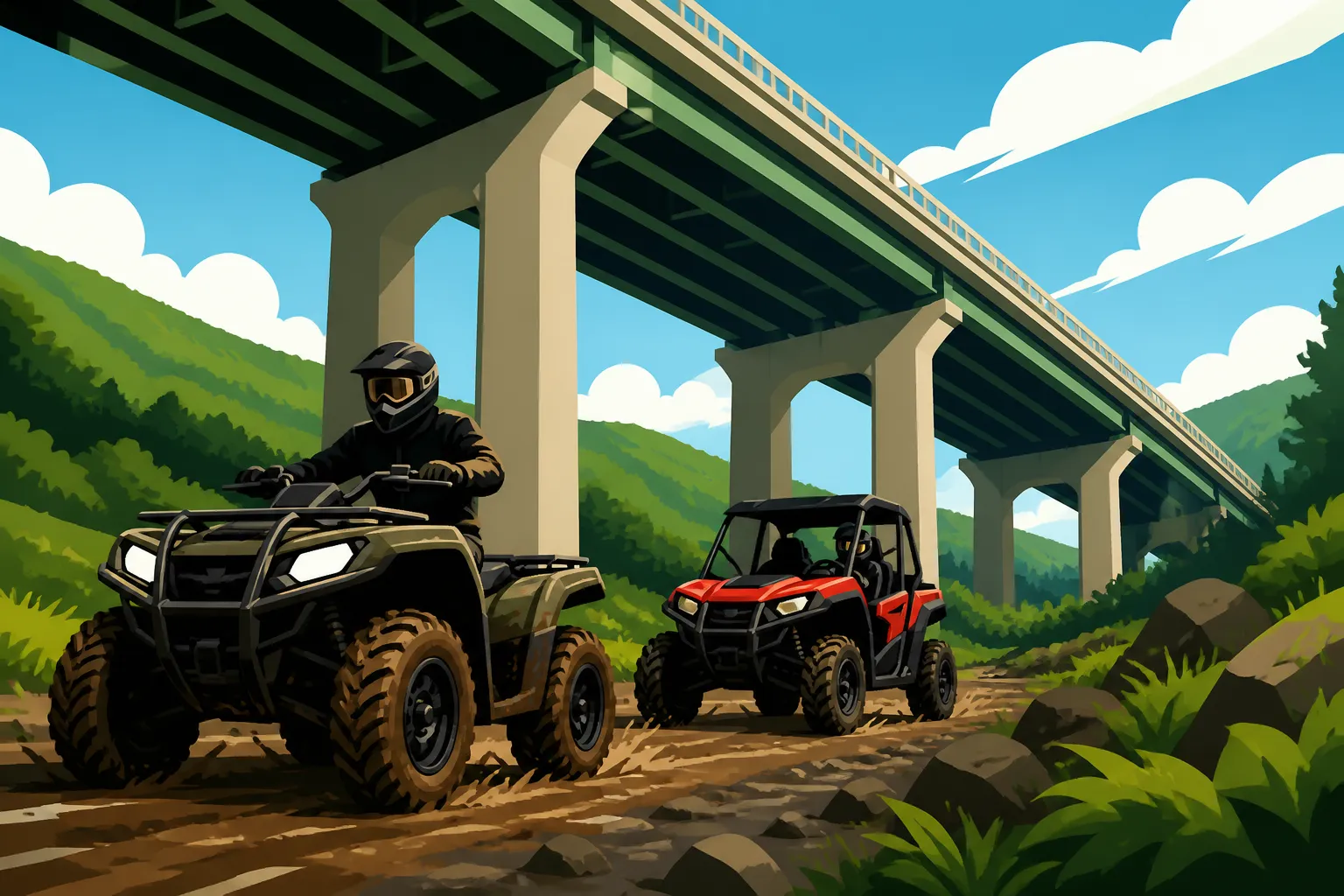
Picture this: you're out on the trails, maybe exploring some lesser-known routes, and you come across a spot where the easiest way to connect to the next section or even just get home seems to be cutting under a massive interstate bridge. It feels like a shortcut, a natural passage, but a nagging voice in your head probably wonders, "Is this actually allowed?" Many West Virginia riders face this exact dilemma, feeling the pull of convenience mixed with the uncertainty of local rules. This guide is here to untangle the complexities of riding your ATV or UTV under a West Virginia interstate bridge, clarifying the laws, safety concerns, and what you need to know to stay out of trouble.
The Nuances of Public Roads and Interstate Underpasses
Navigating West Virginia's vast network of trails often means encountering public roads, and sometimes, those roads weave directly under the state's sprawling interstate system. It's a common point of confusion for riders: does "under" count as "on" the interstate, or is it just another public road segment? The answer, as with many things in our Mountain State, isn't always straightforward, and understanding the subtleties can save you a lot of headache.
Understanding "Public Road" Definitions in West Virginia
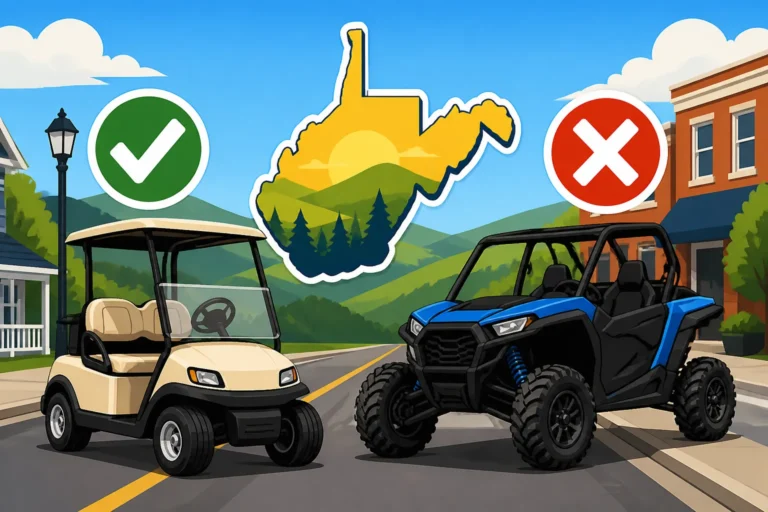
Here in West Virginia, a "public road" isn't just a bustling highway; it can be anything from a paved county route to a gravel logging path, as long as it's maintained by a public entity and open to general traffic. When you find yourself under an interstate bridge, the road beneath it, whether paved or unpaved, is almost always considered a public right-of-way. This distinction is crucial because West Virginia has specific rules about how and where ATVs and UTVs can operate on public roads. For instance, many areas adhere to [West Virginia's 10-Mile, 25 mph Road Rule], allowing limited road travel for trail access, but even then, there are conditions. You might also encounter roads that lack a painted centerline, which can sometimes open up additional riding possibilities, but these are often secondary or tertiary routes, not typically found directly beneath major interstate structures. The general rule of thumb is: if it looks like a road and acts like a road, a deputy will treat it like a road—and expect you to follow the rules for ATV/UTV use on it.
Why Interstates Are Different
While the road under an interstate might be fair game under certain conditions, the interstate highway system itself is an entirely different beast. Interstates are high-speed, limited-access highways strictly forbidden for ATV and UTV travel. The infrastructure around them, including the land immediately beneath the bridges and along the embankments, is typically under the jurisdiction of the West Virginia Department of Transportation (WVDOT). This means it's not simply "public land" in the way a national forest might be; it's specific, controlled property.
Consider the inherent dangers: you have high-speed traffic thundering overhead, often creating narrow clearances and echoey conditions that can obscure other noises. Visibility can be extremely poor, especially if the underpass is long, dark, or has blind curves where support structures might block your view. Trying to cut through these areas, even if you're technically on what looks like a public road, presents significant safety risks that law enforcement are keenly aware of. They're not just looking for trespassers; they're looking for accidents waiting to happen. Therefore, even if you are on a public road, the unique environment of an interstate underpass introduces hazards and jurisdictional complexities that make it a very different scenario from simply riding down a county road.
Legalities and Land Ownership Under Interstate Bridges
The question of legality often boils down to "whose land is it anyway?" When you're considering riding under an interstate bridge, you're not just thinking about the immediate path your tires are on, but also the surrounding ground, the bridge supports, and the approach areas. It’s a complex patchwork of ownership and jurisdiction that makes a quick decision to ride through these areas potentially problematic.
Who Controls the Land? State DOT vs. Private Land
Most interstate highways in West Virginia are built on property acquired by the state, typically under the control of the WVDOT. This ownership usually extends beyond the paved lanes, encompassing the shoulders, medians, embankments, and the land directly beneath bridge structures. So, while a county road might pass under the interstate, the immediate ground where the bridge pilings sit, or the sloped terrain leading up to the bridge, is often still WVDOT property. This means straying from the established county road, even by a few feet, could put you squarely on state-owned land where ATVs and UTVs are not permitted.
Adding another layer of complexity, sometimes an interstate might cross over privately owned land, with only the necessary right-of-way acquired for the highway itself. However, access to these private lands under or near an interstate is rarely implied or permitted for recreational vehicle use. Without explicit permission from the landowner, you would be trespassing, which carries its own set of penalties. It's a common frustration for riders looking for continuous routes, but [West Virginia Trespass Rules Along Roads] are strictly enforced, and ignorance of property lines is rarely an acceptable excuse. Always assume state or private ownership of the surrounding land and stick to clearly marked public roads or designated trails.
Permitted Road Crossings vs. Underpass Travel
It's vital to distinguish between a brief, legal road crossing and attempting to use an interstate underpass as a thoroughfare. West Virginia laws, particularly in designated trail towns, allow ATVs and UTVs to operate on certain public roads for short distances to connect trail systems. This might involve crossing a state route that passes beneath an interstate or riding a short section of a county road that happens to be an underpass. The key here is "short distance" and "connecting trails."
However, intentionally using the area under an interstate bridge as a prolonged travel route, or as a shortcut not part of an approved trail connector, is generally not permitted. These areas are designed for vehicular traffic, and even if an ATV or UTV is street-legal (perhaps with a [West Virginia Street-Legal Special Purpose Vehicle Plate]), it doesn't grant carte blanche to use any section of road, especially in potentially hazardous or restricted zones. The intent of West Virginia's road-riding laws is to facilitate trail access, not to create a parallel road network for off-road machines. If you're using a public road under an interstate, you need to be certain it's part of a legally recognized route for ATV/UTV travel, not just a convenient passage you've identified on a map.
Practical and Safety Considerations for Underpasses
Beyond the legal aspects, which are certainly paramount, there are very real, very practical dangers to consider when you think about riding under an interstate bridge. These aren't just minor inconveniences; they are factors that can lead to serious accidents, injuries, or worse. As much as we love our machines and the freedom they offer, common sense and safety must always prevail.
Visibility, Noise, and Structural Hazards
Interstate underpasses are often dark, even in the middle of a sunny day. The massive concrete structures block natural light, creating deep shadows and poor visibility for riders and any other traffic that might be sharing the space. This limited visibility is compounded by the deafening roar of traffic overhead. That constant, loud drone can make it incredibly difficult to hear approaching vehicles, other riders, or even commands from passengers. This auditory interference can mask critical warning sounds, making reaction time nearly impossible.
Then there are the structural hazards themselves. You're riding in close proximity to massive concrete pilings, abutments, and bridge supports. These aren't forgiving surfaces. There can be debris from the road above, or construction materials left behind. Water runoff often creates slick spots, or even deep puddles that obscure potholes and other hazards. Even if you've invested in high-quality aftermarket lighting from a brand like SuperATV to improve your machine's visibility, or robust skid plates to protect your undercarriage, these accessories can't eliminate the fundamental risks of the environment. The combination of low light, high noise, and immovable obstacles creates a dangerous recipe for an ATV or UTV, which often operates with less protection than a car or truck.
Local Enforcement and Penalties
West Virginia law enforcement, including county sheriffs, state troopers, and even local police in trail towns, are well aware of the areas where riders might try to cut corners or venture onto forbidden roads. Interstate underpasses are often monitored precisely because they present unique hazards and are prone to illegal activity. Getting caught riding inappropriately in such an area can lead to a range of citations and penalties.
For instance, you could face fines for illegal road use if the road you're on isn't designated for ATVs, or if you're not operating within the specific parameters (like speed or distance limits) allowed. If you stray off the road and onto WVDOT land or private property, you're looking at trespassing charges. Depending on the severity and whether there's any perceived damage or reckless behavior, the consequences can escalate. Beyond just fines, your machine could be impounded, leading to towing and storage fees that quickly add up. And for some violations, you might even lose your riding privileges or face points on your driver's license. For a broader understanding of what type of infractions can lead to trouble, you might want to review [Tickets West Virginia Deputies Write for Road Riding]. While an untitled machine isn't directly related to where you ride, failing to have a proper [West Virginia Penalties for an Untitled Machine] can certainly exacerbate any issues you encounter with law enforcement, making a bad situation much worse.
To give you a clearer picture, here's a general overview of potential issues:
| Violation Type | Description | Potential Consequences |
|---|---|---|
| Illegal Road Use | Riding on a public road not designated for ATVs/UTVs or exceeding limits. | Fines, potential impoundment, points on driver's license. |
| Trespassing | Riding on WVDOT property (off road) or private land without permission. | Fines, impoundment, legal action from landowner. |
| Reckless Operation | Operating machine unsafely (e.g., excessive speed, erratic driving). | Higher fines, impoundment, suspension of riding privileges. |
| Unregistered/Untitled Machine | Operating a machine without proper title or registration (if required). | Additional fines, impoundment, difficulty recovering machine. |
| Equipment Violations | Missing required safety gear for road use (e.g., no helmet, no eye protection). | Fines. |
Always remember, what seems like a minor shortcut could quickly turn into a costly and frustrating encounter with the law.
Finding Legal and Safe Alternatives
It's easy to get frustrated when a natural path seems blocked by legalities or safety concerns. But in West Virginia, especially with our incredible trail systems, there are almost always legal and safe alternatives that lead to fantastic riding experiences without the risks and penalties of riding where you shouldn't. The key is knowing where to look and understanding the options available to you.
Designated Trail Crossings and Connectors
West Virginia is home to some of the most extensive and well-maintained trail systems in the country, like the Hatfield-McCoy Trails. These systems are designed with connectivity in mind, often incorporating legal road sections or specific crossings to link different trail systems or access trail-friendly towns. If you find yourself needing to get from one side of an interstate to another, or connect to a new area, the first place to look is always an official trail map.
Many trail systems have clearly marked sections that permit ATV/UTV use on county or secondary roads, and these are often the safest and most legal way to navigate around larger infrastructure like interstates. These designated routes might even include specific underpasses that have been vetted and approved for off-road vehicle traffic. For example, some trail systems allow for significant mileage connections, as detailed in resources like [West Virginia Trail Systems You Can Link in One Day], which highlights how you can travel between different trail areas legally. Moreover, understanding [Where West Virginia Trail Connectors Cross a Public Road] is essential for seamless, lawful travel. These routes are patrolled by trail rangers and local law enforcement who are there to help riders, not just issue citations, as long as you're following the rules. Relying on these official routes ensures your safety and keeps you compliant with state and local regulations.
Utilizing Street-Legal Modifications for Connecting Roads
For those riders who frequently find themselves needing to use public roads to connect trails or access amenities, making your ATV or UTV street-legal can be a game-changer. While this still doesn't grant you permission to ride on interstate highways or other forbidden zones, it significantly expands your options for legal travel on many public roads, including those that might run under an interstate.
To make your machine street-legal in West Virginia, you'll need to equip it with certain features to meet vehicle code requirements. This typically includes items like DOT-approved tires, working headlights and taillights, brake lights, mirrors, a horn, and turn signals. Many of these crucial components can be sourced from reputable aftermarket brands like SuperATV, which offers a wide range of parts specifically designed to help off-road vehicles meet street-legal standards. Their kits and individual parts can make the conversion process much easier, ensuring you have reliable, compliant equipment.
Once your machine is properly equipped and registered as a Special Purpose Vehicle (SPV), you gain access to many county and state roads that might otherwise be off-limits. This flexibility allows you to legally navigate the sections of road required to bypass an interstate, reach a gas station, or connect to another trailhead. For a comprehensive guide on this process, check out [Making a UTV Street Legal in West Virginia], which covers all the necessary steps and considerations. Remember, while a street-legal machine offers more freedom, it still requires you to adhere to all traffic laws and local ordinances, especially in potentially tricky areas like interstate underpasses.
Disclaimer
This article is for general informational purposes only and does not constitute professional advice. Laws, prices and regulations vary by location and change over time. Consult a qualified professional for guidance on your specific situation.