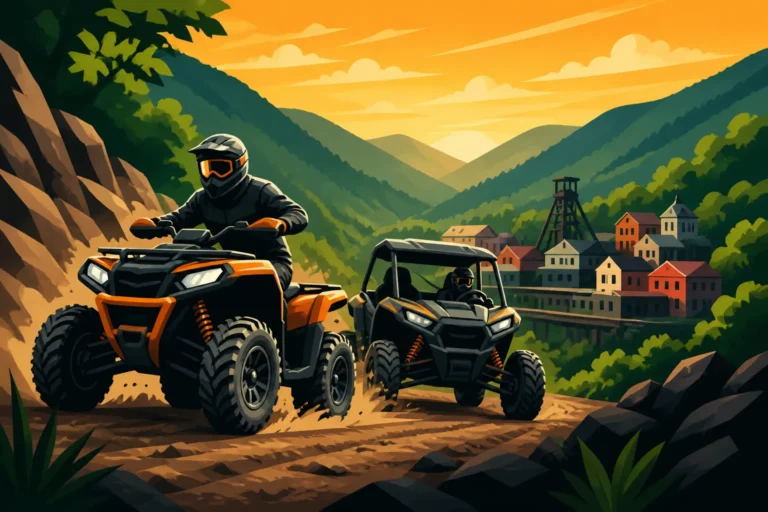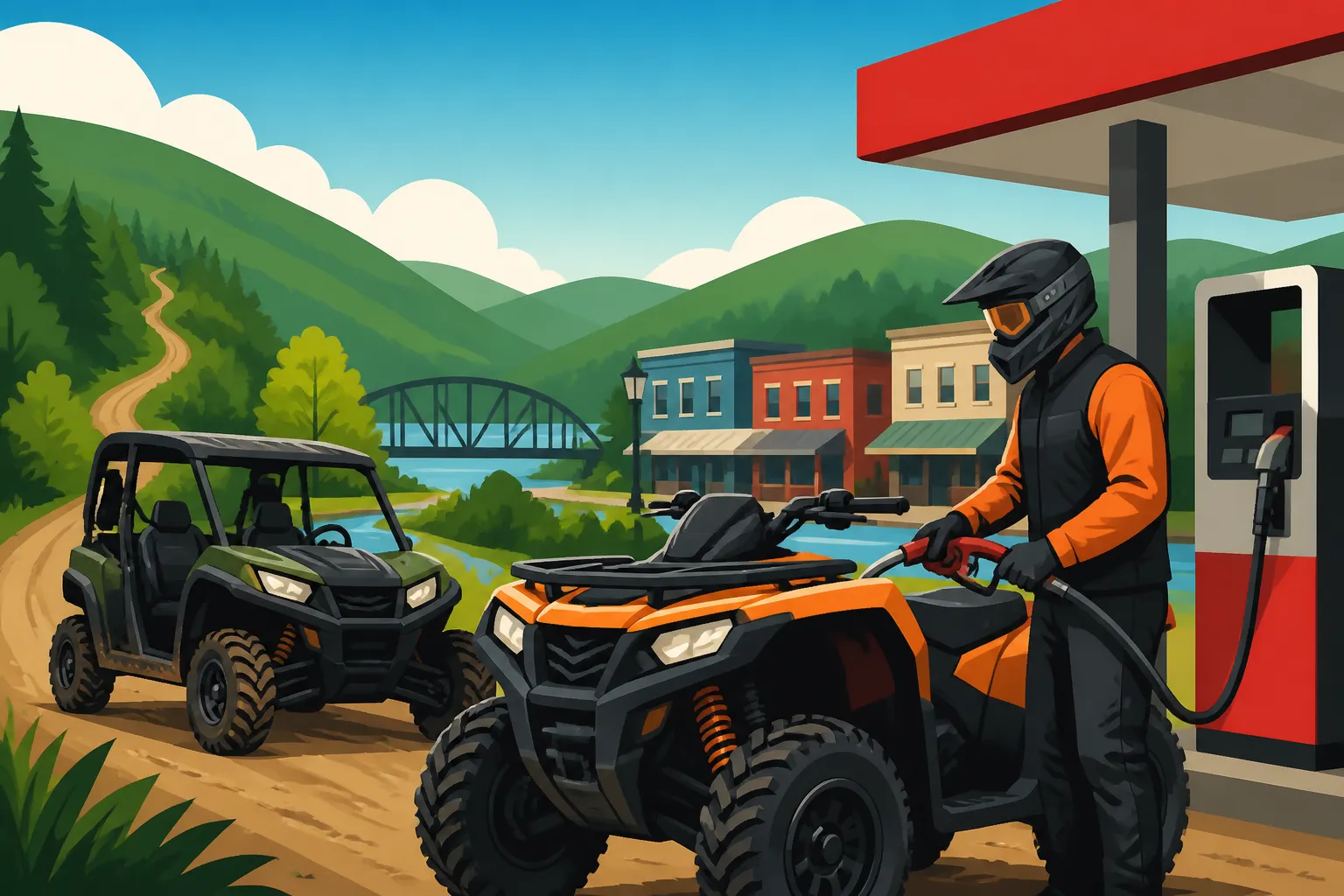
Fueling Up in a West Virginia ATV-Friendly Town
There’s nothing quite like the feeling of hitting the trails in West Virginia, the roar of your engine, the smell of fresh earth, and the freedom of the open path. But let's be honest, that blissful feeling can evaporate in an instant when you glance down and see that fuel gauge needle hovering dangerously close to "E." Suddenly, the thrill turns to a mild panic as you wonder where the nearest gas station is and, more importantly, how you’re legally going to get there. This guide is here to quell those worries, walking you through everything you need to know about fueling up your ATV or UTV in West Virginia’s unique ATV-friendly towns, ensuring your ride never gets cut short by an empty tank.
Understanding West Virginia's ATV-Friendly Town Concept
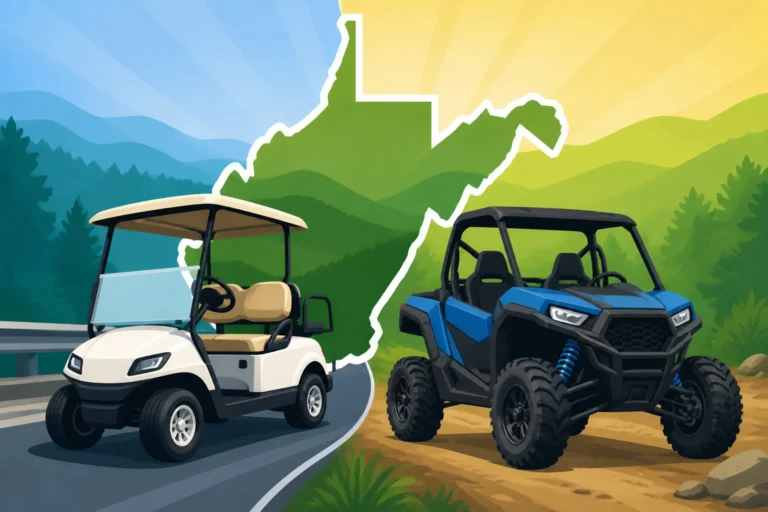
West Virginia has truly embraced the off-road community, creating a network of trails and, crucially, trail towns that welcome riders with open arms and, perhaps most importantly, open gas stations. These aren't just towns that tolerate ATVs; they've actively crafted ordinances and infrastructure to make it easy and legal for you to ride your machine right off the trail and onto their streets. But what does "ATV-friendly" really mean when it comes to keeping your tank full?
What Makes a Town "ATV-Friendly"?
When we talk about an ATV-friendly town in West Virginia, we're describing a place where you're permitted to operate your off-highway vehicle (OHV) on designated municipal streets to access services. This isn't a free-for-all; it's a structured approach designed to support riders and local businesses alike. These towns, often nestled directly alongside popular trail systems like the Hatfield-McCoy Trails, understand that riders need more than just trails – they need food, lodging, and, inevitably, fuel. They've recognized the economic benefit of catering to the off-road crowd, leading to a unique blend of trail access and urban convenience.
Beyond just allowing machines on the road, true ATV-friendly towns often have visible signage indicating where you can ride, offer specific parking for ATVs and UTVs, and have businesses, including gas stations, geared up for your arrival. This means you might find larger spaces at pumps, or even specific designated areas for off-road vehicles to pull in. It’s a huge relief compared to trying to sneak your machine down a shoulder or worrying about getting a ticket just for trying to get a fill-up. They become vital hubs, allowing you to seamlessly transition from ripping through the wilderness to grabbing a soda and topping off your tank.
The Legal Framework for Riding on Town Streets to Get Fuel
While these towns are "friendly," they're not lawless. There's a specific set of rules that govern how you can operate your ATV or UTV on their public streets, even if your sole purpose is to reach a gas pump. Generally, you’ll be riding on municipal roads where the speed limit is 25 mph or less, often sticking to the right-hand edge of the pavement. These rules are in place for everyone's safety, combining the enjoyment of the trails with the realities of shared road space. It’s not just about getting to the gas station; it's about getting there safely and legally.
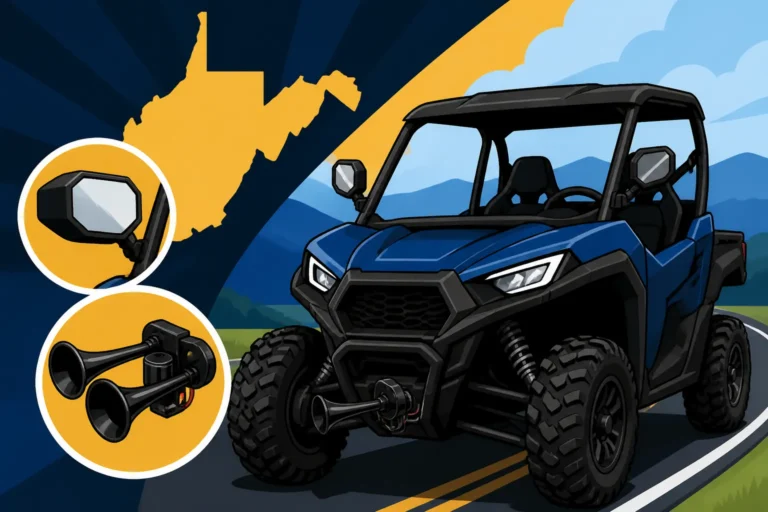
You'll need to ensure your machine meets certain basic requirements for road use, even if it's only for a short hop. This typically includes working headlights and taillights, brake lights, and sometimes mirrors. It's not a full street-legal conversion like you might do for a [West Virginia's Street-Legal Special Purpose Vehicle Plate], but it's more than just trail readiness. Many towns implement the state's [West Virginia's 10-Mile, 25 mph Road Rule], allowing you to traverse short distances on certain public roads. Always check the local ordinances for the specific town you’re visiting, as rules can vary slightly. For instance, the regulations in [Riding Through Gilbert on an ATV] might have minor differences from those in [Riding Through Man and Logan by ATV], even though both are highly welcoming. Ignoring these rules, even for a quick fuel stop, can lead to fines, which is certainly not how you want to end a day of riding.
Planning Your Fuel Stops on West Virginia's Trails
Effective fuel management is crucial for a stress-free riding experience. Running out of gas miles from anywhere can turn an epic adventure into an exhausting hike. With a little foresight and preparation, you can avoid this scenario entirely, making your stops for fuel part of the adventure, not an emergency.
Pre-Ride Fuel Checks and Route Mapping
Before you even load your machine onto the trailer, make it a habit to check your fuel level. A full tank is always the best starting point for any significant ride. But beyond that, good trail planning involves understanding your machine's fuel economy and the layout of the trails and towns you'll be traversing. Most modern ATVs and UTVs have a decent range, but aggressive riding, heavy loads, and challenging terrain can significantly reduce it. Don't just assume; plan.
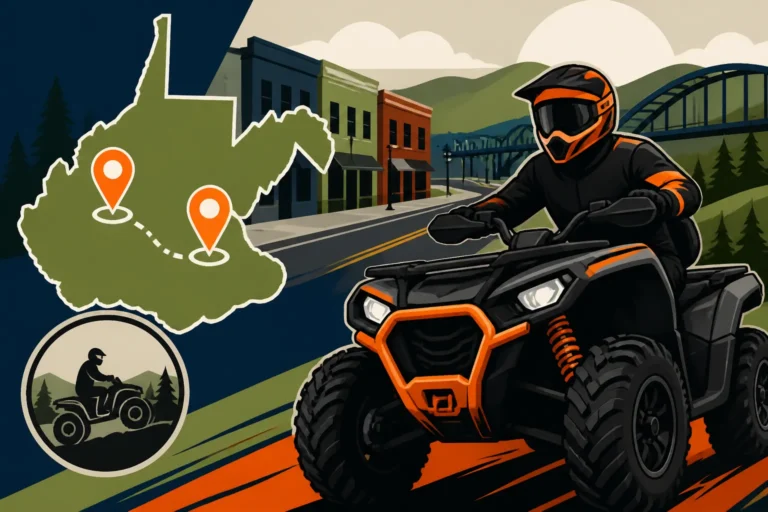
Using detailed [West Virginia Trail Maps and Signage] is invaluable here. These maps, often available at trailheads or visitor centers, highlight major points of interest, including trail towns. As you plan your route, identify potential fuel stops along your intended path. Consider how many miles you expect to cover between these points. If you know your UTV gets, say, 15 miles per gallon and you have a 10-gallon tank, you have a theoretical range of 150 miles. Factor in that you don't want to run it completely dry, and then look for towns within that range. Many riders find it helpful to mark these fuel stops directly on their physical maps or on their GPS units. Knowing exactly where you'll find fuel—and that you're allowed to ride there—provides immense peace of mind.
Carrying Extra Fuel: When and How
Sometimes, even with meticulous planning, the distance between convenient fuel stops on your route might be longer than your comfort zone, or you might be venturing into a more remote section of a trail system where town access is limited. In these situations, carrying extra fuel becomes a wise, even essential, precaution. This is particularly true for longer multi-day rides or if you're exploring less-trafficked trails where gas stations might be few and far between.
There are numerous solutions for safely transporting auxiliary fuel. Purpose-built fuel packs, often made by companies like Rotopax, are designed to securely mount to your ATV or UTV and are much safer than simply tossing a plastic gas can into your bed. These containers are robust, leak-proof, and designed to withstand the rigors of off-road riding. When choosing to carry extra fuel, always prioritize safety: ensure the container is properly sealed, securely mounted away from hot engine components, and vented if necessary to prevent pressure buildup. Never overfill them. It's also a good idea to have a small funnel with you, as pouring from a portable tank directly into your machine's small opening can be messy, and spilled fuel is not only wasteful but also an environmental hazard. Carrying extra fuel gives you a critical buffer, allowing you to explore further or handle unexpected detours without the looming dread of an empty tank. Companies like SuperATV also offer various storage solutions and mounts that can help you secure these fuel packs safely.
Navigating Gas Stations in ATV-Friendly Towns
Once you’ve successfully ridden your machine off the trail and onto the paved streets of an ATV-friendly town, the gas station itself presents a new set of considerations. It's not quite the same as pulling up in your truck, and being mindful of your surroundings and other patrons is key to a smooth and respectful experience.
Parking Your Machine Safely at the Pump
Pulling into a busy gas station on an ATV or UTV can feel a bit awkward at first, especially if you’re used to riding primarily in remote areas. Your machine is often wider and louder than a typical passenger vehicle, and you're exposed to the elements. The first step is to approach the pumps cautiously, paying attention to other vehicles, pedestrians, and the station’s layout. Look for a pump that offers ample space, ideally one on an end or with a little extra room to maneuver. It’s generally best to avoid blocking traffic or making it difficult for cars to get in and out.
When you pull up, consider where you're going to park. If you're on a single-rider ATV, you might be able to tuck in closer to the pump, but a wider UTV will need more space. Try to orient your machine so that the fuel cap is easily accessible to the pump hose. It's usually courteous to park slightly to the side after fueling to allow the next customer to access the pump, especially if you're going inside for a snack or to use the restroom. Also, remember that your machine might have muddy tires from the trail, so try to avoid tracking excessive mud directly onto the paved areas near the pumps. A little consideration goes a long way in ensuring these towns remain welcoming to off-roaders.
Best Practices for Fueling Up Your ATV or UTV
Fueling an ATV or UTV is straightforward, but there are a few best practices to keep in mind, especially with these smaller engines. First and foremost, turn off your engine! This is a universal safety rule at all gas stations. While it might seem obvious, in the excitement of a ride, it's easy to forget. Remove your helmet and eye protection – not only is it more polite, but it also improves your visibility and ability to communicate if needed. Make sure you select the correct fuel type. Most ATVs and UTVs run on regular unleaded gasoline, but always double-check your owner’s manual. Using the wrong fuel can cause serious engine damage.
When you're ready to pump, take your time. ATV and UTV fuel tanks are usually smaller than car tanks, and their fill necks can sometimes be a bit restrictive. Pumping too fast can lead to splash-back and spills, which are dangerous and create a mess. Use the lowest pump setting if available, or just squeeze the trigger gently. Fill until the nozzle automatically clicks off or you can see the fuel level near the top, being careful not to overfill. Overfilling can lead to fuel expansion and spills, particularly on a hot day or if you're immediately heading back out onto bumpy trails. Take a moment to wipe up any spills with a paper towel from the pump island, and ensure your fuel cap is securely tightened before starting your machine.
Paying at the Pump and Other Considerations
In today's world, paying at the pump with a credit or debit card is often the most convenient option. It allows you to quickly get your fuel and be on your way without having to walk inside, which can be particularly handy if you're covered in trail dust or mud. Most gas stations in West Virginia's ATV-friendly towns are accustomed to riders and will have no issues with you paying this way.
However, sometimes you might need to go inside. Perhaps you want to buy some snacks, grab a cold drink, or even pick up some [West Virginia ATV Bill of Sale: What Belongs in It] forms if you're making a quick stop for a transaction. If you head inside, remember that you’re likely still wearing your riding gear, which might be dusty or dirty. Be mindful of not tracking excessive dirt into the store. A quick stop at a gas station is also an excellent opportunity to stretch your legs, check your tires, and do a quick visual inspection of your machine before hitting the trails again. Some larger stations, like Sheetz or GoMart, might even have air pumps if you need to adjust tire pressure. These moments are brief but important for safety and comfort on longer rides. For a table of common services offered by gas stations in trail towns, check out the section below.
| Service Category | Typical Offerings | Notes for ATV/UTV Riders |
|---|---|---|
| Fuel Types | Regular Unleaded, Premium, Diesel | Most ATVs/UTVs use regular. Check for ethanol-free if preferred. |
| Payment | Credit/Debit at pump, Cash/Card inside | Pay at pump for convenience. |
| Amenities | Restrooms, Convenience Store | Handy for a quick break and supplies. |
| Food/Drink | Snacks, Drinks, Hot Deli (select stations) | Great for trail snacks or a quick meal. |
| Air/Water | Air pump for tires, sometimes water | Useful for adjusting tire pressure after trail riding. |
| Parking | Standard car spots, sometimes extra room | Be mindful of machine width and other vehicles. |
Specific Fueling Challenges and Solutions
While most ATVs and UTVs simply run on regular unleaded gasoline, there can be specific scenarios or preferences that introduce minor fueling challenges. Knowing how to address these ensures you're always prepared, regardless of your machine or fuel choice.
Finding Diesel for UTVs or Tow Rigs
The vast majority of off-road enthusiasts riding ATVs and UTVs will be looking for gasoline. However, a segment of the UTV market, particularly utility-focused side-by-sides often used for work or specific heavy-duty applications, does run on diesel fuel. If you operate one of these machines, or if you're towing your rig with a diesel truck, finding a diesel pump is your specific mission. While most gas stations carry diesel, it's not always at every pump.
When pulling into a station, keep an eye out for clearly marked diesel pumps, which are often separated from the main gasoline islands or designated with green handles. Diesel nozzles are typically larger than gasoline nozzles, so it's nearly impossible to accidentally put diesel into a gasoline tank, but the reverse can be a costly mistake. If you’re towing a heavy-duty truck and a trailer, you might also want to seek out truck stops or larger travel centers. These facilities are designed to accommodate larger vehicles and often have more spacious parking, high-flow diesel pumps, and easy-access entrances and exits that are less stressful for backing up or maneuvering a long trailer. Planning ahead, perhaps by checking a mapping app on your phone for stations with diesel before you arrive in a town, can save you time and frustration.
Avoiding Ethanol in Small Engines
Many riders, especially those with older machines or those concerned about engine longevity, prefer to use ethanol-free gasoline. Ethanol, while common in most modern gasoline, can sometimes cause issues in small engines, including ATVs and UTVs. It has a tendency to attract and absorb water, which can lead to corrosion in fuel systems, especially during periods of storage. It can also degrade certain rubber and plastic components over time, leading to fuel leaks or blockages. For these reasons, many riders actively seek out fuel without ethanol.
Finding ethanol-free gas in West Virginia's ATV-friendly towns can be a bit hit-or-miss. Not every station will carry it, and when they do, it's often labeled as "Recreational Fuel" or clearly marked as "No Ethanol." It's usually a premium-priced option. If you specifically want to avoid ethanol, it’s a good idea to research gas stations in the trail towns you plan to visit beforehand. Apps or websites dedicated to finding ethanol-free gas can be incredibly useful resources. If you can't find ethanol-free fuel, don't fret too much for a single fill-up, but consider using a fuel stabilizer product if your machine will be sitting for an extended period, especially with ethanol-blend fuel in the tank. This is particularly important for machines that aren't ridden constantly and might experience periods of dormancy, helping to prevent the fuel system issues that ethanol can exacerbate.
Beyond the Pump: Making the Most of Your Town Stop
A fuel stop in a West Virginia ATV-friendly town is rarely just about the gas. These towns are designed to be vibrant hubs for riders, offering much more than just a full tank. Taking a few extra minutes to enjoy the local flavor can significantly enhance your overall riding experience.
Grabbing a Snack and Supplies
Let’s be honest, after hours of riding, battling dusty trails or muddy sections, a cold drink and a salty snack can feel like a luxurious treat. Gas stations in these trail towns are often well-stocked with the kinds of quick provisions that riders crave: bottled water, sports drinks, sodas, chips, candy bars, and sometimes even hot food from a deli. This is your chance to refuel yourself as well as your machine. Don't underestimate the morale boost of a well-timed snack break.
Beyond immediate cravings, a quick stop can also be an opportunity to pick up other essentials. Did you forget your sunscreen? Is your water bottle empty? Do you need a spare rag or a basic tool? Many gas station convenience stores in areas like [Riding Through Williamson and Matewan] understand their clientele and might even stock items like small tubes of chain lube, zip ties, or other small riding necessities. It’s also a perfect time to call home, check messages, or quickly consult a digital map using your phone’s signal, which can sometimes be spotty out on the more remote sections of the trails. These small stops break up the ride, keep your energy levels up, and help you stay connected.
Supporting Local Businesses
When you pull into an ATV-friendly town to fuel up, you're not just buying gas; you're participating in a vital economic ecosystem. These towns, often in areas that have seen economic shifts, have actively embraced ATV and UTV tourism as a way to support their communities. Every gallon of gas you buy, every soda you grab, and every local souvenir you might pick up contributes directly to the livelihoods of the people who live and work there. It’s a symbiotic relationship: you get convenient services and access, and the town benefits from your business.
Consider extending your stop beyond just the gas station. Many of these towns boast charming local restaurants, small shops, or even dedicated ATV accessory stores. Places like [Riding to a Restaurant in Gilbert] or those found in [Mullens and Pineville ATV Street Access] often rely heavily on rider traffic. Perhaps you need a new flag for your machine, or maybe you're looking for an aftermarket accessory from a brand like SuperATV to enhance your ride. Even a brief visit to a local eatery can offer a taste of West Virginia hospitality and regional cuisine. By consciously choosing to spend your money in these communities, you’re helping to ensure that these towns continue to be welcoming and provide the services that make our riding adventures possible and enjoyable for years to come. It’s a win-win for everyone involved.
Disclaimer
This article is for general informational purposes only and does not constitute professional advice. Laws, prices and regulations vary by location and change over time. Consult a qualified professional for guidance on your specific situation.