ATV Access to a West Virginia State Park Road
It can be incredibly frustrating when you're itching to hit the trails, but you're not entirely sure where your ATV or UTV is welcome, especially when it comes to scenic spots like West Virginia's beautiful state parks. Many riders assume that if a road is open to vehicles, it must be open to all, but state parks often have their own specific rules. This guide will help clarify the regulations surrounding ATV access on West Virginia State Park roads and point you towards where you can legally and safely enjoy your machine.
Understanding West Virginia's State Park Rules for ATVs
Let's be upfront about this: most West Virginia State Park roads are generally off-limits to ATVs and UTVs. It's a common point of confusion for riders, especially those new to the area or unfamiliar with the nuances of different land management agencies. You might drive through a gorgeous state park and see paved roads, gravel roads, and even unpaved service roads, all looking like potential riding opportunities. However, the designation "state park" comes with a specific set of rules designed to protect natural resources, ensure the safety and enjoyment of a diverse range of visitors, and maintain the park's infrastructure.
The General Prohibition
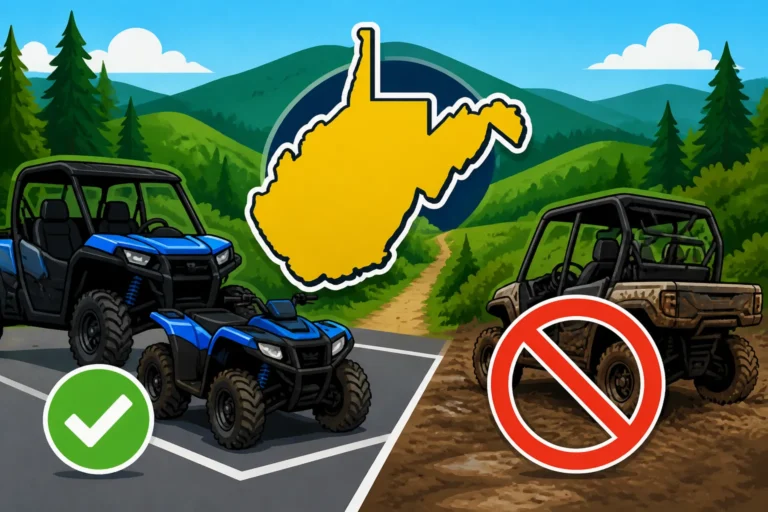
The overarching rule for West Virginia State Parks is that motorized vehicles, including ATVs and UTVs, are typically restricted to paved, designated public roadways used for general vehicular access, like driving to a lodge, campground, or trailhead parking area. Crucially, this does not mean you can take your side-by-side or quad off these paved roads onto trails, dirt tracks, or even seemingly innocuous gravel service roads within the park boundaries. These areas are often reserved for hiking, biking, or specific park maintenance operations, and allowing ATVs would disrupt the experience for others and potentially damage sensitive ecosystems. It's a blanket rule that simplifies enforcement and helps preserve the park's natural quiet and beauty for all visitors, many of whom are there specifically to escape motorized noise.
For instance, driving your UTV to the lodge at Blackwater Falls State Park or venturing to a scenic overlook at Babcock State Park would mean sticking strictly to the paved roads accessible by cars. Any attempt to turn off onto a fire road or a path marked for hikers would be considered a violation, and park rangers are often diligent in enforcing these regulations.
Exceptions and Designated Areas
While the general rule is restrictive, it's worth noting that land management in West Virginia can be complex. However, when it comes to state parks specifically, designated ATV trails or roads within their boundaries are exceptionally rare, if they exist at all. State parks are primarily established for conservation, recreation (like hiking, camping, fishing, and picnicking), and natural beauty, not typically for off-road motorized sports.
Sometimes, a public road that is not a state park road might pass through or alongside a state park or state forest, and on those specific public roads, different rules might apply. But this distinction is critical: you're riding on a public road, not on a road owned or managed by the state park system as an ATV trail. For example, you might be able to legally traverse a county road that borders a section of a state park, but the moment you cross into the actual park property and onto an undesignated road or trail, you're likely in violation. Always check local signage and specific park regulations for any potential, albeit unlikely, exceptions. It’s vital not to confuse state parks with state forests or other public lands where some limited ATV access may be permitted on designated trails or forest roads. [West Virginia State Forest OHV Trails] outlines some of those other opportunities.
Distinguishing Park Roads from Public Roads
This distinction is perhaps the most important one to grasp. A "state park road" refers to any road within the boundaries of a West Virginia State Park that is owned and maintained by the Division of Natural Resources (DNR) specifically for the park's operations and visitor access to park amenities. These roads are often clearly marked with park signage, and their primary purpose is to serve general passenger vehicles (cars, trucks, RVs) accessing campgrounds, lodges, visitor centers, and picnic areas.
A "public road," on the other hand, is part of the broader state or county highway system, maintained by the Division of Highways, and is generally open to all licensed vehicles (unless specifically restricted). While a public road might run adjacent to, or even directly through, a state park, it retains its designation as a public road. On these specific public roads, West Virginia has specific rules about ATV operation, such as the [West Virginia's 10-Mile, 25 mph Road Rule] for certain instances, or the requirements for a [West Virginia's Street-Legal Special Purpose Vehicle Plate] to allow broader road use. The key here is jurisdiction: who owns and manages that particular stretch of pavement or gravel. Park roads fall under the state park authority, and their rules are often much stricter for off-road vehicles.
Why State Parks Restrict ATV Access
The reasons behind the restrictions on ATV access within West Virginia's State Parks are rooted in a combination of environmental protection, visitor safety, and maintaining the intended recreational experience. While it might feel inconvenient for riders, these rules are put in place with good intentions for the long-term health and enjoyment of these valuable public lands.
Environmental and Wildlife Concerns
ATVs and UTVs, while incredibly fun and useful, can have a significant impact on natural environments if not managed carefully. The tires can churn up soil, leading to erosion, especially on sloped terrain or near waterways. This erosion can degrade water quality, harm aquatic life, and make trails unusable for other park users. Furthermore, ATVs can spread invasive species by carrying seeds and plant fragments from one area to another.
Beyond the physical impact, noise pollution from engines can disturb wildlife. Many park visitors come to experience the peace and quiet of nature, to observe birds, deer, and other animals in their natural habitats. The constant drone of an engine can scare off wildlife, disrupt breeding patterns, and diminish the experience for hikers, birdwatchers, and campers seeking tranquility. State parks often serve as crucial habitats and protected areas for various species, and minimizing human-caused disturbance is a priority.
Safety and User Conflict
State parks are designed to accommodate a wide array of recreational activities, many of which are incompatible with high-speed, motorized vehicles. Hikers, mountain bikers, horseback riders, and families with young children often share trails and pathways. Introducing ATVs into these shared spaces creates significant safety risks due to differences in speed, maneuverability, and visibility. A quiet stroll can quickly become dangerous if an ATV rounds a blind corner unexpectedly.
The serene atmosphere that many visitors seek in a state park would also be undermined by the presence of ATVs. Imagine trying to enjoy a peaceful picnic with the sound of engines roaring by, or attempting to relax at a campsite only to be disturbed by passing UTVs. These parks are multi-use areas, but the "uses" are carefully curated to ensure minimal conflict and maximum enjoyment for the largest number of visitors seeking a specific type of outdoor experience. The rules protect the integrity of the park as a refuge for quiet recreation.
Infrastructure and Maintenance
The roads and trails within state parks are often not built or maintained to withstand the heavy wear and tear that ATVs and UTVs can inflict. Paved roads, while designed for cars, can still suffer damage from the aggressive tires and suspension of off-road vehicles, leading to potholes and surface degradation. Unpaved service roads or designated hiking trails are even more vulnerable. Maintaining these roads and trails requires significant resources, and repair work due to unauthorized ATV use diverts funds from other essential park services.
Beyond roads, bridges, culverts, and other infrastructure elements within state parks are typically designed for pedestrian or light vehicle traffic. The weight and dynamic forces of ATVs, particularly larger side-by-sides, could cause structural damage, necessitating costly repairs or replacements. Park management must consider the longevity of their infrastructure and the financial implications of allowing vehicles that could prematurely wear it out.
Where You CAN Ride Your ATV Legally in West Virginia
Now that we've covered where you generally cannot ride in West Virginia State Parks, let's talk about the incredible places where you can legally and safely enjoy your ATV or UTV. West Virginia is renowned for its off-road opportunities, so don't despair! You just need to know where to look.
Exploring Managed Trail Systems
West Virginia is home to some of the finest managed off-road trail systems in the eastern United States, most notably the [The Hatfield-McCoy Trails, West Virginia's 1,200-Mile Network]. These sprawling trail systems, such as Rockhouse, Buffalo Mountain, and Indian Ridge (to name just a few of the [West Virginia's Thirteen Hatfield-McCoy Trail Systems]), are specifically designed, maintained, and permitted for ATV and UTV use. They offer hundreds of miles of diverse terrain, from easy greens to challenging black diamonds, ensuring there's something for every skill level.
To ride these trails, you'll need a valid [West Virginia Trail Permit Explained] and, for riders under 16, completion of the [West Virginia ATV Safety Awareness Course] and adherence to [West Virginia Helmet Rules for Riders Under 18]. Many riders outfit their machines with high-quality aftermarket parts from companies like SuperATV, ensuring their vehicles are tough enough for the demanding terrain. Whether it's heavy-duty axles, lift kits, or protective skid plates, proper preparation makes a huge difference on these trails. These systems are truly a mecca for off-road enthusiasts and offer a riding experience far superior to anything you'd find on a state park road.
Riding on Public Roads (with restrictions)
West Virginia does offer some limited opportunities for ATVs and UTVs to operate on public roads, though these are strictly regulated and are not the same as state park roads. The state has specific laws for [Riding an ATV on the Road in West Virginia]. For instance, you might encounter the "10-mile, 25 mph rule" on certain secondary or county roads that are not part of the primary highway system and do not have a double yellow centerline. This rule allows riders to travel short distances on these specific roads to connect trails or access services.
For more extensive road use, West Virginia offers the option to title and register your ATV or UTV as a "Special Purpose Vehicle" (SPV) with an SPV plate. This essentially makes your machine street-legal, provided it meets specific equipment requirements (lights, mirrors, horn, etc.) and you carry the necessary [Insurance Required for a West Virginia SPV Plate]. This option allows you to ride on most public roads with a speed limit of 55 mph or less, providing a fantastic way to access trailheads, local businesses, and even ride from town to town in some ATV-friendly communities. Again, these are public roads, not state park roads.
Private Land Access
Of course, one of the most straightforward ways to enjoy your ATV or UTV is on private land with the owner's explicit permission. Many West Virginia residents own large tracts of land perfect for off-road riding, and some even operate private riding parks or offer land access for a fee. This is often the simplest solution for those who want to ride without navigating complex public land regulations. Always ensure you have clear, documented permission to avoid any issues with [West Virginia Trespass Rules Along Roads] or on private property. Respecting private property and securing permission beforehand is paramount to a good riding experience.
Steps to Plan a Legal West Virginia ATV Adventure (Excluding State Parks)
Planning your off-road trip in West Virginia doesn't have to be complicated, even if state parks are off the list. By focusing on the dedicated trail systems and understanding the rules for road use, you can ensure a fantastic and legal adventure. Here's how to get started:
Getting Your Machine Ready
Before you even think about hitting the gas, your ATV or UTV needs to be in tip-top shape and properly equipped for the specific type of riding you plan to do. If you're tackling the rugged trails of Hatfield-McCoy, a thorough pre-ride inspection is crucial. Check your tires, brakes, fluid levels, and ensure all your lights are working. Many riders invest in protective gear like skid plates, A-arm guards, and robust bumpers. Companies like SuperATV offer a huge range of these essential upgrades, providing peace of mind that your machine can handle the rough stuff and helping to prevent costly breakdowns far from civilization. A winch is also an invaluable tool for self-recovery or helping a buddy out of a sticky situation. Don't forget basic tools, a first-aid kit, and enough water and snacks for your ride.
If you plan to utilize public roads under the SPV rules, ensure your machine meets all the legal requirements: DOT-approved tires, turn signals, brake lights, headlights, a horn, and mirrors. You'll also need proper registration and insurance for your street-legal machine. Remember, safety first – always wear appropriate riding gear, including a helmet and eye protection.
Navigating Trail Rules and Regulations
The single most important step for riding on West Virginia's managed trail systems is obtaining the necessary permit. For the Hatfield-McCoy Trails, this means purchasing a [Hatfield-McCoy Trail Permit Explained]. These permits are mandatory for anyone riding on the system, and the funds go directly back into trail maintenance and expansion. You can purchase them online or at various vendors in the trail towns. Be sure to display your permit sticker clearly on your machine.
Beyond the permit, familiarize yourself with the specific rules of the trail system you're visiting. This includes age restrictions (like [West Virginia Age Rules on the Trails]), helmet laws, and rules about staying on marked trails. Many trail systems have color-coded difficulty ratings, so choose trails appropriate for your skill level and your machine's capabilities. Remember, respect for the land and fellow riders is key. Always stay on designated trails to prevent environmental damage and avoid fines for [Riding Off a Marked Trail].
Identifying ATV-Friendly Towns and Lodging
One of West Virginia's greatest assets for ATV and UTV riders is its network of "trail towns." These communities, often located directly on or adjacent to the Hatfield-McCoy Trail system, embrace off-road tourism. Towns like Gilbert, Man, Logan, and Williamson offer direct trail access from lodging, restaurants, and gas stations. You can often ride your machine right from your cabin or campground to the trailhead, or even into town for a meal or supplies.
When planning your trip, look for lodging that explicitly states "trail access" or "ATV friendly." Many hotels, cabins, and campgrounds cater specifically to riders, offering amenities like wash stations for your machine, secure parking for trailers, and sometimes even on-site rentals. These towns are built around the riding experience, and you'll find a welcoming atmosphere and plenty of resources to make your adventure seamless. Knowing where you can pull off the trail and into town makes for a much more enjoyable multi-day trip.
| Feature | West Virginia State Park Roads | Managed ATV Trail Systems (e.g., Hatfield-McCoy) | Public Roads (non-SPV) | Public Roads (SPV-registered) | Private Land (with permission) |
|---|---|---|---|---|---|
| ATV/UTV Access | Generally Prohibited | Yes (Designated Trails) | Limited (e.g., 10-mile, 25 mph) | Yes (Most roads ≤ 55 mph) | Yes (Owner's discretion) |
| Permit Required | No (because not allowed) | Yes (e.g., Hatfield-McCoy Permit) | No (but vehicle registration) | Yes (vehicle registration) | No |
| Helmet Required | Yes (if ridden) | Yes (all riders) | Yes (Under 18, and often recommended for all) | Yes (Under 18, and often recommended for all) | Yes (recommended) |
| Primary Purpose | Conservation, quiet recreation | Off-road motorized recreation | General vehicular travel | General vehicular travel | Varies |
| Infrastructure | Paved roads, hiking trails | Dirt trails, rock gardens, mud sections | Paved/gravel roads | Paved/gravel roads | Varies |
| Enforcement | Park Rangers | Trail Rangers, local law enforcement | State/local police | State/local police | Landowner, local law enforcement |
Disclaimer
This article is for general informational purposes only and does not constitute professional advice. Laws, prices and regulations vary by location and change over time. Consult a qualified professional for guidance on your specific situation.