West Virginia Agricultural Road Exemptions
It's incredibly frustrating when you're trying to get honest farm work done, relying on your ATV or UTV to move tools, check fences, or haul feed across your property, and you hit a public road. Suddenly, you're wondering if you're breaking the law just by crossing the pavement. This guide is here to untangle the specific rules and exemptions West Virginia has in place for using your off-road machine for legitimate agricultural purposes on public roads, helping you avoid unnecessary worry or citations.
Understanding West Virginia's Agricultural Exemption for ATVs and UTVs
West Virginia farmers and landowners face a unique challenge: their properties might be split by a county road, or their fields might require a short jaunt down a public thoroughfare to access. Thankfully, the state recognizes the practical necessities of agricultural work and provides specific exemptions for ATVs and UTVs when used for farm duties. This isn't a free pass to hit the trails or cruise into town for groceries, but a targeted allowance to facilitate essential farming operations. The key here is intent and use—your machine must be actively engaged in or directly supporting agricultural activities to qualify.
What Constitutes "Agricultural Use" in West Virginia?
When we talk about "agricultural use," the state is generally thinking about activities directly related to farming, ranching, timber production, or similar operations. This can include a wide range of tasks that are vital to your livelihood. For example, moving a post-hole digger from one field to another, transporting hay bales across the road to your barn, or driving a side-by-side to check on livestock grazing in a different pasture all typically fall under this umbrella. It could also involve hauling tools for fence repair along a boundary that parallels a public road, or even moving small equipment between separated parcels of farmland.
It's about the purpose of the trip. Are you genuinely tending to crops, livestock, or the land itself, or are you just trying to avoid trailering your machine for a quick pleasure ride? That distinction is critical. If your UTV is loaded with fencing supplies, or your ATV is pulling a small utility trailer with feed, it's far easier to demonstrate agricultural intent than if you're empty-handed and cruising down a paved road on a Sunday afternoon. We'll delve deeper into the types of equipment and tasks that clearly signal legitimate agricultural use versus recreational riding.
The Core Exemption: When Can Farmers Ride?
West Virginia law allows ATVs and UTVs used for agricultural purposes to operate on public roads under specific conditions. This isn't about getting a special license plate like a [West Virginia's Street-Legal Special Purpose Vehicle Plate]; it's an exemption based on the machine's role in your farm operation. The core of this exemption often revolves around connecting pieces of agricultural property or crossing a road to continue work. You might need to traverse a county route to get from your main barn to a distant field, or cross a less-trafficked road that divides your acreage.
Typically, these exemptions come with distance and speed limitations. You're generally permitted to travel on public roads for brief distances, usually to connect two parcels of land or access parts of your farm that are separated by a road. The speed limit is often kept quite low, reflecting the utility nature of the travel rather than recreational speed. It’s important to remember that this isn't an open invitation to ride miles down the highway. This exemption is designed for the shortest, most direct route necessary for your farm tasks. For any farmer, understanding [West Virginia ATV Title Rules for Farm ATVs] and whether [Do Farmers Need an ATV Title in West Virginia?] are good places to start when thinking about these machines.
Differentiating from Recreational Use
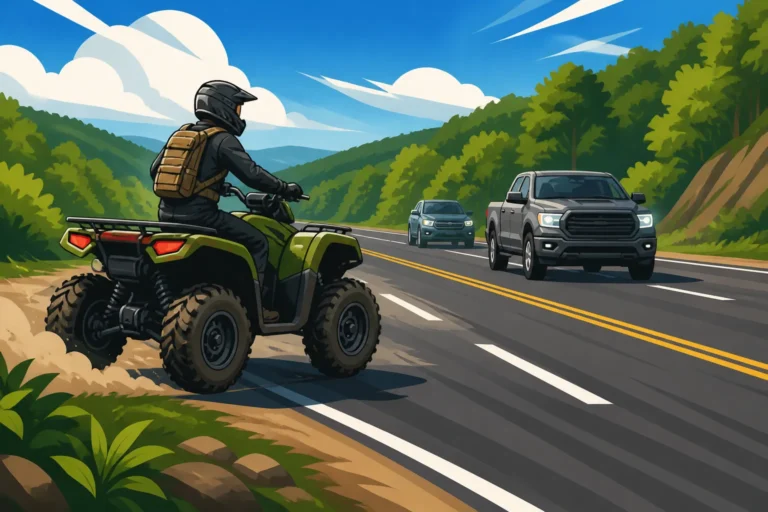
This is perhaps the most crucial point to grasp: the agricultural exemption is not a loophole for recreational riding. Law enforcement officers are trained to recognize the difference, and attempting to pass off a joyride as "farm work" can lead to significant penalties. If you're simply riding your ATV or UTV down a public road to visit a neighbor, drive to the local convenience store for a soda, or just take it for a spin, you are very likely in violation of the law. The exemption is specific to the machine's function in an active agricultural operation.
Consider the context: Are you wearing farm clothes, carrying tools, or pulling a trailer with farm supplies? Is it daylight, or are you out late at night with no clear agricultural purpose? These factors can weigh heavily in how your use is perceived. The moment your activity deviates from a direct, necessary farm task, you risk losing the protection of this exemption. If you intend to ride regularly on public roads for reasons beyond strict agricultural duties, even for short distances, it's worth exploring broader road legality options, which we'll discuss a bit later.
Requirements and Limitations for Agricultural Road Use
Even when operating under an agricultural exemption, there are still rules and common-sense precautions you need to follow to ensure safety and stay within the bounds of the law. You can't just throw caution to the wind because you're on your way to tend to the cows. Understanding the equipment your machine should have, the types of roads you can use, and who can operate the vehicle is paramount to preventing accidents and tickets.
Equipment and Vehicle Requirements
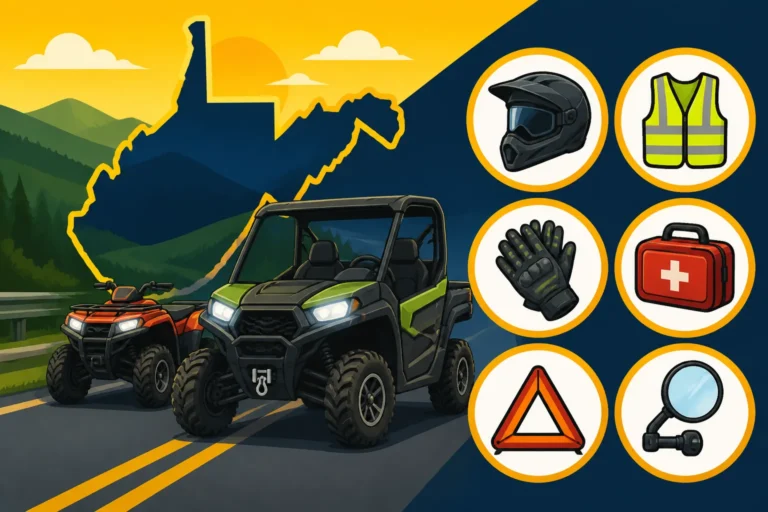
While agricultural-use ATVs and UTVs don't need to meet all the stringent requirements of a fully street-legal Special Purpose Vehicle (SPV), they absolutely still need to be safe and visible, especially when sharing the road with other traffic. Think about common-sense safety gear. Headlights, taillights, and brake lights are non-negotiable, particularly if there's any chance you'll be on the road when visibility is low. You wouldn't drive a tractor without proper lighting, and the same principle applies here.
Reflectors are also a wise addition, often required, to make your machine more visible from all angles. While not always mandated for agricultural exempt use, many farmers choose to add items like turn signals and mirrors for their own safety and for clarity to other drivers. Components from brands like SuperATV can be incredibly useful for adding these safety features, ensuring your machine is clearly communicating its intentions on the road. Remember, even with an exemption, you have a responsibility to operate your machine safely and predictably on public roadways. This also ties into knowing [Equipment a West Virginia SPV Must Carry], as some of those items are simply good safety practice for any road use.
Road Types and Distances Allowed
The agricultural exemption is primarily intended for use on lower-traffic public roads, typically county routes, secondary roads, or township roads. Think about the roads that crisscross farmlands, connecting small communities and homesteads. These are often narrower, slower, and have less commercial traffic than major state or federal highways. Traveling on busier state highways or interstates with an ATV or UTV under this exemption is generally not permitted and would be extremely dangerous.
As mentioned earlier, the distance you can travel under this exemption is usually limited to what's necessary to move between agricultural parcels or access portions of your farm. This isn't a fixed mileage number set in stone, but rather a "reasonable and necessary" standard. If your farm is split by a road, driving a quarter-mile down that road to get to your next field is likely acceptable. Driving five miles to the next town for a tool part, however, would likely exceed the spirit and letter of the exemption, and you'd be better served to trailer your machine or consider a proper street-legal conversion for that kind of travel. This is a very different standard than the [West Virginia's 10-Mile, 25 mph Road Rule] which applies to recreational riding on roads without a centerline, which has a specific distance limit and other conditions.
Age and Licensing for Agricultural Operators
When it comes to who can operate an ATV or UTV on public roads for agricultural purposes, West Virginia law still prioritizes safety. Generally, the operator needs to be of an age where they can responsibly handle the machine and understand road rules. While the specific licensing requirements for exempt agricultural use might differ from a fully licensed driver operating a street-legal vehicle, it's almost always a given that the operator should possess a valid driver's license. This ensures they have a fundamental understanding of traffic laws, signals, and safe driving practices.
Allowing an unlicensed minor, for instance, to operate a farm ATV or UTV on a public road, even for a short distance between fields, could create significant liability and safety issues. Always confirm the most current age and licensing requirements with the West Virginia DMV or local authorities to ensure full compliance. The general rule of thumb is: if you're on a public road, even briefly, treat it with the same respect and responsibility you would in a car or truck.
Practical Advice and Avoiding Misunderstandings
Navigating these exemptions can feel like walking a tightrope. On one side, you have the practical needs of running a farm; on the other, the state's desire to keep public roads safe. The best way to stay in the clear is to be proactive, carry the right documentation, always prioritize safety, and understand when the exemption might not be enough for your needs.
Documentation to Carry and Proving Agricultural Intent
When you're out on a public road, even for a brief agricultural jaunt, there's always a chance you might encounter law enforcement. Being prepared can save you a lot of hassle and potential citations. It's highly advisable to carry documentation that clearly establishes your agricultural intent and connection to the land. This could include:
- Proof of ownership: Your ATV or UTV title (or a copy), bill of sale, or registration. This is crucial even for farm machines. For instance, knowing [West Virginia ATV Bill of Sale: What Belongs in It] can help ensure your proof of ownership is solid.
- Property deeds or leases: Documentation showing you own or operate the agricultural land in question.
- Farm registration or business license: If you operate a registered farm business.
- A manifest or list of tasks: A simple written note outlining the specific agricultural task you are performing (e.g., "Transporting fence posts from Smith Field to Jones Pasture"). This might seem excessive, but it can be incredibly helpful in a roadside stop.
- Personal identification: Your driver's license, of course.
The goal is to eliminate any doubt that your use of the ATV or UTV on the public road is for legitimate agricultural purposes. If an officer sees you with hay bales in the bed of your UTV, a chainsaw and chaps on your ATV, and you have documents showing you own the land on both sides of the road, you're much less likely to face issues than someone just riding empty.
Safety Best Practices, Even with Exemptions
No exemption frees you from the responsibility of operating safely. In fact, because ATVs and UTVs handle differently than cars on pavement, extra caution is warranted. Here are some critical safety best practices:
- Visibility is key: Wear bright clothing, especially blaze orange during hunting seasons. Always have your headlights and taillights on, even during the day. Consider adding reflective tape to your machine.
- Reduce speed: ATVs and UTVs are not designed for high speeds on paved surfaces. Excessive speed can lead to loss of control, especially when turning or braking. Always adhere to any stated speed limits for agricultural vehicles, and err on the side of caution.
- Watch for traffic: Anticipate that drivers in larger vehicles might not see you. Be extra vigilant at intersections, blind curves, and hillcrests. Consider pulling over to let faster traffic pass when safe to do so.
- Secure loads: If you're hauling anything, make sure it's properly secured. A shifting load can throw off your balance and control.
- Stay alert: Avoid distractions and remain focused on the road and surrounding environment.
Remember, a mishap on a public road, even if you’re operating under a valid exemption, can still lead to injuries, property damage, and legal complications. Always ride defensively. It’s also important to think about [Insuring an ATV in West Virginia], as even farm use carries risks.
The "Gray Areas" and When to Consider an SPV Plate
Life on the farm isn't always black and white, and sometimes the lines between "agricultural use" and other types of road use can blur. What if you need to run to the hardware store for a critical part that's just a mile or two down the road? Or take your kids to a fishing spot on another part of your property, which requires a short road ride? These scenarios likely fall outside the strict agricultural exemption.
If you find yourself frequently wanting to use your ATV or UTV on public roads for tasks that aren't strictly agricultural—even if they're still practical and related to your daily life—it might be time to consider making your machine fully street-legal. West Virginia offers a [West Virginia's Street-Legal Special Purpose Vehicle Plate] for this exact reason. While it requires modifications to meet specific safety standards (like turn signals, horn, mirrors, and DOT-approved tires), it gives you much broader, legal access to public roads. Companies like SuperATV offer conversion kits that can help you get your UTV or ATV compliant with these regulations, providing all the necessary components in one package. It's an investment, but for many, the peace of mind and expanded utility are well worth it. Exploring [Making a UTV Street Legal in West Virginia] will give you a comprehensive understanding of the process.
Common Questions and Scenarios for Farm ATV/UTV Use
Farmers often have specific questions that come up in their day-to-day operations. Let's tackle some of these common scenarios to provide clarity and help you navigate the rules effectively. Understanding these can prevent common misunderstandings with law enforcement and ensure you're always operating legally.
Hauling Firewood or Farm Products on Public Roads
This is a classic scenario for many rural West Virginians. You've cut firewood on one part of your property, or you're moving a load of produce from the garden to your roadside stand, and it requires a short trip down a public road. Does the agricultural exemption cover this? Generally, yes, if the firewood is for your own farm or personal heating on the farm property, or if the farm products are indeed from your agricultural operation. The key again is the purpose and origin/destination.
If you are harvesting timber from your own land for personal use or sale as part of your farm business, and using the ATV/UTV to move it across or along a public road for a short distance to another part of your property or to a processing area, it likely falls under the exemption. However, if you're hauling firewood that you bought from someone else and are just transporting it down a public road for convenience, that may not qualify as agricultural use. Similarly, if your "farm products" are actually just items you bought at a store and are transporting, the exemption wouldn't apply. Always ensure your activity directly relates to the production, management, or sale of your own farm's goods.
Riding Between Farm Properties
Many farms in West Virginia are not contiguous. They might consist of several parcels of land separated by public roads. This is precisely the kind of situation the agricultural exemption is designed to address. You absolutely can use your ATV or UTV to travel between these properties on public roads, provided you stick to the shortest, most direct route possible and adhere to speed and safety requirements.
For instance, if your cows are grazing in a pasture on the other side of County Route 12, you can take your UTV, perhaps with some feed or tools, directly across or along that road for the necessary distance to access that pasture. This avoids the cumbersome process of loading your machine onto a trailer for a quarter-mile trip. However, if that "short distance" turns into a prolonged journey that deviates from the direct route or extends beyond reasonable access, you could be risking a citation. This exemption is for connecting your farm, not for taking the scenic route.
Penalties for Misuse and Operating Outside the Exemption
Operating an ATV or UTV on public roads outside of the agricultural exemption—or any other authorized legal pathway like a Special Purpose Vehicle plate—can lead to significant legal trouble. Law enforcement officers are vigilant about unauthorized road use for off-road vehicles, especially given the safety risks involved.
Penalties can vary depending on the specific violation, but typically include:
- Fines: You could face substantial monetary fines for operating an unregistered or unauthorized vehicle on a public roadway.
- Impoundment: Your ATV or UTV could be impounded, leading to towing fees, storage costs, and the hassle of retrieving it.
- Points on your driver's license: Certain infractions could result in points being assessed against your driving record, impacting your insurance rates or even leading to license suspension.
- Misdemeanor charges: In some cases, repeated offenses or reckless operation could lead to more serious misdemeanor charges.
It's critical to take these rules seriously. If you're caught using your ATV or UTV for recreational purposes on a public road while claiming an agricultural exemption, you'll not only face penalties but also undermine the very intent of these necessary allowances for legitimate farmers. Understanding [Penalties for an Untitled ATV in West Virginia] can also give you a broader picture of consequences for non-compliance. When in doubt, always err on the side of caution or pursue the proper avenues for street-legal conversion.
| Feature / Category | Agricultural Exemption | General Road Riding (10-Mile Rule) | Street-Legal SPV Plate (e.g., SuperATV build) |
|---|---|---|---|
| Primary Purpose | Direct farm work, moving between parcels, hauling farm goods. | Recreational connection between trails, accessing services. | Any legal road use, commuting, recreational, trail access. |
| Eligibility | Farmers/landowners performing agricultural duties. | Any permitted ATV/UTV rider with appropriate machine. | Any ATV/UTV owner who meets conversion requirements and DMV criteria. |
| Road Types Allowed | Low-traffic county/secondary roads, brief crossings. | Roads without a centerline, specific distances. | Most public roads (state, county, municipal), excluding interstates. |
| Distance Limits | "Reasonable and necessary" for farm tasks, typically short. | Limited to 10 miles. | Generally no distance limit once registered. |
| Speed Limit | Low utility speeds, often specific agricultural vehicle limits. | Max 25 mph. | Posted speed limits apply, up to vehicle's safe operating speed. |
| Required Equipment | Basic lights, reflectors (often specific to agricultural vehicles). | Basic lights, reflectors. | DOT-approved tires, turn signals, horn, mirrors, brake lights, headlights, windshield. |
| Driver's License | Highly recommended, often required. | Required. | Required. |
| Registration/Title | Title often required. | Title and permit for trail access. | Title, SPV plate, registration card. |
| Insurance | Recommended, liability protection is vital. | Recommended. | Minimum liability insurance required. |
| Legal Basis | WV Code agricultural exemptions. | WV Code for road riding. | WV Code for Special Purpose Vehicles. |
Disclaimer
This article is for general informational purposes only and does not constitute professional advice. Laws, prices and regulations vary by location and change over time. Consult a qualified professional for guidance on your specific situation.