Equipment West Virginia Requires on a Road Ride
So, you've dreamed of connecting those incredible West Virginia trails, linking up small towns, or just zipping down a county road to the gas station without having to load your machine onto a trailer. It's a fantastic vision, but the reality of making your ATV or UTV truly "road-legal" in the Mountain State can feel like navigating a maze of regulations. This guide is here to untangle the specific equipment West Virginia requires on your machine so you can ride with confidence, knowing you're compliant with the law and ready for your next adventure.
Understanding West Virginia's Stance on ATV/UTV Road Use
West Virginia is a haven for off-road enthusiasts, but riding your ATV or UTV on public roads isn't a free-for-all. There's a common misconception that since you can ride in trail towns, any road is fair game. This simply isn't true for standard, off-the-assembly-line machines. The state has specific rules, and understanding them is the first step to equipping your rig correctly.
The Limited Access for Standard ATVs
For most ATVs and UTVs, riding on a public road in West Virginia is generally prohibited unless it falls under very specific exceptions. These exceptions often involve riding within designated trail towns or crossing specific roads to connect trails. Even in these limited scenarios, your machine still needs basic safety equipment to be considered safe for brief road use. Think about it: a quad designed purely for dirt doesn't automatically have the lights, mirrors, or signals that a car or motorcycle does, and those are essential for sharing the road with other traffic. Ignoring these fundamental differences can lead to tickets and even accidents.
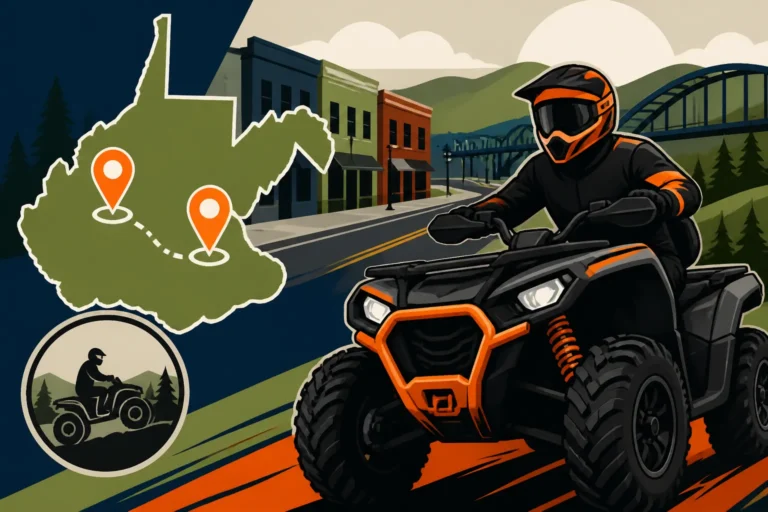
Imagine you're planning a ride through the Hatfield-McCoy system, and you know you'll need to use a short stretch of county road to get from one trailhead to another. While this might be permitted under [West Virginia's 10-Mile, 25 mph Road Rule], your machine still needs to be equipped to operate safely on that public right-of-way, even for a few minutes. This isn't just about avoiding a fine; it's about making sure you're visible and can communicate with other drivers.
The Special Purpose Vehicle SPV Exception
The biggest game-changer for road-legal ATV and UTV use in West Virginia is the Special Purpose Vehicle, or SPV, plate. This classification allows you to register and title your off-road machine for broader road use, provided it meets a rigorous set of equipment requirements. It's not just about slapping a license plate on your side-by-side; it's about transforming it into a vehicle that can genuinely share the road with cars, trucks, and motorcycles. Many riders dream of the freedom an SPV plate offers, but the conversion process can be daunting if you don't know what equipment is legally required.
An SPV designation opens up significantly more road access, allowing you to venture beyond trail connectors and into areas like state routes and city streets, often with speed and distance limitations. This is where the core of our discussion truly lies, as the equipment list for an SPV is extensive and specific. If you're considering the [West Virginia's Street-Legal Special Purpose Vehicle Plate], then every piece of equipment we're about to discuss becomes a mandatory checkbox on your conversion list.
Why Equipment Matters So Much Here
The reason West Virginia mandates specific equipment isn't to make your life difficult; it's purely for safety. On public roads, your ATV or UTV needs to be as visible and controllable as any other vehicle. Without proper lighting, you're a hazard after dark. Without mirrors, you're a guesser in traffic. Without turn signals, you're a mystery to the driver behind you. These components are standard on every street-legal vehicle for a reason.
Furthermore, equipping your machine correctly protects you. Being seen by oncoming traffic, signaling your turns clearly, and being able to quickly slow down or stop are all critical for preventing accidents. Many riders invest heavily in performance upgrades for their machines, but neglecting basic safety equipment for road use is a critical oversight. It's not just about the law; it's about your well-being and the safety of everyone else on the road.
Illuminating Your Ride: Headlights, Taillights, and Brake Lights
When you take your ATV or UTV onto a public road, visibility becomes paramount. Cars are designed to be seen, especially at night or in inclement weather. Your off-road machine, while often brightly colored, isn't always built with the same level of road visibility in mind. This is where adequate lighting steps in as your first line of defense.
The Non-Negotiable Need for Headlights
Whether you're just crossing a short paved section or fully utilizing an SPV plate, functional headlights are an absolute must, especially if there's any chance you'll be riding during dawn, dusk, or after dark. West Virginia law is clear that any vehicle operating on public roads during these low-light conditions must have working headlights. These aren't just for you to see the path ahead; they're primarily for other drivers to see you. Standard ATV headlights might be sufficient for trail riding, but for road use, you want something robust and clearly visible.
Think about pulling out from a trail into a main road just as the sun is dipping below the mountains. A car approaching from the opposite direction needs to see your machine immediately. Headlights, often required to be capable of both high and low beams, ensure that you're not just a silhouette. Many riders opt for aftermarket LED light bars or more powerful LED headlights for their SPV conversions to guarantee maximum visibility, sometimes even from brands like SuperATV, which offers a range of lighting solutions.
Essential Taillights and Brake Lights for Safety
Just as crucial as seeing where you're going is being seen from behind, especially when you're slowing down or stopping. Functional taillights and brake lights are non-negotiable for any road-legal ATV or UTV. Your taillights provide a constant rearward presence, indicating your position to following vehicles. Without them, you're practically invisible from the rear after dark.
Brake lights, on the other hand, are your primary communication tool to alert drivers behind you that you are reducing speed or coming to a halt. Imagine a car following you on a winding mountain road; their ability to react safely to your braking is entirely dependent on those bright red lights illuminating instantly. This is a basic safety feature found on every street-legal vehicle, and your converted ATV or UTV is no exception. Ensuring these are bright, clean, and functioning perfectly before every road ride is a critical pre-ride check.
Reflectors: Small Details, Big Impact
While not always as prominently discussed as powered lighting, passive reflectors play a vital role in making your ATV or UTV visible, particularly if your electrical system fails or if you're parked on the side of the road. West Virginia law typically requires certain types of reflectors on vehicles that operate on public roads. These small, often inexpensive additions reflect light from other vehicles, providing an additional layer of visibility.
Common locations for reflectors include the rear of the machine (often red) and sometimes the sides (amber or red). While your powered lights are active, reflectors serve as a backup, ensuring that you maintain some level of visibility even if your main lights are off or damaged. It's a low-cost, high-impact safety feature that demonstrates your commitment to being seen on public roadways. Always check [Equipment West Virginia Requires on a Road Ride] for the precise placement and color specifications.
Seeing and Being Heard: Mirrors, Horns, and Turn Signals
Effective communication and situational awareness are key to safe road riding. Unlike the open trails where you might only need to worry about the trees and terrain directly in front of you, public roads demand a constant awareness of your surroundings and the ability to signal your intentions clearly to other drivers.
Why Mirrors Aren't Just for Looks
Mirrors are absolutely essential for road safety. On the trail, you might glance over your shoulder, but on a busy road, taking your eyes off the path ahead for even a second to check blind spots can be dangerous. West Virginia law, in line with most other states, requires at least one rearview mirror on street-legal vehicles, often specifying a left-side mirror. Many riders opt for both a left and right mirror, and sometimes even a center rearview mirror, especially on UTVs, to maximize their field of vision.
These aren't just decorative items. They allow you to monitor traffic approaching from behind, check your blind spots before changing lanes or making turns, and generally maintain a much safer awareness of your environment. Without proper mirrors, you're constantly guessing what's around you, making maneuvers like merging or turning hazardous. When converting your machine, invest in sturdy, vibration-resistant mirrors designed for powersports vehicles, ensuring they provide a clear, unobstructed view.
The Humble Horn: A Crucial Warning Device
While it might seem out of place on an off-road machine, a functional horn is a mandatory piece of equipment for any vehicle operating on West Virginia roads. The horn is your direct auditory warning device, allowing you to alert other drivers, pedestrians, or even wildlife to your presence or to an impending hazard. It’s a tool for preventing accidents, not just for expressing frustration.
Imagine a situation where a car starts to drift into your lane, or a pedestrian steps off the curb unexpectedly. A quick, sharp blast of the horn can often avert a collision. Standard off-road machines might not come with a horn, so this is a key component you'll need to add during a street-legal conversion. Ensure it's loud enough to be heard over road noise and your machine's engine, but not excessively aggressive. You want a horn that commands attention without causing alarm.
Signaling Your Intentions: Turn Signals
Perhaps one of the most significant differences between an off-road machine and a street-legal vehicle is the requirement for turn signals. On a trail, you just turn. On a road, every lane change, every turn, and every merge requires you to clearly indicate your intentions to other drivers. West Virginia law for SPVs will mandate functional front and rear turn signals that flash brightly.
This means you'll need to install amber lights at the front and either amber or red lights at the rear, typically integrated into a system with a dashboard indicator. Many aftermarket kits, including those from SuperATV, offer comprehensive turn signal setups designed specifically for ATVs and UTVs. These systems ensure that you meet the legal requirements and, more importantly, can safely communicate your next move to surrounding traffic. Without turn signals, you're forcing other drivers to guess your actions, significantly increasing the risk of an accident. It's a non-negotiable component for true road legality. For more on this, check out [Turn Signal Wiring on a Polaris Ranger].
Gripping the Road: Tires and Traction Considerations
The tires on your ATV or UTV are your machine's only contact with the road, and their suitability for paved surfaces is critical for safety and compliance. Off-road tires are designed for maximum traction in dirt, mud, and rocks, but these characteristics can become liabilities on asphalt.
The Importance of DOT-Approved Tires
For an ATV or UTV to be considered street-legal in West Virginia, especially under the SPV designation, it must be equipped with tires that are Department of Transportation (DOT) approved. This isn't just a suggestion; it's a legal requirement. DOT-approved tires are manufactured and tested to meet specific safety standards for highway use, covering aspects like load capacity, speed ratings, and tread wear.
Off-road tires, with their aggressive tread patterns and softer compounds, tend to wear out extremely quickly on pavement, offer less grip on wet asphalt, and can even contribute to instability at higher speeds. DOT-approved tires, on the other hand, feature tread patterns and rubber compounds designed for a balance of traction, durability, and ride comfort on hard surfaces. Swapping out your pure off-road tires for a set of DOT-approved tires is often one of the first and most crucial steps in a street-legal conversion. This ensures you have predictable handling and braking characteristics on the road. Many popular side-by-sides now come with DOT-approved tires as an option, or you can find a wide variety of aftermarket choices.
Tire Choice: Off-Road Aggression Versus Pavement Performance
The challenge for many West Virginia riders is finding a tire that offers acceptable performance both on the rugged trails and on the paved roads. Pure street tires will leave you stranded in the mud, while extreme mud tires will be loud, wear fast, and handle poorly on asphalt. The sweet spot is often a "hybrid" or "all-terrain" DOT-approved tire that offers a compromise.
These hybrid tires typically have a less aggressive, tighter tread pattern than dedicated mud tires, which reduces road noise and improves stability. However, they still retain enough void space and sidewall strength to perform capably on moderate trails. It's a balancing act: you'll likely sacrifice a bit of extreme mud performance for road manners, or vice-versa. Considering the terrain you ride most frequently will help you make the best choice. Some riders even keep two sets of wheels and tires – one for pure trail riding and one for road-legal excursions – though this requires more investment and storage.
Mud-Terrains on Pavement: A Compromise
While DOT-approved tires are required for true street legality, some riders, especially those primarily focused on trail connectors, might be tempted to use their aggressive mud-terrain tires on short stretches of pavement. This is a compromise fraught with potential issues. As mentioned, aggressive mud tires wear extremely fast on pavement, leading to premature replacement costs. The large, widely spaced lugs also create excessive road noise and can make the machine feel squirmy or unpredictable, especially when cornering or braking hard.
Furthermore, the soft compounds optimized for grip in loose terrain often perform poorly on wet or cold pavement, reducing braking effectiveness and increasing the risk of skidding. While they might get you by for a few hundred feet, relying on mud tires for any significant road use is not recommended for safety or longevity. Prioritize the correct tire for the intended use, particularly if you are converting to a [West Virginia Street-Legal Special Purpose Vehicle Law].
Keeping it Quiet and Clean: Exhaust and Emissions Equipment
Beyond lights and mirrors, West Virginia also has regulations regarding the environmental and auditory impact of your ATV or UTV on public roads. These rules are designed to protect both the natural environment and the peace and quiet of communities you might be passing through.
Spark Arrestors: Preventing Wildfires and Meeting Regulations
A spark arrestor is a critical safety device designed to prevent hot carbon particles (sparks) from exiting your exhaust system and potentially igniting dry vegetation. While crucial for off-road riding, especially in forested areas common in West Virginia, it's also a standard requirement for most vehicles operating on public lands or roads where fire danger is a concern. West Virginia law, particularly when referencing federal regulations for off-highway vehicles, will typically require a functional spark arrestor.
The absence of a spark arrestor isn't just an environmental risk; it's also a potential ticket. Many aftermarket exhausts for ATVs and UTVs are designed with integrated spark arrestors, but it's essential to verify that yours is compliant. This simple device is a testament to responsible riding, protecting West Virginia's beautiful natural resources from accidental fires caused by exhaust emissions. Always ensure your spark arrestor is clean and properly installed before any ride, on or off the pavement.
Muffler Requirements: Taming the Roar
Let's be honest, many of us love the throaty rumble of a powerful off-road machine. However, what sounds great on a wide-open trail can be a nuisance – or even illegal – on a residential street. West Virginia, like most states, has laws regarding vehicle noise levels, and these extend to street-legal ATVs and UTVs. A functional muffler is required to keep exhaust noise within acceptable limits.
This means that incredibly loud, straight-piped, or "race-only" exhausts are generally not permitted for road use. The goal is to minimize noise pollution, particularly when passing through towns or residential areas. If you've upgraded your exhaust for performance, you'll need to ensure it's still equipped with a muffler that brings the sound level down to legal standards. Many aftermarket exhaust manufacturers offer "quiet core" inserts or street-legal versions of their systems. Ignoring muffler requirements can lead to citations and is often a common source of complaints from residents in [West Virginia's ATV-Friendly Towns and What You Can Ride].
Protecting the Rider: Helmets, Eye Protection, and Seat Belts
Safety is always paramount, and when you transition from the relative isolation of the trail to the shared environment of public roads, the need for personal protective equipment becomes even more critical. West Virginia has clear stipulations for rider protection, especially for those operating on pavement.
West Virginia's Helmet Rules on Roads
West Virginia has specific helmet laws that apply to ATV and UTV riders on public roads. While the rules can vary slightly depending on age and the specific type of road, it's generally safest and often legally required for all riders, regardless of age, to wear a DOT-approved helmet when operating on public roads. For riders under 18, helmets are mandatory across the board, even on trails. However, for road use, the expectation extends more broadly.
A DOT-approved helmet provides crucial head protection in the event of an accident. It's designed to absorb impact energy and resist penetration, significantly reducing the risk of severe head injuries. When selecting a helmet, look for the DOT sticker, which indicates it meets federal safety standards. Many riders also choose helmets that meet more stringent Snell or ECE certifications for even greater protection. Don't skimp on this vital piece of gear; your brain is worth protecting. For more details on the laws, look up [West Virginia Helmet Rules for Riders Under 18].
Beyond the Helmet: Eye Protection Essentials
Even with a full-face helmet, dedicated eye protection is a must when riding an ATV or UTV on West Virginia roads. If you're wearing an open-face helmet, this is unequivocally mandatory. Debris, dust, insects, and even strong winds can impair your vision, leading to dangerous situations. West Virginia law typically requires eye protection for all riders on public roads unless the machine has a DOT-approved windshield.
This can come in the form of goggles that fit snugly with your helmet, a face shield integrated into a full-face helmet, or even safety glasses for those with a windshield. The key is that your eyes are fully shielded from airborne hazards and wind. Clear vision is non-negotiable for safe road operation, allowing you to react quickly to changing road conditions, traffic, and potential obstacles. Ensure your eye protection is scratch-free, clean, and provides an unobstructed field of view.
Seat Belts: A UTV's Lifeline on Pavement
For UTVs (side-by-sides), which are increasingly popular for street-legal conversions, functional seat belts are a critical safety requirement. Just like in a car or truck, seat belts are designed to keep occupants securely in their seats during sudden stops, turns, or, in the worst-case scenario, a collision or rollover. Many UTVs come standard with seat belts, but it's important to ensure they are properly maintained, not frayed, and fully functional.
West Virginia law, particularly for SPVs, will almost certainly require the use of these safety restraints. Always ensure that you and all your passengers are properly buckled in before you even start the engine, especially when venturing onto public roads. While some off-roaders might prefer to ride unrestrained on rough trails for maximum body movement, this habit needs to change immediately when transitioning to paved surfaces. Your seat belt is a primary safety system that could save your life or prevent serious injury.
The "Other" Essentials for a West Virginia Road Ride
While the major components like lights, tires, and safety gear are often the focus, there are several other pieces of equipment that are either legally required or highly recommended to ensure a safe and compliant road ride in West Virginia. These smaller details contribute to the overall safety and functionality of your street-legal ATV or UTV.
Windshields and Wipers: Comfort and Clear Vision
While not always a strict legal requirement for all road-legal ATVs (many standard ATVs are open), a windshield is almost universally installed on street-legal UTVs and is highly recommended for any machine spending significant time on the road. A windshield protects riders from wind, rain, dust, and flying debris, greatly enhancing comfort and reducing rider fatigue. If your machine is equipped with a windshield, West Virginia law will often require it to be made of safety glass or a similar approved material, and it must provide an unobstructed view.
If your UTV has a full windshield, wipers become an incredibly important addition, especially when riding in West Virginia's often unpredictable weather. Rain, mud spray, or even morning dew can quickly obscure your vision, making a clear path forward impossible without a functioning wiper system. Many aftermarket manufacturers, including SuperATV, offer robust windshields and wiper kits specifically designed for popular UTV models. A clear view is paramount for safe road driving, making this a worthwhile investment.
License Plate Mounts and Illumination
Once your ATV or UTV is titled and registered as an SPV, you'll receive a license plate. This plate needs to be securely mounted to the rear of your machine, clearly visible, and illuminated after dark. West Virginia law dictates that the license plate must be visible from a certain distance and, during low-light conditions, illuminated by a white light so that the characters can be clearly read.
This often means installing a small LED light above or below your license plate bracket. Improperly mounted or unlit license plates are an easy target for law enforcement and can result in a fine. Ensure your chosen mount is sturdy enough to withstand vibrations and bumps without bending or losing the plate, and that the illumination system is wired correctly and reliably. This small detail is often overlooked during a conversion but is a fundamental requirement for any street-legal vehicle. [West Virginia SPV Plate Requirements List] delves into more specific mounting requirements.
Fire Extinguishers and First Aid Kits: Being Prepared
While perhaps not explicit legal requirements for every single road-legal ATV or UTV, carrying a fire extinguisher and a well-stocked first aid kit are highly recommended best practices, especially when venturing out on public roads or trails. Incidents can happen anywhere, and being prepared can make a significant difference.
A small, easily accessible fire extinguisher can quickly put out electrical fires, fuel fires, or brake fires that might occur due to mechanical issues or an accident. It's a cheap form of insurance that could save your machine and prevent a larger disaster. Similarly, a first aid kit ensures you can address minor injuries – cuts, scrapes, sprains – immediately, whether for yourself or a fellow rider. When you're further from immediate assistance, these items become even more valuable. Don't view them as unnecessary burdens; view them as essential tools for responsible riding.
Navigating the Conversion: Aftermarket Parts and Compliance
So you've decided to make your ATV or UTV street-legal in West Virginia, likely through the SPV route. This conversion process involves more than just adding a few accessories; it's about integrating components that meet specific legal standards and ensuring the entire package is compliant.
Building a Street-Legal Machine: DIY vs. Kits
When it comes to equipping your off-road machine for road use, you generally have two main approaches: a DIY, piece-by-piece build or purchasing a comprehensive street-legal conversion kit. Each has its pros and cons. A DIY approach gives you maximum flexibility to choose specific brands and components, potentially saving money if you're good at sourcing parts and doing your own electrical work. However, it requires a thorough understanding of West Virginia's regulations to ensure you don't miss any mandatory items, and it can be time-consuming.
On the other hand, many reputable aftermarket companies offer all-inclusive street-legal kits designed for popular ATV and UTV models. These kits typically include everything you need – turn signals, horn, mirrors, license plate bracket with light, and often a wiring harness that makes installation much simpler. While potentially more expensive upfront, they offer peace of mind, knowing that all the components are designed to work together and often meet compliance standards. Regardless of the route you choose, meticulous planning and attention to detail are key to avoiding headaches later. [Making a Side-by-Side Street Legal in West Virginia on a Budget] can offer some tips here.
Reputable Aftermarket Brands for Conversion
When purchasing aftermarket parts for your street-legal conversion, it's crucial to choose reputable brands known for quality and reliability. Shoddy components can fail prematurely, leaving you in a non-compliant or even dangerous situation on the road. Brands like SuperATV are well-known in the off-road community for offering a wide range of accessories, including many that are suitable for street-legal conversions.
Look for companies that specifically market their products as DOT-compliant or designed for street-legal applications where applicable (e.g., tires, windshields). Read reviews, ask for recommendations from other riders who have completed similar conversions, and don't be afraid to invest a little more in critical safety components. Trying to save a few dollars on a cheap horn or flimsy mirrors isn't worth the risk of a citation or, worse, an accident.
The Final Inspection: What to Expect from the DMV
Once you've installed all the necessary equipment, the final hurdle for an SPV conversion is often a physical inspection by the West Virginia DMV or an authorized agent. This inspection is where they verify that your machine meets all the legal requirements. They'll check your lights, horn, mirrors, turn signals, windshield, wipers (if applicable), seat belts, and typically your tires for DOT compliance. They might also check your VIN for accuracy, as detailed in [VIN Inspection Before a West Virginia Title].
It's a moment of truth, and arriving prepared is key. Double-check everything yourself before you go. Make sure all lights work, the horn is loud, mirrors are properly adjusted, and your license plate is securely mounted and illuminated. Having a checklist based on the state's official requirements can be incredibly helpful. Don't be surprised if they're thorough; their job is to ensure that every vehicle on West Virginia roads is safe and compliant. Passing this inspection is the final step to earning that coveted SPV plate and unlocking broader road access.
Summary of Key Equipment Requirements
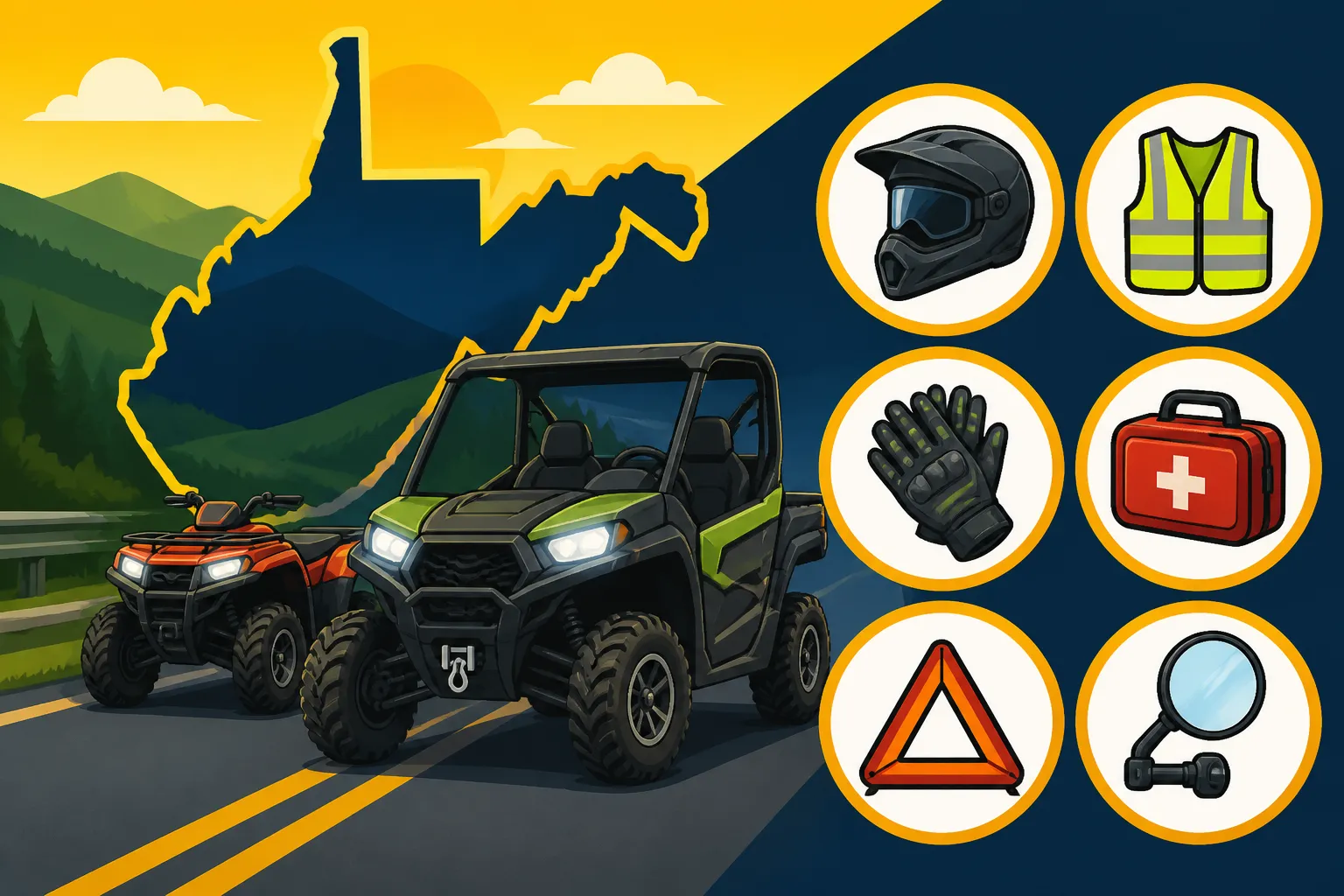
To help visualize the essential equipment for a West Virginia road-legal ATV or UTV, here's a quick summary. Remember, this table provides a general overview, and specific requirements for an SPV plate can be extensive. Always consult the official West Virginia DMV resources for the most up-to-date and complete list.
| Equipment Category | Specific Items Required / Recommended | Why It's Needed |
|---|---|---|
| Lighting | Headlights (high/low beam), Taillights, Brake lights, Reflectors, License Plate Illumination | Visibility to others, seeing the road, signaling stops, compliance for night driving. |
| Signaling/Warning | Turn Signals (front & rear, amber/red), Horn, Mirrors (at least left rearview, recommended right & center) | Communicating intentions, alerting others to hazards, situational awareness. |
| Traction/Stability | DOT-Approved Tires | Safe handling, braking, and durability on paved surfaces. |
| Emissions/Noise | Spark Arrestor, Functional Muffler | Fire prevention, noise pollution control, environmental compliance. |
| Rider Protection | DOT-Approved Helmet (for all on road, mandatory under 18), Eye Protection, Seat Belts (for UTVs) | Head injury prevention, clear vision, occupant retention in accidents. |
| Other Essentials | License Plate Mount, Windshield (with wipers if full), Fire Extinguisher (recommended), First Aid Kit (recommended) | Secure plate display, rider comfort/visibility, emergency preparedness. |
This table serves as a strong starting point for your conversion planning. Remember to always cross-reference with official state guidelines.
Disclaimer
This article is for general informational purposes only and does not constitute professional advice. Laws, prices and regulations vary by location and change over time. Consult a qualified professional for guidance on your specific situation.