Which West Virginia Roads Allow ATVs
There's a special kind of frustration that bubbles up when you've just unloaded your side-by-side or quad in West Virginia, you're itching to hit the trails, but you're not quite sure if you can legally drive it down that paved road connecting your cabin to the trailhead. It feels like every rider has a different interpretation of the rules, and the fear of getting a ticket for simply trying to get from point A to point B can really put a damper on your adventure. This guide is here to clear up that confusion once and for all, helping you understand exactly which West Virginia roads allow ATVs and UTVs, and under what specific conditions, so you can ride with confidence and stay on the right side of the law.
The General Rule: Why Most West Virginia Roads Are Off-Limits
Let's get this out of the way upfront: by and large, West Virginia's public roads are not open to ATVs and UTVs. I know, I know, it's a tough pill to swallow, especially when you see folks cruising through small towns or just crossing a paved section. But the baseline law is that these machines are generally designed for off-road use, and state statute reflects that. It's a fundamental aspect of navigating the Mountain State's trail systems, and understanding this starting point is crucial before we dive into the exceptions.
Understanding the Basic Prohibition
When the law talks about "off-highway vehicles," it's usually drawing a clear line between those machines and street-legal vehicles like cars, trucks, and motorcycles. ATVs and UTVs, in their standard configuration, simply don't meet the Department of Motor Vehicles' criteria for highway use. This typically includes things like turn signals, DOT-approved tires, windshields, specific lighting requirements, and even vehicle identification numbers that are specifically designated for on-road use. Without these features, they're considered too different, too exposed, and frankly, too dangerous for the speeds and traffic found on most public roads. The general prohibition is there to ensure safety for both the ATV operator and other motorists.
Think about it this way: a typical ATV has knobby tires designed for gripping dirt, not pavement, and a high center of gravity that can feel squirrely on asphalt. Braking distances are different, and the lack of traditional safety features like enclosed cabins and airbags makes them a very different beast from your daily driver. This isn't just West Virginia being difficult; it's a common stance across many states trying to balance recreational access with public safety. You'll find similar regulations, or even stricter ones, in other places.
The Frustration of Limited Access
For us riders, this blanket prohibition can feel incredibly frustrating. You've invested in a machine, you're ready to explore, and then you hit a wall: a short stretch of pavement separates you from the next trail section, or your campsite is just a mile down a county road. It can be a real headache to have to load up your machine onto a trailer just to move it a few hundred yards. This is especially true in areas that are rich with trails, where the natural terrain often forces trails to intersect or parallel public roads.
Many riders feel like they're being penalized for simply enjoying their hobby. We see the potential for connecting trails, for easing access to gas stations or restaurants in trail towns, and for making a full day's ride flow seamlessly. The disconnect between what riders want and what the law generally allows is a constant source of discussion and, let's be honest, occasional rule-bending (which we strongly advise against!). It's this very frustration that has led to the development of the specific exceptions we're about to dive into, aimed at providing some much-needed flexibility for the West Virginia ATV community. It's a recognition that the rules needed to evolve to accommodate the growing popularity of off-road riding in the state.
Navigating the 10-Mile, 25 MPH Rule
While the general rule limits ATV access to public roads, West Virginia does offer a crucial exception for short distances. This is often referred to as the "10-mile, 25 mph rule," and it's what allows many riders to connect trail sections, access amenities, or simply get from their lodging to the trailhead without having to trailer their machine for every short hop. However, it's vital to understand the precise limitations of this rule, as misinterpreting it can lead to tickets and fines. It's not a free pass to cruise the highways, but a targeted allowance for specific situations.
What the 10-Mile Rule Actually Means
So, what does it mean? It means that, in unincorporated areas of West Virginia, you can operate your ATV or UTV on a public road for a distance not exceeding ten miles, provided you are doing so to access an authorized trail, return to your lodging, or reach a service facility like a gas station or mechanic. This isn't a general permission to joyride down a state route; it's a practical allowance for point-to-point transit over relatively short distances when no other reasonable option exists. The keyword here is "unincorporated." Once you enter city limits, this rule typically no longer applies unless that specific town has passed its own ordinance allowing ATV use, which we'll discuss later.
This rule is designed to be a bridge, not a highway. Imagine you're staying at a cabin that's a mile down a county road from the nearest trail system entrance. Under this rule, you could legally drive your machine that mile to get to the trails. Or perhaps you've been riding for hours and need to grab gas; if the nearest station is within that 10-mile limit on an unincorporated road, you could make that trip. It requires discretion and adherence to the spirit of the law, which is about necessary access, not recreational road riding. [How Far You Can Ride an ATV on a West Virginia Road] goes into more detail on this specific distance limit.
The Speed Limit on Public Roads
Crucially, even when operating under the 10-mile rule, there's a strict speed limit: you cannot exceed 25 miles per hour. This isn't merely a suggestion; it's a hard limit that needs to be respected for your safety and the safety of others. Public roads, even in rural, unincorporated areas, can still have unexpected curves, blind spots, and other traffic moving at highway speeds. Your ATV or UTV, even a larger side-by-side, simply isn't built to handle those conditions at higher velocities, and other drivers aren't necessarily expecting a slower-moving off-road vehicle.
Adhering to the 25 mph cap is non-negotiable. Not only does it keep you legal, but it significantly reduces the risk of an accident. Many ATVs and UTVs don't have speedometers that are calibrated with the precision of a street vehicle, so you'll need to be mindful of your speed and err on the side of caution. If you find yourself needing to go faster to keep up with traffic, or if the road conditions make 25 mph feel unsafe, you should reconsider using the road segment and look for an alternative route or trailer your machine. [The 25 mph Cap on a West Virginia Road Ride] provides additional context.
Practical Considerations for Short Road Segments
Beyond the letter of the law, there are practical realities to consider when utilizing the 10-mile, 25 mph rule. First, visibility is paramount. Your machine might be bright, but it's smaller than most cars, and you're less visible, especially on winding mountain roads. Consider adding reflective tape or a bright flag, particularly if you're riding during dawn, dusk, or in inclement weather. [Equipment West Virginia Requires on a Road Ride] covers other essential items.
Second, be courteous and defensive. Other drivers might not be expecting an ATV. Stay as far to the right as safely possible, and be prepared for vehicles to pass you. Never assume another driver sees you. Third, always carry your proper documentation – your trail permit (if on a managed trail system), your driver's license, and proof of ownership. While a title isn't required to ride on a trail, it's a good idea to have proof of ownership readily available if you are interacting with law enforcement on a public road. [Do You Need Paperwork on the Trail in West Virginia?] discusses what to carry. Law enforcement officers in West Virginia are familiar with these rules, but they expect you to be too. Violating these conditions can result in a ticket, and nobody wants their adventure cut short by a fine.
Special Purpose Vehicles (SPVs) and Their Road Access
For those who want more extensive road access than the 10-mile rule allows, West Virginia offers the option to register certain off-highway vehicles as "Special Purpose Vehicles" (SPVs). This designation is a game-changer for many UTV owners, in particular, as it allows them to legally operate their modified machines on a much wider range of public roads. However, it's not as simple as slapping a license plate on your side-by-side; there's a comprehensive list of requirements you must meet to qualify.
What Qualifies as a West Virginia SPV
Not every ATV or UTV can become an SPV. Generally, this designation is geared towards side-by-sides (UTVs) and often excludes traditional single-seat ATVs and dirt bikes due to their design and safety limitations. The core idea is that the vehicle needs to be capable of being modified to meet certain safety and equipment standards typically associated with street-legal vehicles, even if it retains its off-road capabilities. This often means a four-wheel vehicle with a steering wheel and seat belts, offering a more stable and controllable platform for road use. [Machines That Cannot Become a West Virginia SPV] outlines the exclusions.
The process usually involves an inspection to ensure the machine meets the criteria, not just for the equipment but also for its fundamental design. If your machine is older or a very basic model, it might be difficult or cost-prohibitive to bring it up to SPV standards. It's a serious commitment to road safety, reflecting West Virginia's efforts to balance rider convenience with public highway integrity.
The SPV Plate and Expanded Road Privileges
Once your machine successfully navigates the inspection and registration process, you'll be issued a West Virginia Special Purpose Vehicle license plate. This is your golden ticket to significantly expanded road access. With an SPV plate, your UTV is no longer limited to the 10-mile, 25 mph rule in unincorporated areas. Instead, it can generally be operated on any public road with a posted speed limit of 55 mph or less, including within most incorporated towns, unless those towns specifically opt out or have stricter local ordinances. This means you can drive directly from your home to the trails, ride through trail towns to access restaurants and shops, and cover much longer distances on paved roads. [West Virginia's Street-Legal Special Purpose Vehicle Plate] details the process and benefits.
There are still limitations, of course. SPVs are typically prohibited from interstate highways and other high-speed controlled-access roads. And even on permitted roads, you must obey all traffic laws, including speed limits, traffic signals, and signs, just like any other vehicle. The SPV plate signifies that your machine is recognized as a legitimate, if specialized, vehicle on the road, demanding the same respect for traffic laws and safety as a car or truck.
Equipping Your Machine for SPV Status
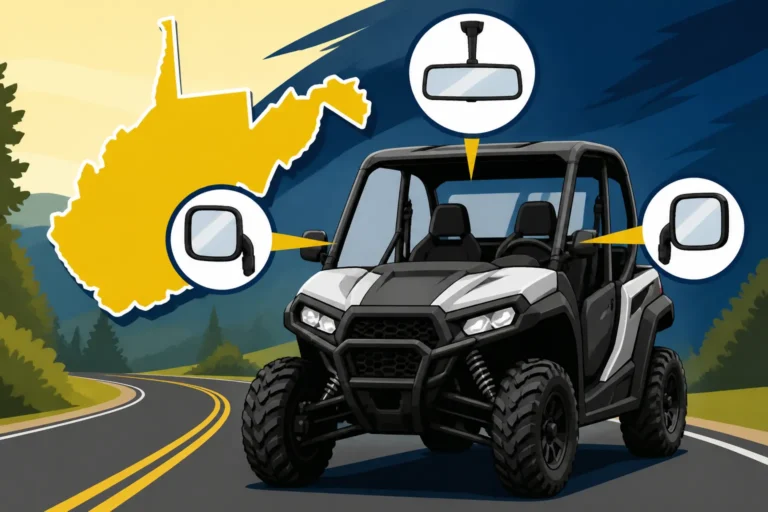
Converting your UTV to an SPV isn't just about getting a plate; it's about making your machine safe and compliant for road use. This involves a long list of equipment requirements. You'll need DOT-approved tires, which are designed to handle the wear and tear of pavement better than pure off-road knobbies. A windshield, often made of safety glass, is usually mandatory, along with a functional windshield wiper. You'll need proper turn signals (front and rear), brake lights, headlights (high and low beam), taillights, and a horn. Mirrors – typically a rearview mirror and at least one side mirror – are also essential for visibility.
Many riders turn to aftermarket parts and kits to achieve SPV compliance. Companies like SuperATV offer a wide range of accessories, from full glass windshields to complete street-legal kits that bundle many of the required components, making the conversion process much simpler. For instance, you can find SuperATV turn signal kits, DOT-approved tires, and mirror sets specifically designed for popular UTV models. [Equipment a West Virginia SPV Must Carry] provides a comprehensive list of what you'll need. Don't forget proper seat belts for all occupants, and always ensure everything is installed correctly and functioning perfectly before heading to your DMV inspection. This investment in proper equipment is what truly makes your machine road-ready and legal.
West Virginia's ATV-Friendly Trail Towns
One of the most exciting developments for ATV and UTV riders in West Virginia has been the rise of "trail towns." These are communities, often located along or near the famous Hatfield-McCoy Trails system, that have embraced off-road tourism by passing local ordinances that allow ATVs and UTVs to legally operate on their municipal streets. This creates a truly immersive riding experience, where you can ride directly from the trail to local businesses, fueling up, grabbing a meal, or even staying overnight without ever having to load your machine onto a trailer.
The Concept of a Trail Town
A "trail town" is more than just a town near a trail. It's a community that has actively worked to become accessible and welcoming to off-road enthusiasts. This involves passing specific local ordinances that override the general state prohibition on ATV use on municipal roads. These ordinances typically outline specific rules, such as maximum speed limits within town (often 20 or 25 mph), designated routes, and sometimes even specific times of day when ATV operation is permitted. The goal is to integrate ATV traffic safely and seamlessly into the town's existing infrastructure, benefiting local businesses and enhancing the rider experience.
These towns recognize the economic impact that off-road tourism brings. Riders spend money on gas, food, lodging, and supplies, breathing new life into communities that might have seen economic decline. It's a symbiotic relationship: riders get convenience and a richer experience, and the towns get vital revenue. This concept has been a huge success, especially in southern West Virginia, transforming the region into a premier destination for ATV and UTV enthusiasts. [How a West Virginia Town Becomes ATV-Friendly] explores the process in more detail.
Riding Legally Within Town Limits
Once you're in a designated trail town, the rules shift considerably. You can typically ride your ATV or UTV on most city streets to access various amenities. This means no more parking your truck and trailer miles away and hiking in; you can ride right up to the gas pump, park outside a restaurant, or pull up to your hotel. However, it's not a free-for-all. You still need to adhere to all posted speed limits (which are often lower for ATVs than for cars), stop at stop signs, obey traffic lights, and yield to pedestrians and other vehicles.
Many trail towns require you to have your Hatfield-McCoy Trail System permit visible on your machine, even if you're just riding on the streets. Some also have helmet requirements, even for adults, within city limits, so always check local signage or websites. The key is to be respectful, drive cautiously, and act as an ambassador for the off-road community. Your responsible riding helps maintain these precious privileges for everyone. [Riding an ATV on a Town Street] offers tips for urban navigation.
Specific Examples of Trail Towns
West Virginia boasts several fantastic trail towns, particularly concentrated around the Hatfield-McCoy Trails. Here are some of the most popular:
- Gilbert: Often called the "ATV Friendly Capital," Gilbert is a bustling hub where you can literally ride your machine down Main Street, grab a bite, or fuel up. It's connected directly to the Rockhouse Trail System. [Riding Through Gilbert on an ATV]
- Man and Logan: These towns provide excellent access points and services for riders exploring the Bearwallow Trail System. You can find lodging, restaurants, and gas stations easily accessible by ATV. [Riding Through Man and Logan by ATV]
- Williamson and Matewan: Located along the Tug Fork River, these towns offer unique historical experiences alongside trail access. Williamson is a gateway to the Buffalo Mountain Trail System, and Matewan, famous for the Hatfield-McCoy Feud, welcomes riders. [Riding Through Williamson and Matewan]
- Mullens and Pineville: These communities serve riders visiting the Pinnacle Creek Trail System, providing essential services and a friendly atmosphere. [Mullens and Pineville ATV Street Access]
- Bramwell: A historic town known for its millionaire mansions, Bramwell is a popular gateway to the Pocahontas Trail System.
Always look for "Welcome ATV Riders" signs or specific municipal ordinances posted online when planning your trip. The spirit of these towns is genuinely welcoming, but they still expect adherence to their specific rules to maintain safety and harmony between riders and residents.
| Trail Town Example | Connected Trail System(s) | Typical Road Access | Common Amenities | Notes |
|---|---|---|---|---|
| Gilbert | Rockhouse | Full town access | Gas, food, lodging | Known as "ATV-Friendly Capital" |
| Man | Bearwallow | Full town access | Gas, food, lodging | Popular for staging and supplies |
| Williamson | Buffalo Mountain | Full town access | Gas, food, lodging | Historic location, near Kentucky border |
| Matewan | Buffalo Mountain | Full town access | Food, historical sites | Feud history, trail access |
| Mullens | Pinnacle Creek | Full town access | Gas, food, lodging | Good base for Pinnacle Creek |
| Pineville | Pinnacle Creek | Full town access | Gas, food, lodging | Often linked with Mullens for services |
| Bramwell | Pocahontas | Full town access | Food, lodging | Historic town, near Virginia border |
Specific Road Types and Their ATV Legality
Beyond the general prohibitions, the 10-mile rule, and trail towns, the specific type of road you're encountering also dictates whether or not your ATV or UTV can legally traverse it. West Virginia has a diverse road network, from narrow, winding county routes to multi-lane interstates, and the rules vary significantly for each. Understanding these distinctions is crucial for safe and legal riding, preventing accidental trespass or violations.
County Routes and Secondary Roads
County routes and other secondary roads in unincorporated areas are where the 10-mile, 25 mph rule is most frequently applied. These are often the roads that connect remote trailheads, small communities, or private properties. If you are operating under the conditions of that rule—i.e., for necessary access to trails, lodging, or services, and adhering to the speed limit—these roads are generally permissible for limited use. However, it's vital to confirm that you are indeed in an unincorporated area and not inadvertently entering a town or city boundary that hasn't adopted ATV-friendly ordinances.
These roads can be tricky. They're often winding, have blind hills and curves, and may lack shoulders. Visibility for both you and oncoming traffic can be poor. Always drive defensively, stay to the right, and use appropriate lighting. While the letter of the law might allow you to be there, exercising extra caution is always the best practice on these less-traveled, but potentially hazardous, routes. [West Virginia Rules for Riding a County Route] can provide more detail.
Crossing Highways and Interstates
This is where the rules become much stricter and less flexible. Generally, ATVs and UTVs (even SPVs) are not permitted on interstate highways or other controlled-access, multi-lane highways with high speed limits. These roads are simply not designed for the slower speeds and different handling characteristics of off-road vehicles. The risks of a high-speed collision are too great, and the state's traffic laws explicitly prohibit their use on such arteries.
However, you might occasionally encounter situations where a trail system or a county road requires you to cross a major highway. In these specific, marked instances, West Virginia law may allow an ATV or UTV to cross a two-lane state highway at a 90-degree angle, after stopping and yielding to all traffic. This is a quick, direct crossing, not riding on the highway. For multi-lane highways or interstates, such crossings are typically prohibited or require specific, designated overpasses or underpasses. Always look for official signage. Never assume a crossing is legal just because it seems convenient. [Crossing a West Virginia Highway on an ATV] emphasizes caution here.
Private Roads and Coal Haul Roads
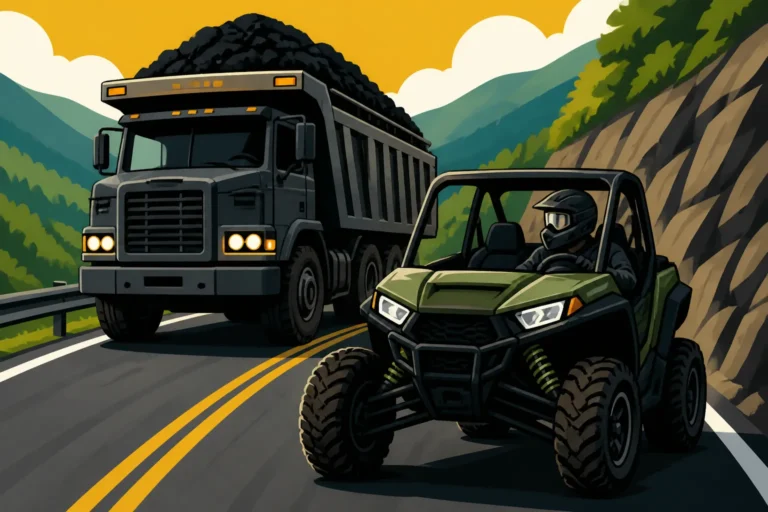
Private roads are a different beast entirely. If a road is truly private, owned by an individual or a company, then accessing it with your ATV or UTV requires explicit permission from the landowner. Without it, you are trespassing, regardless of whether your machine is street-legal or not. This is particularly relevant with coal haul roads, which are common in West Virginia's coalfields. Many of these are private industrial roads, actively used by heavy equipment, and are absolutely off-limits to recreational riders without specific authorization. They are often unpaved but are not part of any public trail system.
Some private landowners or coal companies may have agreements with the Hatfield-McCoy Trails Authority to allow trail segments to cross their land, but this is always within the clearly marked boundaries of the trail system itself, not on their general private road network. Respecting private property is paramount, not just to avoid legal trouble, but to maintain good relationships with landowners, which is vital for the future of trail access in the state. [West Virginia Rules on Private Mine Roads] outlines the dangers and restrictions.
Bridges and Tunnels
Riding across bridges and through tunnels presents its own set of rules and safety concerns. For most public roads where ATVs are permitted (either via the 10-mile rule or as an SPV), crossing bridges that are part of that road network is generally allowed. However, always exercise extreme caution. Bridges can be narrow, have limited shoulders, and often carry higher-speed traffic. Your visibility to other drivers might be reduced, and the road surface on a bridge can sometimes be different (e.g., metal grating or expansion joints) which can affect ATV handling.
Tunnels are less common on ATV-permissible roads, but if you encounter one, the same rules apply: if the road is legal for your ATV, then traversing the tunnel is typically allowed. Ensure your lights are fully functional and visible, and be aware that enclosed spaces can amplify engine noise, which might startle other drivers or even yourself. Always prioritize safety over convenience, and if a bridge or tunnel feels unsafe, look for an alternative. [West Virginia Rules on Bridges and Tunnels] provides further guidance.
Safety, Equipment, and Compliance for Road Riding
Whether you're making a quick hop on an unincorporated county route or cruising through a trail town as an SPV, operating your ATV or UTV on any public road demands a higher level of awareness and preparation. It's not just about what the law allows, but what common sense and safety require. Ignoring these aspects can lead to serious consequences, from accidents and injuries to hefty fines and legal issues.
Required Safety Gear for Road Use
When you're sharing the road with cars and trucks, your personal safety gear becomes even more critical. While West Virginia has specific helmet laws for those under 18 on trails and roads, and for all riders on certain roads, it's always recommended for all ages. A DOT-approved helmet is your best defense against head injuries, which are tragically common in ATV accidents. [West Virginia Helmet Rules for Riders Under 18] and [Do Adults Need Helmets in West Virginia?] clarify legal requirements, but personal choice should lean towards maximum protection.
Beyond a helmet, eye protection is non-negotiable. Goggles or a face shield on your helmet protect you from dust, debris, insects, and even small rocks kicked up by other vehicles. Gloves can protect your hands and improve grip, especially on longer rides. Sturdy, over-the-ankle boots are crucial for foot and ankle protection, and long pants and long-sleeved shirts can help prevent scrapes and abrasions. Dress for the slide, not for the ride, even if it's just a short road segment. Your skin offers no protection against asphalt.
Essential Vehicle Equipment for Legality
For any ATV or UTV venturing onto a West Virginia public road, even under the 10-mile rule, basic equipment is often expected by law enforcement, and for SPVs, it's mandatory. This typically includes:
- Headlights and Taillights: Fully functional headlights (low and high beam for SPVs) and taillights are essential, especially if there's any chance of riding near dusk, dawn, or in low visibility. Even during the day, they increase your visibility to others.
- Brake Lights: Clearly visible brake lights are critical for signaling your intentions to traffic behind you.
- Mirrors: At least one rearview mirror is typically required, and often two (a rearview and a side mirror) for SPVs, to monitor traffic.
- Horn: A functional horn is vital for alerting others to your presence or impending actions.
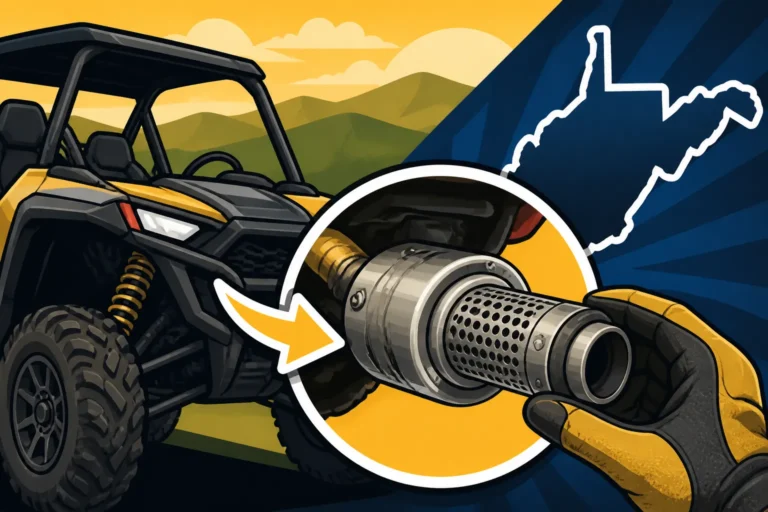
- Spark Arrester: While often associated with off-road noise and fire prevention, having a properly functioning spark arrester is a legal requirement for most recreational vehicles and helps keep your exhaust compliant. Aftermarket exhausts, for example, must still meet noise regulations.
- DOT-Approved Tires: As mentioned for SPVs, these tires are designed for pavement and are critical for safe handling and braking on roads. For those using the 10-mile rule, while not always explicitly mandated, they offer a significant safety upgrade.
For those planning an SPV conversion, companies like SuperATV are a fantastic resource. They offer a comprehensive catalog of parts ranging from windshields, wipers, and full enclosures to complete turn signal kits with wiring harnesses and switches. For instance, if you're looking to upgrade your Polaris RZR for street legality, you might find a SuperATV glass windshield and wiper kit, alongside a Universal Turn Signal Kit, which makes the complex wiring much more manageable. Their products are designed to meet many of these specific requirements, making the conversion process much less intimidating. [West Virginia SPV Plate Requirements List] gives you the full rundown.
Common Misconceptions and Penalties
A common misconception is that if a road "looks like" a trail or is rarely traveled, it's okay to ride on it. This is a dangerous assumption. Unless it's explicitly marked as a public trail or falls under one of the specific exceptions, assume it's off-limits. Another mistake is believing that if you're "just going a little ways" or "no one will see," the rules don't apply. Law enforcement patrols, especially in popular riding areas and trail towns, are well aware of common violations.
The penalties for operating an ATV or UTV illegally on West Virginia public roads can include significant fines, impoundment of your vehicle, and even points on your driver's license. Furthermore, if you're involved in an accident while operating illegally, your insurance coverage might be denied, leaving you personally liable for damages and medical expenses. Always carry proof of insurance, especially if you have an SPV plate, as it's required for road use. [West Virginia ATV Liability Coverage Limits] outlines what you'll need. Don't let a momentary lapse in judgment ruin your entire trip or, worse, lead to a tragic outcome. Be informed, be equipped, and ride responsibly.
Disclaimer
This article is for general informational purposes only and does not constitute professional advice. Laws, prices and regulations vary by location and change over time. Consult a qualified professional for guidance on your specific situation.