Alcohol Limits for West Virginia ATV Operators
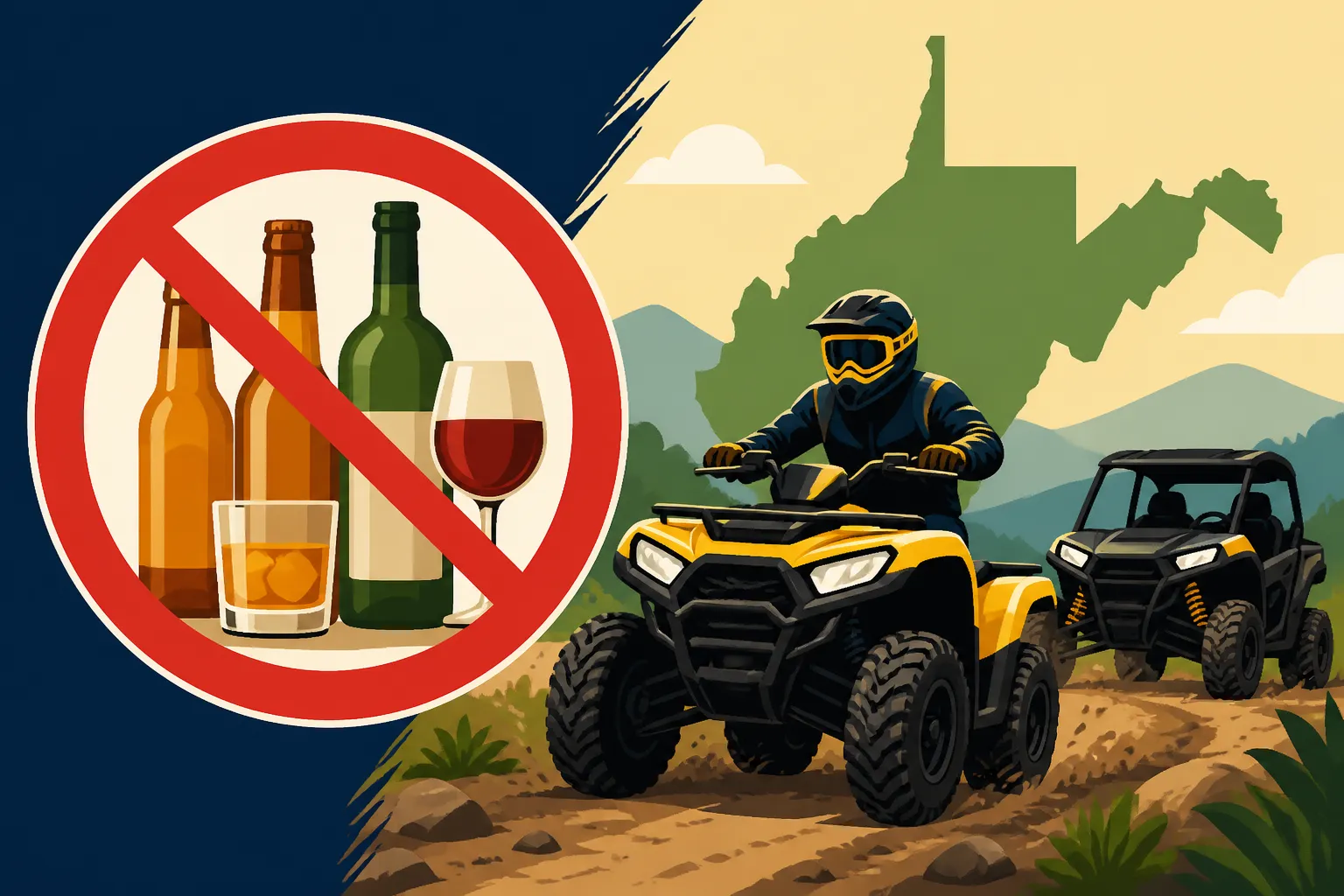
It's easy to get caught up in the thrill of a West Virginia trail ride or the camaraderie of a weekend at a trail-friendly town, and sometimes, the idea of enjoying an alcoholic beverage might cross your mind. However, mixing alcohol and ATV or UTV operation in the Mountain State isn't just a bad idea; it's a serious legal risk with profound consequences for your safety, your riding privileges, and your future. This comprehensive guide will meticulously break down West Virginia's alcohol limits for ATV and UTV operators, explaining the exact laws, the stiff penalties, and why staying sober behind the handlebars is absolutely crucial for everyone involved.
Understanding West Virginia's DUI Laws for ATVs
Many riders assume that because an ATV or UTV isn't a traditional "car" or "truck," the same stringent DUI laws might not apply. Unfortunately, this is a dangerous misconception that can lead to severe legal trouble. West Virginia takes impaired driving very seriously, regardless of the vehicle type. The law is designed to protect everyone on and around the trails and roads, and that includes you.
Are ATVs Treated Like Cars Under DUI Law?
In West Virginia, the law is quite clear: operating an ATV or UTV while under the influence of alcohol or drugs carries the same legal weight as operating a regular motor vehicle. This means that if you're found to be impaired while riding your quad or side-by-side, you're facing a Driving Under the Influence (DUI) charge, just as if you were driving a car. The state's statutes broadly define "motor vehicle" to include off-road vehicles when they are operated in areas accessible to the public or where state laws apply, which includes public roads, certain trails, and even some private lands if the public has access. This isn't some obscure loophole; it's a direct application of the law to ensure safety across all vehicle types. This also means that getting a DUI on your ATV can absolutely impact your regular driver's license. [A DUI on an ATV in West Virginia] is a very real concern for any rider.
Ignorance of the Law is No Excuse
Perhaps you've heard stories, or maybe you've even seen people openly consuming alcohol while riding in other states or on private property. It's vital to understand that what applies elsewhere, or what happens in less regulated environments, simply does not apply on West Virginia's public roads, public trails, or even many private trail systems where state law is enforced. The West Virginia State Police and local law enforcement agencies are well aware of the state's ATV and UTV laws, and they actively enforce them. Claiming you didn't know the rules isn't going to get you out of a DUI charge. The expectation is that you, as an operator, are responsible for knowing and adhering to the laws of the road and trail. This includes respecting the guidelines set forth by systems like the Hatfield-McCoy Trails, where [West Virginia Trail Rules Every West Virginia Rider Signs Up To] clearly outline prohibited conduct, including operating under the influence.
The Legal Blood Alcohol Content (BAC) Limit
Knowing that DUI laws apply to ATVs is one thing, but understanding the specific limits for alcohol in your system is another crucial piece of information. Just like with cars, West Virginia has a strict legal threshold for impairment.
How BAC is Measured for ATV Operators
For operators aged 21 and over, the legal Blood Alcohol Content (BAC) limit in West Virginia is 0.08%. This means if a law enforcement officer has probable cause to believe you are impaired and administers a chemical test (like a breathalyzer, blood test, or urine test), and your BAC registers at or above 0.08%, you are legally considered to be driving under the influence. For those under 21, the rules are even stricter, often a "zero tolerance" policy where any detectable amount of alcohol can lead to charges. It's important to remember that these tests are designed to give an accurate reading of the alcohol concentration in your bloodstream, which directly correlates to your level of impairment. Even if you feel fine, your body might tell a different story to a breathalyzer.
What 'Impaired' Really Means Beyond the Number
Beyond the hard numerical limit, West Virginia law also prohibits operating an ATV or UTV if your ability to do so is "impaired" to any degree by alcohol or drugs, regardless of your specific BAC. This means an officer can still arrest you for DUI even if your BAC is below 0.08%, if they observe signs of impairment such as swerving, reckless driving, slowed reflexes, slurred speech, or poor judgment. An ATV or UTV demands your full attention and quick reflexes, navigating uneven terrain, tight turns, and potential obstacles. Even a small amount of alcohol can degrade these essential skills, making you a danger to yourself and others. This also factors into broader categories like [West Virginia Penalties for Reckless Riding], which can escalate quickly if alcohol is involved.
| BAC Level (Age 21+) | Legal Status | Potential Consequences |
|---|---|---|
| Under 0.08% | Not "Per Se" Impaired | Still subject to "Impaired to Any Degree" charges |
| 0.08% or Higher | Legally Impaired | DUI charges, license suspension, fines, jail time |
| Under 0.02% (Under 21) | Zero Tolerance | DUI charges for minors, license suspension, fines |
This table provides a simplified overview. The actual legal implications can be complex and vary based on individual circumstances, prior offenses, and other factors.
Consequences of an ATV DUI in West Virginia
The fallout from an ATV DUI in West Virginia can be extensive, reaching far beyond a simple ticket. These are serious criminal offenses with long-lasting repercussions that can affect your personal life, finances, and ability to operate any vehicle.
Fines and Jail Time
A first-offense ATV DUI in West Virginia typically carries substantial fines, which can quickly add up to significant amounts. Beyond the fines, you could face jail time, ranging from a minimum number of hours to several months, depending on the severity of the offense and the judge's discretion. Subsequent offenses come with even harsher penalties, including longer mandatory jail sentences and higher fines. These aren't just minor inconveniences; they are punishments designed to deter impaired driving and reflect the seriousness of the crime.
License Suspension and Revocation
One of the most immediate and impactful consequences of an ATV DUI is the suspension or revocation of your regular driver's license. That's right – even if you were only riding your quad on a remote trail, a DUI conviction will almost certainly affect your ability to drive your car, truck, or motorcycle on public roads. The suspension period can vary, but it's often for several months or even a year or more for a first offense, extending significantly for repeat offenders. Imagine being unable to drive to work, pick up groceries, or simply get around town because of a decision made on a trail. It's a harsh reality that many riders unfortunately discover firsthand.
Vehicle Impoundment and Forfeiture
In some cases, especially for repeat offenses or in circumstances deemed particularly egregious, your ATV or UTV could be impounded or even subject to forfeiture. This means the state could seize your machine, taking away your beloved ride permanently. The costs associated with impoundment alone – towing fees, daily storage fees – can quickly accumulate, becoming another heavy financial burden on top of fines and legal fees. If you've invested heavily in customizing your ride with aftermarket parts from brands like SuperATV, losing your machine or incurring massive impound fees would be a devastating blow.
Insurance Ramifications
Beyond the direct legal penalties, an ATV DUI will almost certainly cause your insurance rates to skyrocket, both for your ATV/UTV policy and potentially your automotive policy as well. Insurers view DUI convictions as a major risk factor, and they adjust premiums accordingly. In some cases, you might even find it difficult to obtain insurance at all, or you might be relegated to high-risk pools with exorbitant costs. This financial hit can last for years, long after you've paid off your fines and served any jail time. It highlights why understanding [West Virginia ATV Insurance and When You Need It] is critical for responsible ownership.
Open Container Rules on West Virginia ATVs
It's not just about being under the influence; West Virginia also has specific laws regarding open containers of alcohol in vehicles, and these rules extend to ATVs and UTVs. This means even if you're not actively drinking while operating your machine, having an open alcoholic beverage within reach can lead to trouble.
What Counts as an Open Container
An "open container" is generally defined as any bottle, can, or other receptacle containing any alcoholic beverage that is open, has a broken seal, or has had some of its contents removed. This applies whether the container is partially full, mostly empty, or anywhere in between. It doesn't matter if it's a beer can, a wine bottle, or a mixed drink in a cup; if it's open and contains alcohol, it falls under the open container law. Keeping these rules in mind is essential, and further details can be found in resources like [Open Container Rules on a West Virginia Quad].
The 'Operating' Aspect and Where Alcohol Can Be Stored
The key phrase here is "operating" an ATV or UTV. While you are operating your machine, an open container should not be in the passenger area, within the operator's immediate control, or accessible to anyone riding in the vehicle. The safest bet is to store any alcoholic beverages, if you're transporting them for later, unsealed, and in a secure, inaccessible location like a locked storage compartment, a trunk, or a cooler that is not accessible from the rider compartment. Some riders might think storing it in a bag on a cargo rack is enough, but if it's within reach or easily accessible, it could still be an issue. If you're planning a ride that might end with a celebratory beverage, ensure all alcohol is sealed and properly stowed until you're safely parked and no longer operating your machine.
Preventing an ATV DUI: Tips for Responsible Riding
The best way to avoid an ATV DUI and all its severe consequences is simply not to drink and ride. This isn't just about avoiding legal trouble; it's about ensuring your safety and the safety of everyone else on the trails and roads. Responsible riding habits are paramount.
Designated Drivers for ATVs
Just as with cars, designating a sober driver is the most effective strategy if your group plans to consume alcohol. This might mean having one person in your group who commits to not drinking and operating the ATV or UTV, or it could mean making arrangements for alternative transportation back to your lodging after any alcohol consumption. Some trail towns offer shuttle services, or you might need to arrange for a non-riding friend to pick you up. Planning this before you start drinking is critical. Don't leave it to chance or the judgment of someone who's already had a few. For those occasions where you're linking trails with road sections, understanding rules like [Riding an ATV on the Road in West Virginia] becomes even more critical, as law enforcement presence can be higher.
Planning Your Ride Around Alcohol
If your day's plan includes enjoying alcoholic beverages, make sure that activity is completely separate from your riding time. This means planning your ride first, finishing up for the day, and then heading to a safe, stationary location like a cabin porch, a designated campground area, or a local restaurant or pub where you won't be operating any vehicle. Don't try to squeeze in "just one more loop" after having a drink. Alcohol affects judgment quickly, and that "one more loop" could turn into a life-altering mistake. It’s always smart to have a clear head when you're navigating challenging terrain or public roads. Even just riding [West Virginia Rules for Riding Trail to Trail] on those short connecting stretches, you need to be completely sober.
When you're equipping your rig for a full day of responsible fun, remember that companies like SuperATV offer a range of accessories that can enhance your riding experience without encouraging risky behavior. From sturdy storage boxes perfect for packing plenty of water and non-alcoholic drinks to protective gear that keeps you safe, these additions support smart, sober adventuring. Invest in quality accessories that promote safety and enjoyment, and always make the conscious choice to keep your rides alcohol-free.
Other Important Considerations
- Hydration is Key: Especially on hot days, it's easy to mistake dehydration for the effects of alcohol. Always carry plenty of water and stay hydrated. This keeps your mind clear and your body functioning optimally. What you need to bring on a remote ride is important, and [What to Carry on a Remote West Virginia Ride] includes plenty of water.
- Know Your Limits: Even if you're planning to stop riding before drinking, understand how alcohol affects you. Everyone's tolerance is different, and fatigue, food intake, and even altitude can influence how quickly you become impaired.
- Set a Good Example: If you're riding with friends or family, particularly younger riders, set a positive example by always riding sober. Your actions speak louder than words, and promoting responsible behavior contributes to a safer riding community for everyone. Encouraging participation in programs like [West Virginia's ATV Safety Awareness Course] also helps instill these values early on.
- Stay Informed: Laws can change, and enforcement efforts can intensify. Stay up-to-date on West Virginia's ATV and UTV laws, especially those related to road use and impaired driving. Local law enforcement agencies in trail towns are often visible, and they are there to ensure everyone's safety. When you get a ticket, even for minor infractions, it can be a hassle, so understanding [Tickets West Virginia Deputies Write for Road Riding] is good practice. The last thing you want is to be caught off guard. Losing access to trails is a real consequence of violations, as detailed in [Losing West Virginia Trail Access After a Citation].
Riding an ATV or UTV in West Virginia offers unparalleled adventure and breathtaking scenery. Don't let a momentary lapse in judgment jeopardize your safety, your freedom, or your future. Make the responsible choice to keep alcohol out of your riding experience, and enjoy the Mountain State's incredible trails and roads safely and legally.
Disclaimer
This article is for general informational purposes only and does not constitute professional advice. Laws, prices and regulations vary by location and change over time. Consult a qualified professional for guidance on your specific situation.