Passengers on a Single-Rider Quad in West Virginia
It’s a common sight on the trails, or even just around a property in West Virginia: someone tries to hop on the back of a single-rider ATV to catch a quick ride. Whether it’s a parent giving their child a lift, or a friend joining for a short trip, this practice is incredibly dangerous and often illegal. This guide will walk you through why putting a passenger on a single-rider quad is such a bad idea, what the rules are, and how you can safely enjoy the trails with others.
The Straightforward Rules: Why Single-Rider Means Single-Rider
When you look at an ATV, especially a sport quad or even many utility models, you'll notice it has a distinct single seat, often with a narrow profile. This isn't just a design choice; it's a critical safety feature that defines its intended use. Trying to squeeze another person onto that seat fundamentally changes how the machine is meant to operate, and that's why regulations and manufacturers are so clear about it.
What the Law Says About Passengers
In West Virginia, the law is pretty unambiguous when it comes to riding ATVs designed for a single operator. For the most part, if an ATV is manufactured with a single seat, it's intended for a single rider. Carrying a passenger on a machine not explicitly designed for two or more people is generally prohibited on public lands, designated trail systems like the Hatfield-McCoy Trails, and often even on private property if safety is a concern that escalates to liability. The intent behind these rules is simple: to prevent accidents and serious injuries that often result from overloaded or improperly balanced machines. While there might be nuances for agricultural use on private land, for recreational riding, the "one seat, one rider" rule is a solid guideline to live by. Violating this can lead to citations and other repercussions.
Manufacturer Guidelines and Why They Matter
Every ATV comes with an owner's manual, and every manufacturer explicitly states the machine's intended capacity. They design their ATVs with a specific weight distribution, center of gravity, and suspension system tailored for a single rider. Adding a passenger, especially an adult, drastically exceeds these design parameters. The footpegs, handlebars, and seat are all positioned for one person to maintain control and balance effectively. Ignoring these guidelines isn't just about breaking a rule; it's about overriding years of engineering and safety testing. Manufacturers, like Polaris, Can-Am, or Honda, design these machines for peak performance and safety within their specified limits. When you disregard their recommendations, you're essentially experimenting with your own safety and the safety of your passenger, often with dire consequences. It’s important to understand that these guidelines aren't arbitrary; they are the bedrock of safe ATV operation.
The Dangerous Reality of Riding Double
It might seem harmless to have a child sit in front of you for a short spin, or for a friend to squeeze on behind for a quick hop between campsites. But what looks innocent on the surface hides a multitude of dangers that can turn a fun ride into a nightmare in an instant. ATVs are already dynamic machines that require constant balance and attention from the rider. Introducing an extra person compounds these challenges exponentially.
How an Extra Passenger Changes Handling
Imagine trying to ride a bicycle with someone sitting on the handlebars or standing on the back pegs. It's difficult, right? An ATV, despite its four wheels, is not much different in its fundamental need for proper weight distribution. When you add a passenger to a single-rider quad, you throw off its carefully engineered balance. The weight is no longer centered as intended, making the machine top-heavy and unstable, especially in turns or on uneven terrain. The front or rear suspension might compress excessively, reducing ground clearance and making it easier to high-center or roll. Even a slight shift in the passenger's weight can dramatically alter the ATV's handling, making it unpredictable. What might feel like a minor bump or dip with a single rider can become a major instability issue with an extra person, increasing the risk of a rollover accident significantly. This is particularly true if the passenger isn't experienced in riding and doesn't know how to lean with the driver.
Increased Risk of Injury and Ejection
With compromised handling comes an elevated risk of injury for both the driver and the passenger. In the event of a sudden stop, a sharp turn, or hitting an obstacle, a passenger on a single-rider ATV is highly susceptible to being ejected from the machine. They often don't have proper handholds, footpegs, or a secure seating position. Unlike a legitimate two-up ATV or a side-by-side (UTV), where passengers have dedicated seats, seatbelts, and grab bars, a single-rider quad offers none of these. If a rollover occurs, which is already a significant risk in ATV riding, the passenger is much more likely to be pinned under the machine or thrown clear into obstacles. The driver, too, faces increased risk as they struggle to maintain control of an unwieldy machine, potentially leading to injuries from overcorrection or impact. These aren't just theoretical risks; emergency rooms in ATV-heavy areas see these kinds of injuries regularly. [West Virginia Age Rules on the Trails] also often factor into who can safely ride, emphasizing the need for appropriate machine sizing and supervision.
Impact on Braking and Steering Control
Adding extra weight, especially dynamic weight that can shift, puts immense strain on an ATV's braking and steering systems. The brakes, designed for the machine's curb weight plus one rider, become less effective with an added passenger. Stopping distances increase significantly, which can be critical on trails where sudden obstacles or other riders can appear without warning. Steering also suffers. The added weight can make the front end feel light, reducing traction and making it harder to steer precisely, especially on ascents. Conversely, too much weight shifted to the front can make the steering feel sluggish and heavy. The driver's ability to react quickly and make precise maneuvers is severely hampered, turning what should be an agile machine into a cumbersome and dangerous one. Imagine trying to navigate a tricky rock garden or a steep downhill section with someone constantly throwing off your balance and making your brakes work harder. It's a recipe for disaster. This is why things like [Equipment West Virginia Requires on a Road Ride] for legitimate street-legal machines are so specific—safety is paramount.
Facing the Consequences: Penalties and Liability
It's easy to think of carrying an extra passenger as a minor infraction, a little bending of the rules. However, the potential consequences extend far beyond a simple slap on the wrist. When an accident occurs with an illegal passenger, the ramifications can be severe, affecting your wallet, your legal standing, and even your ability to continue enjoying the trails you love.
Fines and Citations for Illegal Passengers
Law enforcement and trail patrol officers in West Virginia, particularly on popular systems like Hatfield-McCoy, are well aware of the rules regarding ATV passenger limits. If you're caught operating a single-rider ATV with an extra person on board, you can expect to receive a citation. These fines can add up quickly, and repeat offenses might lead to even stricter penalties. It’s not just about the money, though; a citation becomes part of your record and can indicate a disregard for safety regulations. These rules are in place to protect riders, and ignoring them not only puts yourself and your passenger at risk but also contributes to a negative perception of ATV riders as a whole. Nobody wants to end their day on the trails with a hefty ticket, but it's a very real possibility if you don't adhere to the basic safety guidelines. [West Virginia Penalties for Reckless Riding] can also encompass things like unsafe passenger transport.
Insurance Implications After an Incident
This is where the consequences can become truly devastating. If you have an accident while carrying an illegal passenger on your single-rider ATV, your insurance company may deny your claim entirely. ATV insurance policies are written with specific parameters, and exceeding the manufacturer's passenger capacity is almost certainly a violation of your policy terms. This means you could be personally responsible for all medical bills, property damage, and legal fees resulting from the accident. Imagine the burden of facing tens or even hundreds of thousands of dollars in medical costs if your passenger is seriously injured, all because of a decision to take a "quick ride" together. It's a financial risk that far outweighs any perceived convenience. Always review your policy and understand what is covered and, more importantly, what is explicitly not covered. For specific situations, checking into [West Virginia ATV Liability Coverage Limits] can offer crucial insight.
Losing Trail Privileges and Trust
Beyond financial and legal penalties, riding unsafely can lead to a loss of privileges. Many trail systems, including the Hatfield-McCoy Trails, have strict rules about safe operation. If you're caught violating these rules, such as carrying an unauthorized passenger, you could have your trail permit revoked. This means you wouldn't be allowed to ride on those trails, potentially for an extended period or even permanently. It's not just about personal loss; such incidents can also affect the broader riding community. Incidents caused by unsafe practices can lead to increased scrutiny, stricter regulations, and even calls for reduced trail access from local communities or landowners. We all share the responsibility of maintaining a good reputation for ATV enthusiasts to ensure these incredible riding opportunities remain available. Every rider signs up to a set of rules, and adhering to [West Virginia Trail Rules Every West Virginia Rider Signs Up To] is paramount to keeping our trails open.
Riding Safely with Others: Legitimate Alternatives
The good news is that just because you can't double up on a single-rider quad doesn't mean you can't enjoy the thrill of off-road riding with friends and family. There are plenty of safe, legal, and enjoyable ways to share the adventure without compromising safety or breaking the rules. Embracing these legitimate alternatives not only protects everyone but also enhances the overall experience.
The Solution: Multi-Passenger Side-by-Sides
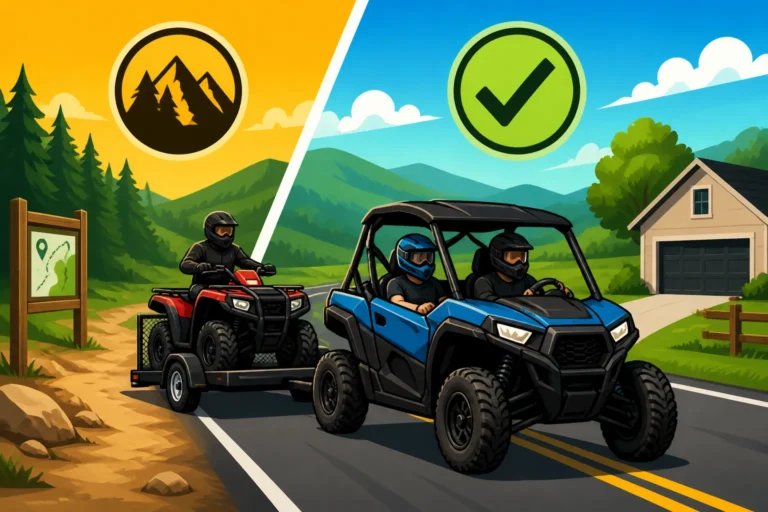
If your goal is to ride with a passenger, or even several, a side-by-side (UTV) is the definitive answer. These machines are purpose-built for multiple occupants, featuring bucket seats or bench seating, seatbelts, roll cages, and grab bars. Many UTVs, like those from Polaris or Can-Am, come in two-seat, four-seat, and even six-seat configurations. They offer a much more stable and secure riding experience for passengers, allowing everyone to enjoy the scenery and the ride in comfort and safety. You can even find a wide array of aftermarket accessories from brands like SuperATV to enhance your UTV's performance, protection, and comfort, making it an even better experience for all occupants. Investing in a multi-passenger UTV means you're investing in the safety and enjoyment of everyone who rides with you, ensuring unforgettable memories on the trails. It's the proper way to go when you want to share the adventure. If you're thinking about a street-legal machine, remember that [West Virginia's Street-Legal Special Purpose Vehicle Law] explicitly considers these multi-passenger vehicles.
Teaching Young Riders on Separate, Age-Appropriate Machines
It's natural for parents to want to introduce their children to the joy of ATV riding. However, putting a child on a full-sized single-rider quad with an adult, or even allowing them to ride with an adult as a passenger, is incredibly risky. The safest and most effective way to introduce young riders is by providing them with their own age-appropriate, youth-model ATV. These machines are designed specifically for smaller body frames, lower weight, and reduced speed, allowing children to learn balance, throttle control, and steering in a controlled environment.
Many manufacturers offer youth quads that range in size and power, suitable for various age groups and experience levels. Always ensure the child fits the machine according to manufacturer guidelines, and they receive proper training, like the West Virginia ATV Safety Awareness Course. With their own machine, children develop their riding skills independently and safely, rather than being a passive and vulnerable passenger. Plus, think of the pride they'll feel riding their own machine! For more on specific rules, check out [Youth ATV Size Rules for West Virginia Families] and [Riding With a Child in a Side-by-Side] for UTV options.
Essential Safety Gear for All Riders
Regardless of whether you're on a single-rider quad or a multi-passenger UTV, safety gear is non-negotiable for every occupant. This isn't just about following rules; it's about protecting lives. Every rider and passenger needs a properly fitted helmet that meets DOT or Snell standards. [Helmet Requirements on West Virginia Trails] are very clear on this. Eye protection, such as goggles or a face shield, is also crucial to shield against dust, debris, and insects. Long sleeves, long pants, gloves, and sturdy over-the-ankle boots provide additional protection against scrapes, impacts, and exhaust heat.
For UTVs, ensuring seatbelts are always worn is paramount. Neglecting safety gear, even for a short ride, can turn a minor incident into a serious injury. Think of safety gear as your personal force field on the trail – you wouldn't go to battle without armor, so don't hit the trails without yours. Equipping your machine with proper safety accessories, even from companies like SuperATV, can also add to the overall safety for all riders, enhancing visibility or providing additional protection.
| ATV Type | Passenger Capacity | Safety Features | Ideal Use Case |
|---|---|---|---|
| Single-Rider ATV | One (Driver Only) | Rider-centric controls, agile | Sport riding, utility work by one person |
| Multi-Passenger UTV | Two to Six | Seats, seatbelts, roll cage, grab handles | Family outings, group rides, shared adventure, utility |
Disclaimer
This article is for general informational purposes only and does not constitute professional advice. Laws, prices and regulations vary by location and change over time. Consult a qualified professional for guidance on your specific situation.