West Virginia ATV Access to a Boat Ramp
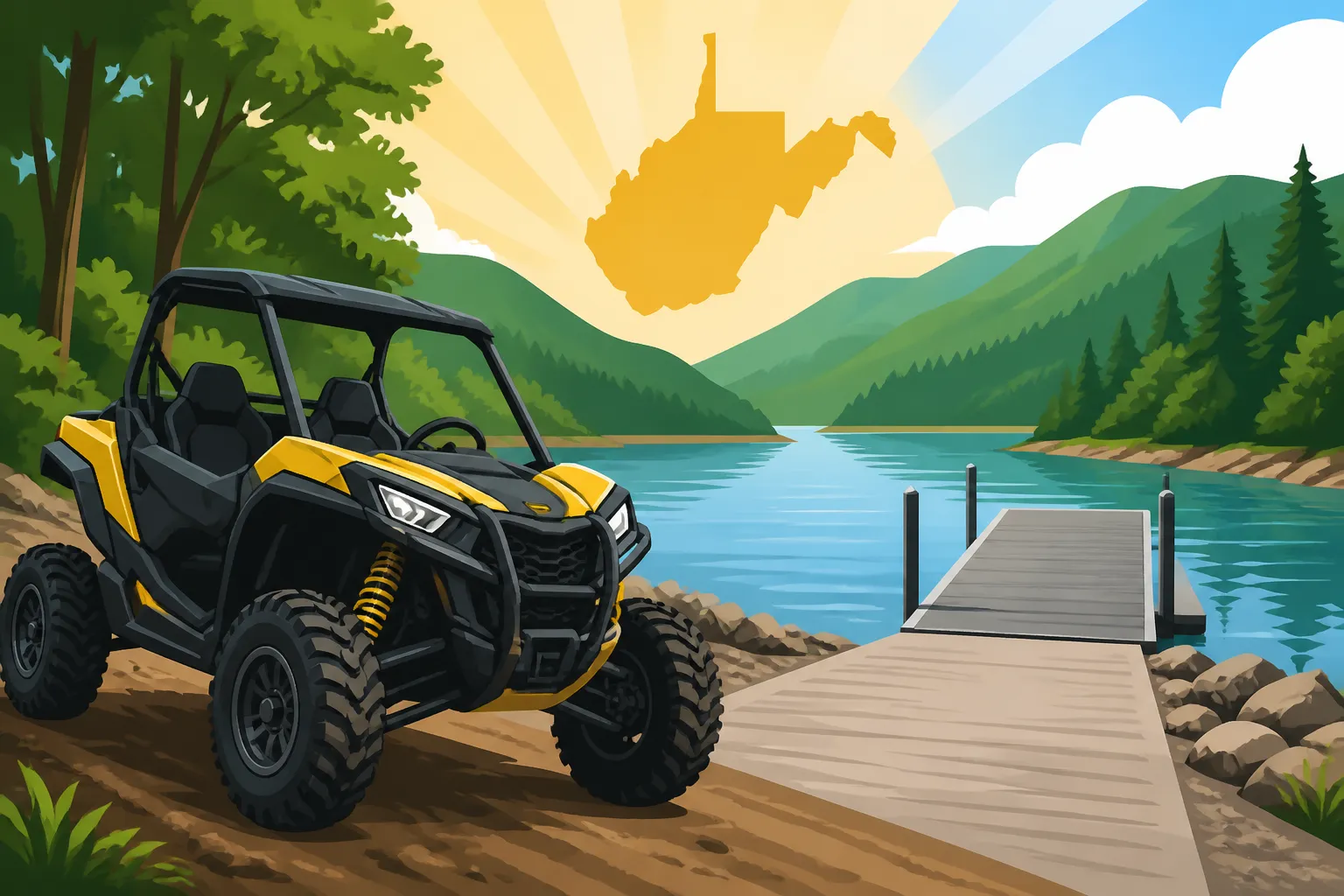
Oh, the dream of a seamless ride from the trail to the lake, launching your boat with the trusty power of your ATV or UTV! It sounds like the perfect West Virginia weekend, doesn't it? But then reality hits: you pull up to a boat ramp, and suddenly you're wondering if you're even allowed to be there on your quad. West Virginia has some unique rules for ATVs and UTVs, especially when it comes to riding on anything resembling a public road or access point. It's a common headache for riders who want to combine their love for powersports with their passion for fishing or boating.
This guide is going to cut through the confusion and explain exactly when, where, and how you might be able to use your ATV or UTV to access a boat ramp in the Mountain State, focusing on the crucial legal distinctions and practical considerations that can keep you out of trouble.
The Basics: When is ATV Access to a Boat Ramp Even an Option in West Virginia?
Before you even think about backing down a ramp, you need to understand the fundamental legal landscape for ATVs and UTVs in West Virginia. Unlike some other states, West Virginia generally restricts these machines from public roads. This core principle heavily influences whether you can legally get your ATV to a boat ramp in the first place, let alone use it there.
Understanding the "Road" Question: Is a Boat Ramp a Road?
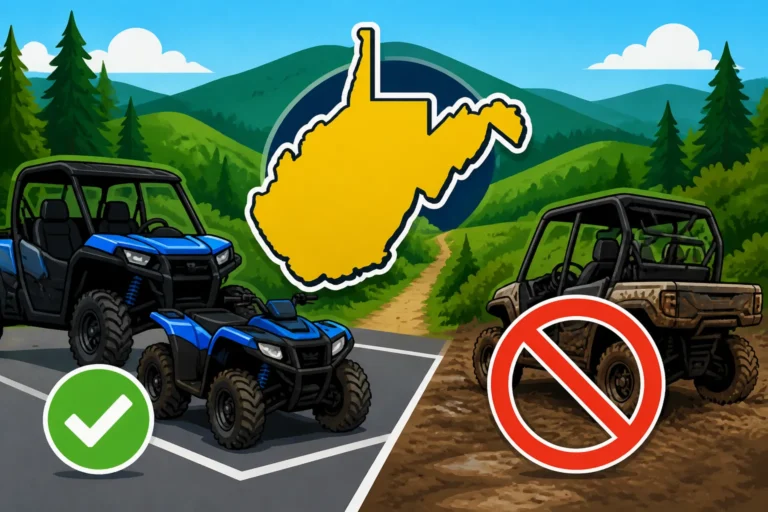
This is where things get tricky. Is a boat ramp, particularly the paved or concrete section leading into the water, considered a "road" in the eyes of West Virginia law? For the most part, yes, it often is. Many boat ramps are extensions of public roads, parking areas, or are maintained by state or local agencies as public access points. This means that the same rules that govern ATV use on highways, county roads, and even paved parking lots usually apply to boat ramps.
Why does this distinction matter so much? Because if a boat ramp is deemed a "public road" or an area directly connected to one, then your standard, off-highway ATV or UTV is generally prohibited from operating on it. You can’t just cruise down a county road to get to a boat ramp, and by extension, you usually can't use the paved or concrete boat ramp itself as if it were a trail. This can be incredibly frustrating when you're just trying to get your jon boat into the water, but the law is pretty clear about where an ATV belongs.
West Virginia's Specific Rules for ATVs on Paved Surfaces
West Virginia's laws are primarily designed to keep ATVs and UTVs off public roads, with a few very specific exceptions. These exceptions are crucial if you hope to legally approach or use a boat ramp.
First, there's the "10-mile, 25 mph" rule. This allows an ATV or UTV to operate on a public road without a center line for a distance not exceeding 10 miles, solely for the purpose of getting from one legal riding area to another. The speed limit is strictly 25 mph. So, if a boat ramp happens to be directly adjacent to a trail system and the access road leading to it meets these criteria, you might have a very narrow window of legal access. However, this is a rare scenario for most designated boat ramps, which are often found on paved roads with clear center lines. You can learn more about this by reading [West Virginia's 10-Mile, 25 mph Road Rule].
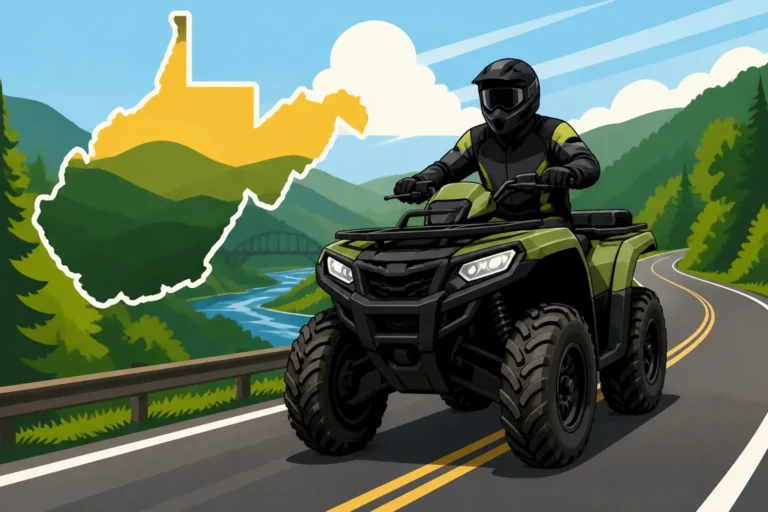
Second, and more significantly, there are Street-Legal Special Purpose Vehicles (SPVs). Since 2010, West Virginia has allowed UTVs and certain ATVs to be converted and registered as SPVs, which can then legally operate on most public roads. To qualify, these machines need a host of modifications, including DOT-approved tires, mirrors, turn signals, a horn, and other safety equipment. If your UTV or ATV is legally registered as an SPV, then the game changes completely for getting to a boat ramp. An SPV can legally drive on most roads to reach a boat ramp, just like a regular car or truck. We'll dive deeper into SPVs later in this guide, but for now, understand that this is your most reliable path to legal road access. You can find more details in [West Virginia's Street-Legal Special Purpose Vehicle Plate].
Navigating Public Versus Private Boat Ramps with an ATV
The rules can differ greatly depending on whether the boat ramp is public or privately owned. This distinction is paramount when planning your outing.
Public Boat Ramps: State Parks, Wildlife Management Areas, and Local Access Points
Public boat ramps are managed by various governmental entities – the West Virginia Division of Natural Resources (DNR), the Army Corps of Engineers, state parks, or local municipalities. Each entity might have its own specific regulations regarding ATV and UTV access, but they all operate under the overarching state laws concerning road use.
Generally, for a public boat ramp, if the access road leading to it is a standard paved road, your regular ATV or UTV is likely prohibited. Even if the ramp is within a state park or wildlife management area, unless that specific area explicitly designates the boat ramp or its access as an ATV-friendly zone (which is rare for launching boats), you cannot simply drive your ATV there. The exception would be if the boat ramp is located directly within a designated ATV riding area, like a specific trailhead on the Hatfield-McCoy Trails system that has a pond or river access point, and the rules of that system explicitly permit such use. However, these are typically rare for formal boat ramps designed for larger craft. For example, while you might ride to a fishing spot directly from a [Rockhouse Trail System for Advanced Riders] section, that's different from pulling up to a dedicated boat launch.
Imagine you're at Beech Fork State Park. While it's a beautiful place with plenty of recreational opportunities, you wouldn't typically see ATVs driving down the paved park roads to the boat launch. The park rules, aligning with state law, would likely restrict off-highway vehicles to designated trails, if any exist within the park. The same applies to most DNR-maintained access points along rivers and lakes. Always, always look for signage and check the specific regulations for that particular public access point. A quick call to the managing agency can save you a lot of grief.
Private Boat Ramps: Marinas, Campgrounds, and Personal Property
Private boat ramps, on the other hand, offer a bit more flexibility, but with a critical caveat: you must have the owner's explicit permission. Marinas, private campgrounds, and individuals with waterfront property often have their own boat ramps. On private property, the rules are set by the property owner, not necessarily by state highway laws (though all state environmental and water safety laws still apply).
If you’re staying at a private campground that has a boat ramp and they allow ATV or UTV use within their property, you might be in luck. It’s crucial to ask ahead of time. Don't assume. Many campgrounds have specific rules about where and when ATVs can be ridden, and often restrict them to designated routes or areas, not necessarily the boat ramp itself. Similarly, if you own private property with river or lake frontage, or if a friend does and gives you permission, you can use your ATV to launch your boat on that specific private ramp.
The key here is communication. Before you even load your ATV onto your trailer, make a phone call. Ask the marina, the campground manager, or your friend with the lakeside cabin: "Can I use my UTV to back my small boat down your private ramp?" Many private owners understand the utility of these machines, especially for smaller boats or jet skis, but they need to know you're doing it safely and within their comfort zone. Without explicit permission, you could be trespassing or violating their property rules, which could lead to you being asked to leave or even facing legal consequences.
| Feature | Public Boat Ramps | Private Boat Ramps |
|---|---|---|
| Governing Rules | State laws (often restricting ATVs on roads), DNR, park rules, local ordinances | Property owner's rules; still subject to all state and federal environmental/water laws |
| ATV Access | Generally restricted if on a public road or park access. Exception for SPVs or specific designated ATV-friendly zones. | Permitted only with explicit owner permission. |
| Permission Needed | Check signage, official regulations, or contact managing agency (DNR, park office). | Always get direct, explicit permission from the property owner or manager. |
| Typical Use | Primarily for vehicles like trucks and SUVs with trailers. | Varies by owner; can include ATVs/UTVs for launching smaller craft. |
| Risk of Infraction | High, if your ATV isn't an SPV and you're on a prohibited road. | Low, if you have permission and abide by property rules. |
Practicalities and Safety Considerations for ATV Use Near Water
Even if you find a legally permissible way to access a boat ramp with your ATV, there are significant practical and safety concerns to address. Water and powersports machines can be a dangerous combination if not handled correctly.
The Risks of Water and ATVs: Traction, Depth, and Corrosion
Let's be blunt: boat ramps are designed for vehicles with more traction and ground clearance than many ATVs, especially when wet or slimy. The concrete or asphalt surface can become incredibly slick with algae, moss, or just plain water. Your ATV's knobby tires, which are great for mud and dirt, can lose traction rapidly on a wet, sloped, paved ramp. This can lead to a loss of control, potentially sending your ATV, yourself, and your boat careening into the water. It’s a terrifying thought, and it happens.
Then there's the water itself. How deep is it at the end of the ramp? Is the ramp well-maintained, or does it drop off suddenly? Driving your ATV into water deeper than its air intake or electronics can lead to catastrophic engine damage (hydro-locking) or electrical system failure. Even if you don't submerge it completely, repeated exposure to freshwater (and especially saltwater, though less common in West Virginia) can lead to corrosion of critical components like bearings, brakes, and electrical connections. A little splash might be fun on the trail, but intentionally driving into a murky lake or river can turn your machine into an expensive paperweight.
Consider a situation where you're backing a small fishing boat down a ramp. If your UTV starts to slide, or you misjudge the depth, you could end up with your expensive side-by-side partially submerged, struggling to get traction. This is where tools like a high-quality winch from a company like SuperATV could become invaluable, but it's far better to avoid the situation entirely. Winches are fantastic for getting unstuck on the trail, but they're not a substitute for sound judgment on a slippery boat ramp.
Best Practices and Alternative Solutions for Launching Your Boat
Given the inherent risks, what are the best practices if you absolutely must use your ATV for boat ramp access?
- Assess the Ramp: Before attempting anything, walk the ramp. Check for slipperiness, excessive algae, cracks, or sudden drop-offs. Never attempt to back down a ramp you haven't visually inspected.
- Small, Light Craft Only: Think kayaks, canoes, paddleboards, or very light jon boats with small trailers. Your 25-foot pontoon boat is absolutely not a job for an ATV.
- Use a Spotter: Always have someone on foot guiding you, especially when backing down. They can watch the water depth, trailer position, and alert you to any traction issues.
- Engage 4WD/AWD: If your machine has it, engage four-wheel drive or all-wheel drive for maximum traction on the ramp.
- Go Slow and Steady: Feather the throttle and brake. Any sudden movements can lead to a loss of control.
- Minimal Water Contact: Try to keep your ATV's tires out of the water as much as possible, only backing in far enough to float your boat.
- Consider Hand Launching: For small craft, is it truly necessary to use the ATV to back it down? Often, it's safer and easier to unhitch the trailer and hand-roll the craft into the water.
- Traditional Tow Vehicle: Honestly, for most boat launches, the safest and most practical solution remains a truck or SUV with a proper tow rating. They are designed for this task, have better road manners, and are less susceptible to water damage from incidental immersion.
Always remember that safety is paramount. No amount of convenience is worth risking your machine, your boat, or your personal safety.
When a Street-Legal Special Purpose Vehicle (SPV) Changes the Game
As briefly mentioned earlier, the West Virginia Special Purpose Vehicle (SPV) plate fundamentally alters the discussion about ATV and UTV access to boat ramps. If your machine is an SPV, many of the primary legal hurdles melt away.
How an SPV Plate Opens Up Road Access
An SPV plate means your UTV or ATV is legally recognized as a road-worthy vehicle in West Virginia. This designation allows you to drive it on almost all public roads in the state, with exceptions typically including interstates and certain controlled-access highways. This means you can legally drive your SPV from your home, campground, or trailhead directly to a public boat ramp, just as you would with a truck. This convenience opens up a world of possibilities for combining trail riding with watersports, enabling you to explore more remote fishing spots or simply enjoy the freedom of riding your machine directly to the water.
To achieve SPV status, your machine needs specific modifications to meet state safety standards. These often include:
- DOT-approved tires: These are crucial for safe road handling and are different from standard off-road tires. Companies like SuperATV offer a wide range of DOT-compliant tires suitable for UTVs.
- Headlights, taillights, brake lights, and turn signals: Essential for visibility and signaling intentions on public roads.
- Horn: A signaling device for alerting other drivers or pedestrians.
- Mirrors: Side mirrors and a rearview mirror for situational awareness.
- Windshield: Often required for UTVs, though specific requirements can vary.
- Seatbelts/Restraints: Ensuring passenger safety on public roads.
Once your machine has these modifications and passes an inspection, you can apply for a [West Virginia SPV Registration Cost] and a special SPV license plate through the DMV. This plate is your golden ticket for road access. For a deeper dive, check out [Equipment a West Virginia SPV Must Carry].
However, even with an SPV plate, remember that the vehicle's design limitations still apply. While you can drive to the ramp, the SPV plate doesn't magically make your UTV an amphibious vehicle or an expert boat launcher. The traction and water ingress risks discussed earlier remain. The SPV plate primarily addresses the legality of getting to the ramp on public roads, not the act of launching itself.
Insurance and Legal Responsibilities for an SPV on Paved Surfaces
Operating an SPV on public roads comes with increased legal responsibilities, most notably mandatory liability insurance. Just like any other registered vehicle in West Virginia, your SPV must carry a minimum level of liability insurance. This is non-negotiable and a critical requirement for maintaining your SPV status. Driving an SPV on public roads without proper insurance can lead to significant penalties, including fines, license suspension, and potential impoundment of your vehicle. You'll want to review [Insurance Required for a West Virginia SPV Plate] for specific details on coverage minimums.
Beyond insurance, you, as the operator, are responsible for knowing and following all traffic laws when driving your SPV on public roads. This includes obeying speed limits, traffic signals, and yielding the right-of-way. While the freedom an SPV plate offers is fantastic, it comes with the obligation to operate your machine safely and responsibly, integrating smoothly with other road users. This is especially true when maneuvering near a busy boat ramp, where trailers, pedestrians, and other vehicles create a dynamic environment. Treat your SPV like any other vehicle when approaching and using a boat ramp; follow all rules, be courteous, and prioritize safety above all else. This way, your adventure to the water can be truly stress-free and enjoyable.
Disclaimer
This article is for general informational purposes only and does not constitute professional advice. Laws, prices and regulations vary by location and change over time. Consult a qualified professional for guidance on your specific situation.