Lights Required After Dark in West Virginia
Picture this: You’ve just wrapped up an incredible day on the Hatfield-McCoy trails, the sun is dipping below the Appalachian ridges, painting the sky in fiery oranges and purples. You’re ready to roll your side-by-side back to the cabin, maybe grab some dinner in an ATV-friendly town like Gilbert, but as darkness settles in, a thought creeps into your mind: Are my lights actually legal for this road? It’s a common worry for many riders in West Virginia, especially as more towns open up their streets to off-road vehicles. This guide is here to shed light, quite literally, on all the requirements for lighting up your ATV or UTV after dark when you're venturing onto West Virginia's public roads.
Understanding West Virginia's Stance on Night Riding
When you're out enjoying the wild and wonderful landscapes of West Virginia, whether on designated trails or making your way through a trail-friendly town, the shift from daylight to darkness brings a whole new set of rules and, more importantly, safety considerations. It’s not just about seeing where you’re going; it’s about being seen by everyone else sharing the road or trail.
The Core Requirement: Visibility
At its heart, West Virginia's laws around lights after dark boil down to one critical principle: visibility. This isn't just a suggestion; it's a fundamental safety requirement designed to protect you, your passengers, and anyone else around you. Think about it: an ATV or UTV is often smaller and less visible than a typical car or truck, especially at night. Without adequate lighting, you become a ghost on the road, a serious hazard in a state known for its winding, often unlit country roads.
The state wants to ensure that if you're operating any vehicle, especially something like an ATV or UTV, you can clearly see what's ahead of you – unexpected dips, wildlife darting across the path, or a parked vehicle. Equally important, every other driver, pedestrian, or rider needs to be able to spot you from a safe distance, day or night. This isn't just about avoiding a ticket; it's about avoiding a tragedy. Failing to have proper lighting when it’s required isn’t just a minor infraction; it’s a gamble with your safety and the safety of others.
General Rules for Off-Road and Private Land Use
Now, let's talk about riding off-road or on private land when the sun goes down. While West Virginia's strict street-legal lighting codes don't directly apply here, common sense and the rules of managed trail systems certainly do. Most dedicated trail systems, like the famed Hatfield-McCoy Trails, often have rules regarding night riding. While many trails operate on a "daylight hours only" policy, if you're caught out after dark, having working headlights and taillights is crucial for your own safety and for navigating challenging terrain. Imagine being deep in the woods on a winding trail and having your only headlight fail – it quickly turns a fun adventure into a precarious situation.
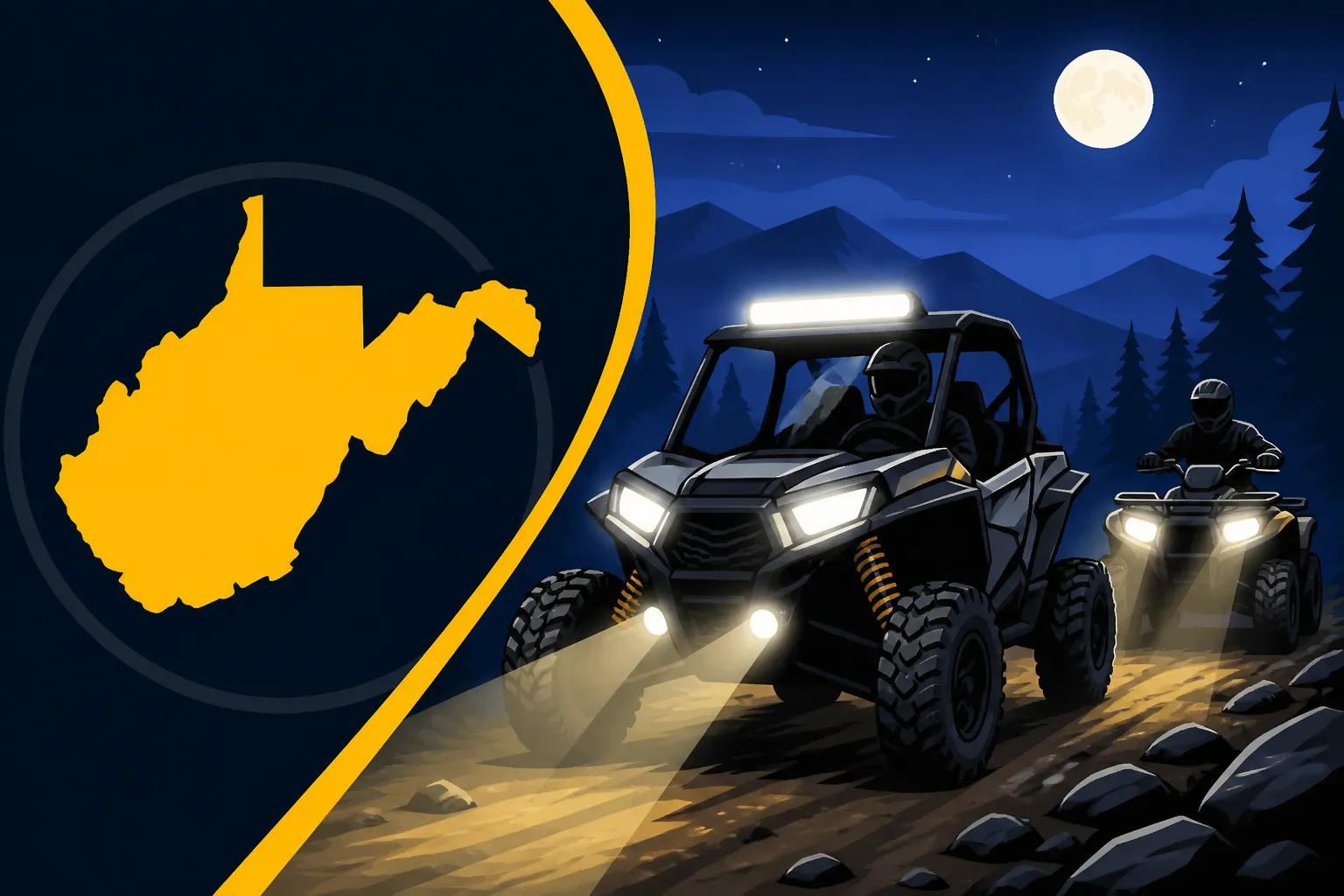
Even on private land, if you’re using your machine after dark, good lighting is essential. Whether you’re checking fences on the back forty, hauling firewood, or just cruising around your property, you need to see what’s in front of you and behind you. While you might not face a legal penalty from the state for inadequate lights on your own land, the personal cost of an accident could be far higher. For many riders, the bright, powerful light bars and cubes from companies like SuperATV are popular for off-road night riding, illuminating the path ahead with exceptional clarity. These might not be street-legal in all scenarios, but for pure off-road utility, they are a game-changer.
Specific Lighting Requirements for Street-Legal SPVs
When you decide to equip your ATV or UTV to meet West Virginia’s specific standards for a "Special Purpose Vehicle" (SPV) plate, you're signing up for a whole new level of legal compliance, especially when it comes to lights. This isn't just about slapping on a few extra bulbs; it's about meeting detailed requirements that ensure your machine is as visible and predictable as any other vehicle on the road.
Headlights: The Forward View
Your headlights are your eyes on the road after dark, and West Virginia doesn't take them lightly. For an SPV, you generally need two white headlights, mounted at specific heights, that can illuminate the road effectively. These aren't just decorative; they need to cast a beam far enough to reveal hazards and also clearly define the width of your vehicle to oncoming traffic. The law typically requires them to be visible from at least 500 feet away, ensuring that other drivers have ample time to react to your presence.
But it’s not just about having any headlights. Street-legal machines need to have both high and low beam functionality, just like a car. Low beams are crucial for not blinding oncoming traffic, while high beams offer that extra reach when you’re on unlit rural roads, provided there’s no opposing traffic. Properly aiming these headlights is critical. Lights pointed too high will blind others, while lights pointed too low will limit your own visibility. Getting this right is a key part of your street-legal conversion and often falls under the inspection requirements for an [Equipment a West Virginia SPV Must Carry].
Taillights and Brake Lights: The Rear View
While your headlights announce your arrival, your taillights and brake lights protect your rear, communicating your presence and your intentions to drivers behind you. West Virginia law typically requires two red taillights, mounted at specific heights, visible from at least 500 feet to the rear. These lights need to be constantly illuminated whenever your headlights are on, serving as a steady beacon in the darkness.
Crucially, your brake lights must be separate and distinct, illuminating brighter than your taillights whenever you apply the brakes. This is a non-negotiable safety feature, warning following drivers that you are slowing down or stopping. Imagine the confusion and danger if your brake lights weren’t working on a busy road; a rear-end collision would be almost inevitable. Ensuring your brake lights are bright, easily visible, and activate instantly with the slightest brake pressure is paramount for an SPV. You can find detailed information on these specific requirements under [West Virginia Taillight and Brake Light Requirements].
Turn Signals and Hazard Lights
This is where many off-road machines really need an upgrade to become street-legal. Unlike trail riding where hand signals might suffice, public road use demands clear, electronic indicators of your intent to turn or change lanes. West Virginia mandates amber or red turn signals on both the front and rear of your SPV, easily visible from at least 200 feet away. These signals must flash at a consistent rate, clearly communicating your intention to turn left or right.
Many riders opt for comprehensive aftermarket turn signal kits to meet this requirement. Companies like SuperATV offer robust, easy-to-install kits specifically designed for popular UTVs like Polaris RZRs or Can-Am Commanders, integrating seamlessly into your existing electrical system. These kits typically include a horn, turn signal switch, and all necessary wiring to ensure compliance. A functioning hazard light system, which flashes all four turn signals simultaneously, is also a standard requirement, providing crucial visibility if your vehicle is stopped or disabled on the side of the road. For many riders, the installation process, especially for specific models, can be detailed, as you might explore in a guide like [Turn Signal Wiring on a Polaris Ranger].
License Plate Illumination
Often overlooked but absolutely critical for street legality is proper license plate illumination. Every street-legal vehicle, including your SPV, must have a white light shining on its rear license plate when the headlights are on. This light must be bright enough to make the characters on the plate clearly legible from a distance of at least 50 feet to the rear. It’s a small detail, but it’s a non-negotiable part of being road-legal. Without it, you could face a stop by law enforcement, even if all your other lights are working perfectly. This ensures that your vehicle can be identified by officers, toll cameras, or anyone else who needs to read your plate after dark.
Additional Safety Lighting and Accessories
Beyond the minimum legal requirements for street-legal operation, there's a whole world of additional lighting and accessories that riders often consider for their ATVs and UTVs. While some enhance safety, others are strictly for off-road prowess and must be used judiciously, if at all, on public roads.
Reflectors: Passive Visibility
Even with a full suite of active lighting, reflectors play a vital, passive role in your visibility. West Virginia law typically requires red reflectors on the rear of your vehicle and amber or red reflectors on the sides. These simple, inexpensive additions can be life-savers, catching the light from other vehicles’ headlights and making your machine visible even if your active lights fail or are momentarily obscured. Think about parking on the side of the road at night; reflectors ensure your SPV still has a presence even when static.
Many OEM machines come with some reflectors, but adding extra ones, particularly on the sides and corners of your machine, can significantly improve your profile to other drivers. This is especially true for UTVs, which can have a wide stance. Reflective tape can also be an effective, low-cost way to enhance your machine's visibility, particularly if it's a darker color that tends to blend into the night. It's an often-forgotten component in discussions about [West Virginia SPV Plate Requirements List], but crucial nonetheless.
Auxiliary Lighting: Beyond the Minimum
This is where the line between trail lighting and street legality often blurs. Light bars, cube lights, rock lights, and other auxiliary lights are incredibly popular for off-road riding, transforming night trails into daylight. Brands like SuperATV offer a massive range of these powerful lighting solutions, designed to cut through the darkest woods. However, their use on public roads is highly restricted, if not outright prohibited, in West Virginia.
Most state laws dictate that any lights beyond the standard headlights and fog lights must be covered when on a public road, or they must be wired to activate only when the vehicle is in reverse or when off-road. The sheer intensity of these lights, while amazing for illuminating a pitch-black trail, can be blinding and dangerous to oncoming traffic on a paved road. Using a powerful LED light bar on a highway, for instance, could result in a hefty fine and a serious safety hazard. Always check local ordinances, but generally, if it's brighter than your high beams and not factory-installed as part of a DOT-approved system, it needs to be off or covered when on public pavement.
Wiring and Power Considerations
Adding all these lights isn't just about bolting them on; it's about properly integrating them into your machine's electrical system. Modern ATVs and UTVs have increasingly sophisticated electrical systems, and simply tapping into a random wire can lead to blown fuses, drained batteries, or even more serious electrical problems. For street-legal conversions, especially with turn signals and additional lights, professional wiring or careful DIY with proper components is essential.
You’ll want to use appropriate wire gauges, relays for high-current accessories like light bars, and dedicated fuse blocks to protect your system. A weak electrical connection can lead to intermittent lighting, which is just as dangerous as no lighting at all. Consider your machine's stator and battery output – can it handle the additional electrical load of all your new lights? For complex conversions, especially if you're adding multiple accessories from companies like SuperATV, it might be worth consulting with a qualified mechanic or an experienced aftermarket installer to ensure your electrical system is robust enough to handle the demand without leaving you stranded in the dark.
Practical Considerations for Night Riding Safety
Riding after dark, whether on the trail or on public roads, adds a layer of complexity and risk compared to daytime operation. Being prepared and proactive is key to a safe and enjoyable experience.
Regular Maintenance and Pre-Ride Checks
Before you ever roll out for a night ride, a thorough pre-ride inspection of your lighting system is absolutely non-negotiable. This isn’t just a quick glance; it's a methodical check of every single light on your machine.
- Headlights: Are both high and low beams working? Are they aimed correctly? Are the lenses clean and free of mud or scratches that could diffuse the light?
- Taillights & Brake Lights: Are both taillights glowing steadily? Do both brake lights illuminate brightly when you press the brake pedal?
- Turn Signals & Hazards: Do all four turn signals flash correctly and at a consistent rate when activated? Does your hazard light function work?
- License Plate Light: Is it illuminating your license plate clearly?
- Reflectors: Are they clean and intact?
It’s astonishing how often a bulb can burn out or a connection can come loose between rides. A quick check takes minutes but can prevent a dangerous situation or an unwanted interaction with law enforcement. Always carry spare bulbs or a basic repair kit, especially if you're venturing far from home. A small crack in a lens can dramatically reduce light output and needs to be addressed promptly. For a complete overview of what law enforcement might check, consider [West Virginia Inspection Rules for a Street-Legal Machine].
Riding Conditions and Adjusting Your Lights
Night riding itself presents unique challenges. Your depth perception is reduced, shadows can play tricks on your eyes, and hazards are harder to spot. This means you need to adjust your riding style and how you use your lights.
- Speed: Reduce your speed significantly. You can only react to what you can see, and if your lights only illuminate 100 feet ahead, you need to be able to stop within that distance.
- Beam Selection: Be diligent about switching between high and low beams. Blinding an oncoming driver with your high beams is not only dangerous but can also be a ticketable offense. Use your low beams in traffic, and switch to high beams only when the road ahead is clear and unlit.
- Weather Conditions: Fog, heavy rain, and even thick dust can severely reduce visibility, making your lights less effective. In these conditions, auxiliary fog lights (if legally mounted and used) can sometimes help, but primarily, your speed needs to drop even further. Driving with only your high beams in fog can actually make visibility worse as the light reflects off the moisture particles.
- Dust: When riding in a group on dusty trails, your lights can create a "wall of light" that actually impairs vision. In these situations, often the best approach is to slow down, increase following distance, and rely more on your taillights and passive reflectors to be seen.
Penalties for Non-Compliance
Let's be direct: riding without the legally required lighting after dark on West Virginia's public roads is asking for trouble. Law enforcement officers are vigilant about safety, and inadequate lighting is a clear red flag. The specific penalties can vary, but you could be looking at fines, points on your driving record (if you have one), and a requirement to fix the issue promptly. In some cases, a severe violation could even lead to your vehicle being impounded until the lighting issue is corrected.
Beyond the legal ramifications, the greater penalty is the increased risk of an accident. An SPV without proper headlights or taillights is a severe hazard, exponentially increasing your chances of a collision. In the event of an accident, if your lighting was found to be non-compliant, you could face increased liability, regardless of who was at fault in the initial collision. It’s simply not worth the risk. While the article [West Virginia Penalties for an Untitled Machine] covers a different core topic, it serves as a good reminder that West Virginia takes vehicle compliance seriously, and the consequences for breaking the rules can be significant.
Converting Your Machine for Night Road Use
So, you're ready to make your off-road beast street-legal for those twilight rides home or evening runs into town. The lighting aspect of this conversion is one of the most significant and often the most intimidating.
Aftermarket Kits and DIY vs. Professional Installation
The good news is that the aftermarket industry has recognized the growing demand for street-legal UTVs and ATVs. You'll find a wealth of "street legal kits" available from various manufacturers, including comprehensive options from companies like SuperATV. These kits are often designed to be relatively plug-and-play for popular models, bundling essential components like turn signals, a horn, mirrors, and often a license plate bracket with illumination.
- DIY Installation: If you're mechanically inclined and comfortable with wiring diagrams, installing a kit yourself can save you money. Many kits come with detailed instructions, and there are countless online tutorials. However, be prepared to spend some time, especially on the wiring aspects, to ensure everything is connected safely and correctly. A common pitfall for DIYers is cutting corners on proper fusing or weatherproofing, which can lead to future electrical issues.
- Professional Installation: For those less confident in their electrical skills or simply short on time, professional installation by an experienced mechanic or ATV/UTV shop is a fantastic option. They can ensure all components are installed correctly, wired safely, and meet West Virginia's specific requirements. While it costs more upfront, it can save you headaches and potential legal troubles down the road, and ensures you're ready for an [Equipment a West Virginia SPV Must Carry] check.
Regardless of your chosen path, research the kits carefully. Look for reviews, compatibility with your specific machine, and ensure the components themselves are robust enough to handle the rigors of both on-road and off-road use. A good starting point for budget-conscious conversions is exploring guides like [Making a Side-by-Side Street Legal in West Virginia on a Budget].
Ensuring DOT Compliance
One crucial aspect of street-legal lighting that often gets overlooked by riders is "DOT compliance." DOT stands for the Department of Transportation, and their standards govern the safety and performance of vehicle components, including lights, for use on public roads. Many aftermarket off-road lights, while incredibly powerful, are not DOT compliant. They might be too bright, have the wrong beam pattern, or lack the proper testing and certification for road use.
When you're outfitting your SPV, particularly for headlights and taillights, look for components that specifically state they are DOT compliant. These lights are engineered to provide the correct light output, beam cutoff, and color spectrum required for safe road operation without blinding other drivers. Using non-DOT compliant lights for your primary road lighting could lead to you failing an inspection, being pulled over, or worse, contributing to a dangerous situation on the road. This distinction is similar to the difference between off-road tires and [DOT Tires for a Street-Legal Side-by-Side] – both work, but only one is legally approved for sustained highway use. Always prioritize DOT-compliant lighting for any function that will be active on public roads after dark.
Table: West Virginia SPV Lighting Quick Reference
To help you keep track of the key lighting requirements for your Special Purpose Vehicle in West Virginia, here's a handy quick reference table. Remember, always consult the most current state regulations or a qualified professional for definitive advice.
| Lighting Component | Requirement | Key Features | Important Notes |
|---|---|---|---|
| Headlights | 2, White, Forward-Facing, DOT-Compliant | High & Low Beams, Visible 500 ft, Properly Aimed | Must not blind oncoming traffic. Crucial for nighttime visibility. |
| Taillights | 2, Red, Rear-Facing, DOT-Compliant | Continuously illuminated when headlights are on, Visible 500 ft from rear. | Essential for rear visibility, especially when stopped or moving slowly. |
| Brake Lights | Integrated with taillights or separate, Red, Brighter when applied | Clearly brighter than taillights, Activates with brake pedal. | Critical for signaling deceleration/stops to trailing vehicles. |
| Turn Signals | 4 (2 front, 2 rear), Amber or Red (rear), Flashing | Visible 200 ft, Consistent flash rate, Controlled by dash switch. | Aftermarket kits common. Must clearly indicate turns. Hazard light function usually included. |
| License Plate Light | 1, White, Illuminates rear license plate | Clearly legible from 50 ft. | Often a small LED light; easily overlooked but legally required. |
| Reflectors | Red (rear), Amber or Red (sides) | Passive visibility enhancement, Catches light from other vehicles. | Required even with active lights. Check if existing reflectors are sufficient. |
| Auxiliary Lights | Off-Road use only, or covered on public roads (e.g., light bars, rock lights) | High intensity, Wide spread. | Generally illegal to use on public roads unless specifically DOT-approved and wired (e.g., fog lights). Always cover or turn off when on pavement. Examples include SuperATV light bars. |
Disclaimer
This article is for general informational purposes only and does not constitute professional advice. Laws, prices and regulations vary by location and change over time. Consult a qualified professional for guidance on your specific situation.