West Virginia’s 20-Mile Centerline Rule for Street-Legal Machines
Riding an ATV or UTV in West Virginia is an absolute blast, but trying to understand all the different rules for taking your machine on public roads can feel like deciphering ancient scrolls. One of the most confusing aspects for many enthusiasts is West Virginia's specific 20-mile centerline rule for street-legal machines. This guide is here to break down exactly what that means, who it applies to, and how you can ride legally without accidentally running afoul of the law.
Understanding West Virginia's 20-Mile Centerline Rule
For many riders dreaming of connecting trails or running to the gas station on their side-by-side, the idea of a "street-legal" machine is incredibly appealing. West Virginia does offer a path to street legality through its Special Purpose Vehicle (SPV) designation. However, this isn't a free pass to drive anywhere, anytime. The 20-mile centerline rule is a key component of how these street-legal machines can operate, and it's frequently misunderstood, leading to confusion and sometimes costly tickets. It’s not just a general guideline; it's a specific legal restriction designed to balance trail access with public road safety and infrastructure.
What "20-Mile Centerline" Actually Means
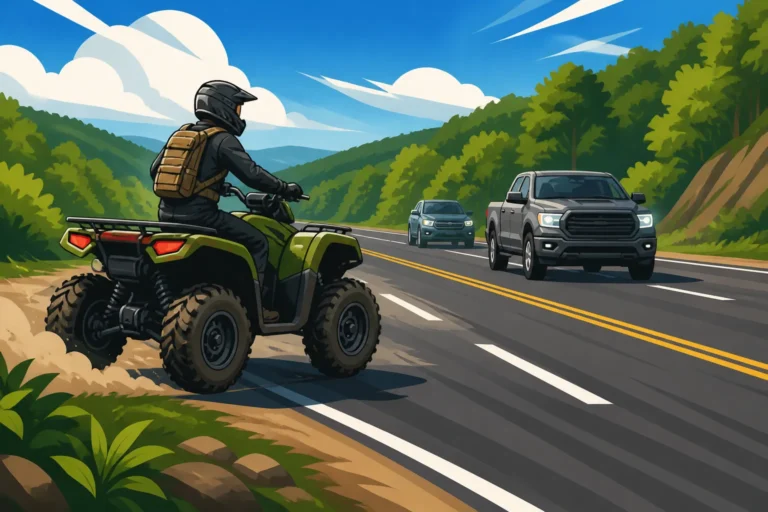
Let's cut right to the chase: the "20-mile centerline rule" dictates that a properly equipped and titled Special Purpose Vehicle (SPV) can only be driven on a road with a painted centerline for a maximum distance of 20 miles. This isn't 20 miles round trip; it's 20 miles in total on any given trip that involves a road with a centerline. Once you hit that 20-mile mark on a centerline road, you're expected to get off it or be in violation. The crucial distinction here is "painted centerline." Many smaller, rural roads, particularly in mountainous areas, might not have a painted centerline. These roads often fall under different regulations or are more typically classified as trail connectors or county routes without the same restrictions, or they might be subject to more general [West Virginia's 10-Mile, 25 mph Road Rule] which applies to non-SPV machines. This difference is critical for planning your rides and avoiding unintended infractions.
Imagine you're leaving a trailhead in a town like Gilbert. You want to ride a paved road to get to another trail system ten miles away, and that road has a painted centerline for the entire stretch. You're allowed to make that ten-mile journey. But if that road were twenty-five miles long and you continued past the twenty-mile point on the centerline section, you'd be breaking the rule. The rule is designed to facilitate connections between trail systems and local amenities within reasonable proximity, rather than allowing long-distance highway travel.
The Intent Behind the Restriction
So, why does West Virginia have this specific limitation? The primary intent behind the 20-mile centerline rule is to provide a practical means for SPV owners to connect designated trail systems, access services like gas stations and restaurants in [West Virginia's ATV-Friendly Towns and What You Can Ride], and navigate short distances on public roads without granting them full passenger vehicle status. Lawmakers recognized the growing popularity of ATVs and UTVs and the economic benefit they bring to regions like southern West Virginia, but they also needed to maintain safety and address concerns about these machines on higher-speed, higher-traffic roads.
By limiting travel on centerline roads, the state attempts to keep SPVs primarily off major thoroughfares where they might pose a greater risk due to their design, speed capabilities (or lack thereof compared to cars), and general visibility. It's a compromise that acknowledges the utility and recreational value of these machines while attempting to mitigate potential hazards on roads typically used by cars and trucks. The rule aims to facilitate the "trail town" experience, allowing riders to easily move between trailheads, lodging, and local businesses, but within a defined geographical and practical scope.
Who the 20-Mile Rule Applies To
It's absolutely vital to understand that the 20-mile centerline rule only applies to machines that have been legally converted to Special Purpose Vehicles (SPVs) and bear a specific [West Virginia's Street-Legal Special Purpose Vehicle Plate]. This is not a universal rule for all ATVs and UTVs in the state. Many riders mistakenly believe that if their ATV is simply registered or titled, they can ride it anywhere, which simply isn't true. This distinction is paramount because the requirements, privileges, and restrictions for an SPV are significantly different from those for a standard off-road vehicle.
Special Purpose Vehicles Only
To be clear: if your ATV or UTV has not gone through the specific conversion process and received an SPV plate from the West Virginia DMV, this 20-mile centerline rule does not apply to you. Instead, you're subject to the much more restrictive general ATV road riding laws, which often limit you to roads without centerlines, certain low-speed areas, or direct crossings. The SPV designation is earned by equipping your machine with a host of safety and road-legal items—things like DOT-approved tires, turn signals, mirrors, a horn, a windshield (if applicable), and proper lighting. Once your machine meets these criteria and you've successfully navigated the [Registering a Street-Legal Special Purpose Vehicle in West Virginia] process, then, and only then, does the 20-mile centerline rule become relevant to your riding.
Think of it this way: your standard ATV is like a dirt bike on steroids – awesome off-road, but mostly restricted from pavement. An SPV is like taking that dirt bike and adding all the necessary lights, mirrors, and signals to make it somewhat car-like, allowing it limited road access. Without that transformation and the special plate, you're still on the dirt bike, even if you put a blinker on it yourself.
Differentiating From General ATV Road Riding Rules
West Virginia has a separate set of rules for general ATV road riding that applies to machines without an SPV plate. These rules are much more constrained. For instance, non-SPV ATVs and UTVs are typically limited to roads without painted centerlines, often referred to as "county routes" or "secondary roads," and even then, usually only for short distances to cross a highway or connect trails. The maximum speed is often capped at 25 mph, and there are often strict limitations on the length of travel (like the 10-mile rule mentioned earlier).
This is where a lot of riders get into trouble. They see friends on SPVs using paved roads and assume their own machine, which isn't an SPV, can do the same. This can lead to hefty fines and citations. Always check the specific laws for your machine's classification before hitting any public road. An SPV plate is your official permit to utilize the 20-mile centerline rule, and without it, you're playing a different, much riskier game with law enforcement.
| Vehicle Type | Street Legal Status | Centerline Road Access | Maximum Distance (Centerline Road) | Speed Limits (General) | Required Plate |
|---|---|---|---|---|---|
| Standard ATV/UTV | No | Limited/Crossing Only | N/A (subject to local ordinances) | 25 mph (on permitted roads) | Off-Road Title |
| Special Purpose Vehicle (SPV) | Yes | Yes | 20 Miles | Posted Speed Limits | SPV Plate |
Navigating the Rule in Practice
Knowing the rule in theory is one thing, but actually applying it while you're out riding is another challenge entirely. It requires awareness, planning, and often, some quick mental math. The mountainous terrain and winding roads of West Virginia can make this particularly tricky, as roads might change character – from no centerline to a centerline – without much warning. Riders need to be constantly vigilant about their surroundings and their odometer to stay compliant.
Planning Your Routes to Stay Compliant
The best way to avoid issues with the 20-mile centerline rule is to plan your routes meticulously. If you know you'll be using an SPV on roads with painted centerlines, measure those sections of your ride. Utilize GPS apps or paper maps that clearly delineate roads with centerlines from those without. Many popular riding areas in West Virginia have excellent trail maps that also indicate road classifications. Apps like onX Offroad can be incredibly helpful for visualizing your route and tracking your mileage. Remember, the 20-mile limit is per trip, not per day, and it resets once you exit the centerline road and re-enter an approved off-road trail or a non-centerline road where SPV use is permitted.
Consider a scenario: you start at a trailhead, ride 5 miles on a centerline road to get gas and lunch, then ride another 5 miles on the same centerline road to get to a different trailhead. You've now used 10 of your 20 miles. If you were to then ride an additional 15 miles on a third centerline road, you'd exceed your limit. It's not about the clock, but the distance. This is where pre-planning is essential, especially for longer rides or when exploring new areas. Make sure you know [Where West Virginia Trail Connectors Cross a Public Road] to safely link up different sections.
What Happens If You Exceed the Limit?
Exceeding the 20-mile centerline limit on your SPV can result in a citation, which means a fine and potentially other penalties, just like any other traffic infraction. Law enforcement in West Virginia, particularly in trail towns, is well-versed in the nuances of ATV and UTV laws. They're often out on patrol, ensuring riders adhere to regulations designed for safety and to maintain good relationships with local communities.
The fines for such violations can vary, and repeated offenses could lead to more severe consequences. It's far better to err on the side of caution. If you realize you're approaching your 20-mile limit on a centerline road, look for an alternative route, a trail access point, or a place to safely park and continue by other means if your destination is further than the remaining mileage allows. Remember, ignorance of the law is generally not a valid defense, so understanding and respecting these rules is your responsibility as a rider. Checking [West Virginia ATV Ticket Costs] can give you an idea of what kind of financial hit you could take.
Equipment for Street Legality and the Rule
Achieving street-legal status for your ATV or UTV in West Virginia involves more than just filling out paperwork. It requires specific modifications to your machine to meet safety standards comparable to other road-going vehicles. These modifications are not optional; they are a prerequisite for obtaining that coveted SPV plate and, by extension, the privilege of utilizing the 20-mile centerline rule. Investing in quality parts for this conversion is crucial not only for compliance but also for your safety and the longevity of your machine on paved surfaces.
Essential Gear for SPV Conversion
Before you can even think about the 20-mile rule, you need to ensure your machine is properly equipped to be an SPV. This typically includes:
- DOT-Approved Tires: Your off-road tires might be fantastic in the mud, but they often aren't rated for highway speeds and wear. You'll need tires specifically designed and certified for road use. Many riders turn to aftermarket suppliers like SuperATV for their range of [DOT Tires for a Street-Legal Side-by-Side] that offer a balance of off-road capability and on-road compliance.
- Headlights, Taillights, and Brake Lights: These need to be functional and meet state standards for visibility, especially for [West Virginia Headlight Rules After Sunset].
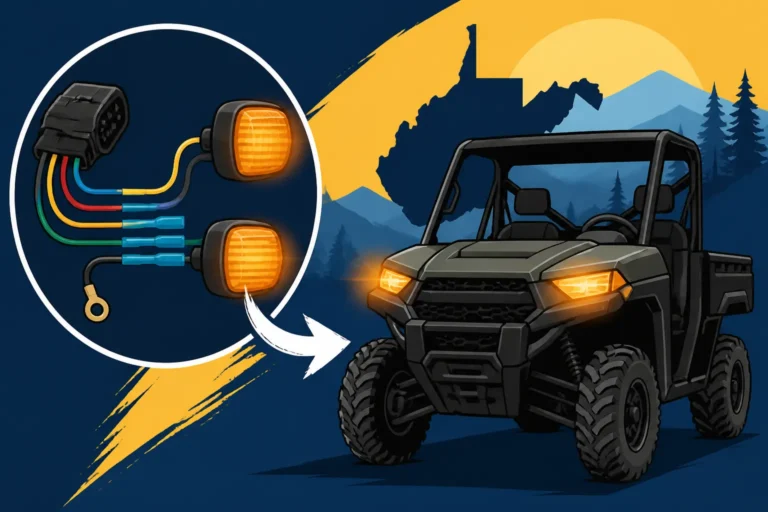
- Turn Signals: Both front and rear, clearly visible, are essential for communicating your intentions on the road. Kits are available that make [Turn Signal Wiring on a Polaris Ranger] or other popular models fairly straightforward.
- Horn: A working horn is a must for alerting others to your presence. [Horn Placement on a Side-by-Side] should be easily accessible to the driver.
- Rearview Mirror(s): At least one rearview mirror is typically required, often a single center mirror, but side mirrors are also a good idea for increased visibility.
- Windshield: For UTVs, a windshield (often [Safety Glass Windshield or Goggles]) is usually required to protect occupants from debris.
- Seatbelts: If your machine has seats, functional seatbelts for all occupants are mandatory.
- License Plate Mount and Light: A properly illuminated spot for your SPV plate is a necessity.
These components are foundational to your SPV status. Without them, you won't get the plate, and thus, the 20-mile centerline rule won't apply to you because you're not a legal SPV. Many of these items are available in convenient street-legal conversion kits from various aftermarket companies, making the process much simpler than sourcing individual parts.
Maintaining Your Machine for Road Use
Once your machine is an SPV, simply having the right equipment isn't enough; you also need to maintain it for the different demands of road use. Riding on pavement puts different stresses on your machine compared to off-road trails. Your [Insurance Cost for a Street-Legal Side-by-Side in West Virginia] might be higher because of the increased liability of road use, so it's critical your machine is always in top condition. Regular checks of tire pressure, brake function, and all lighting components become even more important when you're sharing the road with cars and trucks.
Additionally, consider how the components you've added for street legality perform over time. For example, the [Mirror Requirements on a West Virginia Street-Legal Machine] mean your mirrors need to be securely mounted and provide a clear view. If they're constantly vibrating loose or getting knocked out of alignment, they're not effectively serving their purpose. Riding on pavement for extended periods, even within the 20-mile limit, will put more wear on your suspension and tires than purely off-road excursions, so a proactive maintenance schedule is highly recommended. Many riders often supplement their SPV conversion with heavier-duty components, again, often sourced from reputable vendors like SuperATV, to withstand the dual demands of trail and pavement.
Common Misconceptions and Penalties
The intricacies of West Virginia's ATV and UTV laws, especially concerning road use, are ripe for misunderstanding. Many riders, with the best intentions, often fall prey to common misconceptions that can lead to unexpected run-ins with law enforcement. It's crucial to clarify these points to ensure you're riding safely, legally, and without unnecessary stress or financial burdens. Understanding not just the rules, but also the consequences of breaking them, can be a powerful motivator for compliance.
"I Have a Title, So It's Street Legal!" (Not Quite)
This is perhaps the biggest misconception out there. Just because your ATV or UTV has a [Titling an ATV in West Virginia] doesn't mean it's street legal or automatically an SPV. In West Virginia, virtually all ATVs and UTVs sold after 1989 are required to have a title, regardless of whether they ever touch a paved road. The title establishes ownership and is critical for [Buying a Used ATV in West Virginia: The Title Steps] or [Selling an ATV in West Virginia Without Trouble]. It allows the state to track the machine for sales tax purposes and to prove ownership.
However, having a title is only the first step in a multi-step process to achieve SPV status. You still need to make all the necessary equipment modifications (as discussed in the previous section), have your machine inspected (if required), and apply for the specific SPV plate. Without that SPV plate, your titled machine is still an off-road vehicle in the eyes of the law, and the 20-mile centerline rule does not apply to it. You would instead be subject to the more stringent [West Virginia ATV Road Rules for Young Riders] and general off-road machine restrictions, which offer very limited road access.
Ignoring Local Ordinances
While the state law outlines the 20-mile centerline rule for SPVs, individual cities and counties in West Virginia often have their own specific local ordinances regarding ATV and UTV use on public roads. These local rules can sometimes be more restrictive than state law. For example, a town might prohibit SPV use on any road within its corporate limits, or it might designate specific routes. [West Virginia's ATV-Friendly Towns and What You Can Ride] often have clear signage and published maps indicating where SPVs and ATVs are permitted.
Always check with the local municipality if you plan to ride your SPV on roads within a town or city, even if you're confident you're within the state's 20-mile centerline limit. A local ordinance could trump or add to the state rule in that specific area. Getting a ticket because you didn't check the local rules, even if you were compliant with state law, is a frustrating but avoidable situation. This is especially true for things like [Parking an ATV on a West Virginia Main Street] or [Fueling Up in a West Virginia ATV-Friendly Town]; these activities, while generally permissible in trail towns, can still be subject to local rules.
Penalties for Non-Compliance
The penalties for violating West Virginia's ATV and UTV road laws, including exceeding the 20-mile centerline rule for SPVs or operating a non-SPV machine illegally on paved roads, can range from simple fines to more serious consequences. A typical first offense might result in a monetary fine, similar to a traffic ticket. However, repeat offenses can lead to higher fines, impoundment of your vehicle, or even loss of riding privileges.
Furthermore, if you're involved in an accident while operating your ATV or UTV illegally on a public road, your insurance coverage could be jeopardized. Most standard ATV insurance policies are designed for off-road use and may not cover incidents that occur during illegal road operations. This could leave you personally liable for damages, medical bills, and legal fees, which can be astronomical. Understanding [West Virginia ATV Liability Coverage Limits] and how your policy applies to road riding is critical. It's always in your best interest to understand and follow all rules to protect yourself, your machine, and your finances.
Disclaimer
This article is for general informational purposes only and does not constitute professional advice. Laws, prices and regulations vary by location and change over time. Consult a qualified professional for guidance on your specific situation.