Street-Legal Conversion Kit Prices
Thinking about making your ATV or UTV street-legal here in West Virginia can feel like a maze, right? You're picturing cruising through our trail towns, connecting rides, and avoiding loading up the trailer for every short hop, but then the questions start piling up. What exactly do you need? How much is it all going to cost? It's easy to get overwhelmed by the various components and the price tags attached to "conversion kits." This guide is here to untangle that knot, breaking down what typically goes into these kits, the different price points you might encounter, and what to realistically budget for turning your off-road machine into a legal road warrior in the Mountain State.
What Goes Into a West Virginia Street-Legal Conversion Kit?
When you hear "street-legal conversion kit," it's not usually one single box that contains everything you need. Instead, think of it more as a collection of essential components designed to bring your off-road vehicle into compliance with state laws for on-road use. In West Virginia, like many places, these requirements primarily revolve around making your machine visible, able to signal, and equipped with basic safety features. Understanding these core elements is the first step in deciphering kit prices and building your budget.
Essential Lighting and Signaling Components
At the heart of any street-legal conversion are the lights and signals. Without these, your machine simply can't safely or legally share the road with other traffic. We're talking about things that most cars take for granted but are often missing or insufficient on off-road-only ATVs and UTVs.
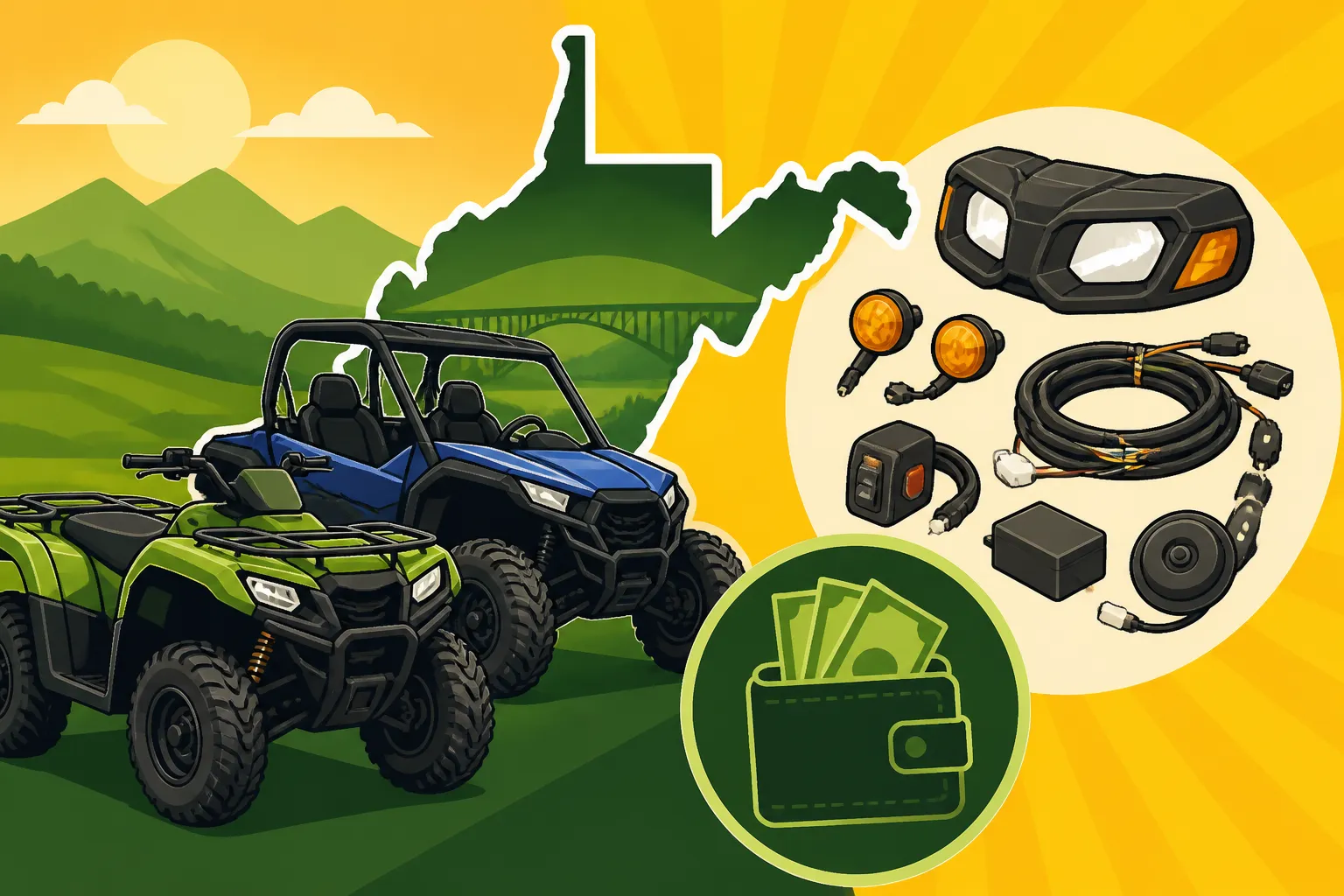
You'll need proper headlights that are bright enough and aimed correctly to illuminate the road ahead, especially after dark. These often need to meet specific Department of Transportation (DOT) standards. Similarly, taillights and brake lights are crucial so drivers behind you know when you're slowing down or stopping. But perhaps the most significant addition for many off-roaders is a full turn signal system. This isn't just a couple of blinkers; it's typically a complete front and rear setup with a switch, flasher relay, and wiring harness to ensure you can clearly indicate your intentions when turning or changing lanes. And don't forget the license plate light! West Virginia requires your plate to be visible, even at night, so a small light to illuminate it is a must. The type of bulbs (LEDs are common for their brightness and low draw, but some kits might still use halogen) and the overall waterproof rating of these components can significantly affect the kit's cost and long-term durability, especially if you plan to keep riding in all kinds of weather.
Safety and Visibility Gear
Beyond lighting, other components ensure you can see, be seen, and react safely while on public roads. These aren't just suggestions; they're integral to meeting West Virginia's specific requirements for a street-legal Special Purpose Vehicle (SPV).
A functioning horn is non-negotiable. You need to be able to alert others to your presence in a hazardous situation. Mirrors are another big one. Most conversion kits will include at least two mirrors—one on the left and one on the right—to give you adequate rearward visibility. Some comprehensive kits might even throw in a rearview mirror, which can be a nice bonus for UTVs. A proper windshield is also critical for UTVs, and if it's not already installed, some kits will provide one, often made from safety glass or a durable, scratch-resistant polycarbonate. The materials here make a huge difference in price. And speaking of safety, you’ll also need DOT-compliant tires. Off-road tires are fantastic in the mud and on rocks, but their aggressive tread and softer compounds aren't designed for sustained pavement use. [DOT Tires for a Street-Legal Side-by-Side] are crucial for grip, longevity, and legality on asphalt. These are usually a separate purchase, but some advanced kits might offer bundles or recommendations.
Other Necessary Accessories for West Virginia Roads
West Virginia has a few other specific requirements that often necessitate additional components beyond the basic lighting and mirrors you'd find in a generic kit. You'll definitely want to check the full list of what [Equipment a West Virginia SPV Must Carry] before finalizing your kit purchase.
For starters, a speedometer is essential. Knowing your speed is fundamental to safe and legal road operation, so if your machine doesn't have one, or if it's not accurate for road speeds, you'll need to add one. Many kits will include a universal unit or suggest compatible options. A spark arrester is also required, ensuring your exhaust system isn't spitting out embers that could cause a fire. Most modern ATVs and UTVs come with one from the factory, but it’s always good to check, especially if you have an aftermarket exhaust. Seatbelts are another key safety item. While most UTVs already have them, ensuring they are in good working order and properly mounted is critical. If your UTV or ATV isn't equipped with them, or if you're upgrading, this could be an additional cost. Ultimately, meeting the full suite of West Virginia's street-legal requirements means carefully evaluating your machine's current setup against the law, and then filling in the gaps with a conversion kit and any necessary supplementary parts.
Factors Influencing Street-Legal Conversion Kit Prices
You've probably noticed a wide range of prices when looking at street-legal kits online or in stores. It's not just random; several key factors determine how much you'll end up paying for a conversion kit for your West Virginia adventures. Understanding these can help you manage your expectations and make an informed decision that balances cost with your needs.
Machine Type and Make/Model Specificity
One of the biggest drivers of kit price is the specific machine you're trying to make street-legal. Are we talking about a single-rider ATV or a four-seat UTV? The answer significantly impacts the complexity and therefore the cost.
ATVs typically have fewer components that need conversion compared to UTVs. They might need a simpler wiring harness for turn signals, and often, their stock headlights and taillights are more easily adaptable. UTVs, on the other hand, are more akin to small cars, often requiring more extensive wiring for a larger cab, more robust mirrors, and potentially a full windshield if not already equipped. Beyond the type of machine, the make and model also play a huge role. A kit designed specifically for a Polaris RZR or a Can-Am Defender will almost always be more expensive than a generic "universal" kit. This is because model-specific kits are engineered for perfect fitment, often featuring plug-and-play wiring harnesses that match your vehicle's factory connectors, custom mounting brackets, and switches that fit existing dash cutouts. This specificity saves you a ton of time and frustration during installation, but you pay for that convenience in the upfront cost. Universal kits might be cheaper, but they often require more modification, custom wiring, and a bit more elbow grease to get everything installed correctly and looking tidy.
Quality, Features, and Brand Reputation
Just like with any other product, the quality of the components, the features they offer, and the reputation of the brand selling the kit all impact the price point. You truly get what you pay for in many cases.
Entry-level kits might use simpler wiring, basic switches, and less durable plastics or lenses for the lights. These can be perfectly functional, but they might not hold up as well to the rigors of West Virginia trail dust, mud, and weather. Mid-range and premium kits, however, will typically boast higher quality components: think robust, weather-sealed wiring harnesses, heavy-duty switches that won't fail after a few seasons, brighter LED lights with better light patterns, and more durable mirror housings. A brand with a strong reputation in the off-road community, like SuperATV, will often command a higher price for their kits because they've built trust through reliable products and good customer support. They might offer features like custom-designed light pods, stronger brackets, or integrated horn buttons that make the entire system feel more factory-installed. These kits often prioritize ease of installation, too, with comprehensive instructions and well-organized parts, further justifying their higher price tag compared to a no-name brand that might leave you scratching your head during installation.
DIY Installation vs. Professional Help
When budgeting for a street-legal conversion, it's easy to focus solely on the kit's price, but the cost of getting it installed is a significant factor that can dramatically sway your total outlay. Are you planning to tackle this project yourself, or will you be handing it over to a professional?
If you're handy with tools and have some experience with automotive wiring, a DIY installation can save you a substantial amount of money in labor costs. You're effectively trading your time and effort for cash. However, don't underestimate the time commitment or the potential need for specialized tools, especially for more complex UTV kits. Things like drilling into body panels, running wires cleanly through tight spaces, and ensuring all connections are waterproof and secure can be time-consuming and challenging. You also risk making errors that could lead to electrical issues or even fines if something isn't installed to West Virginia's legal standards. On the other hand, taking your machine to a professional shop means paying for their expertise and time. While this adds to the overall cost, it ensures the job is done correctly, adheres to all regulations, and usually comes with a warranty on the installation. For those who aren't confident in their mechanical or electrical skills, or simply don't have the time, professional installation is often a worthwhile investment, albeit one that increases your total budget significantly beyond just the kit price.
Budgeting for Your West Virginia Street-Legal Ride
Now that we've covered what typically goes into a kit and the factors that influence its price, let's talk about putting it all together for your wallet. Budgeting for a street-legal conversion isn't just about the kit itself; it's about understanding the whole financial picture to avoid any unwelcome surprises down the road.
Understanding the Range of Kit Costs
The price of a street-legal conversion kit can fluctuate quite a bit, making it hard to pinpoint an exact figure without knowing your specific machine and desired quality. Generally speaking, you can expect to spend anywhere from a few hundred dollars on the lower end to well over a thousand for a premium, comprehensive setup.
For basic ATVs or older UTVs that already have some factory lighting, a bare-bones turn signal and horn kit might start in the low hundreds. These kits often assume you'll be using existing lights for headlights/taillights and will require you to source mirrors and other items separately. Moving up the scale, a more complete kit for a popular UTV model—something with a robust wiring harness, integrated switches, LED lights, and good quality mirrors—will typically fall into the mid-hundreds to the upper end of the spectrum, possibly even reaching a thousand dollars or more. These kits aim to provide a more seamless, factory-like integration and save you a lot of custom fabrication. For instance, a dedicated [Turn Signal Wiring on a Polaris Ranger] might be part of a larger kit that costs more but offers superior integration. When you’re comparing options, pay close attention to the details of what each kit actually includes.
Here's a simplified look at how component choices can influence the overall kit cost:
| Component Type | Basic/DIY-Friendly Option | Mid-Range Option | Premium/Integrated Option | Impact on Kit Price |
|---|---|---|---|---|
| Turn Signals | Universal surface-mount LEDs | Model-specific LEDs with basic harness | Plug-and-play, waterproof, integrated switch | Low to Moderate |
| Horn | Simple button and generic horn | Weather-sealed, durable horn | High-tone, robust, integrated into harness | Low |
| Mirrors | Small, clamp-on universal mirrors | Larger, adjustable, break-away mirrors | DOT-approved, robust housing, wide view | Low to Moderate |
| Wiring Harness | Cut-and-splice, basic connections | Modular, some plug-and-play sections | Fully plug-and-play, sealed, OEM-style | Moderate to High |
| License Plate | Basic bracket with small LED light | Sturdy, vibr-resistant bracket, bright LED | Integrated into taillight, robust mounting | Low |
| Windshield | Not included (DIY/separate) | Full polycarbonate (scratch-resistant) | DOT safety glass, hard-coated polycarbonate | Not always in kit, but big cost if added |
Beyond the Kit: Other Street-Legal Expenses
It's tempting to think that once you buy the kit, you're done with the expenses. However, there are several other crucial costs involved in getting your machine legally on West Virginia roads. Overlooking these can lead to a busted budget or unexpected delays.
First, as mentioned before, DOT-compliant tires are almost always a separate purchase from the conversion kit itself. If your current tires aren't rated for road use, you'll need to invest in a new set. The cost of these can vary widely based on size, brand, and type, but it's a significant expense you must factor in. Then there are the fees associated with titling and registering your machine as a [West Virginia's Street-Legal Special Purpose Vehicle Plate]. You’ll have a title fee, registration fee, and potentially a sales tax to pay if you haven't already. While we can't give specific figures, these are recurring or one-time government fees that you'll need to account for. Don't forget about [Insurance Cost for a Street-Legal Side-by-Side in West Virginia]. Just like a car, a street-legal SPV needs liability insurance to be legal on public roads. The cost of this will depend on your driving record, the value of your machine, and your chosen coverage limits. You might also encounter an inspection fee if your county or a certified mechanic needs to verify that your modifications meet state standards before the DMV issues your SPV plate.
Making Smart Choices to Save Money (Without Cutting Corners)
Budgeting for a street-legal conversion doesn't mean you have to break the bank, nor does it mean you should compromise on safety or legality. There are smart ways to approach this project that can save you money while still ensuring your machine is road-ready in West Virginia.
One key strategy is to prioritize. Look at [West Virginia SPV Plate Requirements List] and identify what your machine absolutely needs to meet the minimum legal standards. Focus your initial kit purchase on these non-negotiable items: proper turn signals, a horn, and mirrors. You might already have sufficient headlights and taillights, for example, or your UTV might already have acceptable seatbelts. Another way to save is by considering a more DIY-friendly universal kit if you're confident in your installation skills. While they might require more effort, the lower upfront cost can be appealing. However, don't skimp on critical safety items like DOT tires, as these are non-negotiable for road safety. Shopping around for deals and comparing prices from different retailers can also yield savings. Sometimes, individual components purchased separately from different sources can be cheaper than a bundled kit, especially if you only need a few specific items. Finally, consider a phased approach. Get the absolute necessities installed and registered first, then gradually upgrade components like a fancier windshield or brighter auxiliary lights over time as your budget allows.
Where to Find and What to Look For in a Kit
You've got a handle on the costs and components, but now where do you actually go to buy these kits, and what should you be looking for to ensure you're getting a good deal and a reliable product? It's not always as simple as picking the first thing you see.
Reputable Retailers and Online Sources
When you're ready to buy, seeking out reputable sources is key. You want to ensure you're getting quality parts that will last and, ideally, come with some support if you run into issues.
Specialized off-road accessory retailers, both online and brick-and-mortar, are often the best places to start. These companies live and breathe ATVs and UTVs, so they understand the specific needs of these machines. Websites like SuperATV, for instance, offer a wide range of conversion components and full kits, often with detailed descriptions and installation guides specific to popular models. You'll also find kits on larger online marketplaces, but be sure to check seller reviews and product specifics carefully, as quality can vary. Some ATV/UTV manufacturers or their authorized dealerships might also offer proprietary kits or work with aftermarket suppliers to provide compliant solutions, though these might be at the higher end of the price spectrum. Don't hesitate to read reviews from other West Virginia riders who have completed a similar conversion—their experiences can provide invaluable insight into the best places to buy and which kits perform well under local conditions.
Key Features to Prioritize in a Kit
Once you've found a few potential kits, it's time to compare them. Beyond the price, several features should be at the top of your priority list to ensure a smooth installation and reliable operation for your street-legal machine.
First and foremost, look for kits that offer "plug-and-play" wiring. This feature is a game-changer for DIY installers, as it means the harness is designed to connect directly into your machine's existing electrical system with minimal cutting, splicing, or complex wiring diagrams. A truly plug-and-play system will save you hours of frustration and reduce the risk of electrical issues. Durability of components is another critical factor. Your ATV or UTV is designed for harsh environments, and your street-legal kit needs to withstand that too. Look for weather-sealed connectors, robust switchgear, and sturdy housings for lights and mirrors. Finally, confirm that the kit's components are compliant with West Virginia's specific regulations. For example, ensuring mirrors meet [Mirror Requirements on a West Virginia Street-Legal Machine] or that lights are DOT-approved is crucial. Some kits might be designed for other states with different rules, so always double-check the fine print or contact the seller to confirm compatibility with West Virginia law.
Understanding Kit Contents and Missing Pieces
It’s an unfortunate reality that sometimes what you think you're getting in a kit isn't exactly what arrives, or you might realize critical items are missing after you've started the installation. To avoid this headache, be meticulously thorough in reviewing the kit's contents before you buy.
Read the product description multiple times. Does it explicitly list every single item? For example, some kits might include turn signals but not a horn, or vice versa. Some might offer a basic set of mirrors, but you might prefer a larger, more durable option that isn't included. If the kit claims to be comprehensive, make sure it genuinely includes everything mandated by West Virginia law. This might mean asking specific questions to the seller about a speedometer, seatbelts, or even just detailed instructions. For UTVs, pay close attention to whether a windshield is included, and if so, what type it is. A full, hard-coated polycarbonate windshield is very different from a small half-windshield or nothing at all. Making a detailed checklist based on what [Making a UTV Street Legal in West Virginia] requires and then comparing it to the kit's manifest is the best way to ensure you're not left scrambling for missing parts, which can quickly add unexpected costs and delays to your conversion project.
Disclaimer
This article is for general informational purposes only and does not constitute professional advice. Laws, prices and regulations vary by location and change over time. Consult a qualified professional for guidance on your specific situation.