ATV Crash Injury Claims in West Virginia
Let's face it, enjoying the wild beauty of West Virginia on an ATV or UTV is an absolute thrill, but sometimes, the unexpected happens. A sudden turn, a hidden obstacle, or another rider's mistake can turn a fun day into a terrifying accident, leaving you with injuries and a mountain of questions about what comes next. This guide is here to walk you through the complex world of ATV crash injury claims in West Virginia, helping you understand your rights and the steps you can take when you're hurt.
The Immediate Aftermath: What to Do After an ATV Accident
When an ATV crash happens, it’s often sudden, disorienting, and incredibly stressful. Your immediate actions, or lack thereof, can significantly impact any future injury claim you might pursue. It’s not just about getting better physically; it’s about protecting your future.
Prioritizing Safety and Seeking Medical Attention
Your health is paramount, always. After any crash, even if you feel okay, the first thing you need to do is assess yourself and anyone else involved for injuries. Adrenaline can mask pain, so what seems like a minor bump at the scene could be a serious issue later.
If someone is seriously injured, call 911 immediately. Don't try to move someone with a suspected head, neck, or spinal injury unless they are in immediate danger (like from a fire). If you can safely do so, move yourself and your machine out of the path of other traffic. Once the immediate danger is addressed, seek medical attention. Go to the emergency room, an urgent care clinic, or see your primary care physician as soon as possible. Even a visit a day or two later can provide crucial documentation that links your injuries directly to the accident. Skipping this step can make it incredibly difficult to prove the crash caused your injuries later on, giving insurance companies an easy out. Make sure to clearly describe all your symptoms, no matter how minor they seem, to the medical staff. Those details become part of your medical record, which is vital evidence.
Documenting the Scene and Gathering Information
Once safety is secured and medical attention is on its way or received, your next critical step is to gather as much information as you possibly can from the scene. Memories fade, and details become blurred over time, so documenting everything while it’s fresh is key.
Start with photographs and videos. Use your phone to capture everything: the position of the ATVs, the damage to all vehicles involved, any visible injuries, skid marks, trail conditions, road conditions, traffic signs, weather, and anything else that might have contributed to the crash. Take pictures from multiple angles and distances. Don't forget to get close-ups of specific damage or injuries. The more visual evidence you have, the better.
If there were witnesses, talk to them! Get their full names, phone numbers, and email addresses. Ask them what they saw and if they'd be willing to provide a statement. An objective third-party account can be incredibly powerful in establishing fault.
Finally, make sure to get the contact and insurance information from any other parties involved in the crash. This includes their name, address, phone number, driver's license number, and insurance company details and policy number. If the crash involved a non-ATV vehicle, get that information too. You’ll also want to note the year, make, model, and [Finding the VIN Stamp on an ATV Frame] of all machines involved.
Notifying Authorities and Insurance
Depending on the severity of the crash, you might have already called 911, bringing law enforcement to the scene. If police or sheriff's deputies respond, they will typically create an accident report. Get the report number and the investigating officer's name and badge number. This report can be a valuable piece of evidence, detailing their assessment of what happened, though it's not always the final word on liability.
After addressing immediate safety and getting medical attention, you'll need to notify your own insurance company as soon as you reasonably can. Even if you believe the other party is at fault, your policy might have provisions for medical payments or uninsured motorist coverage that could help you. Be factual and stick to the observable details of the crash when speaking with them. Avoid speculating on fault or making statements that could be interpreted as admitting fault. This also applies when speaking with the other party's insurance company, which will likely contact you quickly. Remember, their primary goal is often to minimize their payout, so be cautious about what you say.
Understanding Liability in West Virginia ATV Crashes
Figuring out who is at fault after an ATV accident in West Virginia can feel like a tangled mess, especially when emotions are running high. But understanding how liability is determined is absolutely crucial if you're hoping to make an injury claim. It's not always as simple as "you hit me" or "I hit you."
Proving Negligence: The Core of Your Claim
In West Virginia, most personal injury claims, including those stemming from ATV accidents, hinge on proving negligence. What does that mean exactly? It means that someone failed to act with the reasonable care expected under the circumstances, and that failure directly caused your injuries. To prove negligence, you generally need to establish four key elements:
- Duty of Care: Everyone operating an ATV or UTV has a duty to operate it safely and responsibly, both to themselves and to others around them. This includes following trail rules, road laws (if applicable, like [West Virginia's 10-Mile, 25 mph Road Rule]), and generally exercising good judgment.
- Breach of Duty: This is where someone failed in that duty. Examples include speeding on a blind turn, riding under the influence of alcohol or drugs, distracted riding (yes, even on a quad!), failing to yield, or driving a poorly maintained machine that then suffered a mechanical failure. For instance, if another rider was showing off, riding way too fast for the trail conditions, and clipped your machine, sending you into a tree, they breached their duty of care.
- Causation: You must show a direct link between the other party's breach of duty and your injuries. If their negligent act hadn't happened, would you have been injured? If a manufacturer's defect, perhaps in a critical steering component, caused your UTV to veer unexpectedly and crash, then the manufacturer might be negligent. Or, if you're riding with good, regularly inspected aftermarket parts, say from SuperATV, and a different part fails due to another's negligence, that can help your case.
- Damages: Finally, you must have suffered actual damages as a result of those injuries – things like medical bills, lost wages, and pain and suffering.
Without clear evidence for each of these elements, your claim will struggle. This is why thorough documentation from the scene and immediate medical attention are so vital.
Comparative Negligence: How West Virginia Handles Shared Fault
One of the trickiest aspects of ATV accident claims in West Virginia is understanding how shared fault works. It's not uncommon for both parties to bear some responsibility for a crash, especially in dynamic off-road environments. West Virginia follows a "modified comparative negligence" rule, often called the "50% bar rule."
Here's how it breaks down:
- If you are found to be 50% or less at fault for the accident, you can still recover damages, but your compensation will be reduced by your percentage of fault. For example, if you sustained $100,000 in damages but were found to be 20% at fault because you didn't have your headlights on in dim conditions, you would only be able to recover $80,000.
- However, if you are found to be more than 50% at fault (i.e., 51% or more), you cannot recover any damages at all from the other party. This is a critical threshold.
Insurance adjusters and opposing lawyers will aggressively try to pin as much fault on you as possible to reduce or eliminate their payout. This makes the initial investigation and collection of evidence absolutely crucial. What you wear (like [Helmet and Eye Protection Rules in West Virginia]), how fast you were going, whether you were on a marked trail, or if you had consumed alcohol (which is a serious issue, see [Alcohol Limits for West Virginia ATV Operators]) can all play a role in determining your percentage of fault.
Common Causes of ATV Crashes Leading to Injury Claims
ATV crashes rarely have a single, simple cause. Often, it's a combination of factors, but identifying the primary cause is key for liability. Some of the most common causes include:
- Rider Error: This is probably the biggest category. It includes things like riding too fast for conditions, improper turning, loss of control on difficult terrain, inattention, or performing stunts that go wrong.
- Inexperienced Riders: While thrilling, ATVs and UTVs require skill and judgment. Riders who are new to the sport, or who attempt trails beyond their skill level, are at a higher risk. This is why [West Virginia's ATV Safety Awareness Course] is so important.
- Terrain Hazards: Unmarked obstacles, sudden drops, deep ruts, mud holes, or hidden rocks can all lead to crashes. While these are part of off-roading, if a commercial trail operator failed to properly mark known hazards, they might bear some responsibility.
- Mechanical Failure: This is less common but can be catastrophic. A sudden brake failure, steering component malfunction, or tire blowout can cause an immediate loss of control. If the failure was due to a manufacturing defect or improper maintenance by a rental company, that could shift liability. Riders who prioritize durable, quality parts for critical systems – say, from a company like SuperATV – often reduce this risk significantly.
- Other Vehicles or Riders: Collisions with other ATVs, dirt bikes, or even full-sized vehicles (especially if riding on or near public roads) are a common cause of serious injury. This could involve another rider crossing into your path or a motor vehicle driver failing to see an ATV on a legal road section.
- Defective Products: Sometimes, a component of the ATV itself is faulty, leading to an accident. This could involve design flaws, manufacturing errors, or inadequate warnings. These cases often involve complex product liability lawsuits against the manufacturer.
Types of Damages You Can Claim After an ATV Injury
When you’ve been hurt in an ATV crash, the impact stretches far beyond the initial pain. There are financial burdens, emotional tolls, and long-term consequences that can dramatically alter your life. Understanding what you can claim compensation for is critical to ensuring you receive a fair settlement that truly covers your losses.
Medical Expenses and Future Care
This is often the most immediate and significant category of damages. Your medical expenses begin accumulating the moment the accident occurs. This includes:
- Emergency Care: Ambulance rides, emergency room visits, immediate surgeries, and diagnostic tests like X-rays, CT scans, and MRIs.
- Hospital Stays: The cost of inpatient care, including room and board, nursing, medications, and any procedures performed.
- Doctor Visits and Specialist Consultations: Appointments with orthopedic surgeons, neurologists, physical therapists, chiropractors, and other specialists as your recovery progresses.
- Medications and Medical Supplies: Prescriptions for pain, inflammation, or other conditions, as well as crutches, braces, wheelchairs, or other assistive devices.
- Rehabilitation and Therapy: Extensive physical therapy, occupational therapy, and sometimes even psychological counseling to cope with the trauma of the accident.
Beyond these immediate and ongoing costs, serious ATV injuries often require future medical care. This is a crucial element that many people overlook. If your injury results in permanent impairment, chronic pain, or requires future surgeries, long-term physical therapy, or adaptive equipment for your home or vehicle, these projected costs must be included in your claim. Estimating these future expenses accurately often requires expert medical opinions and actuarial calculations, which is another reason why legal counsel is so important. [ATV Crash Injury Claims in West Virginia] often involve severe injuries, making this a substantial part of any settlement.
Lost Wages and Earning Capacity
An injury from an ATV crash doesn’t just hurt your body; it can hit your wallet hard. If your injuries prevent you from working, you are entitled to claim lost wages. This includes:
- Past Lost Wages: Any income you lost from the date of the accident until your claim is settled or goes to trial. This is usually straightforward to calculate based on your pay stubs, tax returns, and employer statements.
- Future Lost Earning Capacity: This is a more complex but incredibly important component for severe, long-term injuries. If your injuries leave you with a permanent disability or impairment that reduces your ability to perform your job duties, or prevents you from working at all, you can claim the future income you will likely lose over your lifetime. For example, if you were a carpenter who relied on physical strength and now can only perform light duty work, the difference in your earning potential must be compensated. This often requires vocational experts and economists to assess your pre-injury earning potential versus your post-injury capacity.
This category also extends to lost benefits, such as retirement contributions, health insurance, and bonuses that you would have received had the accident not occurred.
Pain and Suffering and Other Non-Economic Damages
While medical bills and lost wages are concrete, quantifiable losses, not all damages are easy to put a dollar figure on. "Pain and suffering" falls into the category of non-economic damages, and it represents the profound impact an injury has on your quality of life. This can include:
- Physical Pain: The actual physical discomfort and agony caused by your injuries, both acute and chronic.
- Emotional Distress: The psychological impact, such as anxiety, depression, fear, anger, PTSD, and sleeplessness that often accompany traumatic accidents and severe injuries.
- Loss of Enjoyment of Life: If your injuries prevent you from participating in activities you once loved, whether it's riding your ATV on the [Hatfield-McCoy Trails, West Virginia's 1,200-Mile Network], playing with your children, or pursuing a hobby, you can claim for this lost enjoyment.
- Disfigurement and Scarring: If the accident leaves you with permanent scars, burns, or other visible disfigurements, these can have a significant emotional and psychological impact.
- Loss of Consortium: In some cases, a spouse can claim damages for the loss of companionship, affection, and support due to their partner’s injuries.
Assigning a monetary value to pain and suffering is subjective and often involves complex calculations and legal arguments. There’s no fixed formula, but factors like the severity and permanence of your injuries, the length of your recovery, and the impact on your daily life will all be considered.
Navigating the Legal Process: Your West Virginia ATV Injury Claim
After an ATV crash, especially one involving serious injuries, the idea of dealing with legalities can feel incredibly daunting. You're already recovering physically and emotionally; adding a legal battle to the mix might seem impossible. However, understanding the process and knowing when to seek help can make all the difference in getting the compensation you deserve.
The Role of an Attorney in Your ATV Crash Claim
While you can attempt to handle an injury claim on your own, it's generally not advisable, particularly if your injuries are serious or liability is disputed. An experienced West Virginia personal injury attorney specializing in ATV accidents brings crucial expertise to the table:
- Investigation and Evidence Gathering: Your attorney will launch a thorough investigation, going beyond what you might have collected at the scene. This can include obtaining police reports, medical records, witness statements, accident reconstructionist reports, expert testimony (e.g., medical, vocational), and even scrutinizing manufacturer data if a defect is suspected. They understand exactly what evidence is needed to prove negligence and damages.
- Understanding Complex Laws: ATV laws in West Virginia, especially regarding road use or specific trail systems, can be nuanced. An attorney understands West Virginia's comparative negligence rules, insurance laws, and the statutes of limitations for filing a lawsuit. They can help identify all potentially liable parties, which might include another rider, a vehicle driver, a trail operator, or even a manufacturer.
- Dealing with Insurance Companies: Insurance adjusters are trained negotiators whose primary goal is to settle claims for the lowest possible amount. They might try to get you to admit fault, sign away your rights, or accept a quick, lowball offer that doesn't cover your long-term needs. Your attorney acts as a shield, handling all communications, negotiating on your behalf, and ensuring you don't inadvertently jeopardize your claim.
- Accurate Valuation of Your Claim: As discussed earlier, damages extend beyond just medical bills. An attorney has the experience to accurately calculate both economic (medical, lost wages) and non-economic (pain and suffering) damages, often bringing in experts to project future costs and losses.
- Litigation if Necessary: While many claims settle out of court, if a fair settlement can't be reached, your attorney will be prepared to take your case to trial. This involves drafting complaints, engaging in discovery (exchanging information with the other side), depositions, and presenting your case to a jury. This can be a very long process, but a skilled attorney will guide you every step of the way.
Ultimately, an attorney levels the playing field, allowing you to focus on your recovery while they navigate the complexities of the legal system on your behalf.
Dealing with Insurance Companies
Interacting with insurance companies after an accident is a minefield, even when it's your own insurance. Here are some pointers:
- Be Polite, Be Brief, Be Factual: When first reporting the accident to your insurer, provide only the facts. State when and where it happened, who was involved, and that you were injured. Do not speculate on fault, minimize your injuries, or offer details beyond the basic facts.
- Do Not Give Recorded Statements Without Legal Advice: The other party's insurance company (and sometimes even your own) will likely request a recorded statement. Politely decline until you've spoken with an attorney. These statements are often used to find inconsistencies or get you to say something that can be used against your claim.
- Do Not Sign Any Releases or Authorizations Without Review: You might be asked to sign medical release forms or other documents. Before signing anything, have your attorney review it. You want to ensure that only relevant information is being released and that you aren't unknowingly waiving any rights.
- Avoid Quick Settlements: Insurance companies often try to settle quickly, especially if your injuries initially seem minor. They might offer a sum that barely covers your initial medical bills. Once you accept and sign a release, your claim is closed, and you cannot seek additional compensation, even if your injuries worsen or new issues arise. Always wait until you understand the full extent of your injuries and their long-term impact before considering any settlement offer.
- Understand Policy Limits: Be aware that insurance policies have limits. If your damages exceed the available policy limits, your attorney can explore other avenues for compensation, such as underinsured motorist coverage or seeking assets directly from the at-fault party.
Potential Challenges and How to Overcome Them
ATV injury claims are rarely straightforward. You might face several challenges, but knowing about them can help you prepare:
- Disputed Liability: The other party might deny fault or try to place significant blame on you (remember West Virginia's comparative negligence rule). Strong evidence, witness testimony, and potentially accident reconstruction are crucial here.
- Pre-Existing Conditions: Insurance companies will scour your medical history to argue that your injuries were pre-existing and not caused by the accident. Your attorney can work with medical experts to differentiate between pre-existing conditions and new injuries, or how the accident aggravated a prior condition.
- Lack of Witnesses: If the accident occurred in a remote area with no witnesses, proving what happened can be tougher. Your own detailed account, photographs, and the physical evidence at the scene become even more vital.
- Uncooperative Parties: The at-fault party or their insurance company might drag their feet, deny responsibility, or refuse to negotiate fairly. This is where the threat of litigation, and ultimately going to court, becomes a powerful tool.
- Undefined Injuries: Sometimes, the full extent of an injury isn't immediately clear (e.g., certain soft tissue injuries or psychological trauma). It’s important to continue seeking medical treatment and documenting your symptoms thoroughly. Don't rush into a settlement before your prognosis is clear.
Prevention and Safety: Minimizing Your Risk on West Virginia Trails and Roads
While we've focused on what to do after a crash, the best injury claim is the one you never have to make. Southern West Virginia offers incredible riding opportunities, from the [Rockhouse Trail System] to the [Pinnacle Creek Trail System], but these thrills come with inherent risks. Taking proactive steps can significantly reduce your chances of being involved in an accident and, should the worst happen, minimize the severity of any injuries.
Essential Safety Gear for Every Ride
Think of your safety gear as your personal force field. It's not just a recommendation; it's a non-negotiable requirement for smart, safe riding.
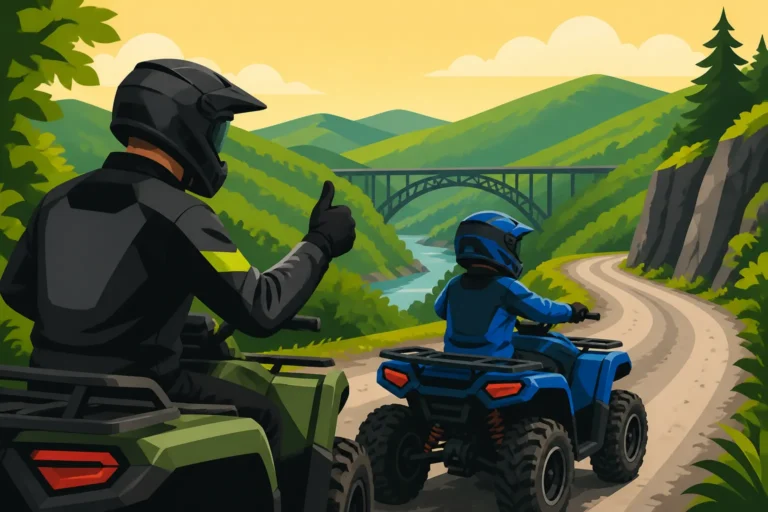
- Helmet: This is number one. A DOT-approved helmet (or even better, a Snell-certified one) is vital. Brain injuries are often catastrophic, and a good helmet can literally save your life. West Virginia law requires helmets for riders under 18, but adults should wear them too, especially if you plan to ride on specific roads that are part of the [West Virginia's Street-Legal Special Purpose Vehicle Law].
- Eye Protection: Goggles or a face shield on your helmet are a must. Dust, mud, flying debris, and even low-hanging branches can cause serious eye injuries. Clear vision also prevents accidents.
- Gloves: Protect your hands from blisters, cuts, and scrapes in a fall. They also improve your grip on the handlebars.
- Long Sleeves and Pants: Even on a hot day, sturdy long sleeves and pants (like denim or specialized riding gear) protect your skin from abrasions, branches, and sun exposure.
- Over-the-Ankle Boots: Your feet and ankles are incredibly vulnerable. Boots with good ankle support protect against sprains, crushing injuries, and impacts.
- Riding Jacket or Chest Protector: These offer crucial protection for your torso, back, and shoulders in a crash. They often include armor in key areas.
Beyond just personal gear, consider robust accessories from reputable brands like SuperATV that can add an extra layer of protection to your machine. Whether it's a sturdy roof, a full windshield to keep debris out, or beefed-up A-arms designed for the rugged terrain you're tackling, these enhancements can often mitigate injury or prevent certain types of accidents. If you've converted your UTV into a street-legal Special Purpose Vehicle (SPV) in West Virginia, you know the importance of quality parts. From DOT-approved tires to turn signal kits, many riders turn to outfitters like SuperATV for the components needed to meet those strict requirements, ensuring your machine is as safe as possible on public roads. These kinds of preventative measures are a common topic in discussions around [West Virginia ATV Safety Awareness Course].
Responsible Riding Practices
Your attitude and habits on the trail are just as important as your gear.
- Know Your Limits: Don't push yourself or your machine beyond your skill level. Start on easier trails and gradually work your way up to more challenging terrain. A lot of crashes happen when riders overestimate their abilities or underestimate the trail.
- Inspect Your Machine: Before every ride, do a quick check of your ATV or UTV. Check tires, brakes, fluid levels, lights, and ensure all nuts and bolts are tight. Regular maintenance is your best friend. From checking your brakes to ensuring all your suspension components are in top shape – perhaps even upgraded with durable parts from a company like SuperATV – staying on top of your machine's health can prevent a lot of headaches, and potential crashes, down the line. A machine that is well-maintained is less likely to break down or malfunction, which can be a direct cause of an accident.
- Ride Sober: Alcohol and drugs impair judgment, reaction time, and coordination – a deadly combination when operating an ATV. Never ride under the influence. [Alcohol Limits for West Virginia ATV Operators] are strict for a reason.
- Stay on Marked Trails: Venturing off-trail can lead to trespassing, getting lost, encountering unexpected hazards, or damaging the environment. Stick to the designated routes, whether it's the [Hatfield-McCoy Trails] or other approved riding areas.
- Maintain a Safe Distance: Just like driving a car, give other riders plenty of space. Dust, sudden stops, or unexpected maneuvers can happen in an instant.
- Ride with Others: It’s always safer to ride with at least one other person. In case of an accident or breakdown, you’ll have help.
- Be Aware of Your Surroundings: Pay attention to other riders, hikers, wildlife, and changing trail conditions. The mountains of West Virginia are beautiful but can also be unpredictable.
- Carry Essential Supplies: Always have a basic first-aid kit, a map, water, and a communication device (though cell service can be spotty in remote areas). This is crucial for [What to Carry on a Remote West Virginia Ride].
By making safety a priority, you're not just protecting yourself, but also ensuring that the amazing experience of riding ATVs and UTVs in West Virginia remains a positive one for everyone.
Disclaimer
This article is for general informational purposes only and does not constitute professional advice. Laws, prices and regulations vary by location and change over time. Consult a qualified professional for guidance on your specific situation.