Riding Home From the Trailhead Legally
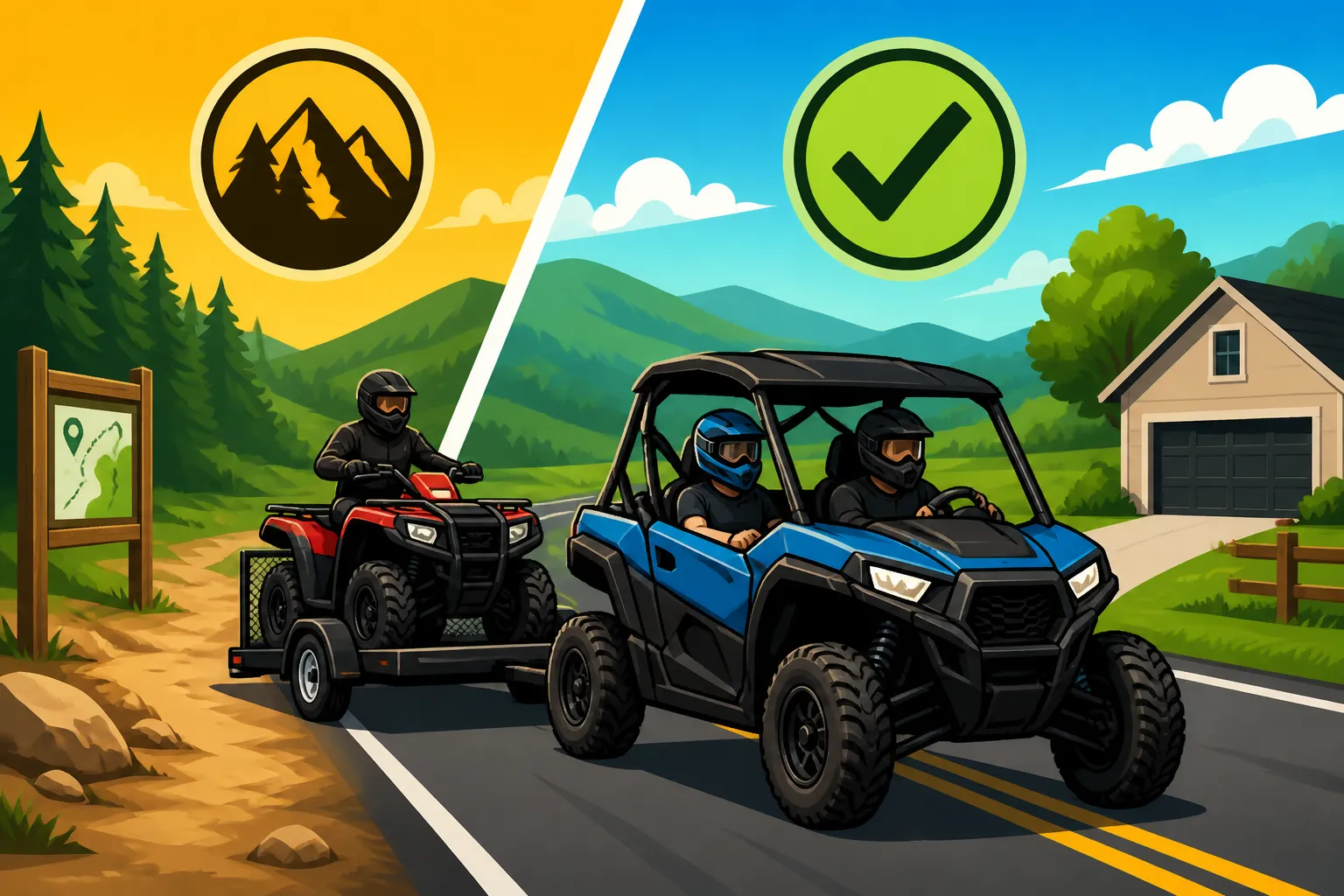
After an incredible day tearing up the trails, conquering mud holes, and navigating rocky climbs, the last thing you want is a legal headache just because you need to get your ATV or UTV back home. It's a common frustration: you're tired, the sun's going down, and all you can think about is a warm meal, but you're still miles from your truck and trailer, facing public roads. This guide is here to walk you through exactly how to transition safely and legally from the West Virginia trails back to your driveway, avoiding unnecessary tickets and ensuring a smooth journey.
The Core Rules for West Virginia Road Riding When Leaving the Trail
Riding an ATV or UTV on West Virginia's public roads isn't like cruising down the highway in your car. There are very specific, and sometimes confusing, rules you absolutely need to know, especially when you're simply trying to get from a trail exit back to your lodging or tow vehicle. The state makes some allowances, but they come with strict limitations. Ignoring these can turn a great day of riding into an expensive evening.
Understanding the 10-Mile, 25 MPH Limit
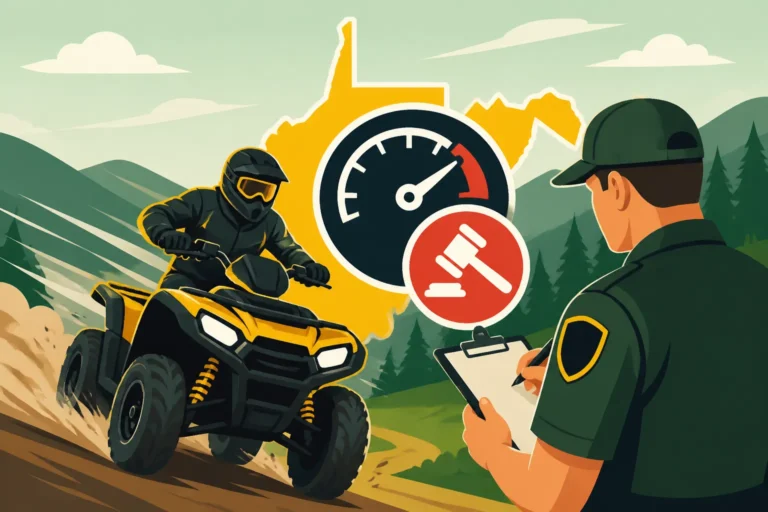
One of the most crucial rules for West Virginia ATV and UTV riders on public roads involves both distance and speed. Generally, you can ride your machine on a public road or highway for a maximum of ten miles to get from one trail to another, or to access services. This isn't a free pass to ride all over town; it's explicitly for linking trails or reaching necessities like gas or food. And here's the kicker: your speed is capped at 25 miles per hour. This speed limit is often far below what the posted speed limit might be for cars, making you a much slower-moving vehicle. It's vital to stay aware of this and not get caught up in the flow of faster traffic. Think of it as a brief, necessary transition, not an extended cruise. Many riders, after the exhilaration of the trails, forget to dial back their speed, and that's often where trouble starts with local law enforcement. For a deeper dive into this, check out [West Virginia's 10-Mile, 25 mph Road Rule].
When you're trying to figure out if you're within that ten-mile limit, remember it's about the shortest practical distance. You can't just take the scenic route for ten miles. The intent is clear: get from point A to point B efficiently. This might mean riding the shoulder or the far right edge of the paved road, giving ample space to other vehicles. On narrower roads, this can feel a bit hairy, but safety and compliance are paramount. If you're on a multi-lane highway, you might even find yourself limited to crossing it directly, rather than riding along it, depending on whether it has a center line or not. Always be thinking about where the quickest and safest exit point is.
Roads Where ATVs Are Permitted or Not
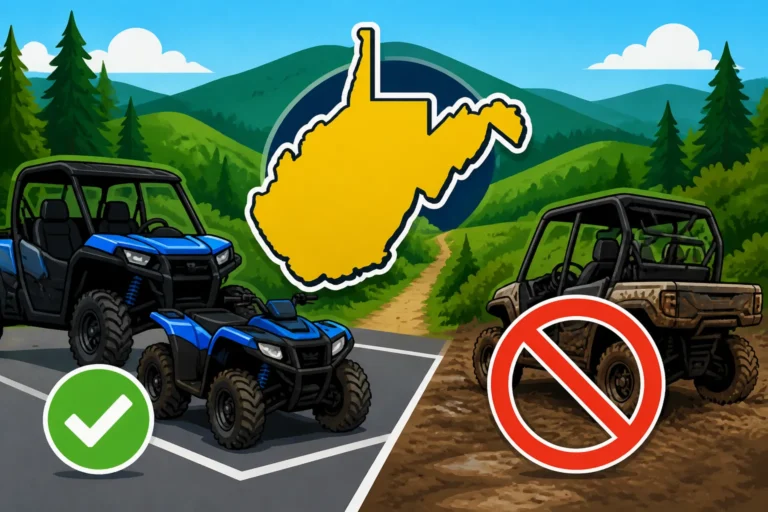
Not all roads are created equal when it comes to ATV access in West Virginia. The general rule allows ATVs and UTVs on secondary roads, county routes, and even some state highways, provided they don't have a solid yellow center line. The presence of that center line often indicates a major thoroughfare where ATVs are generally prohibited from longitudinal travel, though crossing might be permitted. This is where local knowledge or a good GPS map becomes invaluable. Many of the trail towns have specific ordinances that open up certain streets, but outside those designated areas, you need to be very cautious.
For instance, riding on a major four-lane divided highway is typically a big no-no. You might be able to cross it directly at an intersection if it's the only way to connect trail segments, but riding on it, even for a short distance, could lead to a citation. You'll often see signs indicating "ATV Permitted" or "OHV Route" in trail-friendly areas. If you don't see those signs, assume you're on a restricted road unless you have definitive local information to the contrary. [Which West Virginia Roads Allow ATVs] goes into much more detail about the nuances of road classification.
It's also worth noting that roads within the Hatfield-McCoy Trail System's boundaries often have different rules. In some of these areas, county roads are expressly designated as part of the trail system, allowing for much more liberal travel. However, once you leave the designated trail system and enter a general public road, the 10-mile, 25 mph rules immediately apply unless you're in a specifically designated "ATV-friendly town" that has its own local ordinance expanding those privileges. Always be aware of your location relative to these boundaries.
Age and License Requirements for Road Travel
Just because you can ride an ATV on a trail doesn't mean you can operate it on a public road in West Virginia. To legally operate an ATV or UTV on a public road, even for those short, permitted distances, you must hold a valid driver's license. This means a standard automobile driver's license. A learner's permit or a motorcycle endorsement alone typically won't cut it for road-legal ATV operation. This is a common pitfall for younger riders who might be perfectly capable on the trails but don't yet have their full driver's license.
Furthermore, there are age restrictions beyond just having a license. To drive an ATV on a public road, the operator must be at least 16 years old. If you have younger riders in your group, they absolutely cannot operate their machines on public roads, even if it's just a short hop back to the parking lot. In such cases, the adult with a valid driver's license would need to operate the machine, or the machine would need to be loaded onto a trailer or transport vehicle. This rule is in place for safety, recognizing the different skill sets and responsibilities required for road versus trail riding. You can learn more about this in [West Virginia ATV Road Riding Age Minimum].
For passengers, the rules are also specific. While on the trails, a passenger might be allowed depending on the machine's design and manufacturer recommendations, but on a public road, any passenger must be old enough and capable of holding onto the machine and keeping their feet on the footrests. Young children should typically not be passengers on an ATV when operating on a public road, and UTVs with proper seating and seatbelts offer a much safer option for carrying passengers if permitted by the local ordinance. Always ensure that any passenger is wearing appropriate safety gear, including a helmet and eye protection.
Essential Equipment for Legal Road Travel
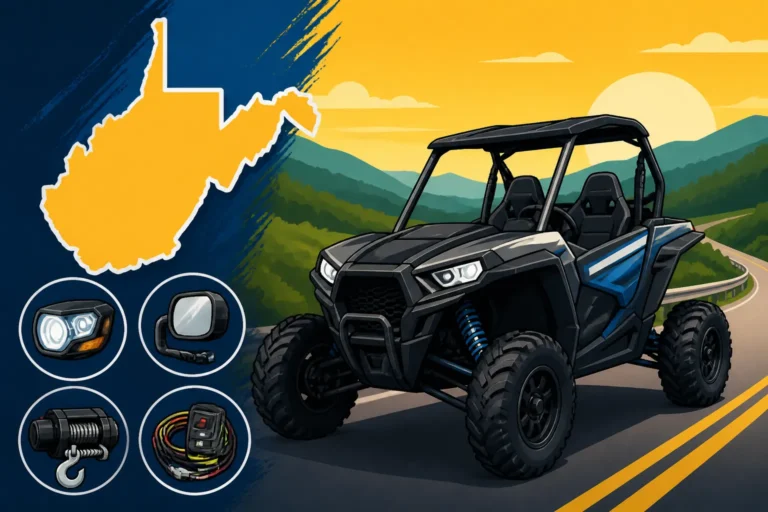
Transitioning from a dedicated trail machine to something that can legally touch pavement requires more than just knowing the rules; your machine needs to be properly equipped. Many ATVs and UTVs come from the factory ready for the trail but fall short on road-legal requirements. Before you even consider riding on public roads, you need to ensure your machine meets West Virginia's basic safety and equipment standards.
Lights, Mirrors, and Horns
When you're riding on a public road, even for a short stretch, your machine needs to be visible and able to communicate with other drivers. This means having proper lighting. You must have at least one working headlight and at least one taillight that is visible from a reasonable distance. If you're going to be riding at dusk or after dark, these lights are absolutely non-negotiable and must be on. Many trail machines have lights, but it's crucial to check that they're fully functional, clean, and bright enough for road use. Beyond just illumination, your machine needs brake lights that activate when you apply the brakes, clearly signaling your intentions to traffic behind you.
Mirrors are another critical component often overlooked on trail-focused machines. West Virginia law typically requires at least one rearview mirror, and often two, for road-going vehicles. This allows you to monitor traffic behind and beside you, which is essential when you're moving at a slower speed than other vehicles. An aftermarket mirror kit, easily found from suppliers like SuperATV, can provide the necessary visibility. These kits often attach to your roll cage or handlebars and are designed to withstand off-road vibrations while still being road-compliant.
Finally, a horn is a must-have for signaling. It might seem like a minor detail, but a functional horn is a crucial safety device for alerting pedestrians or other drivers to your presence. Many ATVs and UTVs come with a horn from the factory, but if yours doesn't, or if it's broken, you'll need to install one before you consider any road travel. Ensure it's loud enough to be heard over your engine and ambient road noise.
Tires, Windshields, and Other Safety Gear
While knobby, aggressive tires are fantastic for traction on the trails, they can be a liability and even unsafe on pavement. They wear down quickly, can make handling squirrely, and may not provide adequate grip on wet asphalt. While West Virginia doesn't necessarily require DOT-approved tires for the limited road use allowed for ATVs, it's a wise consideration for any machine that will frequently see pavement. If your tires are heavily worn or inappropriate for road surfaces, you're not only risking a safety issue but also potentially attracting unwanted attention from law enforcement.
A windshield isn't strictly required for all road-legal ATV operation in West Virginia, but it's highly recommended for UTVs that will be traveling on roads. It offers protection from debris, wind, and insects, making the experience much safer and more comfortable. If your UTV has a windshield, it should be made of safety glass or an equivalent shatter-resistant material. Similarly, seat belts are mandatory in UTVs equipped with them, and they must be worn at all times when operating on public roads. Ensuring all seatbelts are in good working order and that passengers are properly secured is critical.
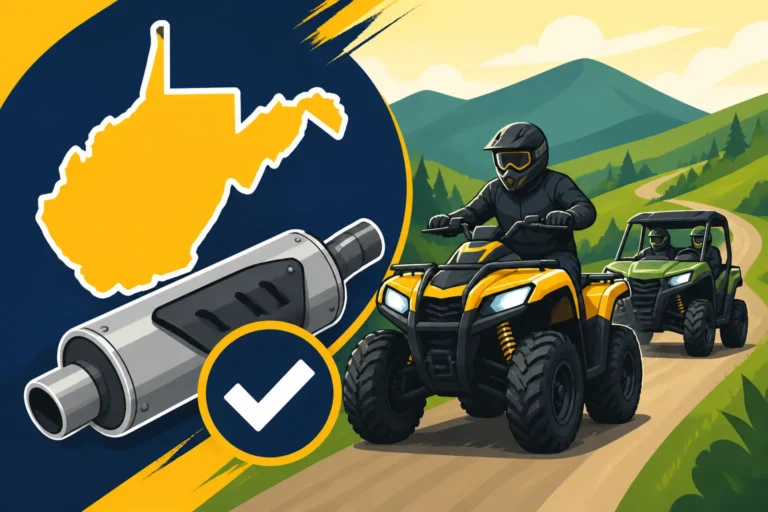
Beyond these, things like proper exhaust systems are important. Your machine should have a muffler and spark arrester that are in good working order. Excessive noise can lead to complaints and citations, especially in residential areas of trail towns. [Equipment a West Virginia SPV Must Carry] provides a good baseline for what vehicles need for street legality, and while not all these apply to the limited ATV road use, it gives a strong indication of the state's safety priorities.
Helmet and Eye Protection Requirements
This is one area where West Virginia doesn't mess around, regardless of whether you're on the trail or a permitted road section. Anyone riding an ATV or UTV on a public road in West Virginia, regardless of age, must wear a DOT-approved helmet. This isn't just a recommendation; it's the law. This means no cheap construction helmets, no bicycle helmets – it must be a helmet certified by the Department of Transportation. You'll usually find a DOT sticker on the back of the helmet.
Coupled with the helmet, eye protection is also mandatory. Goggles or a face shield on your helmet are essential for protecting your eyes from dust, debris, insects, and wind, all of which can severely impair your vision and cause an accident. Even if your machine has a windshield, dedicated eye protection is a smart move, as wind can still whip around and carry particles into your eyes. These requirements apply to both the operator and any passengers. [West Virginia Helmet Rules for Riders Under 18] and [Eye Protection on a West Virginia Road Ride] cover these topics in more detail, but the bottom line is: always wear your helmet and eye protection.
It’s often easiest to just keep your helmet and goggles on for those brief road sections rather than taking them off and putting them back on. Not only does it save time, but it ensures you remain compliant and safe throughout your ride home. Many riders carry extra sets for passengers or if one gets damaged on the trail. Investing in quality gear from a reputable dealer is always a good idea.
Navigating West Virginia's ATV-Friendly Towns and Local Ordinances
West Virginia's trail towns are a beacon for ATV enthusiasts, offering direct access to some of the country's best riding. However, even within these welcoming communities, there are rules to follow. It's not a free-for-all; these towns have specific ordinances designed to balance the economic benefits of ATV tourism with the safety and comfort of their residents.
Recognizing ATV-Friendly Zones
Many towns in Southern West Virginia, particularly those near the Hatfield-McCoy Trails, have embraced ATV tourism wholeheartedly. Places like Gilbert, Man, Mullens, and Williamson have passed local ordinances that allow ATVs and UTVs to operate on most municipal streets. This is a game-changer for riders, allowing you to legally ride from the trailhead directly to restaurants, gas stations, and lodging. These areas are often well-marked with signs indicating where OHV travel is permitted. However, it's crucial to understand that these local rules often apply only within the town limits. Once you leave the municipal boundary, you revert to the general state laws regarding ATV road use, which means the 10-mile, 25 mph rule kicks back in.
It's common for riders to arrive at their cabin or hotel, unload their machines, and immediately hit the town streets. In designated trail towns, this is often perfectly legal, but you still need to adhere to posted speed limits within the town and be mindful of pedestrians and other traffic. Don't assume that because you can ride a particular street in Gilbert, you can ride any street in an adjacent, non-trail-friendly town. Always look for signage or consult local visitor information centers to confirm the specific boundaries and rules of ATV-friendly zones. For more information on specific towns, consider reading [Riding Through Gilbert on an ATV] or [Riding Through Man and Logan by ATV].
Parking and Fueling in Trail Towns
One of the great conveniences of ATV-friendly towns is the ability to easily access services. Pulling up to a gas station on your UTV to fill up, or parking outside a local diner for lunch, is a common sight. When parking your machine in these towns, treat it like any other vehicle. Don't block sidewalks, driveways, or fire lanes. Utilize designated parking areas where available, or park in a legal street parking spot. Be courteous and mindful of other vehicles and pedestrians.
Many gas stations in these areas are accustomed to ATV traffic and have plenty of space, but it's still your responsibility to park safely and not impede traffic flow. When fueling up, turn off your engine and be careful to avoid spills. Similarly, when grabbing a bite to eat, park responsibly. Local businesses appreciate the tourism, so show your appreciation by being a respectful patron. Some businesses even have specific ATV parking areas, making it even easier. Keep in mind that a full-size side-by-side takes up more space than a single ATV, so plan your parking accordingly.
Staying Compliant with Local Rules
Even in ATV-friendly towns, there are rules that riders sometimes forget in their enthusiasm. Speed limits are strictly enforced. Just because you're on an ATV doesn't mean the speed limit signs don't apply to you. Many town streets have low speed limits, sometimes as low as 15 or 25 mph, and local law enforcement is often present to ensure compliance. Loud exhausts can also be a source of frustration for residents, so be mindful of excessive noise, especially in residential areas or late at night.
Open container laws also apply. While you might enjoy a cold beverage after a ride, it needs to be consumed off your machine and not while operating it on public roads. [Alcohol Limits for West Virginia ATV Operators] spells out the serious consequences of operating an ATV under the influence, which are comparable to those for cars. These towns welcome riders, but they expect respectful behavior. By following the local rules, you help maintain the positive relationship between the riding community and the residents, ensuring these valuable street access privileges continue for everyone.
| Feature / Requirement | General WV Road Rules (outside trail towns) | WV ATV-Friendly Town Rules (within town limits) |
|---|---|---|
| Speed Limit | Max 25 mph | Posted municipal speed limits (often 15-35 mph) |
| Distance Limit | Max 10 miles (for access/trail link) | No specific distance limit within town |
| Road Type | Roads without centerlines, county routes, specific state routes | Most municipal streets and roads (check local ordinance) |
| Driver's License | Required (standard auto license) | Required (standard auto license) |
| Age Requirement | 16+ years old to operate | 16+ years old to operate |
| Helmet & Eye Protection | Required for all | Required for all |
| Lights (Head/Tail/Brake) | Required | Required |
| Mirrors | At least one rearview (often two recommended) | At least one rearview (often two recommended) |
| Horn | Required | Required |
| Parking | Not generally applicable (short transit) | Standard vehicle parking rules apply |
| Fueling | Not generally applicable (short transit) | Permitted at gas stations |
| Open Container | Prohibited | Prohibited |
| Enforcement | State Police, Sheriff, DNR | Local Police, State Police, Sheriff |
Safety Best Practices When Transitioning from Trail to Road
The transition from the raw, unpredictable environment of the trail to the structured, faster-paced world of public roads requires a significant shift in awareness and riding style. What works perfectly on a dirt trail can be dangerous on asphalt. Prioritizing safety during these transitions is key to a trouble-free ride home.
Shifting Your Mindset from Trail to Pavement
After hours of intense trail riding, where your focus is on obstacles, terrain changes, and navigating tight corners, it's easy for your brain to remain in "trail mode." But public roads demand a different kind of attention. On the trail, you might be the fastest thing out there. On the road, you're likely one of the slowest. This means constantly checking your mirrors, being aware of cars approaching from behind, and anticipating their movements. Your machine's handling will also feel different; the knobby tires designed for grip on dirt will feel vague and less responsive on pavement. Braking distances might increase, and turning can feel less stable.
It's helpful to take a moment at the trailhead exit to consciously make this mental switch. Slow down, take a deep breath, and remind yourself that you are now sharing the road with multi-ton vehicles operating at much higher speeds. Your machine will also behave differently. Accelerating too quickly on pavement can feel squirrely, and sudden braking can cause skidding. Adjust your following distance, especially behind other ATVs or UTVs, as their braking capabilities might differ. Maintaining a smooth, predictable path is far safer than aggressive maneuvers.
Consider adding reflective tape or a visibility flag to your machine, especially if you anticipate riding near dusk. Products from companies like SuperATV can offer enhanced visibility solutions, such as LED light bars or amber strobe lights, that can make you much more noticeable to other drivers. This extra visibility can be a lifesaver when sharing the road with fast-moving cars, particularly on blind curves common in West Virginia's mountainous terrain.
Group Riding Etiquette on Public Roads
When riding in a group, road sections can introduce additional complexities. On the trail, you might spread out or bunch up, but on the road, maintaining a consistent, safe formation is essential. Riding single file, with adequate space between machines, is generally the safest approach. This allows other vehicles to pass your group more easily and reduces the risk of chain-reaction collisions. Avoid riding side-by-side on public roads, even if the road appears wide enough, as it can confuse other drivers and reduce your ability to react to hazards.
Designate a lead and a sweep rider for road sections, especially if your group is large. The lead rider should be familiar with the route and understand the road rules, while the sweep rider ensures no one gets left behind and can signal to the rest of the group if a problem arises. Use hand signals consistently for turns, stops, and hazards. Remember that the goal is to be predictable and clearly communicate your intentions to both your group members and other motorists. It's often helpful to discuss road-riding protocols before you even leave the trailhead.
If you encounter heavy traffic, pull over safely when possible to allow vehicles to pass. Do not impede the flow of traffic unnecessarily. Be patient and courteous to other drivers; remember, they might not be accustomed to sharing the road with ATVs. Your behavior reflects on the entire ATV community, and positive interactions help preserve road access for everyone.
What to Do If Stopped by Law Enforcement
No one wants to see those flashing blue lights in their rearview mirror, especially when you're just trying to get home after a long day of riding. If you are pulled over by law enforcement while on an ATV or UTV, the most important thing is to remain calm, courteous, and compliant. Immediately pull over to the far right side of the road, or a safe, well-lit area if possible, and turn off your engine. Keep your hands visible, ideally on the handlebars or steering wheel.
Have your documents ready: your driver's license, proof of West Virginia ATV title, and any trail permits you might possess. While trail permits aren't usually checked on public roads, having them readily available shows you're a responsible rider. For details on what the DMV needs to title an ATV, see [What the West Virginia DMV Needs to Title an ATV]. The officer will likely be checking for compliance with the 10-mile, 25 mph rule, proper equipment, and whether you have a valid driver's license. If you've ensured your machine meets all requirements and you've followed the rules, the interaction should be brief.
Answer any questions honestly and politely. Avoid arguing or becoming confrontational. If you receive a citation and believe it's unwarranted, you'll have an opportunity to contest it in court, but roadside isn't the place for a debate. Understanding the rules thoroughly before you ever hit the pavement can prevent most issues, but if one arises, a respectful demeanor is always your best defense.
Disclaimer
This article is for general informational purposes only and does not constitute professional advice. Laws, prices and regulations vary by location and change over time. Consult a qualified professional for guidance on your specific situation.