Holding a Line in a Group of Riders
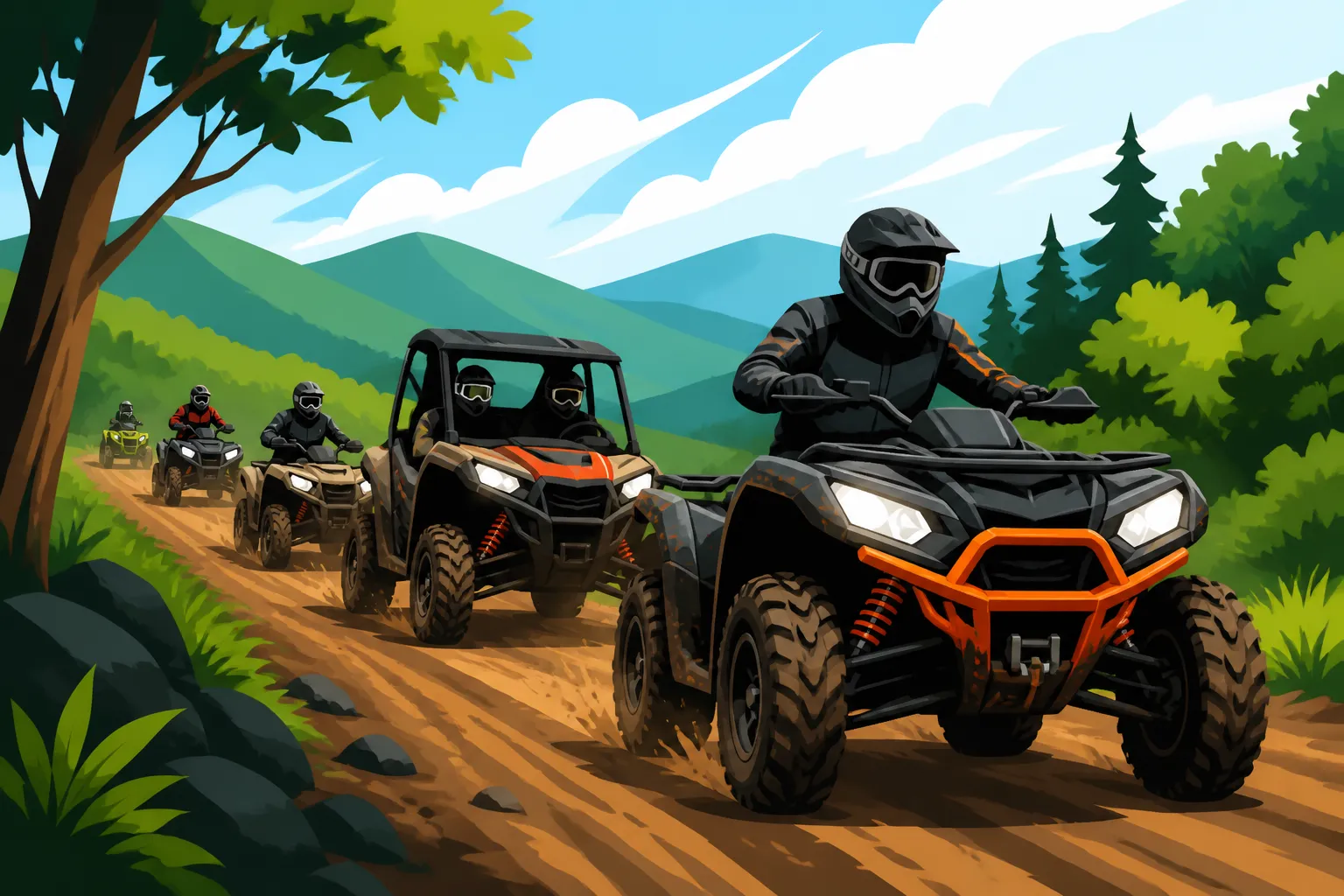
There's nothing quite like hitting the trails with your crew, feeling the rumble of engines, and kicking up dust as you explore the wild beauty of West Virginia. But let's be honest, trying to keep everyone together, especially when you're riding through twisty mountain trails or navigating short stretches of public road, can sometimes feel like herding cats. This guide is all about helping you master the art of holding a "line" – staying in formation and riding cohesively as a group – so your adventures are safer, smoother, and way more enjoyable for everyone involved.
Why Staying in Formation is Crucial for West Virginia Group Rides
Riding with a group, whether it's a couple of buddies or a larger club, adds a whole new layer of dynamics compared to solo excursions. In West Virginia, where trails can be tight, roads can be winding, and visibility can change in an instant, maintaining a consistent formation isn't just about looking organized; it's fundamentally about safety and ensuring a positive experience for everyone.
Enhancing Safety on Diverse Terrain
Imagine you're rolling along the Buffalo Mountain Trail System, a string of machines snaking through the trees. If one rider suddenly stops or swerves without warning, and the person behind them isn't maintaining a safe following distance or isn't paying attention to the group's rhythm, a minor incident can quickly escalate into a pile-up. This is especially true on West Virginia's challenging terrain, which often features blind turns, steep descents, and unexpected obstacles like rocks or fallen limbs. A tight, predictable formation reduces the chances of riders colliding with each other or with external hazards.
Beyond the trails, many of our beloved trail systems, like the Hatfield-McCoy, often connect via short road sections. When you're transitioning from a dirt path to a paved county route, the rules of the road apply. Keeping a compact, visible formation makes your group much more noticeable to other drivers and helps prevent individual riders from getting separated or, worse, caught unaware in traffic. It's not just about protecting yourselves; it's about being responsible road users, too, especially in towns where [West Virginia Sheriff Patrols in Trail Towns] are common.
Maintaining Flow and Preventing Separations
One of the biggest frustrations in group riding is constantly stopping and waiting for someone who's fallen behind, or worse, realizing a rider is completely lost. When a group holds a consistent line, everyone can maintain a steady pace, which keeps the momentum going and prevents those frustrating delays. If riders are constantly speeding up, slowing down, or fanning out, it creates an accordion effect that fatigues riders and makes the entire experience less enjoyable.
Think about a long stretch of dusty trail. If everyone spreads out too much, the dust kicked up by the lead machines can completely obscure the view for those in the middle or back. By maintaining a closer, yet safe, distance and formation, the dust cloud can be managed more effectively, allowing better visibility for everyone. This flow also helps with navigation; if the lead rider takes a turn, and everyone is following closely, there's less chance of someone missing the turn and getting separated from the group. [Hatfield-McCoy Trail Maps and Signage] are helpful, but nothing beats staying together.
Essential Communication Strategies for Group Riding
Even the most experienced riders in the world would struggle to hold a perfect line without effective communication. On the trail or on the road, talking it out isn't always an option, so establishing clear methods for conveying information is paramount. This makes sure everyone is on the same page, aware of potential hazards, and knows the plan, no matter what happens.
The Power of a Pre-Ride Briefing
Before a single wheel turns, gather your group for a briefing. This is your chance to set expectations, review the route, and establish the communication protocols for the day. Discussing these things upfront can save a lot of headaches later on. Talk about the intended pace – is it a leisurely sightseeing ride or a more spirited adventure? Identify any new riders or those less experienced, and designate a "sweep" or "tail gunner" who will always ride last to ensure no one is left behind.
Crucially, this is where you standardize hand signals. Don't assume everyone knows the universal signals. Go over them quickly: "stop," "slow down," "turn left/right," "hazard ahead," "fuel stop." You might even decide on a system for how often the lead rider will check the rearview mirror to ensure the group is still together. This pre-ride huddle also gives riders a chance to voice any concerns or ask questions, fostering a sense of teamwork and preparedness.
Mastering Hand Signals and Visual Cues
While comms systems are fantastic, they can fail, or not everyone in your group might have one. That's why a strong grasp of universally understood hand signals is non-negotiable. These visual cues allow the lead rider to quickly relay vital information down the line, and for riders to communicate with those immediately behind or in front of them.
Here's a basic rundown of essential hand signals every group rider should know:
| Signal | Description |
|---|---|
| Stop | Left arm bent at elbow, hand up, palm facing forward. |
| Slow Down | Left arm out, palm down, moving hand up and down. |
| Turn Left | Left arm extended straight out. |
| Turn Right | Left arm bent at elbow, hand up, palm facing forward (or right arm out). |
| Hazard Ahead (Left) | Left arm extended down, pointing to the ground with finger. |
| Hazard Ahead (Right) | Right arm extended down, pointing to the ground with finger. |
| Follow Me / Come On | Left arm extended forward, sweeping back towards body. |
| Single File | Left arm up, index finger raised. |
| Staggered Formation | Left arm up, two fingers raised. |
| Fuel Stop | Left arm pointing to fuel tank. |
Beyond hand signals, simply knowing to frequently check your mirrors and occasionally glance back to confirm the rider behind you is still there creates a chain of awareness. The lead rider watches for what's ahead, and the sweep rider ensures no one gets lost, but everyone in between has a role in maintaining that visual connection.
Leveraging Comms Systems
For serious group riders, investing in a robust communication system can be a game-changer. These systems allow for constant, real-time chatter between riders, which is invaluable for safety and enjoyment. Many riders opt for Bluetooth headsets that integrate into their helmets, allowing them to talk to each other without shouting over engine noise or having to pull over. Brands like Sena offer popular models designed for motorcycle and ATV use, providing clear audio and impressive range.
For larger groups or those frequently riding at higher speeds or in challenging conditions, a dedicated radio system (like those from Rugged Radios, often seen in off-road racing) offers even greater range and clarity. These systems usually involve a base unit in each machine and wired headsets. With a comms system, the lead rider can verbally announce upcoming turns, hazards, or changes in speed. A lost rider can call out for help, and the group can quickly coordinate a stop or route adjustment. This significantly reduces anxiety and enhances the social aspect of group riding.
Riding Techniques for a Cohesive Formation
Knowing why you need to stay in line and how to communicate are excellent starting points. Now, let's dive into the practical riding techniques that will transform your group from a scattered collection of machines into a well-oiled, single unit, especially as you navigate West Virginia's varied landscape.
Choosing Your Formation: Staggered vs. Single-File
The type of terrain, traffic, and group size will dictate the best formation. Each has its advantages and disadvantages.
Single-File Formation:
This is the most common formation for off-road trails, particularly on tight, single-track routes or in heavily wooded areas where space is limited. It's also ideal when navigating especially muddy or technical sections where everyone needs to follow the exact same line to avoid obstacles or deep ruts. In a single-file line, each rider essentially follows the tire tracks of the person in front, minimizing the impact on the trail and preventing riders from accidentally veering off the designated path. It's also critical on road sections where passing is difficult or prohibited, or when you are crossing a [West Virginia Highway on an ATV] briefly.
- Pros: Maximizes safety on narrow trails, reduces trail impact, easier to maintain visual contact with the rider directly in front.
- Cons: Can create longer overall group length, making it harder for the lead rider to see the sweep. Also creates more dust for riders in the back unless adequate spacing is maintained.
Staggered Formation:
The staggered formation is typically preferred on wider trails or paved roads where there's enough room for two machines to ride side-by-side, but still allows for individual space and safety. In a staggered formation, the lead rider takes one side of the trail/lane, the second rider rides behind and to the opposite side, the third rider behind the first but on their side, and so on. This creates a diagonal "zipper" pattern. It's great for road-legal machines using [West Virginia's Street-Legal Special Purpose Vehicle Law] on wider county routes.
- Pros: Shorter overall group length, allows each rider a better line of sight ahead, provides more space for maneuverability in case of an obstacle. It's also much easier for motorists to see your group as a solid unit on public roads.
- Cons: Requires more road/trail width, and riders need to be more conscious of their position relative to two other riders (front-right, front-left).
Regardless of the formation chosen, consistency is key. The lead rider should communicate which formation the group is using, and everyone should stick to it unless a change is signaled.
Maintaining Safe Following Distances
This is arguably the most critical riding technique for holding a line, especially in West Virginia where conditions can change rapidly. The "right" following distance isn't a fixed number; it depends on speed, visibility, dust, and terrain.
- On Dusty Trails: Increase your following distance significantly. Riding too close in heavy dust is like riding blindfolded. You won't see obstacles, or the sudden braking of the rider in front until it's too late. It's better to fall back a bit and deal with less dust than to ride in a constant white-out. You might need aftermarket dust masks, even from brands like SuperATV, if you're frequently in dusty conditions.
- On Paved Roads: When your group hits a paved section governed by [West Virginia's 10-Mile, 25 mph Road Rule], treat it like you would driving a car. Maintain at least a two-second following distance, increasing that in wet conditions. You need enough space to react to traffic, potholes, or a sudden stop from the rider in front.
- In Technical Terrain: On rock gardens, steep climbs, or deep mud, you might actually want to decrease the following distance slightly, but not so much that you're crowding the rider ahead. This allows you to react quickly if they get stuck or need a spot, and keeps the group more compact to help each other. The goal is to be close enough to offer immediate support without becoming an obstacle yourself.
Remember to constantly scan the terrain ahead, not just the back of the machine in front of you. Anticipate what the lead rider might do based on what you see, and be ready to adjust your speed and line.
Navigating Turns and Blind Spots
West Virginia's mountain trails are notorious for their tight turns and blind crests. These are prime locations for group disorganization or even accidents. When approaching a turn or a blind spot:
- Lead Rider's Responsibility: The lead rider should slow down well in advance, giving ample warning with brake lights and appropriate hand signals. If a blind turn is particularly sharp, they might even pause briefly to ensure the sweep rider is still in sight after they've rounded the corner, especially if communication systems aren't in use.
- Following Riders: Maintain your following distance, but don't rush into the turn. As the rider in front clears the turn, you'll have a clear view of the conditions ahead. Take your time, hit your line, and then accelerate smoothly out of the turn. Never cut a corner on a blind turn, as you don't know what might be coming the other way or if another rider in your group is still navigating it.
- Blind Spots: Be extra vigilant. If you're riding a UTV with a larger frame, be mindful of your own machine's blind spots when checking for the rider behind you. If using mirrors, ensure they are clean and adjusted correctly. Some riders even add aftermarket side mirrors from companies like SuperATV for enhanced visibility.
Adapting to Different Skill Levels
It's rare to have a group of riders all with identical skill levels. This means the pace of the group should always be dictated by the least experienced or slowest rider. It's far better to have a slightly slower, cohesive group than a fragmented one where some riders are constantly stressed trying to keep up, and others are bored waiting.
If you have a mixed-skill group:
- Positioning: Place less experienced riders directly behind the lead rider. This allows them to focus on following a good line without the pressure of leading and ensures they have the most experienced rider to emulate. The sweep rider, usually another experienced rider, can offer encouragement and assistance from the back.
- Frequent Checks: The lead rider should make frequent stops, especially after challenging sections, to allow everyone to regroup, catch their breath, and offer feedback. This prevents frustration and builds confidence.
- Break Down the Ride: On particularly long or difficult rides, consider breaking it into smaller segments. Plan stops for water, snacks, or simply to admire the view at overlooks along the [Rockhouse Trail System]. This helps manage fatigue for everyone.
Addressing Common Group Riding Challenges
Even with the best planning and communication, group rides can present unexpected challenges. Knowing how to handle these situations efficiently is part of being a good group rider and ensures everyone remains safe and enjoys the adventure.
When a Rider Gets Separated or Lost
It happens to the best of us. A wrong turn, a momentary lapse in attention, or simply getting gapped out by dust can lead to a rider getting separated. The key here is prevention and a rapid response.
- Prevention: This goes back to the pre-ride briefing. Establish a "no-drop" rule, meaning no one gets left behind. Ensure everyone knows the route (or at least the next major waypoint) and the designated sweep rider. Using [onX Offroad for West Virginia Trails] or similar GPS apps, and sharing the planned route, can be invaluable.
- Response: If you realize a rider is missing, the group should immediately stop. The lead rider should wait for a few minutes. If the rider doesn't appear, the sweep rider, or a designated "runner" if safe to do so, should turn back to find them. If using comms, the missing rider should immediately try to contact the group. The entire group should stay put until the missing rider is accounted for. Never send multiple people back to search, as this can lead to more people getting lost.
Dealing with Breakdowns and Trailside Repairs
A flat tire, a loose chain, or even a more serious mechanical issue can halt a group ride. Being prepared for these eventualities is crucial.
- Individual Preparation: Every rider should carry a basic toolkit, tire repair kit, and enough fluids for their machine. Knowing how to perform basic trailside repairs on your own machine is also a big plus. Brands like SuperATV offer a range of spare parts and repair kits designed for common breakdowns.
- Group Support: The group should always stop and assist with a breakdown. This is where extra tools, spare parts, or even a tow strap carried by one of the more prepared riders can save the day. If a repair is beyond the group's capabilities, it's time to assess recovery options. Do you have cell service for [Trail Rescue in West Virginia and Who Responds]? Do you have a plan for [Towing a Broken Rental Off the Trail]? This again highlights the importance of what to carry on a remote West Virginia ride.
Managing Diverse Machine Types and Riding Styles
It's common to have a mix of ATVs and UTVs, or machines of varying engine sizes, in a single group. This diversity can add to the fun but also requires careful management to maintain a cohesive line.
- Pacing: The group's pace should always accommodate the slowest or least capable machine on that particular terrain. It's often helpful to place the larger or slower machines towards the front (after the lead rider) if the terrain is suitable, allowing them to set a comfortable pace.
- Machine-Specific Considerations: A wider side-by-side might struggle on a narrow ATV-only trail, while a smaller ATV might get bounced around more on rougher sections. Lead riders need to be aware of these limitations and choose routes or lines that are appropriate for all machines in the group. For instance, [West Virginia Trails Too Tight for a 64-Inch Machine] might be fine for your quad, but not for your buddy's RZR.
By anticipating these challenges and fostering a culture of preparedness and mutual support, your group can navigate West Virginia's incredible trail system safely and enjoyably, holding a perfect line from start to finish.
Disclaimer
This article is for general informational purposes only and does not constitute professional advice. Laws, prices and regulations vary by location and change over time. Consult a qualified professional for guidance on your specific situation.