Which West Virginia Towns Allow ATVs Downtown
There's nothing quite like rolling off a dusty trail in West Virginia, seeing a welcoming small town, and thinking about grabbing a bite to eat or fueling up. But then the nagging question hits: "Can I even ride my ATV or UTV into town, let alone park it downtown?" It's a common frustration for riders, as the rules aren't always clear-cut and vary wildly from one community to the next. This guide is here to shed light on which West Virginia towns genuinely embrace ATV and UTV riders, allowing access to their downtown areas, and what you need to know before you venture off the trail and onto Main Street.
Understanding West Virginia's ATV/UTV Road Rules (General Context)
West Virginia has carved out a unique identity as an off-road paradise, largely thanks to its vast trail systems like the Hatfield-McCoy Trails. However, the rules for riding your machine on public roads, especially within town limits, can feel like a tangled mess. It’s not as simple as "yes" or "no" everywhere you go. State laws provide a framework, but local ordinances often fill in the crucial details, particularly when it comes to bustling downtown areas.
The "20-Mile Centerline Limit" and "10-Mile, 25 mph Rule"
Many riders are familiar with some of West Virginia's general rules regarding ATV and UTV use on public roads. For instance, the state allows for incidental road use where a road has no centerline or on roads with a centerline for a maximum distance of 10 miles, with a speed limit of 25 mph. This is often referred to as the [West Virginia's 10-Mile, 25 mph Road Rule]. There's also a broader "20-Mile Centerline Rule" that applies to street-legal Special Purpose Vehicles (SPVs) on certain roads.
However, these state-level allowances don't automatically grant you carte blanche to cruise down any town's main street. The intention behind these rules is typically for connecting trail segments, accessing private property, or reaching a trailhead, not necessarily for general downtown travel. Town councils and municipal governments have the authority to enact their own ordinances that can either permit, restrict, or outright prohibit ATV and UTV traffic within their corporate limits, regardless of state law. This is where the distinction between a "trail town" and a regular town becomes critically important.
What Makes a Town "ATV-Friendly"?
A town doesn't just become "ATV-friendly" by accident; it's usually a deliberate choice, often driven by the economic benefits that off-road tourism brings. These communities have typically passed specific local ordinances that permit the operation of ATVs and UTVs on designated municipal streets, usually including their downtown areas. This allows riders to legally access restaurants, gas stations, lodging, and local shops without fear of a citation.
These "trail towns" are generally located adjacent to major trail systems, like the Hatfield-McCoy Trails, and actively market themselves to the off-road community. They understand that riders need places to eat, sleep, and resupply, and allowing downtown access makes their town a more attractive destination. Such towns often have designated parking for ATVs and UTVs, specific signage, and a general welcoming attitude from local businesses. Without these specific local ordinances, even if a state road passes through a town, riding your machine off the trail and into the heart of the community could still be illegal. It truly comes down to the local government's stance and the laws they've put in place to govern their specific streets.
Spotlight on West Virginia's ATV-Friendly Downtowns
When it comes to rolling your ATV or UTV into a downtown area, the best bet by far in West Virginia is to target the official "trail towns" associated with the major trail systems. These communities have made it their mission to welcome riders with open arms and local laws that reflect that hospitality.
The Hatfield-McCoy Trail Towns
The Hatfield-McCoy Trails system is renowned for its vast network of interconnected trails, and perhaps just as famous for the "trail towns" that dot its landscape. These towns have specific ordinances allowing ATVs and UTVs on most, if not all, of their municipal streets. This means you can legally ride directly from the trail system into town for fuel, food, and lodging.
- Gilbert: Often called the "ATV-Friendly Capital," Gilbert is a prime example. You can literally ride right off the Rockhouse Trail System and into town. Downtown Gilbert offers multiple restaurants, gas stations, and shops that cater to riders. Parking is generally well-understood, with many businesses having designated areas or being lenient with street parking for off-road vehicles. Riding to a restaurant in Gilbert is a rite of passage for many visitors.
- Man and Logan: These towns are gateways to the Bearwallow Trail System. Like Gilbert, they have embraced the off-road culture, allowing riders to navigate their streets. You'll find plenty of options for meals and supplies. Riding through Man and Logan by ATV is a common sight, and local businesses are accustomed to trail traffic.
- Williamson and Matewan: Serving the Buffalo Mountain Trail System, Williamson and Matewan offer distinct historical flavors alongside their ATV-friendly policies. Williamson, being a larger town, provides a wider range of services, from hotels to larger grocery stores. Matewan, with its rich coalfield history, is a fascinating place to explore on your machine. Riding to a Hotel in Williamson directly from the trail is a huge convenience.
- Mullens and Pineville: These towns are connected to the Pinnacle Creek Trail System. Both provide essential services for riders. Mullens and Pineville ATV Street Access means you can grab breakfast before hitting the trails or refuel after a long day.
- Bramwell: While technically not a Hatfield-McCoy "trail town" in the same way as the others, Bramwell, near the Pocahontas Trail System, is very ATV-friendly and known for its historic homes and charming atmosphere. It’s a great example of a community that encourages ATV tourism within its limits.
These towns understand that off-road enthusiasts are an economic engine. They’ve often worked directly with the Hatfield-McCoy Trails Authority to ensure seamless access and a welcoming environment. It’s important to always adhere to posted speed limits, be mindful of pedestrian traffic, and demonstrate respectful riding habits when in town, even in these designated friendly areas. Being a good ambassador for the sport ensures these privileges continue.
Beyond the Hatfield-McCoy System
While the Hatfield-McCoy Trail towns are the most prominent examples of communities allowing ATVs and UTVs downtown, there are other considerations across the state. Not every ATV-friendly locale is directly connected to a large trail system, and some areas might have more limited permissions.
- Other Designated Off-Road Parks and Their Adjacent Towns: Parks like Burning Rock Offroad Park might have nearby towns that have adopted similar ordinances to support the riding community. These are often smaller communities that rely heavily on outdoor recreation. Always check the specific park's rules and any local municipal ordinances for towns nearby.
- County Routes and Unincorporated Areas: In many rural, unincorporated areas or on county routes without centerlines, the state's 10-mile, 25 mph rule might apply, allowing you to traverse small sections of road to get to a gas station or general store. However, these are often isolated spots, and the "downtown" experience is usually nonexistent. It's crucial to understand that this is for access, not for recreational cruising. As soon as you enter a municipality's corporate limits, their local ordinances override these general state rules unless those ordinances explicitly state otherwise.
- Private Land and Business Access: Some private businesses, especially those catering to outdoor enthusiasts, might be located just off a trail or a permitted road section and explicitly welcome ATVs/UTVs to their parking lots. This isn't "downtown access" but is a common way riders interact with services.
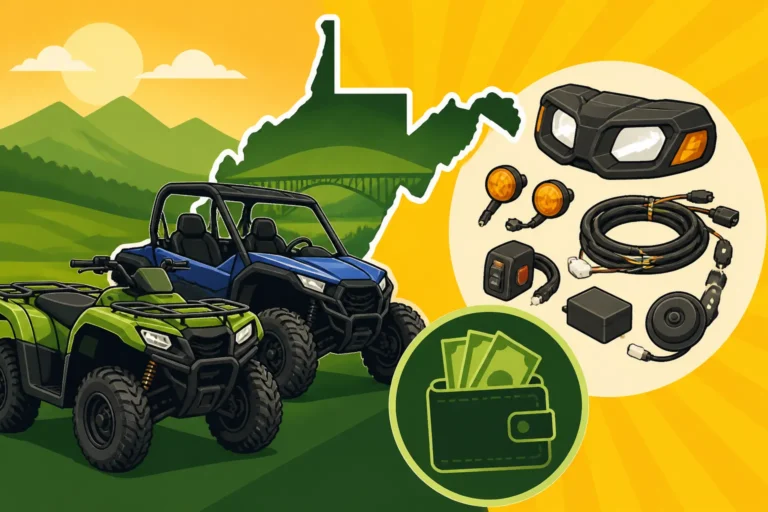
It's vital to do your homework before riding into any town. Don't assume that because one town allows it, all towns do. Look for official signage, check municipal websites, or ask locals if you're unsure. The safest bet for a guaranteed downtown ride is always one of the established Hatfield-McCoy Trail towns. For street-legal conversions to help with this access, many riders turn to aftermarket accessories like those from SuperATV, which offer a range of products from turn signal kits to DOT-approved windshields that can help meet street-legal requirements, even if it's just for short hops into town.
Here's a quick look at some key ATV-friendly towns in West Virginia and what they offer:
| Trail Town Name | Primary Trail System Access | Direct Trail Access to Downtown | Fuel Stations | Restaurants & Food | Lodging Options | General Atmosphere |
|---|---|---|---|---|---|---|
| Gilbert | Rockhouse | Yes | Multiple | Diverse, Rider-Focused | Hotels, Cabins, Rentals | High Energy, Very Rider-Centric |
| Man | Bearwallow | Yes | Multiple | Local Eateries | Cabins, Rentals | Friendly, Authentic |
| Logan | Bearwallow | Yes | Multiple | Varied | Hotels, Cabins | Essential Services, Expanding |
| Williamson | Buffalo Mountain | Yes | Multiple | Wide Selection | Hotels, Motels | Larger Town, More Amenities |
| Matewan | Buffalo Mountain | Yes | Limited | Local Eateries | Cabins, Rentals | Historic, Quaint |
| Mullens | Pinnacle Creek | Yes | Limited | Local Eateries | Cabins | Quiet, Relaxed |
| Pineville | Pinnacle Creek | Yes | Limited | Local Eateries | Cabins | Essential Services |
| Bramwell | Pocahontas (nearby) | Yes, via connecting roads | Limited | Quaint, Historic | B&Bs, Cabins | Historic, Charming |
Navigating Downtown on Your ATV/UTV: Practical Tips
Even in the most ATV-friendly towns, riding on pavement among cars requires a different mindset and a few preparations that you might not consider out on the trails. It's about safety, compliance, and being a good representative for all off-road enthusiasts.
Essential Equipment and Street-Legal Considerations
While West Virginia's official trail towns permit ATVs and UTVs on their streets, it doesn't mean you can ignore basic road safety and legal requirements. Your machine needs to be equipped to handle public road travel, even if only for short distances. Many riders choose to equip their machines with street-legal conversion kits to make these downtown excursions safer and more compliant.
- Lights: You absolutely need working headlights, taillights, and brake lights, especially if you're riding after dusk. Many stock machines have these, but ensure they're functional and visible. Having turn signals is also a huge plus, if not outright required by local ordinance. Companies like SuperATV offer excellent [Turn Signal Wiring on a Polaris Ranger] kits and other lighting upgrades that can be crucial for road use.
- Mirrors: Side mirrors are essential for situational awareness in traffic. Some stock UTVs have them, but ATVs often don't. Adding at least one rearview mirror, if not two side mirrors, is a smart move. Check local ordinances for specific requirements; some might require two mirrors. You can find robust [Mirror Requirements on a West Virginia Street-Legal Machine] from aftermarket providers.
- Horn: A working horn is a must for signaling other drivers or pedestrians. This is often a basic requirement for any vehicle operating on public roads.
- Insurance: While not always strictly enforced for casual trail-town use, having proper [West Virginia ATV Insurance and When You Need It] is critical. If you have an accident on a public road, even in an ATV-friendly town, you'll be glad you're covered. Some local ordinances might explicitly require liability insurance for street operation.
- Helmet and Eye Protection: While adults aren't always required to wear helmets on all public roads in West Virginia (depending on the vehicle type and age), it's always wise to wear one. Riders under 18 absolutely must wear a helmet and eye protection. Even if not legally mandated for adults, the risk of injury on pavement is significant. Always check [West Virginia Helmet Rules for Riders Under 18].
- Safety Glass Windshield: For UTVs, a safety glass windshield (DOT-approved) provides much better protection from road debris and glare than a standard polycarbonate trail windshield, especially when you're traveling at higher speeds or facing oncoming traffic.
Equipping your machine properly not only ensures compliance but also significantly increases your safety when sharing the road with automobiles. Don't cut corners on these crucial items.
Respecting Local Ordinances and Etiquette
Riding in a trail town is a privilege, not an inherent right, and it's something the riding community works hard to maintain. Being a responsible and courteous rider goes a long way in preserving these welcoming policies.
- Speed Limits: Downtown areas often have reduced speed limits, typically 25 mph or even slower. Adhere to these strictly. Speeding in town creates noise, kicks up dust, and is a surefire way to get a ticket and sour local sentiment.
- Parking: Pay attention to designated ATV/UTV parking areas, if they exist. If not, park respectfully and legally, just as you would with a car. Don't block entrances, fire lanes, or pedestrian walkways. Parking an ATV on a West Virginia Main Street requires consideration for other vehicles and pedestrians.
- Noise: While aftermarket exhausts are popular on the trails, they can be incredibly disruptive in a quiet downtown environment. Be mindful of your machine's noise levels, especially early in the morning or late at night. Excessive noise complaints are a quick way for towns to reconsider their ATV-friendly status.
- Dust and Mud: Try to hose off excessively muddy machines before riding into town, if possible. While locals understand you're coming from the trails, coating their streets and storefronts in mud isn't a good look.
- Yield to Pedestrians and Traffic: Treat your ATV or UTV like any other vehicle on the road. Yield to pedestrians in crosswalks and obey all traffic signals and stop signs. Don't weave through traffic or act recklessly.
- Be an Ambassador: Remember that you are representing the entire ATV/UTV community. A positive interaction with locals—a friendly wave, a polite interaction at a gas station or restaurant—helps reinforce the positive economic impact and good reputation of off-road tourism. Conversely, one careless rider can damage that reputation for everyone. Understanding [West Virginia Trespass Rules Along Roads] is also important to avoid issues.
By following these practical tips, you can enjoy the convenience and charm of West Virginia's ATV-friendly downtowns while ensuring these unique opportunities remain available for future generations of riders.
Disclaimer
This article is for general informational purposes only and does not constitute professional advice. Laws, prices and regulations vary by location and change over time. Consult a qualified professional for guidance on your specific situation.