Stopping Before a West Virginia Road Crossing
Riding your ATV or UTV in West Virginia offers some of the most exhilarating experiences anywhere, but hitting those amazing trails often means you'll eventually need to cross a public road. This seemingly simple act can actually be one of the most nerve-wracking and legally critical moments of your ride, especially when you're transitioning from dirt to pavement. This guide is here to walk you through exactly what's expected of you, how to stay safe, and how to avoid costly mistakes when you encounter one of West Virginia's many road crossings.
The Basics of Road Crossings for ATVs and UTVs in West Virginia
Navigating West Virginia's diverse terrain, from deep hollows to winding mountain roads, often puts riders in situations where a trail suddenly meets a paved or gravel public road. This isn't just a minor inconvenience; it's a moment that demands your full attention and adherence to specific rules. Understanding the fundamental requirements for these crossings is your first line of defense against accidents and legal trouble.
Why Stopping is Non-Negotiable
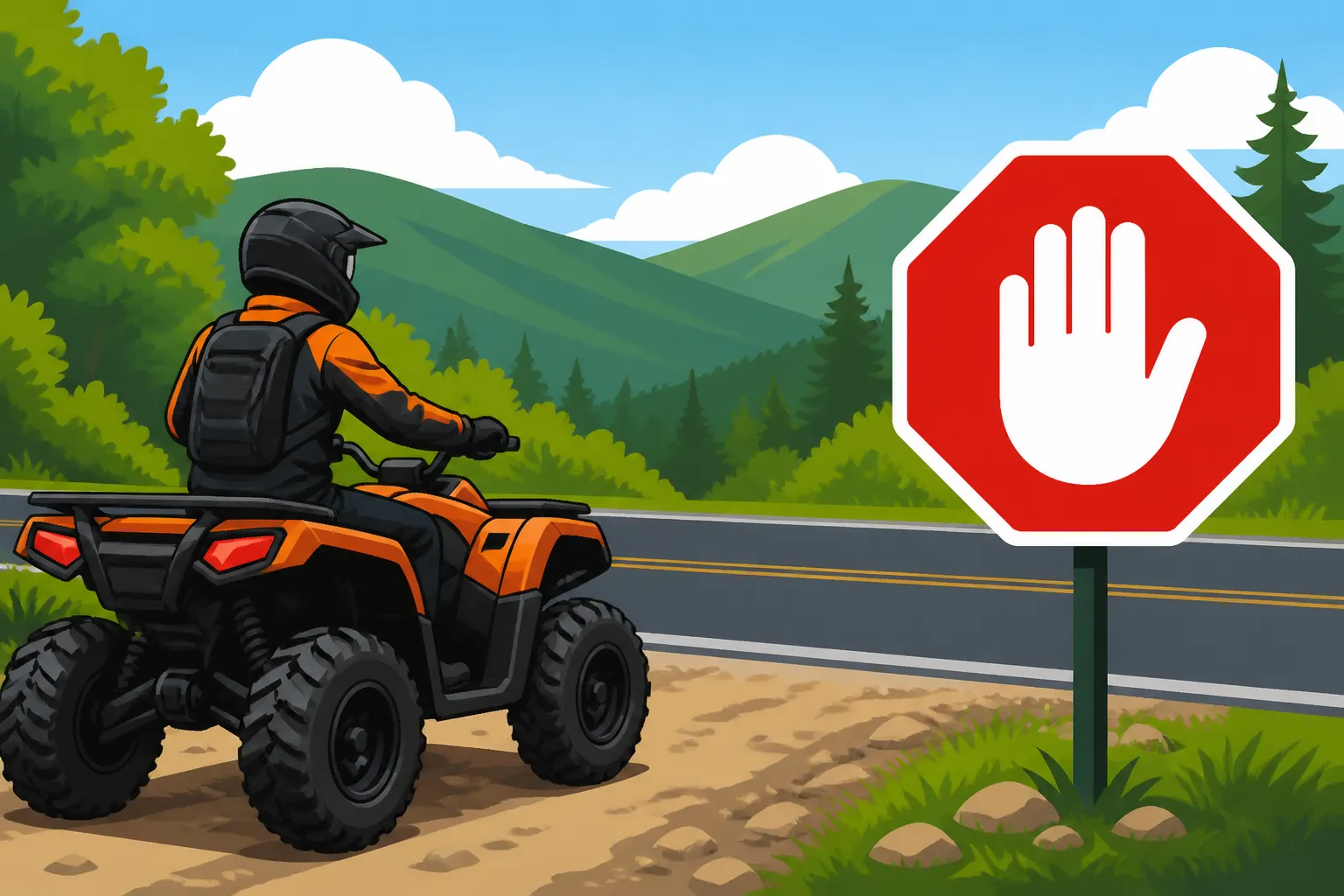
Let's be real: when you're buzzing along on a fantastic trail ride, the last thing you want to do is come to a screeching halt. But when that trail spits you out onto a public road, stopping isn't just a suggestion; it's an absolute mandate in West Virginia. Think of it like a train approaching a railroad crossing—you must stop. The reasons are multifold, but they boil down to two critical factors: safety and legality.
From a safety perspective, imagine rolling out onto a county road where a car might be doing 55 mph around a blind curve. Your small ATV or UTV is incredibly difficult to see, especially if you're covered in mud. The driver of that vehicle isn't expecting you, and a collision could be catastrophic. Stopping completely gives you the crucial time to scan, listen, and ensure the way is clear. It minimizes your momentum, allowing you to react if an unexpected vehicle appears. Without that full stop, you're essentially playing a game of chance, betting your safety and potentially your life against the odds of clear traffic and alert drivers. Many riders have learned this lesson the hard way, often with serious consequences.
Legally, West Virginia law is quite clear. Even if your machine isn't street legal for extended road use, you're often granted limited privileges to cross or ride short distances on certain public roads to connect trails. These privileges come with strict conditions, and a complete stop at an intersection or before entering a public road is almost universally required. Failing to stop isn't just reckless; it's a moving violation that can lead to fines, points on your license, and even more severe penalties, especially if it contributes to an accident. Just like any other vehicle, you are subject to traffic laws, and ignoring a stop sign or a road intersection is a fundamental breach. You don't want to find yourself dealing with [West Virginia Penalties for an Untitled Machine] simply because you didn't take a moment to stop.
Identifying a "Road Crossing"
It might sound obvious, but what exactly constitutes a "road" you need to stop for? In West Virginia, this broadly covers any publicly maintained route where traditional vehicle traffic operates. This includes state routes, county roads, and even some municipal streets within ATV-friendly towns. These are distinct from private drives, unmaintained logging roads, or dedicated trail segments.
Typically, you'll encounter clear indicators:
- Pavement or distinct gravel/dirt roadbed: Public roads often have a more defined and maintained surface than an average trail.
- Road signs: Look for stop signs, yield signs, speed limit signs, or street name signs. These are dead giveaways.
- Traffic flow: If you see cars, trucks, or motorcycles using it, it's a road.
- Markings: Even on rural roads, you might see white stop lines painted on the pavement at intersections, indicating where vehicles should halt.
It's important to differentiate. A private gravel driveway leading to a cabin is not a public road crossing, nor is a mere intersection of two trails. The rule of thumb is: if it's open to the public for traditional vehicle travel, treat it as a road and prepare to stop. This might seem overly cautious, but it's always better to be safe than sorry, especially in areas where trail systems like Hatfield-McCoy might merge with public infrastructure temporarily.
Legal Mandates for Non-Street Legal Machines
For the vast majority of ATV and UTV riders in West Virginia, your machine is not street legal for general road use. This is a critical distinction that heavily influences how you interact with public roads. Non-street legal machines are typically restricted to off-road trails and private property. However, West Virginia law does grant limited exceptions, primarily for crossing public roads or for short distances on specific low-volume public roads to connect trail segments.
The most common exception is often referred to as the "10-mile, 25 mph rule," which allows an ATV or UTV to operate on a public road for up to 10 miles at a maximum speed of 25 mph, primarily to access a trail or connect to another trail. This privilege also extends to simply crossing a public road. However, these privileges are not carte blanche to treat public roads like trails. Every single time you approach a road, even for a brief crossing, you must adhere to all applicable traffic laws, including stopping at stop signs, yielding to traffic, and obeying speed limits. This is a condition of the privilege.
Think of it this way: the state is allowing you a tiny window of access to bridge gaps in the trail system, but only if you demonstrate absolute respect for public safety and traffic law. Violating these rules, especially by not stopping at an intersection or before entering a public road, jeopardizes this privilege not just for you, but for all riders. It can lead to citations, fines, and in severe cases, could even contribute to a reevaluation of existing road-use laws for ATVs and UTVs. Familiarize yourself with [West Virginia's 10-Mile, 25 mph Road Rule] to understand the full scope of these limited allowances. Staying compliant ensures that West Virginia remains an incredibly rider-friendly state.
How to Execute a Safe and Legal Road Crossing
Successfully and safely navigating a road crossing in West Virginia is a skill every ATV and UTV rider needs to master. It’s not just about slamming on the brakes at the last second; it’s a coordinated process that begins well before you see the pavement and involves careful observation, communication, and decisive action.
Approaching the Road: Slow Down, Scan, and Signal
The approach to a road crossing isn't where you race to see how fast you can go. It’s where you start winding down your pace and shift your mindset from trail riding to defensive driving. As soon as you see signs of an impending road—whether it's an actual stop sign, a change in trail surface, or even just the sound of distant traffic—your process should begin.
First, slow down, and I mean really slow down. Reduce your speed significantly as you near the crossing. This gives you more time to react, allows your machine to become more stable, and prepares you for a complete stop. Dust often makes it hard to see, especially when riding in a group, so reducing speed early helps everyone.
Next, it’s all about scanning. This isn't a quick glance; it's an active, deliberate sweep of your surroundings. Look for any traffic signs first. Then, repeatedly scan both left and right for oncoming traffic, not just once, but multiple times. Look far down the road in both directions to assess speed and distance of any vehicles. Listen for approaching cars, especially on blind turns where sightlines are limited. Remember that most drivers aren't expecting an ATV or UTV to pop out onto the road, so you need to be hyper-vigilant.
Finally, signal your intentions. If your UTV has factory or aftermarket turn signals (many street-legal conversions from companies like SuperATV include these), activate them to indicate which way you intend to turn, even if you’re just crossing straight through. For ATVs or UTVs without electronic signals, use clear and unambiguous hand signals. Point in the direction you plan to travel. This communicates your intentions to any potential traffic and to other riders in your group. Remember, visibility is key, and anything you can do to make yourself more predictable to other road users is crucial for safety.
The Full Stop Requirement
Let's cut right to it: a "rolling stop" is no stop at all. West Virginia law, and good old common sense, demands a complete, unequivocal stop before entering a public roadway. This means your wheels must cease all forward motion.
Where exactly should you stop?
- At a painted white line: If there's a solid white stop line painted on the pavement, stop before it. Your front tires should not cross this line.
- Before the crosswalk: If there's a crosswalk but no stop line, stop before the crosswalk.
- Before the intersection: If there are no lines or crosswalks, stop at a point where you have a clear, unobstructed view of traffic coming from both directions, without encroaching into the flow of traffic. This often means stopping well back from the actual intersection to give yourself a buffer.
Why is a full stop so critical?
- Legal Compliance: It's the law. Anything less is a traffic violation.
- Maximized Visibility: A full stop allows you to meticulously scan the road without being distracted by the act of moving forward. It puts you in a static position where you can take a moment to confirm the way is truly clear.
- Predictability: It makes you predictable to any approaching motorists. They see you stopped, they understand you're waiting. A rolling stop just looks like you're about to pull out, which can confuse drivers and lead to misjudgments.
A moment of patience here is worth infinitely more than the potential consequences of rushing. You might be in a hurry to get back on the trail, but that split second could prevent an accident.
Proceeding with Caution
Once you’ve made that complete stop and carefully scanned the roadway, the next step is to proceed, but always with caution. This isn't the time to suddenly gun it and dart across.
First, reconfirm the path is clear. Even after stopping, take one last quick look left, right, and left again. Road conditions can change in a blink. Once you're absolutely certain there are no oncoming vehicles or hazards, accelerate smoothly and decisively. You want to get across the road efficiently, but without losing control or surprising anyone. Avoid jerky movements or sudden acceleration that could cause your machine to lose traction, especially if the crossing involves loose gravel or wet pavement.
If you’re riding in a group, this is where clear communication and a disciplined approach are vital. The lead rider should signal clearly when it’s safe for the group to cross. Often, groups will cross one machine at a time, or in pairs if the road is wide enough and traffic allows. The key is to avoid creating a massive, sprawling obstacle in the middle of a public road. Riders should maintain appropriate spacing, and the trailing rider in a group should always look back to ensure no one has been left behind or encountered an issue. Good group etiquette on road crossings helps everyone stay safe and keeps the flow of the ride smooth. Remember the importance of [Holding a Line in a Group of Riders] to avoid confusion and ensure everyone crosses safely.
Special Considerations for Different Machine Types and Roadways
West Virginia’s terrain and road network are incredibly varied, and so are the machines we ride. Understanding how these differences impact your road crossings is crucial for both safety and legal compliance. It's not a one-size-fits-all approach when you're dealing with everything from narrow ATVs to wide UTVs, and from quiet country roads to busy state routes.
Street-Legal SPVs vs. Non-Street Legal Machines
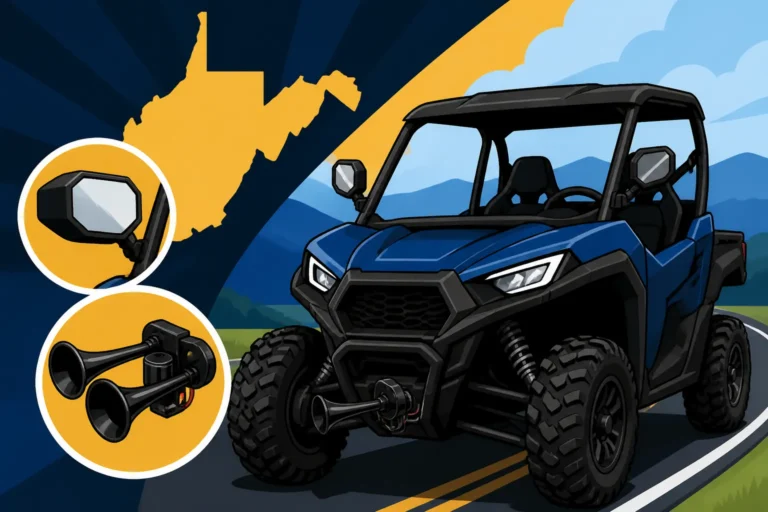
This is perhaps the biggest distinction when it comes to road interaction. A Street-Legal Special Purpose Vehicle (SPV) in West Virginia is a machine that has been specifically modified and registered to meet the state's requirements for limited public road use. These machines typically have turn signals, rearview mirrors, a horn, DOT-approved tires, and sometimes even a windshield. While they enjoy more privileges on public roads, such as longer stretches of travel, they are not exempt from basic traffic laws. They still need to stop at stop signs, yield to traffic, and obey all other rules of the road. The difference is they often come equipped with features that make these interactions safer. For example, [Mirrors and Horns on a Street-Legal Build] significantly enhance awareness and the ability to warn others.
Non-street legal machines, which constitute the majority of ATVs and UTVs on the trails, have much more restrictive access to public roads. As discussed, they are generally allowed only for short distances (like the 10-mile, 25 mph rule) or for direct crossings. For these machines, the need for extreme caution is amplified because they often lack the safety equipment found on SPVs. Their limited road privileges mean that any interaction with a public road is a high-risk situation that demands maximum vigilance. Understanding [West Virginia's Street-Legal Special Purpose Vehicle Law] can clarify what's expected if you decide to go the SPV route. Even then, the "full stop" rule at crossings remains paramount.
Crossing Different Types of Roads
Not all roads are created equal, and your approach to crossing them should reflect that.
- County Roads and Back Roads: These are often gravel or lightly paved, with lower speed limits and generally less traffic. However, "less traffic" does not mean "no traffic." Rural drivers might be less alert for ATVs, and blind curves or crests are common. Always assume a vehicle could appear unexpectedly. These roads might also lack clear signage or painted stop lines, putting the onus entirely on the rider to identify the intersection and perform a safe stop.
- State Routes (e.g., WV-10, WV-80): These are typically paved, higher-speed roads with more consistent traffic flow. Crossings here are significantly riskier. Vehicles travel much faster, reducing your reaction time and theirs. You'll need an even greater "window" of clear traffic to cross safely. When crossing these roads, be extra mindful of your visibility. Bright clothing, a flag, and even aftermarket LED whips from companies like SuperATV can help you stand out.
- Divided Highways: While less common for ATV crossings, you might encounter situations where a trail connector crosses a divided highway. This effectively means you're crossing two separate roads with a median in between. You must treat each side as an independent crossing, stopping fully before entering each traffic flow. Never assume that because one side is clear, the other will be too. Crossing [Crossing a Four-Lane West Virginia Highway on a Quad] requires meticulous planning and patience. Always prioritize getting to the safety of the median before assessing the next lane of traffic.
Group Riding and Lead/Tail Protocols
Riding in a group adds another layer of complexity to road crossings, making established protocols essential.
- Lead Rider Responsibilities: The lead rider is the eyes and ears for the entire group. They are responsible for identifying the crossing well in advance, initiating the slowdown, and making the initial assessment of traffic. They should make a clear, decisive stop and only proceed when it's absolutely safe for the first machine. Once across, the lead rider should watch for the rest of the group, perhaps signaling when it's clear.
- Trailing Riders' Actions: Riders following the lead should maintain proper spacing, allowing enough room to stop safely without rear-ending the machine in front. They should echo the leader's scanning and stopping actions. Each rider is individually responsible for ensuring their crossing is safe, even if the lead rider has given a go-ahead. Never just follow blindly.
- Communication: Hand signals, radio communication (if equipped), or even visual cues are vital. The leader might raise a hand to signal "stop," or use a thumbs-up to indicate "clear."
- Crossing Strategy: For large groups, it’s often safer to cross one or two machines at a time, creating smaller, more manageable units. Waiting for an opening large enough for five or ten machines at once can be impractical and dangerous on busier roads. Once a machine has crossed, it should ideally move off the shoulder to avoid obstructing visibility for those still waiting or for other road users. This systematic approach ensures that everyone gets across safely and minimizes the time the entire group spends vulnerable at the roadside. It’s also important to discuss [West Virginia Road Rules Riders Get Wrong] in group briefings to ensure everyone is on the same page before hitting the trails.
Equipment and Awareness for Enhanced Safety
Riding an ATV or UTV is inherently an immersive, often exhilarating experience. But when you intersect with public roads, that experience needs to shift to one of heightened caution and preparedness. While knowing the rules is fundamental, having the right equipment and maintaining a sharp awareness can be the difference between a close call and a serious accident.
Visibility Aids and Their Importance
On the trail, blending in might be part of the adventure, but on a public road, you want to stand out like a neon sign. Your ATV or UTV is a small vehicle compared to a pickup truck or an 18-wheeler, and its profile can easily be missed by drivers who aren't actively looking for off-road machines. This is why visibility aids are not just recommended, but absolutely essential, especially for road crossings.
Consider these options:
- Visibility Flags: A brightly colored flag mounted on a whip pole extending above your machine can dramatically increase your visibility, particularly in dusty conditions, over hills, or around blind turns. These flags catch the eye of drivers from a distance.
- Bright Clothing: Ditch the drab colors for something fluorescent or highly contrasting. Orange, lime green, or bright yellow riding gear makes you much easier to spot.
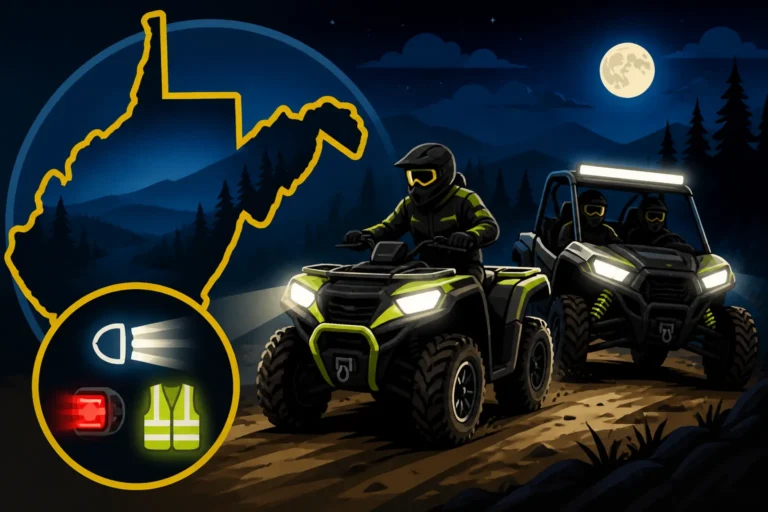
- Reflective Tape: Adding reflective tape to the front, rear, and sides of your machine, and even to your helmet, is crucial for low-light or evening conditions. While [Lights Required After Dark in West Virginia] are mandatory for night riding, reflective tape provides an extra layer of passive visibility.
- Proper Lighting: While non-street legal machines might only have basic headlights and taillights, consider aftermarket LED light bars or auxiliary lights. Even during the day, running your headlights can make you more noticeable. For those considering making their UTV street legal, a full turn signal and horn kit, often offered by brands like SuperATV, dramatically improves your ability to communicate with other road users and ensures you have the necessary [Equipment West Virginia Requires on a Road Ride]. These kits are purpose-built for improved safety and compliance.
Remember, the goal is to be seen. Never assume a driver sees you, even if you see them.
Rider Awareness and Defensive Riding
No amount of equipment can substitute for a sharp, aware rider. Defensive riding is your most potent tool at a road crossing. This means actively anticipating potential hazards and never assuming anything.
- Anticipate the Unexpected: Always expect that a car could come around that blind curve at excessive speed, or that a driver might be distracted by their phone. Don't simply look for clear traffic; think about what could happen.
- Never Assume You've Been Seen: Even if you make eye contact with a driver, don't assume they fully register your presence or intentions. A quick nod from them might be for something else entirely. Wait until you have absolute confirmation that they are slowing down or yielding.
- The "Look Twice, Cross Once" Mentality: This mantra is critical. Before you commit to entering the roadway, look left, then right, then left again. Scan for motorcycles, bicycles, or even pedestrians that are harder to spot. Once you start crossing, your focus should be 100% on getting across safely and efficiently.
- Focus Solely on the Crossing: This is not the time to be checking your phone, adjusting your GoPro, or having a deep conversation with your passenger. Your entire attention should be on the road ahead and the traffic around you. Distraction at a road crossing can have immediate and severe consequences.
Understanding Local Ordinances and Signage
While West Virginia has overarching state laws governing ATV and UTV use on and across roads, it's also true that some specific municipalities or counties might have additional ordinances. For example, some ATV-friendly towns might have specific rules for how you interact with their main streets, even if it's just a crossing. [Riding an ATV on the Road in West Virginia] can give you more insights into these nuances.
It's your responsibility as a rider to be aware of these local rules if you plan to ride within or through specific towns. Pay attention to local signage, especially as you enter or exit trail town limits. A sign indicating "ATV/UTV Route" might come with specific conditions or hours of operation.
The general rule of "always stop unless otherwise indicated" remains your safest bet for any road crossing, regardless of whether you're dealing with a desolate country road or a bustling main street. When in doubt, stop. It's a fundamental safety principle and a cornerstone of being a responsible off-road enthusiast. Always check before you ride and consider contacting local visitor centers for trail towns for any specific rules. This diligence not only keeps you safe but also helps maintain the positive relationship between riders and the communities that support our passion. If you're considering [Making a UTV Street Legal in West Virginia], understanding these details becomes even more paramount.
| Action Step | Description | Why It's Important |
|---|---|---|
| Approach Slowly | Reduce speed significantly well before the crossing point. | Allows more reaction time, machine stability, and prepares for a complete stop. |
| Scan Continuously | Look left, right, left again, and listen for traffic. Repeat multiple times. | Identifies oncoming vehicles, especially from blind spots; drivers might not see you. |
| Signal Intentions | Use hand signals or electronic turn signals if equipped. | Communicates your planned movement to motorists and other riders. |
| Come to a Full Stop | Bring all wheels to a complete halt before the white line or intersection. | Required by law; maximizes visibility; provides critical decision-making time. |
| Reconfirm Clear | Take one final, thorough look in both directions before proceeding. | Ensures no new vehicles have appeared while you were stopped. |
| Proceed Decisively | Accelerate smoothly and cross the road efficiently without hesitation. | Minimizes time spent in traffic; avoids sudden, unpredictable movements. |
Disclaimer
This article is for general informational purposes only and does not constitute professional advice. Laws, prices and regulations vary by location and change over time. Consult a qualified professional for guidance on your specific situation.