Braveheart Trail System From Gilbert
Braveheart can be an appealing place to ride from Gilbert, but a smooth trip depends on more than unloading your machine and following a trail sign. Trail status, route difficulty, permits, fuel, and town access all affect the day. This guide explains how to plan a Braveheart ride, what to check before leaving, and how to avoid common navigation and preparation headaches.
Understanding the Braveheart Trail System from Gilbert
Where Braveheart fits into the Hatfield-McCoy network
Braveheart is part of the Hatfield-McCoy trail network in southern West Virginia, a region where trail riding and small-town visits can fit into the same outing. Gilbert is a practical place to begin planning because it is a familiar trail town with services and lodging options for riders. Still, being near Gilbert does not mean every route, business, or neighboring trail system is automatically connected or open to your machine on a given day.
It helps to think of Braveheart as a destination to plan around, rather than assuming it is simply an extension of a route you already know. The network includes multiple trail systems, and access points, connections, and riding options vary. If you are comparing systems before choosing a base, [West Virginia's Thirteen Hatfield-McCoy Trail Systems] gives you a broader view of the network and helps put Braveheart in context.
For a first visit, identify the specific trailhead you intend to use and confirm the route from your lodging or parking area. An address in Gilbert may be convenient for restaurants or a cabin, but it does not by itself establish a legal trail connection from that property. For background on planning a start point, see [Hatfield-McCoy Trailheads and Where to Start]. Treat each access detail as something to confirm before loading up.
What to expect from the riding day
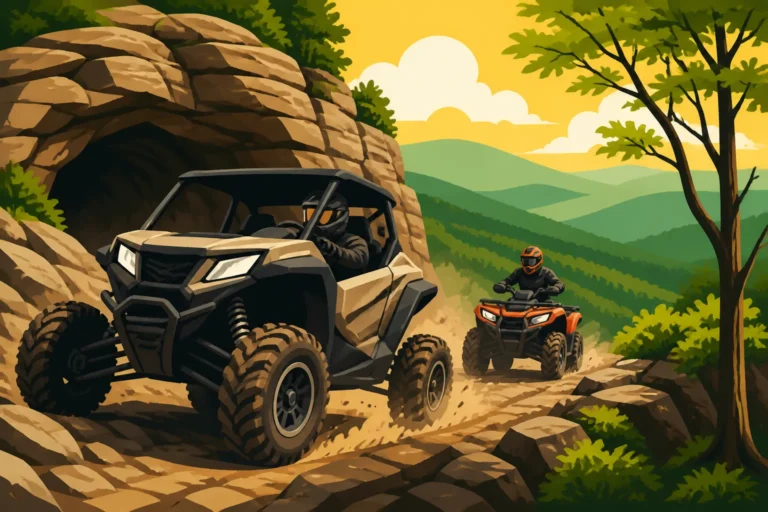
A ride in the Gilbert area can involve more than following a single loop. You may encounter changing terrain, narrow sections, uneven surfaces, climbs, and turns where sightlines are limited. Conditions can vary across the system, and a trail that feels comfortable on a dry day may take more attention after rain. Give yourself room to slow down, reassess, or turn back rather than trying to keep pace with a more experienced group.
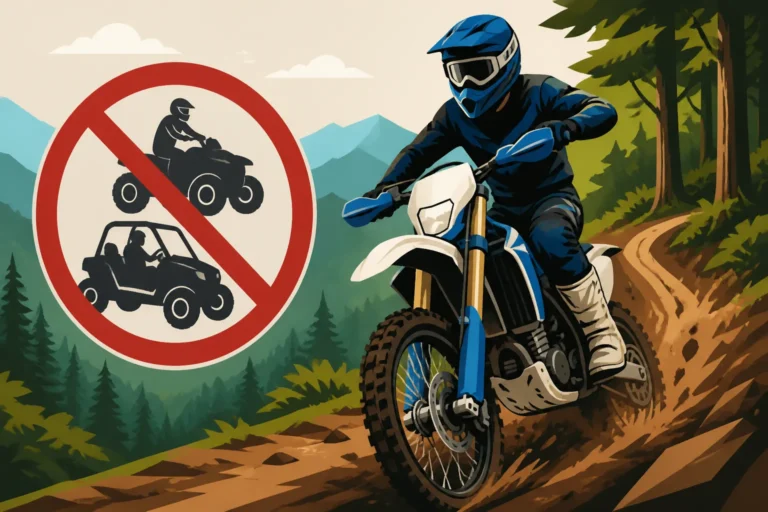
Build the day around your riders’ abilities and the machine you are bringing. A narrow ATV, a wide side-by-side, and a youth machine may not all be suitable for the same route. Check any posted restrictions and trail markings before entering a section, especially if your group has mixed machine sizes. The overview in [West Virginia Trail Systems Best Suited to Side-by-Sides] can help side-by-side riders think through fit, while [West Virginia Trail Difficulty and How It Is Marked] is useful for understanding how to choose routes more deliberately.
It is also worth planning for the less exciting parts of the day. A delayed start, a route change, or a mechanical issue can eat into riding time, particularly when your group is unfamiliar with the area. Set a realistic turnaround point, keep a time buffer, and agree on what the group will do if someone needs to stop. A ride feels much less stressful when nobody is trying to squeeze one last trail into the daylight.
Planning Your Route and Navigation
Confirming trail access and current conditions
Start with official trail information and any posted notices about closures or access changes. Trail conditions are not fixed: maintenance, weather, land access, and other operational factors can affect which sections are available. Do not rely on a saved route, an old screenshot, or a previous visit as proof that a trail is open today. Before driving to Gilbert, review [Checking West Virginia Trail Status Before You Drive] and check again when you arrive if notices have changed.
Pay attention to the difference between a trail route and a public road. A map that shows roads, businesses, or nearby trail lines does not mean every road segment is open to ATV or UTV use. Follow signs at trailheads and junctions, obey gates and closures, and stay within the marked system. [Staying on Marked Trails in West Virginia] covers an important point that is easy to underestimate: leaving a route to explore a tempting side path can create safety, access, and trespass problems.
For digital navigation, onX Offroad can be useful as a planning aid for viewing terrain and organizing a route, but don’t treat any third-party map as a substitute for current official trail information or on-the-ground signs. Download or save the details you need before entering an area where mobile reception may be unreliable. Carry a backup plan, such as a paper map or a screenshot of the trail information, so a low battery or weak signal does not leave your group guessing at a junction.
Choosing routes that match your group
The best route is not necessarily the longest or most challenging one. It is the route your least experienced rider can manage safely, given the day’s conditions and the capabilities of the machines in your group. Before choosing, talk through what your riders are comfortable handling: steep grades, tight turns, loose surfaces, mud, and the possibility of having to maneuver or reverse in a confined spot.
A mixed group benefits from agreeing on the riding plan before anyone starts the engine. Decide who will lead, who will ride at the back, and how often the group will regroup. A fast rider pulling away can create pressure for less confident riders to go faster than they should. If the group splits, agree on a clear meeting point and a plan for anyone who needs to stop.
Use the map and trail signs together. A map may help you understand the general layout, but a posted marker is what you should follow at the trail. A simple planning table can help your group decide whether a route suits the day:
| Planning question | What to consider before you ride |
|---|---|
| Who is riding? | Experience, age, confidence, and ability to keep a steady pace |
| What machines are in the group? | Width, turning room, passenger capacity, and posted restrictions |
| What are conditions like? | Recent rain, mud, visibility, and any official closure notices |
| How much time is available? | Riding time, breaks, daylight, and a buffer for delays |
| What is the backup plan? | A shorter route, a turnaround point, and a regrouping location |
If your group is debating between Braveheart and another nearby system, compare trail access and difficulty rather than choosing based only on what looks close on a map. [Planning a West Virginia Riding Weekend] can help you think beyond the ride itself, including where to stay and how to structure more than one day of riding.
Permits, Rules, and Trail Etiquette
Handle permits and requirements before arrival
Do not assume that a vehicle title, out-of-state registration, or rental agreement automatically covers every requirement for using a managed trail system. Check the permit rules for the system and the machines in your group before traveling. If you need to purchase a permit, confirm the accepted purchase options, where permits are sold, and any instructions for displaying them. [Where to Buy a Hatfield-McCoy Trail Permit] is a practical place to start.
Riders who are traveling from outside West Virginia should check the rules that apply to their circumstances rather than relying on what is allowed at home. Likewise, if you are renting, ask the rental provider which paperwork or trail access items are included and which are your responsibility. Make this part of your booking conversation, not a question for the morning when everyone is waiting to ride.
Keep your documents and emergency information accessible, but avoid carrying irreplaceable paperwork loosely in an open machine. A waterproof pouch or secure storage compartment can help protect important items from rain, dust, and mud. It is also sensible to have a charged phone, a contact plan, and the name of your lodging or meetup point written down in case a device becomes unusable.
Ride considerately around other users
Trail etiquette is more than being polite. It helps prevent collisions, protects access, and makes the experience better for people who are riding at different speeds. Reduce speed when approaching other machines, give others space, and communicate clearly before passing or entering a narrow section. If you cannot see around a bend or over a crest, assume someone may be coming from the other direction.
At trail junctions, pause long enough to confirm the group is together and everyone knows which way to go. Avoid blocking the route while you check a map or discuss the next turn. Move to a safe place where other riders can pass, then make your decision. Keep noise and riding behavior considerate near homes, businesses, and other areas where visitors and residents share space.
Follow posted signs, gates, and instructions even when a detour looks short or harmless. A closed route may be closed for a reason that is not visible from the trail entrance. For more on sharing space responsibly, [West Virginia Trail Etiquette on Shared Routes] is a useful companion read. Riding respectfully helps protect the access that makes places like Gilbert attractive to visitors in the first place.
Preparing Your ATV or UTV and Your Group
Check the machine before you leave
A quick inspection at the lodging lot or trailhead can prevent a small issue from turning into a long recovery. Check tires for visible damage and appropriate pressure, look over the brakes and throttle, and confirm that lights and basic controls work. Make sure fuel is sufficient for the route you have planned, with a margin for detours or delays. A machine that starts easily in the driveway may still have a loose strap, low tire, or leaking fluid that becomes obvious only after it is moving.
Secure loose cargo and make sure anything you carry can withstand vibration, dust, and water. Tools, a basic first-aid kit, water, and a way to contact your group are more useful when they are reachable without unloading half the machine. If you are riding a side-by-side, make sure passengers understand seat-belt use and where to keep hands and feet. If you are bringing children, check machine fit and supervision needs in advance rather than making that decision at the trail entrance.
For a rental, walk around the machine with the provider and ask about any unfamiliar controls, recovery procedures, fuel expectations, and what to do if the machine develops a problem. Point out existing damage before departure and make sure everyone knows how to contact the rental business. A short, clear conversation up front is much better than trying to interpret a contract or troubleshoot a machine on a remote trail.
Pack for changing weather and delays
Weather in the hills can change the feel of a ride quickly. Pack clothing that can handle cooler temperatures, wind, and rain, even if the day begins warm. Goggles or eye protection, gloves, and sturdy footwear help with comfort and visibility, while water and snacks matter if the group is delayed or the ride takes longer than expected. Riders often regret leaving these basics behind more than they regret packing them.
Do not depend on continuous cell service for navigation or contacting someone. Save maps and key information in advance, carry a power bank if appropriate, and tell a person who is not riding where your group expects to be and when you plan to return. If plans change significantly, make an effort to update that person when you have a reliable connection.
Before the trip, review [West Virginia Trail Maps and Signage] so you know how to interpret the information you are likely to encounter. A third-party app such as onX Offroad can supplement that preparation, especially for reviewing an area before the ride, but it should not be the only tool your group has. The safest approach is to combine advance planning, official trail information, posted signs, and sensible judgment on the ground.
Making Gilbert Part of a Longer Visit
Plan for fuel, food, and lodging
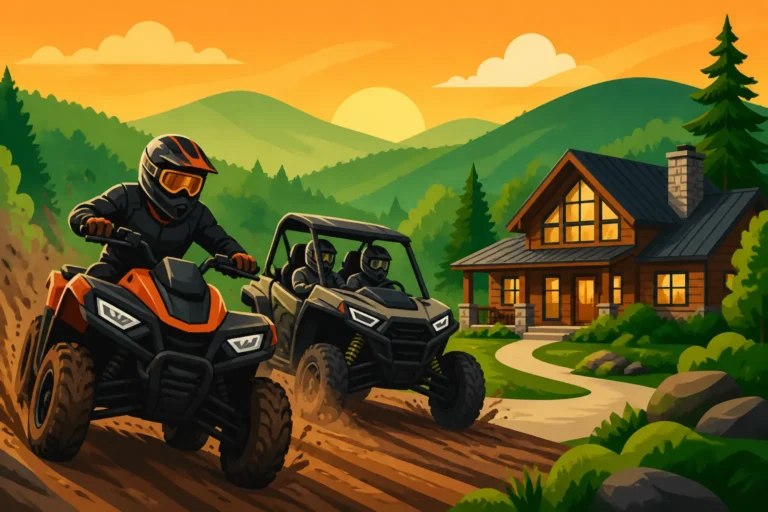
A ride from Gilbert can be part of a relaxed weekend, but it helps to plan the practical stops separately from the trail route. Check where your group will fuel the tow vehicle and machine, when nearby businesses are open, and whether your lodging has the parking space and access you need. Do not assume that a business close to a trail line is reachable by ATV or UTV; access rules and roads are a separate matter from geographic distance.
If you are staying overnight, ask about trailer parking, machine storage, and any property rules before booking. A place that looks convenient online may have a tight driveway or limited room to turn around with a trailer. For larger groups, confirm how many machines can be accommodated and whether everyone can park without blocking other guests.
Think about the pace of your whole visit. A full day on the trails can leave riders tired, muddy, and hungry, so avoid scheduling a late arrival followed by an ambitious early start unless your group is comfortable with it. A simple plan with a clear trailhead, a realistic riding window, and a reserved place to sleep can make the weekend feel easier than trying to improvise every detail.
Use a flexible plan rather than a rigid itinerary
An itinerary is useful, but a trail ride should leave room for conditions to change. If a route is closed, the weather turns, a rider feels uncomfortable, or a machine needs attention, be ready to switch to a shorter outing. A flexible plan is not a failed plan. It is a way to protect the group’s safety and keep the trip enjoyable.
Set expectations before the ride about how decisions will be made. For example, agree that any rider can call for a stop, that the group will wait at designated junctions, and that no one will leave the marked route to catch up. These agreements are especially helpful when riders have different experience levels or are visiting together for the first time.
After the ride, take a moment to check machines and gear before packing for home. Look for damage, note any trail sections that were more difficult than expected, and make sure every rider and passenger is accounted for. That information can make your next visit to Braveheart—or another system in the region—more comfortable and better planned.
Disclaimer
This article is for general informational purposes only and does not constitute professional advice. Laws, prices and regulations vary by location and change over time. Consult a qualified professional for guidance on your specific situation.