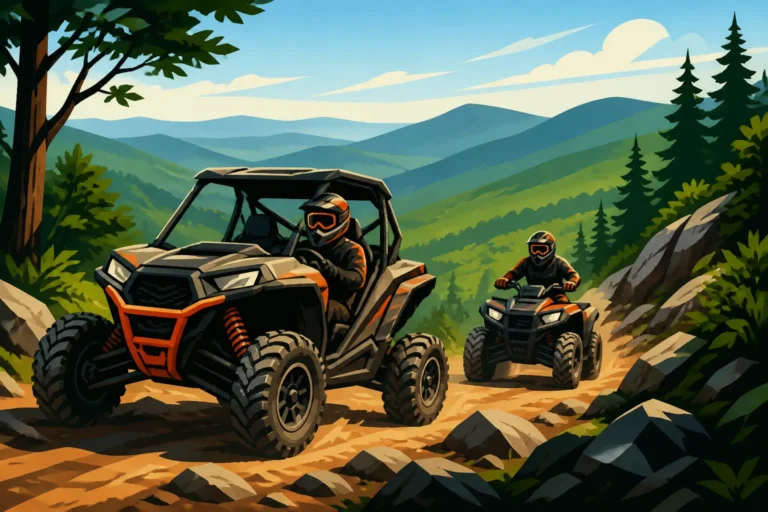
Poker Runs on the Hatfield-McCoy Trails
A poker run on the Hatfield-McCoy Trails can turn a regular ride into a fun day of checkpoints, cards, and time with friends. But route access, permits, trail conditions, and group size all need attention before anyone starts the engine. This guide explains how to plan or join a run while keeping the ride organized, safe, and within the rules.
What a poker run on the Hatfield-McCoy Trails involves
The basic format
A poker run is usually a recreational ride with designated stops. At each checkpoint, a participant draws a card or receives another piece of a hand. At the end, the rider or team with the strongest hand wins, or everyone simply joins in for the fun. Organizers may also use a raffle, a prize drawing, or a charitable fundraiser.
The name can sound competitive, but a well-run event is not a race. Riders should travel at a safe pace, stay on permitted trails, and avoid risky passing or pressure to catch up with another group. The point is to complete the route and enjoy the ride—not to arrive at a checkpoint first.
Formats vary. Some events give each participant one card at every stop; others let riders draw a card at the finish for each checkpoint visited. Before signing up, ask how the hand is recorded, whether the run is timed, what happens if a checkpoint is missed, and whether prizes depend on riding speed. If the rules seem to reward rushing, treat that as a reason to ask more questions.
Why route planning matters here
The Hatfield-McCoy network crosses rugged terrain and connects riding areas with trailheads and nearby communities. That variety is part of the appeal, but it also means a route that looks simple on a screen may not suit every rider or machine. Trail difficulty, width, closures, weather, and the distance between practical stopping points all affect how a poker run feels on the ground.
A route should be designed for the least experienced rider and the narrowest or least capable machine in the group—not just for the organizer’s favorite loop. If a section is too challenging, a participant who feels pressured to continue may make a poor decision on a steep grade, rocky stretch, or muddy turn. A route with clear alternatives and a sensible turnaround plan is more welcoming and easier to manage.
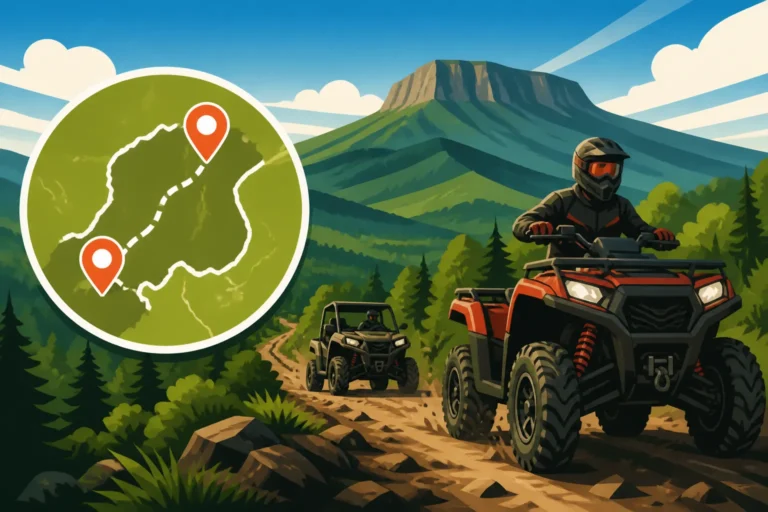
For general orientation, organizers may use a mapping tool such as onX Offroad alongside official trail information. A third-party map can help with planning, but it should not be treated as confirmation that a trail is open, permitted for the event, or appropriate for every machine. Check the day’s official status and local guidance before riding.
What to clarify before joining
Before registering, get the practical details in writing if possible. Confirm the meeting location, start window, finish point, route difficulty, expected ride duration, and what the entry includes. Ask whether the event is organized through a club, charity, lodging business, or other group, and who will answer questions on the day.
It is also worth checking whether the route is suitable for your ATV or UTV dimensions. A wide side-by-side may not fit every trail, and a route designed around narrower machines may not have an easy alternate for wider units. For help evaluating access, see West Virginia Trail Systems Best Suited to Side-by-Sides and Wide Machine Restrictions on West Virginia Trails.
Planning a route, checkpoints, and group
Choose a route for the whole group
Start by setting a realistic riding window, then choose a route that fits it. Build in time for check-in, briefings, card stops, bathroom breaks, refueling, and a slow participant who needs extra help. An event schedule that allows no breathing room often leaves riders feeling rushed, especially when the terrain is unfamiliar or conditions are wet.
Keep the route legible. A small number of well-spaced checkpoints is generally easier to manage than many stops spread across a complicated loop. Give each checkpoint a clear identity and a simple process for recording the participant’s card. If a rider arrives without the rest of their group, a volunteer should know whether to hold them, direct them onward, or contact the event lead.
Navigation should have a backup. Riders can download or save useful information in advance, but mobile service may be unreliable in remote hollows. Carrying a paper map or written route notes can help when a phone battery dies or a screen becomes difficult to use in rain and dust. West Virginia Trail Maps and Signage and Carrying a Paper Trail Map in West Virginia are useful topics to review before heading out.
Keep checkpoints safe and practical
A checkpoint should be positioned where riders can stop without blocking a trail, creating a traffic jam, or forcing an awkward maneuver. Avoid placing card tables at blind corners, narrow bridges, steep approaches, or any spot where waiting machines could obstruct through traffic. Volunteers should be visible, easy to identify, and prepared to move out of the way when a trail needs to remain clear.
Keep the stop brief. Riders should know where to park, how to receive a card, and where to continue. If the event uses a staffed stop, volunteers can remind participants to leave room for other trail users and to avoid spinning tires or revving engines near people. Checkpoints are not a reason to leave the marked route or wander onto private property.
A practical event plan also accounts for a missed stop or a participant who needs help. Decide beforehand who handles a mechanical issue, who contacts emergency services if needed, and how the group will communicate if someone is separated. Do not assume that a volunteer can quickly reach every location by vehicle; terrain and trail access can make response slower than expected.
Set a pace that works for mixed experience
For a group ride, divide participants into smaller groups when the size or experience range makes it difficult for everyone to travel together. Each group should have a leader who knows the route and a sweep rider who stays behind the last participant. Explain whether riders should wait at turns, checkpoints, or designated regrouping areas rather than trying to keep every machine in one continuous line.
A simple pre-ride briefing can prevent common misunderstandings. Cover the route, trail markings, passing etiquette, what to do if someone stops, and the event’s plan for a breakdown. Remind participants that they should ride within their ability and may skip a difficult section or leave the event if they are uncomfortable.
For more on organizing a shared ride, read Group Rides in Southern West Virginia and West Virginia Trail Etiquette on Shared Routes. The same habits matter whether the group is a small circle of friends or a formal event with volunteers and prizes.
| Planning item | What to confirm | Why it matters |
|---|---|---|
| Route | Trail access, difficulty, length, and alternate options | Keeps the ride suitable for the group and the machines |
| Checkpoints | Safe stopping space, staffing, and card procedure | Reduces congestion and confusion |
| Permits | Requirements for participants and the event | Prevents avoidable access and compliance problems |
| Communication | Leaders, sweep riders, and emergency plan | Helps when someone is delayed or separated |
| Conditions | Closures, weather, and trail status | A planned route may need to change |
| Prizes | How winners are determined | Keeps the event recreational rather than speed-focused |
Permits, rules, and event responsibilities
Individual trail access and event permission
Participants and organizers should distinguish between a rider’s trail access requirements and permission to hold an organized event. A participant may need a valid trail permit for the ride, while a club, charity, or organizer may also need to follow separate procedures for an event. Do not assume that buying permits for attendees automatically authorizes a poker run or checkpoint setup.
If you are organizing, contact the appropriate trail authority well before advertising the event. Ask about the route, event approval, checkpoint locations, group size, volunteer activity, and any paperwork or insurance expectations. Requirements can depend on the event’s format and where it takes place, so get direction for your particular plan rather than relying on another group’s old checklist. See Permits for an ATV Club Event and Permits for a Charity Poker Run for related planning topics.
Participants should confirm what their own permit covers and whether each machine needs its own permit. A poker run’s entry fee does not necessarily include trail access. Ask the organizer directly, and review West Virginia’s Hatfield-McCoy Trail Permit Explained and One Permit for Every Trail System before assuming that a registration or event wristband replaces a trail permit.
Follow marked trails and current conditions
Stay on marked, open trails throughout the event. A checkpoint plan does not give riders permission to cut across a closed trail, use an unofficial connector, or cross land outside the authorized route. If a closure or barrier appears, follow the posted direction and the organizer’s instructions. Do not move a gate or ride around a closure simply because the event schedule depends on that section.
Conditions can change after rain, maintenance work, or a land-access issue. The organizer should check official trail updates close to the ride and again before the group starts. If a route is closed, choose a permitted alternative or cancel that portion of the event. An onX Offroad map may help participants understand their location, but it does not replace official closure notices or trail authority guidance.
A good event plan gives riders an easy way to report a hazard or closure. The group leader can relay the information to the organizer, who can stop later groups from entering the affected area. For more preparation, see Checking West Virginia Trail Status Before You Drive and Trail Closures on West Virginia’s Trail System.
Insurance and liability questions
Organizers should ask what insurance applies to the event, the venue, and any volunteer activity. Personal insurance, event coverage, and a participant waiver are not interchangeable. A waiver does not make unsafe planning acceptable, and a participant should not assume that a regular vehicle policy covers an ATV or UTV ride.
Before collecting entry fees or promoting a fundraiser, speak with an insurance professional familiar with off-road events. Explain the planned route, participant numbers, checkpoint setup, volunteers, and any prizes or charitable activity. Confirm what the policy does and does not cover, and ask whether the event needs additional arrangements. Event Insurance for a West Virginia Trail Ride provides a related starting point for the questions to raise.
Participants should read the event terms carefully and ask about damage, injury, cancellation, and weather procedures. If the organizer cannot explain who is responsible for permits, route updates, or emergency communication, that is a useful warning sign to resolve before riding.
What to bring and how to ride the day
Pack for the trail, not just the checkpoint
A poker run can take longer than expected, so bring the essentials you would carry on any remote ride: water, weather-appropriate layers, food, a charged phone, and basic items for your machine. Consider a small first-aid kit and a way to keep important information dry. Riders should wear appropriate helmets and eye protection and follow the applicable trail rules for their age and machine.
Keep the card or hand record secure. A plastic sleeve or sealed pocket can protect paper from mud and rain. If the event uses a digital check-in, ask whether a paper alternative is available in areas with weak service or low battery. The organizer should also have a clear method for matching a rider to their group if someone misses a checkpoint.
Before departure, check fuel, tires, lights, brakes, and tie-downs if you are hauling your machine to the trailhead. Make sure the machine is appropriate for the route and that passengers are seated safely according to the vehicle’s design. For broader preparation, What to Carry on a Remote West Virginia Ride and Helmet and Eye Protection Rules in West Virginia cover useful ride-day considerations.
Use maps as a backup, not permission
A mapping app can make it easier to follow a route, locate a trailhead, or understand where the group is in relation to a planned loop. If you use onX Offroad, save relevant map information ahead of time and make sure the phone is charged and protected from weather. A power bank can be helpful, but it does not solve every navigation issue if the device is damaged or the route is unclear.
Treat digital maps as one layer of preparation. Confirm that the ride follows the authorized trail network, check official status information, and follow signs and barriers in person. If map information conflicts with a closure sign or event instruction, stop and clarify rather than pressing ahead. No app can make a closed or unauthorized route acceptable.
The organizer can improve navigation by sharing a route overview, checkpoint sequence, and emergency contact process before the event. Avoid posting sensitive access details publicly if the event requires controlled entry or coordination. A clear plan helps riders enjoy the challenge of the poker run without turning navigation into a stressful guessing game.
Make the finish about the ride
At the finish, provide a clear place for riders to check in, turn in their hands, and regroup. Explain how ties are handled and when prizes will be announced. If participants are leaving in separate groups, make sure nobody is waiting alone without a ride plan, especially after a long day or a weather change.
It is also helpful to collect feedback while the details are fresh. Ask whether the route felt appropriate, whether checkpoints were easy to find, and whether the schedule allowed enough time. If a section caused confusion or congestion, adjust the plan before repeating the event. Good feedback can make the next poker run safer and more enjoyable without adding unnecessary complexity.
The best Hatfield-McCoy poker runs feel organized without feeling rushed. Riders know where they are going, checkpoints are safe, permits and event requirements are addressed, and everyone understands that the trail—not the prize—is the priority.
Disclaimer
This article is for general informational purposes only and does not constitute professional advice. Laws, prices and regulations vary by location and change over time. Consult a qualified professional for guidance on your specific situation.