Southern West Virginia Riding Weekends
A Southern West Virginia ATV weekend can go sideways before the first trail ride: the trail system may not match your group, the cabin may be farther from an access point than you expected, or rain may change the day’s plan. This guide helps you choose a trail-town base, build a practical itinerary, and prepare for the real logistics of riding in the region.
Choose a trail system and a convenient base
Southern West Virginia offers several distinct riding areas, and picking one that fits your group is usually more useful than trying to cover as much ground as possible. A weekend is short; time spent driving between trailheads, sorting out permits, or searching for fuel is time you could have spent riding.
Match the trail area to your group
The Hatfield-McCoy trail systems are a natural starting point for many visitors, but they are not interchangeable. Rockhouse is associated with Gilbert, while Bearwallow is near Logan. Buffalo Mountain serves the Williamson and Matewan area, and Pinnacle Creek is a practical option to explore around Pineville and Mullens. Pocahontas offers another southern gateway near Bramwell. Check the official trail information for access details, current conditions, and any system-specific restrictions before building your plans.
For a first trip, consider choosing one system and learning its layout rather than planning an ambitious route across multiple areas. A group of experienced riders may want to look closely at the trail ratings and terrain before committing to a system. A family with newer riders may prefer a plan that leaves room for breaks and makes it easy to return to the trailhead if someone gets tired.
It also helps to confirm that every machine in your group suits the trails you intend to ride. Width, rider experience, machine condition, and posted trail restrictions all matter. The guide to [Which Hatfield-McCoy System to Ride First] can help narrow down your options, while [Hatfield-McCoy Trailheads and Where to Start] is useful when you are comparing access points.
Pick lodging around the riding plan
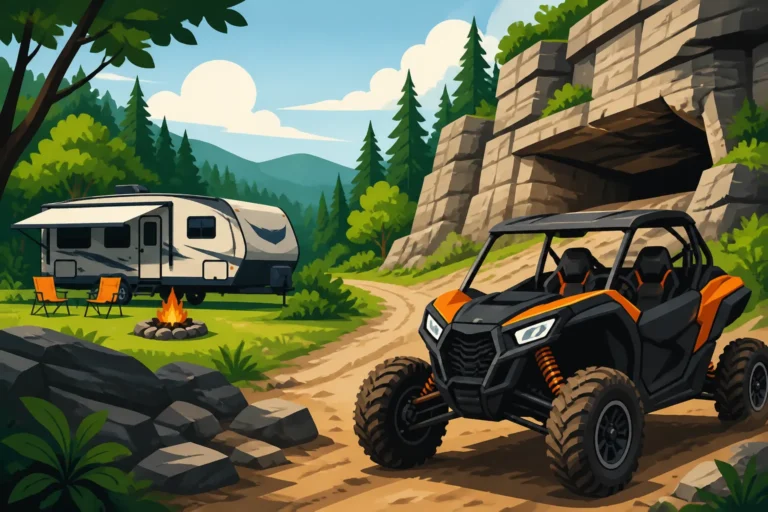
A cabin or campground that offers direct trail access can make a weekend feel much less rushed. When comparing places to stay, ask how guests get from the property to the permitted trail network. “Near the trails” can mean different things: a property may be close by road but still require you to trailer your machine to a designated access point.
Gilbert works well for riders planning around Rockhouse and the surrounding trail-town experience. Logan can be a convenient base for Bearwallow. Williamson and Matewan are worth considering for a Buffalo Mountain-focused weekend, while Pineville and Mullens can suit a Pinnacle Creek plan. Bramwell is a useful place to look when Pocahontas is part of your itinerary. Confirm the lodging’s access arrangements directly, especially if you are bringing a trailer.
Ask practical questions before booking: Is trailer parking available? Can machines be parked overnight at the property? Is there a place to wash off mud? Does the lodging provide trail information or help with permits? If you want to stay close to the riding, [Cabins With Direct West Virginia Trail Access] and [Camping Beside West Virginia's Trails] are useful starting points for comparing lodging styles.
Build a weekend itinerary that leaves room to ride
The best riding weekend is not necessarily the one with the most ambitious route. It is the one that gives you enough time to unload, get oriented, ride at a pace that suits the group, and respond calmly if weather or a mechanical issue changes the plan.
A practical two-night weekend outline
Use this sample as a framework, then adjust it to your arrival time, chosen trail system, and group experience. It avoids treating a trail ride as a timed race and gives you a little breathing room at both ends of the trip.
| Day | Plan | What to account for |
|---|---|---|
| Friday | Arrive, check in, unload, and organize machines and gear | Confirm access, parking, permits, trail status, and the next day’s starting point |
| Saturday | Ride one main trail system, with a planned lunch or rest stop | Follow marked routes, monitor the group’s energy, and leave time to return before the permitted riding period ends |
| Sunday | Take a shorter ride or pack up and head home | Choose a manageable outing that leaves time for loading, cleanup, and travel |
If you arrive late Friday, avoid making the first morning a scramble. Check permit requirements before departure, confirm where your group will begin, and agree on a meeting point in case riders become separated. On Saturday, set a realistic turnaround point rather than assuming everyone will want to ride until the last possible moment. A new rider may need more breaks; an experienced rider may be comfortable with a longer outing, but fatigue still affects attention and decision-making.
A shorter Sunday ride can be a good choice if your group is staying nearby and has enough time to unload and travel afterward. If you are towing a trailer a long distance, packing up and leaving earlier may be the better call. The planning checklist in [Planning a West Virginia Riding Weekend] can help you coordinate the details before you leave home.
Plan for fuel, food, permits, and trail hours
Do not assume every trailhead has the services you need. Check where you can fuel your tow vehicle and machines, whether the lodging has space for extra fuel containers, and what food options are available along your planned route. Towns such as Gilbert, Logan, Matewan, and Williamson can be useful places to plan meals and supplies, but service availability and opening hours can vary. Make a food plan that does not depend on finding an open business at the last minute.
Trail permits are another detail to settle before the ride. Confirm the requirements for each rider and machine, where permits are sold, how they must be displayed, and whether a rental or lodging package includes anything. A permit or reservation for one purpose should not be assumed to cover every other requirement. For meal and fuel planning, see [Fuel and Food Along West Virginia Trails].
Check the trail system’s posted operating information before each ride, and do not rely on an old itinerary if conditions have changed. Trail access, closures, and permitted riding hours can affect the day’s plan. A map app such as onX Offroad can be one planning aid for reviewing your intended area, but it should not replace current official trail maps, signs, or posted closure notices. Save the contact and directions for your lodging and trailhead before you leave an area where phone service may be limited.
Prepare for changing terrain and weather
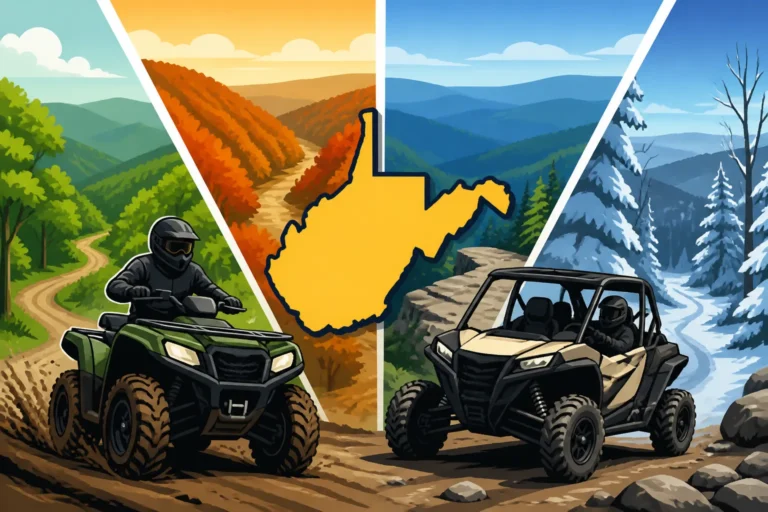
Southern West Virginia riding can include steep grades, rocky sections, mud, and narrow routes. Conditions can also change from one part of a trail system to another. Preparing for the terrain is not just about having the right machine; it is also about choosing a pace and route that match the least experienced person in your group.
Check conditions and keep a flexible route
Rain can turn a familiar ride into a slower, more demanding one. Mud may reduce traction, water crossings can change, and a route that seemed straightforward on a dry map may take longer than expected. Check conditions before you set out, and be willing to shorten or change the ride if weather makes the plan unsuitable. [West Virginia Trail Conditions After Rain] offers more context for thinking through wet-weather plans.
Look at trail ratings and system maps as a group before leaving the staging area. Agree on which options are within the group’s comfort level, and identify a clear way to regroup if riders choose different paces. Avoid splitting into separate groups without a communication and meeting plan. If someone has a mechanical issue, a predetermined regrouping point is more useful than a vague instruction to “meet back later.”
Using onX Offroad to review your intended riding area ahead of time may help you discuss the day’s plan, but riders should follow the current official map and on-trail markers. Maps can differ in detail, and a digital route does not grant permission to use a closed or unauthorized path. Keep the plan flexible enough to account for trail signs, local instructions, weather, and the group’s actual pace.
Pack for a long day, not only a short ride
A day ride in the hills can feel longer when the group is delayed by mud, a flat tire, or an unexpected change in conditions. Carry water, snacks, basic first-aid supplies, and the tools or repair items appropriate for your machine. Bring protective riding gear suited to the weather, plus a layer that can keep you comfortable if temperatures drop or you are waiting outside the machine.
Before leaving, check tires, brakes, lights, fuel, and key fasteners. Make sure each rider knows how to stop safely, what to do if the group gets separated, and whom to contact in an emergency. Tell someone who is not riding where the group plans to go and when you expect to be back. In a remote area, a charged phone is helpful, but do not assume you will have reliable service throughout the ride.
A paper map or downloaded map information can be a useful backup, especially if your phone loses service or power. Keep essential supplies where they are accessible rather than buried under luggage. For a more complete checklist, see [What to Carry on a Remote West Virginia Ride]. If you are riding with children or newer operators, build extra breaks into the day and do not pressure them to keep up with the fastest rider.
Make the trip smoother for every rider
A weekend plan should account for the people as carefully as it accounts for the machines. Clear expectations reduce tension when someone wants to ride longer, take a slower route, or stop for lunch while others are eager to keep moving.
Set group rules before unloading
Talk through the basics before the ride begins: who will lead, who will ride at the back, where the group will stop, and what everyone should do if they lose sight of one another. Agree that riders will stay on marked, authorized routes and follow signs, barriers, and local instructions. A group that makes decisions at the trailhead is less likely to argue about them on a narrow or challenging section.
Be realistic about the mix of machines and riders. A person on a first trip may need time to get used to braking, turning, and changing terrain. A side-by-side group may travel differently from a group of single-rider ATVs, and machine width can matter on some trails. Check restrictions and trail suitability rather than assuming every route works for every vehicle.
If members of your group have very different experience levels, consider splitting into smaller groups only when everyone understands the route and has a reliable way to meet again. Do not leave a newer rider alone or expect them to follow a route they have not reviewed. In close-knit groups, it is easy to assume that everyone has heard the plan; repeat the meeting point and turnaround time before setting off.
Use trail towns thoughtfully
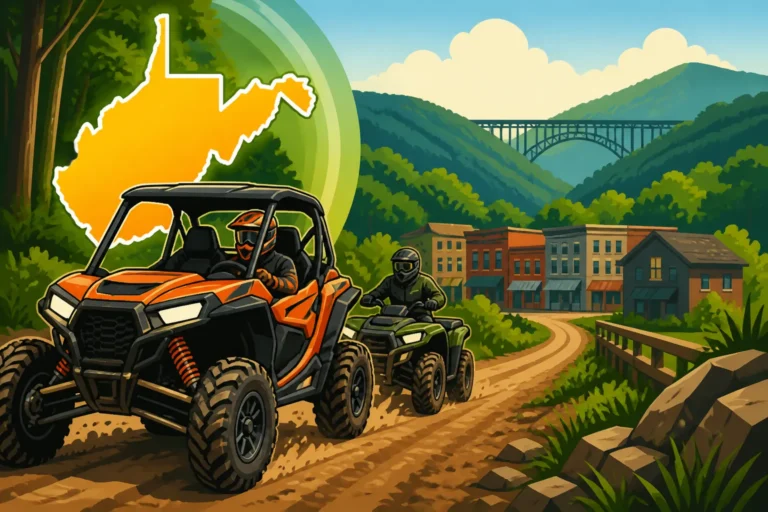
Trail towns are part of what makes a Southern West Virginia riding weekend memorable. Gilbert, Matewan, Williamson, Logan, and other communities offer opportunities to stop for food, supplies, or a break between rides. But riding through town or using a public road requires following the applicable rules and local restrictions. Do not assume that a trail connection authorizes every road or street in the area.
Check whether the route you are planning is an approved trail connection, and follow signs where the trail enters or crosses a road. Keep machines at a safe speed, be courteous to residents and other road users, and avoid blocking business entrances or parking areas. If you are unsure whether a particular road segment is permitted, confirm before riding it rather than relying on another visitor’s directions.
A little preparation makes the trip easier on local businesses and residents, too. Park where directed, keep noise considerate, and plan meals or fuel stops instead of forming an unplanned convoy across town. For background on which communities offer riding access and what to check before traveling through them, read [West Virginia Trail Towns You Can Ride Into].
A Southern West Virginia weekend does not need to cover every trail system to be a good one. Choose a base that fits the riding area, confirm access and permit details, check conditions, and leave enough room in the schedule for the group to ride at a comfortable pace. With those basics settled, you can spend less time troubleshooting and more time enjoying the trails.
Disclaimer
This article is for general informational purposes only and does not constitute professional advice. Laws, prices and regulations vary by location and change over time. Consult a qualified professional for guidance on your specific situation.