Parking at the Rockhouse Trailhead
Parking at the Rockhouse Trailhead is easier when you plan for the whole rig, not just the machine: tow vehicle, trailer, passengers, permits, and the ride back after a long day. This guide explains how to prepare, choose a suitable parking setup, check trailhead information, and avoid common problems without assuming that every lot has the same rules or space.
Plan Your Arrival at the Rockhouse Trailhead
Confirm which access point you are using
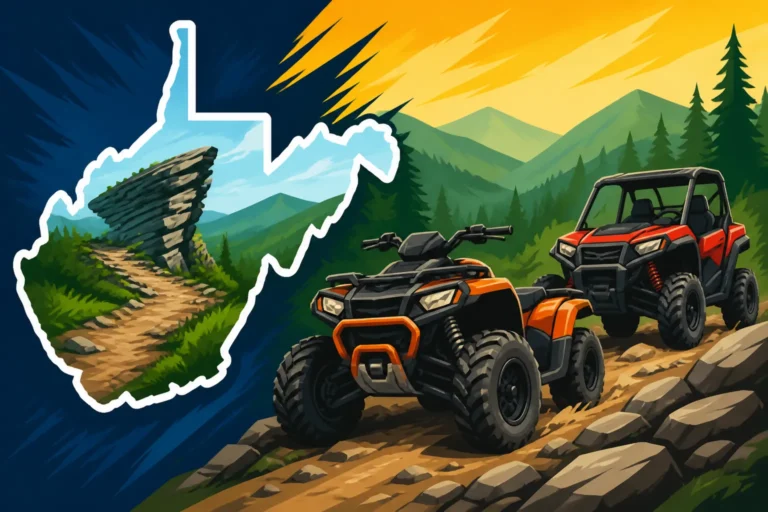
Rockhouse is part of the Hatfield-McCoy trail network in southern West Virginia, and “the trailhead” can mean different things to riders depending on where they are starting. Before leaving home, confirm the exact access point and address or map pin for your trip. A town name or a broad navigation destination may get you into the right area without taking you to the correct parking entrance.
Start with current trail-system information and any directions supplied by your lodging, rental shop, or the official trail operator. At the access point, follow posted signs and markings rather than relying only on a phone map. Conditions, entry routes, and parking instructions can change, and a navigation app may route a trailer onto a narrow or unsuitable road.
If you are choosing among access points, compare the logistics before committing. The guide to [Hatfield-McCoy Trailheads and Where to Start] can help you think through where to begin, while [Reading a Hatfield-McCoy Trailhead Kiosk] explains why it is worth pausing at the information board once you arrive. The kiosk may provide important on-site directions, trail notices, or reminders that are easy to miss when everyone is eager to unload.
Match the parking plan to your vehicle and trailer
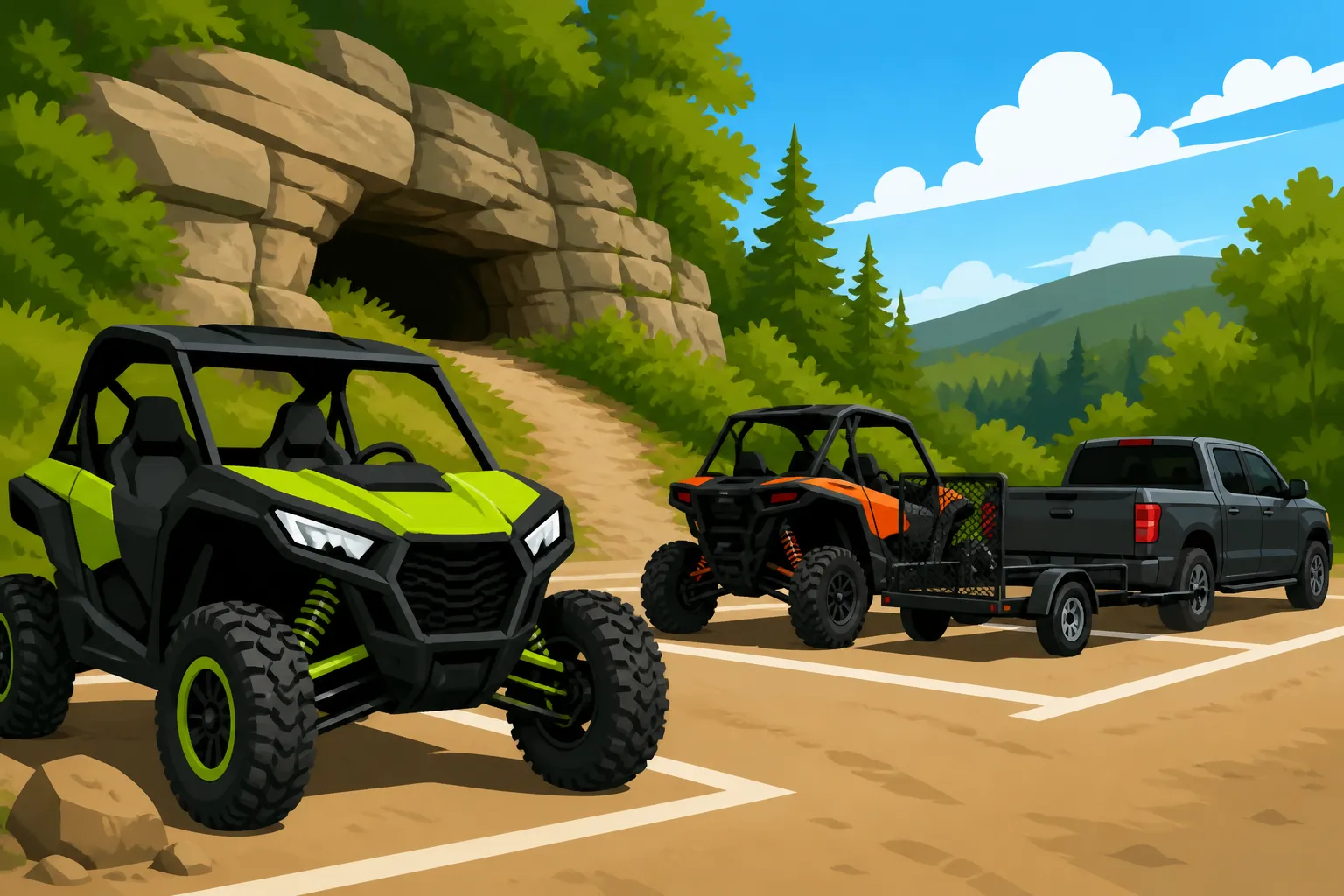
A pickup with a small utility trailer has different parking needs from a long truck towing an enclosed toy hauler. Before your trip, estimate the full length of your combination and consider how much room you will need to turn, back up, unload, and secure equipment. A space that looks adequate for a passenger vehicle may not work comfortably for a tow vehicle and trailer.
Think through the maneuver before you arrive. If you need to reverse, identify a passenger who can guide you from a safe position and agree on simple signals in advance. Keep the guide in view, move slowly, and stop if you lose sight of them. It is much easier to reset than to force a tight turn while other vehicles are moving around you.
Do not assume that a particular parking area can accommodate every trailer size or that overnight parking is allowed. Check posted instructions and confirm the arrangement with an appropriate local contact if your plan depends on leaving a trailer or vehicle for an extended period. For larger rigs, [West Virginia Trailhead Parking That Fits a Toy Hauler] offers additional planning considerations, and [Overnight Trailer Parking Near West Virginia Trails] is useful when your lodging or itinerary involves parking beyond a single riding day.
Prepare Before You Pull Into the Lot
Check maps, notices, and trail access details
Download or save the maps and essential trip information before you reach the trail area. Cell coverage can be inconsistent in mountainous terrain, and a route that loads at home may not be available when you need it. Save the address, trailhead directions, lodging details, and a contact number where you can find them offline.
Use a map as a planning aid, not as permission to ride anywhere that appears connected. Stay on authorized routes and follow current signs, gates, and closures. Apps such as onX Offroad can help riders review mapped routes and keep their bearings, but they should be used alongside official trail information and on-the-ground markers. Before departing, compare the route you intend to ride with the latest trail-system notices. The article on [Downloading Hatfield-McCoy Trail Maps] covers practical preparation for having trail information available when service drops.
It also helps to decide what your group will do if the planned route is closed or conditions change. Choose a fallback ride, agree on a regrouping point, and make sure everyone knows how to contact the group. Checking [Trail Closures on West Virginia's Trail System] before driving can help prevent a frustrating arrival when a route is unavailable.
Organize permits and gear before unloading
Parking is not the time to search through a glove box for a permit confirmation, hunt for a missing helmet, or discover that someone left a strap at home. Put documents and small essentials in a known place before you leave. Confirm that each rider understands what is required for the planned trail access, and review [West Virginia's Hatfield-McCoy Trail Permit Explained] if you need a refresher on what a trail permit covers.
Separate riding gear from items that should remain secured in the tow vehicle. A simple checklist can keep the process calm:
- Confirm the trailhead location, access instructions, and current notices.
- Check that the driver has the right route saved and the group has a backup plan.
- Gather permits, identification, keys, and any needed paperwork.
- Put helmets, eye protection, gloves, water, and weather-appropriate layers where they are easy to reach.
- Secure loose gear and valuables before leaving the vehicle.
- Do a quick walk-around of the truck, trailer, and machines before heading out.
If you still need to arrange a permit, check the current authorized purchasing options before travel. [Where to Buy a Hatfield-McCoy Trail Permit] can help you plan rather than assuming that a permit can be purchased at the exact location or time you arrive. For remote rides, [What to Carry on a Remote West Virginia Ride] can help you think beyond the parking lot and pack for the day ahead.
Park, Unload, and Leave the Area Safely
Use a deliberate unloading routine
Once you arrive, pause long enough to understand the traffic pattern. Look for posted instructions, marked spaces, loading areas, and any restrictions. Do not block an entrance, access lane, or another vehicle’s ability to maneuver while you sort out your equipment. If the lot is busy, take the time to find a legal, practical position rather than squeezing into a spot that creates a hazard.
Unload machines only where it is safe and permitted. Keep children and bystanders away from the path of a reversing vehicle, a ramp, or a machine being moved off a trailer. Use a spotter when needed, and make sure the driver and spotter agree on signals before moving. Never let a passenger stand between a trailer and another vehicle while the rig is backing or repositioning.
Before leaving, secure the tow vehicle and trailer according to posted rules and your own safety needs. Lock the vehicle, put away valuables, and check that ramps, tie-downs, and loose equipment are stored safely. If you are unsure whether a particular parking arrangement is allowed, ask before riding rather than hoping it will be fine when you return.
Keep the return trip in mind
A parking plan should work at the end of the ride, too. After several hours on the trail, riders may be tired, muddy, and ready to get home. Keep keys and any parking-area instructions easy to locate, and make sure everyone knows where the group is meeting before loading. If you are riding in a larger group, agree on a process for counting machines and people so one delayed rider does not leave others guessing.
Before you secure machines for transport, inspect them for loose equipment, damage, or anything that could shift on the drive. Tie-downs should be appropriate for the machine and attached to secure points. [Strapping a Side-by-Side Down for the Highway] offers a more detailed look at transport preparation.
Carry enough water, basic tools, and other essentials for the ride itself rather than treating the vehicle as a guaranteed nearby supply point. onX Offroad can be helpful for orientation and route review, but keep an offline map or another reliable backup available. For a broader packing checklist, see [What to Carry on a Remote West Virginia Ride]. A little preparation at the trailhead can make the return to your vehicle much less stressful.
Parking Questions Riders Commonly Have
| Question | Practical approach |
|---|---|
| Can I park any size trailer at the Rockhouse Trailhead? | Do not assume every trailer fits. Check the specific access point, posted information, and current guidance before traveling. |
| Can I leave my trailer overnight? | Confirm whether extended parking is allowed. A parking area being open during the day does not automatically mean overnight parking is permitted. |
| Can I rely only on a phone map? | Save directions and maps ahead of time, then follow trailhead signs and official notices when you arrive. |
| Should I unload as soon as I enter the lot? | First check traffic flow and parking instructions. Unload only in a safe, permitted place that does not block other users. |
| Does parking mean I can ride the trail? | No. Parking access and trail access are separate questions. Check current permit requirements, trail rules, and closures before riding. |
| What if the lot is crowded or unsuitable for my rig? | Do not block access or force a tight maneuver. Follow posted instructions and use a verified alternative if one is available. |
Is there guaranteed space for a large trailer?
Do not plan around an assumption that a particular size of trailer will fit or that a space will be waiting when you arrive. Lot layouts and conditions can vary, and the amount of room available may depend on other vehicles. If your rig is unusually long or wide, check ahead and consider arriving with enough time to assess the setup without rushing.
If the parking area does not appear suitable, do not create a space by blocking a road, entrance, or another vehicle. Look for posted direction or contact a relevant local provider for guidance. [West Virginia Trailhead Parking That Fits a Toy Hauler] is a useful related guide for riders whose transport setup needs extra room.
Can riders park first and figure out permits later?
It is safer to sort out access requirements before leaving the vehicle. Parking your tow rig does not, by itself, establish that your group has permission to ride. Review the trail permit information and confirm each rider’s requirements before the trip. If you are uncertain, use official trail-system guidance rather than relying on a guess or another rider’s recollection.
Also check that the trail you intend to use is open and appropriate for your machine. Stay on marked routes and respect closures, barriers, and posted restrictions. A few minutes spent checking the kiosk and trail information can save a longer interruption after you have unloaded.
What should I do if I arrive and the access point is unclear?
Stop somewhere safe without blocking traffic, then check the location against your saved directions and official trail information. Read posted signs before moving through an entrance or parking area. If the location still does not match your plan, contact your lodging provider, rental outfitter, or another appropriate local source rather than following an uncertain route onto private or restricted property.
A careful arrival matters just as much as a careful ride. Confirm where you are, park only where allowed, and make sure the group knows the plan before heading out. Those habits help keep the trailhead orderly for other riders and make the day start on a better note.
Disclaimer
This article is for general informational purposes only and does not constitute professional advice. Laws, prices and regulations vary by location and change over time. Consult a qualified professional for guidance on your specific situation.