Green, Blue and Black Trails at Hatfield-McCoy
A trail color can make a ride feel easy to plan: pick green for a relaxed day, blue for a challenge, and black for a serious test. But Hatfield-McCoy ratings are only a starting point. Mud, rocks, steep grades, machine width, and rider experience can change how a route feels, so this guide explains how to read the colors and choose a trail with care.
What green, blue, and black mean at Hatfield-McCoy
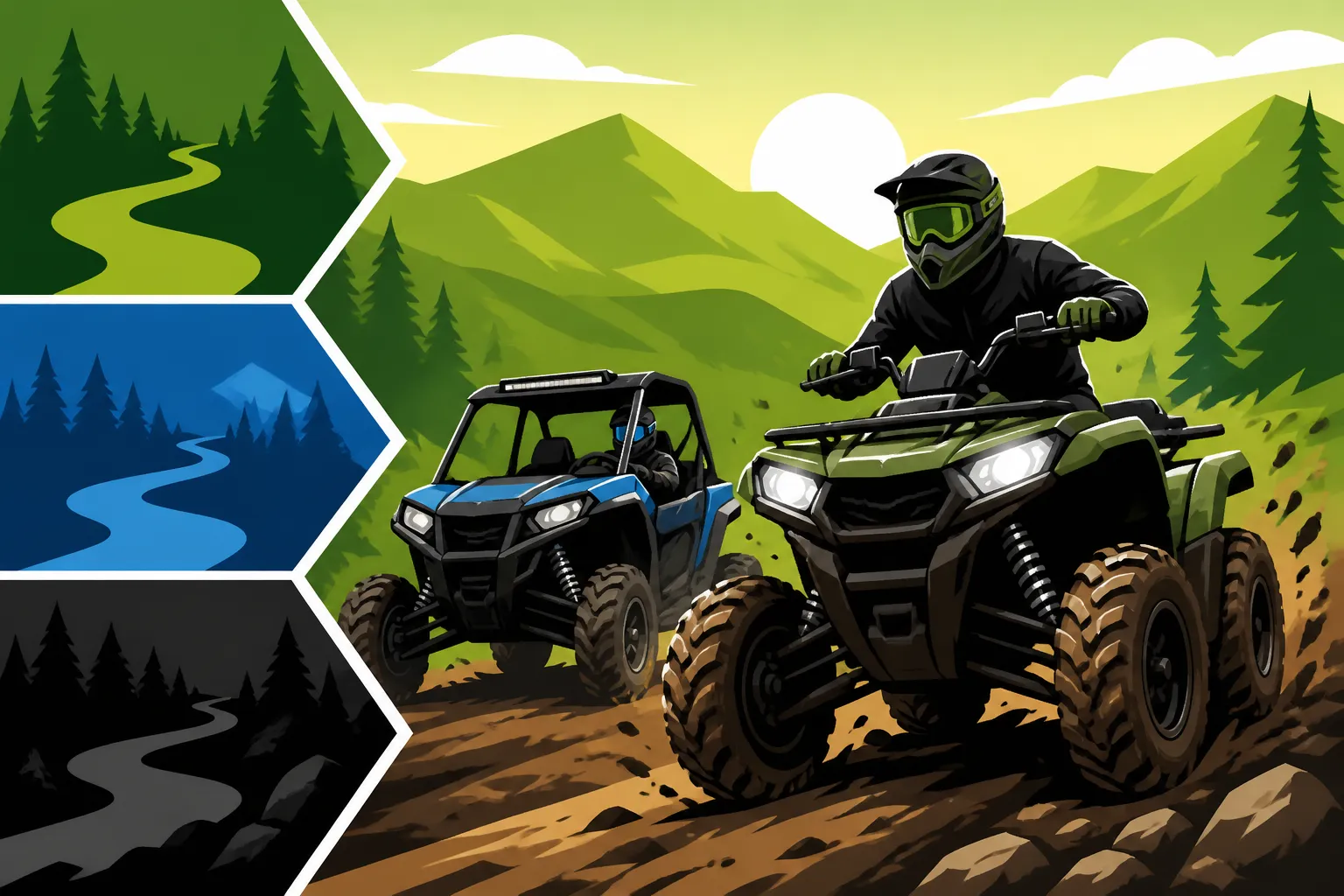
Green trails are generally the easiest choice
Green-rated trails are typically the gentlest option in the Hatfield-McCoy system. They’re a sensible place to start if you’re new to off-road riding, haven’t ridden recently, or want a less demanding route while getting comfortable with your machine. “Easier” doesn’t mean effortless, though. Even a green trail can have uneven ground, loose gravel, ruts, or a narrow section that asks you to slow down and pay attention.
Think about a first-time visitor arriving in Gilbert with a rented side-by-side. The driver may be comfortable on ordinary roads but unfamiliar with steering on rocks or controlling speed on a descent. Starting with easier terrain leaves more room to learn without making every obstacle a high-stakes decision. A confident rider can enjoy the views and settle into a group’s pace, too; choosing green isn’t a sign that someone is a beginner.
Pay attention to the surface and surroundings, not just the color on a map. Rain can turn a mild section slick or deepen ruts. A downhill that seems straightforward in dry conditions may feel very different when the ground is wet. Keep a conservative pace, leave space between machines, and stop somewhere safe if you need time to assess what’s ahead.
Blue trails usually bring a step up in difficulty
Blue-rated trails are generally more challenging than green ones. A route may involve rougher ground, tighter turns, steeper grades, or more frequent obstacles. That doesn’t automatically make a blue trail unsuitable for a newer rider, but it does mean you should be ready to use good judgment rather than follow the group without thinking.
For example, a rider who has handled easy trails comfortably may feel ready to try a blue route. That can be a reasonable progression if the rider has a suitable machine, can control speed on hills, and has someone experienced nearby. The same route might feel overwhelming to a first-time driver in a wide machine or to a rider who is tired after several hours on the trail. Experience is not just a matter of how many rides someone has done; it includes knowing when to pause, turn back, or let another group pass.
Blue also isn’t a promise that every stretch will feel consistently moderate. Trail conditions and the specific features of a section matter. Before committing, check the map and posted information, consider the abilities of the least-experienced person in your group, and agree on a plan for regrouping. For more context on how ratings are used, see [Hatfield-McCoy Trail Ratings Explained] and [West Virginia Trail Difficulty and How It Is Marked].
Black trails are intended for more experienced riders
Black-rated trails are generally the most demanding of the three colors in this guide. Expect a greater chance of technical terrain, steep or uneven sections, and obstacles that require careful control. A black rating should make a group stop and think—not serve as a dare or a test of who is bravest.
A rider’s ability and machine both matter. Someone who has ridden difficult terrain before may be comfortable with a challenging route, while a less experienced driver may struggle to judge a steep descent or navigate a rocky turn. A passenger’s comfort matters as well. In a side-by-side, the driver may feel capable while a passenger is anxious, cold, or exhausted. Those are good reasons to choose an easier route or take a break, not to push on simply because the group has started.
Before choosing a black route, consider whether everyone has the experience, energy, and appropriate equipment for the ride. Don’t assume that a more powerful machine makes a difficult trail safer or easier to manage. High speed is not a substitute for control, and a capable vehicle can still be a poor fit for a narrow or technical section. If a trail feels beyond your ability, there’s no shame in changing plans.
| Rating | General difficulty | Often a better fit for | Questions to ask before riding |
|---|---|---|---|
| Green | Easiest of these three ratings, though still off-road terrain | Newer riders, warm-up rides, relaxed outings | Can everyone manage uneven ground and stay in control? |
| Blue | More challenging, with a greater chance of rough or technical sections | Riders comfortable on easier trails and ready for a step up | Is the group prepared for hills, tighter turns, or rougher footing? |
| Black | Most demanding of these three ratings | Experienced riders who can handle technical terrain | Does everyone have the skill, machine, energy, and judgment for this route? |
These descriptions are general guidance, not a guarantee about a particular trail. Read the available trail information and follow posted signs for the section you’re riding.
How to choose a trail rating that fits your group
Match the route to the least-experienced rider
When planning a group ride, it’s tempting to choose a trail based on the most confident person. A more practical approach is to plan around the person who has the least experience or feels least comfortable. That doesn’t mean the whole group must stay on green trails forever. It means you’re less likely to end up with someone frightened, fatigued, or stuck in a situation they don’t know how to handle.
Imagine a group with an experienced driver, two friends who ride occasionally, and one person on their first off-road trip. A long or difficult route may sound exciting to the experienced driver, but the new rider is the one most likely to need extra time on hills or uneven surfaces. Starting with a manageable route gives everyone a chance to learn how the machines respond and how the group handles trail communication. You can reassess later instead of making the whole day depend on a guess.
Talk about expectations before leaving the trailhead. Ask whether anyone has concerns about steep hills, mud, tight turns, or riding in a group. Decide how you’ll handle a stop or a change of plans. A rider who is nervous may be more willing to speak up if the group has already agreed that turning back is an acceptable choice.
Your machine matters, too. A route that suits a smaller ATV may not be a comfortable fit for every side-by-side. Check machine-width guidance and restrictions before setting out, especially if you’re riding a wider vehicle. [West Virginia Trail Systems Best Suited to Side-by-Sides] and [West Virginia Trails Too Tight for a 64-Inch Machine] can help you think through machine fit as well as rider skill.
Consider weather, fatigue, and trail conditions
A color rating describes a trail’s general difficulty; it can’t tell you exactly what you’ll encounter on the day. Recent rain can soften dirt, create slick rocks, and make a rut harder to cross. Dry conditions can also bring challenges, including loose dust or reduced visibility behind other machines. Slow down when the surface changes and avoid treating yesterday’s conditions as a reliable guide to today’s ride.
Fatigue can change your judgment before you notice it. After hours of riding, a route that seemed manageable in the morning may feel much harder. Drivers can tire from concentrating on uneven terrain, while passengers may become uncomfortable from bouncing around or sitting in one position. Build in breaks, bring water, and be willing to shorten the ride. For preparation ideas, see [What to Carry on a Remote West Virginia Ride].
It’s also worth checking trail information shortly before you ride. A closure or a changed condition can affect a route you planned in advance. If you use onX Offroad to help keep track of a route, treat it as a planning aid rather than a replacement for current trail signs and local guidance. Conditions and access can change, so verify the route where you’re riding and follow any posted restrictions.
Plan and ride with the rating in mind
Review the route before leaving the trailhead
Before heading out, identify where your group is starting, which sections you intend to ride, and where you could safely pause or adjust the plan. Knowing the route in advance makes it easier to notice when you’re approaching a more difficult section. It also helps the group avoid last-minute decisions made in a spot where turning around may be awkward.
Choose a route that gives everyone a realistic option to stop or take an easier path if needed. If the plan includes different ratings, discuss that before you set out—not when a less-experienced rider is already at the entrance to a difficult section. Look for current trail information, follow signs, and pay attention to any machine restrictions. A navigation app such as onX Offroad can help with orientation, but don’t rely on a screen alone when signs on the ground say something different.
If you’re deciding where to begin, compare the terrain and access options for the areas you’re considering. [Which Hatfield-McCoy System to Ride First] and [Hatfield-McCoy Trailheads and Where to Start] are useful next reads when you’re choosing a starting point. The best starting area is the one that suits your group and plans—not necessarily the one with the most difficult routes.
Ride within your limits and communicate clearly
On the trail, leave enough room between machines to see the ground and react to changes. Don’t assume the rider ahead has noticed a hazard or that the person behind knows you’ve stopped. Use clear signals agreed on by the group, and choose a safe place to pull over rather than stopping abruptly in a narrow or exposed spot.
Be honest about what you’re comfortable riding. If a section looks too difficult, pause and assess it instead of charging in because others are watching. A friend can help you think through the terrain, but the driver remains responsible for making a safe decision. If you’re unsure whether your machine can handle a section, or whether a route fits its width, take the safer option and seek current guidance.
Respect other riders and the trail itself. Don’t cut around barriers, leave marked routes, or pressure someone into attempting an obstacle. If the group needs to regroup, find a safe pull-off and keep the route clear. [West Virginia Trail Etiquette on Shared Routes] offers more detail on sharing trail space and keeping a ride considerate.
Common mistakes when reading trail colors
Treating a rating as a guarantee
One common mistake is interpreting green as “safe for everyone” or black as “only for experts.” A color can offer a useful broad comparison, but it cannot account for every rider’s skills, every machine’s size, or every change in conditions. Someone with little experience may find a green route stressful, while a practiced rider may still need to slow down on a black section after rain.
Another mistake is assuming that a trail’s rating tells you how long or tiring the ride will be. Difficulty and duration are different considerations. A shorter technical section can demand more concentration than a longer, easier route. Plan for the group’s energy and experience, not just the rating.
Finally, don’t let the group’s plans outweigh what you see on the ground. Trail signs, closures, and actual conditions deserve attention even if an app or an earlier plan suggests a route is open and manageable. Use onX Offroad, paper maps, and other planning tools to stay oriented, but make your decision based on the trail information available where you are.
Choosing a harder route to keep up with others
It can feel awkward to ask a group to slow down or pick an easier route, especially when everyone else seems confident. But pushing beyond your ability can create more stress for the whole group. A hesitant driver may make sudden moves, and a rider who is tired or overwhelmed may miss hazards. Saying “I’d rather take the easier option” is useful information—not a failure.
Experienced riders can help by making space for different comfort levels. Ask everyone how they feel about the route before setting out, check in after a difficult section, and avoid turning a ride into a competition. A good day at Hatfield-McCoy is not measured by how many black trails you finish. It’s one where the group rides within its abilities, respects the route, and gets back safely.
Disclaimer
This article is for general informational purposes only and does not constitute professional advice. Laws, prices and regulations vary by location and change over time. Consult a qualified professional for guidance on your specific situation.