Hatfield-McCoy Trail Hours by Season
Hatfield-McCoy riders often plan a full day around trail time, only to discover that seasonal daylight, a closure, or the ride back to the trailhead changes the schedule. This guide explains how trail hours shift through the year, what daylight-only riding means in practice, and how to check conditions before you unload in southern West Virginia.
How Hatfield-McCoy trail hours work
Daylight is the key planning limit
Hatfield-McCoy trail riding is generally planned for daylight hours. That matters because “the trails are open” does not necessarily mean you can start riding whenever you arrive or continue until you feel ready to head back. Your practical riding window depends on daylight, the trail system’s posted operating information, and any temporary restrictions in effect.
Treat sunset as a hard planning boundary, not as a target for reaching the trailhead. A group that enters a system late in the day may still have a long route back, especially if riders take a wrong turn, encounter mud, or need to help a machine through a difficult section. Mountain terrain and wooded hollows can also feel dim before sunset.
The safe approach is to plan your route so you are heading back well before daylight fades. Check [West Virginia's Daylight-Only Trail Riding Rule] and [Night Riding Rules on West Virginia Trails] for the rules that apply to riding after dark. If your itinerary depends on riding late, confirm the relevant restrictions before you go rather than assuming lights on your machine make night riding permissible.
Posted hours and temporary closures matter
A seasonal daylight pattern is only one part of the answer. Trail access can also be affected by local operating information, maintenance, weather damage, landowner arrangements, or other temporary closures. A route that appears on a map may not be open to ride on the day you arrive.
Before leaving home, check the trail system’s official status and any notices posted by the authority or at the trailhead. Then check again when you arrive. A closure or route change can affect the entire day’s plan, particularly if your group is staying in Gilbert, Man, Logan, Williamson, or another trail town and expects to ride from a specific access point.
Keep [Why West Virginia Trails Close on Short Notice] and [Where Trail Closure Notices Are Posted] in mind when planning. These topics are especially relevant after heavy rain, washouts, maintenance work, or other conditions that can make a segment unsafe or unavailable. A trail map is useful for navigation, but it does not replace current closure information.
Separate trail hours from business hours
Trail access and the hours of nearby services are not the same thing. A permit vendor, restaurant, rental shop, or visitor center may have its own schedule, and a service being closed does not necessarily tell you whether trails are open. Likewise, an open trail system does not guarantee that every nearby business will be available when you return.
This difference can catch riders who arrive late and expect to pick up a permit, rent a machine, or buy supplies immediately before riding. If you are relying on a local vendor, confirm its hours and arrangements in advance. For permit planning, see [Where to Buy a Hatfield-McCoy Trail Permit] and [Permit Sales Hours at West Virginia Trailheads].
| Planning question | What to check | Why it matters |
|---|---|---|
| Can we ride today? | Current trail-system status and closure notices | A scheduled visit does not guarantee every route is open |
| How long can we ride? | Daylight, posted trail information, and your route length | The usable riding window changes across the seasons |
| Where will we start? | Trailhead access and permit arrangements | Vendors and access points may have separate hours |
| Can we finish this route? | Distance, difficulty, group ability, and return time | Delays can turn a comfortable loop into a late return |
| What if conditions change? | Alternate route and a way to check updates | Weather and maintenance can affect access |
Hatfield-McCoy trail hours by season
Spring brings longer days and changing trail conditions
As daylight increases through spring, riders generally have more time to plan a daytime outing than they did during the darkest part of winter. That does not mean every spring day offers a long, predictable ride. Rain and saturated ground can slow travel, and trail conditions may change quickly in the steep, wooded terrain of southern West Virginia.
Build extra time into your first ride of the season. A route that looked manageable on a map can take longer when the ground is slick or a group includes new riders. Avoid using the latest possible start time as your plan. Set a turnaround point based on the slowest rider and the time needed to reach the trailhead before dusk.
Before your trip, review [Spring Mud on Southern West Virginia Trails] and [West Virginia Trail Conditions After Rain]. If a route is muddy or has been affected by a storm, choosing a shorter loop may be more enjoyable than trying to cover as much ground as possible. Check current notices for your chosen system instead of assuming conditions are identical across the network.
Summer offers a broad daylight window, but heat changes the day
Summer usually gives riders the longest daylight window of the year. That can make a full day on the trails feel less rushed, but it is still important to plan a clear start time and return time. Long daylight is not permission to ride beyond posted hours or continue after a route becomes unsafe.
Heat can shape the schedule as much as sunset. Riders may prefer an earlier start, a longer break during the hottest part of the day, and a route that leaves room for water and rest stops. A group with children, inexperienced riders, or a machine that is running poorly should allow more time than a fast, experienced group expects to need.
Summer also brings busy weekends and more trail traffic. If your group is meeting friends, picking up a rental, or arranging a permit, confirm those details before the ride day. For broader trip planning, [Planning a West Virginia Riding Weekend] can help you coordinate lodging, access, and riding plans without leaving key details until the last minute.
Fall days shorten even while the riding can be excellent
Fall is a favorite time for many riders, but the daylight window narrows as the season progresses. It is easy to underestimate how quickly an afternoon ride can run late when the group stops for photos, takes a wrong turn, or pauses to help another rider. A route that felt comfortable in summer may need an earlier start or a shorter plan in fall.
Set a firm time to turn back before you begin. If your group is riding a system with several connections, choose a route that gives you a straightforward return rather than relying on a complicated late-day loop. On wooded trails, shade and changing light can make visibility feel limited before the official sunset time.
Fall also overlaps with hunting activity in some areas. Check notices and local rules, and consider wearing conspicuous clothing where appropriate. See [West Virginia Hunting Season and Trail Access] and [Blaze Orange on a West Virginia Trail Ride] when planning a ride during hunting season.
Winter requires the most conservative schedule
Winter brings the shortest daylight window and can make travel slower. Cold temperatures, wet ground, snow, ice, or reduced visibility may affect both the route and the time it takes to complete it. Even when a system remains available for riding, a winter outing may call for a shorter route and an earlier return than the same group would choose in warmer months.
Do not assume that a clear morning means the trail will stay easy all day. Shaded sections can remain slick, and a small delay can become more serious when daylight is limited. Make sure every rider knows the route, agree on a turnaround time, and carry essentials for a breakdown or an unexpected wait.
Review [Winter Riding on the Hatfield-McCoy System] and [Snow and Ice on West Virginia Trails] before setting out. Check system status and weather conditions close to departure, and be willing to change plans. If conditions or daylight make the ride feel rushed, a shorter outing is the sensible choice.
Plan your ride around the season
Choose a realistic start time and route
Start with the amount of daylight you have, then work backward from the time you need to be back. Allow time to unload, prepare machines, review the map, and get everyone moving. If you are renting, meeting a group, or traveling to a trailhead from lodging, add time for those steps too.
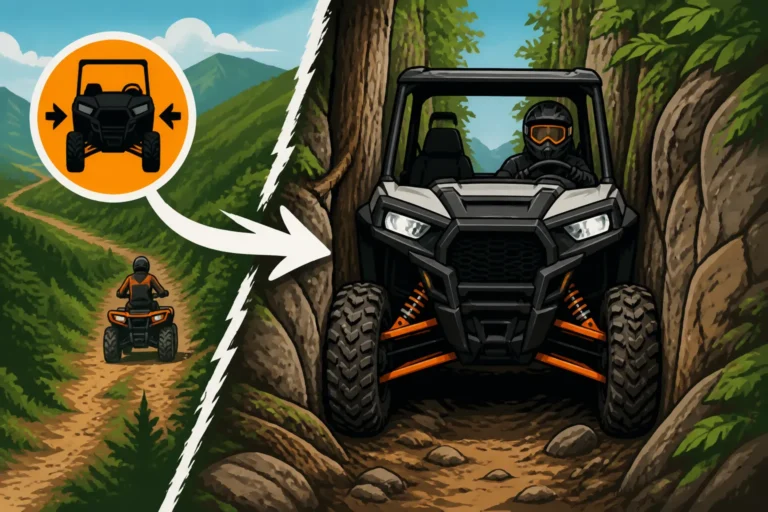
Choose a route based on the least experienced rider, not the most confident one. A strong rider may be comfortable moving quickly, but a group travels only as fast as its slowest participant. Trail difficulty, stops, machine width, and congestion can all affect how long a ride takes. For options that match different experience levels, see [West Virginia Trail Difficulty and How It Is Marked].
A practical plan might look like this:
- Check the trail system’s current status and the day’s weather.
- Confirm your trailhead, permit arrangements, and any needed rental details.
- Select a route that fits the daylight window and the group’s ability.
- Set a turnaround time before you begin.
- Share the route and return plan with someone who is not riding.
- Recheck conditions or posted notices before heading out.
Use maps as a planning aid, not as an hours notice
A current map helps with route planning, but it should not be treated as proof that a trail is open or that a particular riding time is allowed. Use official trail information for access status and rules. Then use a map to understand the layout, connections, and likely options for your group.
Some riders use onX Offroad to review trail routes and orient themselves before a trip. It can be a useful planning aid, especially when a group wants to compare route options in advance. Still, verify closures and operating information through official channels; a navigation app is not a substitute for posted notices or trail-authority updates.
On the ride, make sure everyone understands the route and knows what to do if the group becomes separated. Keep your map accessible, and avoid making a late-day detour simply because a line on a screen looks short. Mountain terrain, trail difficulty, and actual conditions can make a short distance take much longer than expected.
Build in a buffer for delays
The most common scheduling mistake is planning only for the ride itself. Riders need time for parking, unloading, checking equipment, breaks, and getting back to the vehicle. A flat tire, a stalled machine, or a rider who needs extra help can add a meaningful delay.
Keep the plan flexible. If the group is behind schedule by midday, shorten the route rather than trying to make up time by riding faster. If a closure interrupts the planned route, stop and reassess instead of bypassing a barrier. Staying on marked, open routes protects both the group and access to the trail system.
For further preparation, see [What to Carry on a Remote West Virginia Ride] and [Getting Lost on a West Virginia Trail]. These are particularly useful for riders who are unfamiliar with the area, traveling with children, or planning to ride far from their starting point.
Before you head out
Hatfield-McCoy trail hours are best understood as a combination of daylight planning, posted operating information, and current conditions—not as a single year-round clock schedule. Spring rain, summer heat, fall’s earlier sunset, and winter’s short days all affect how much riding makes sense.
Check the status of your chosen system, confirm the details around your trailhead and permit, and plan to return well before dark. Use onX Offroad or another navigation aid for route preparation, but rely on official notices for access and closures. A little extra planning can prevent the frustrating last-minute scramble of cutting a ride short or trying to find your way back as daylight disappears.
Disclaimer
This article is for general informational purposes only and does not constitute professional advice. Laws, prices and regulations vary by location and change over time. Consult a qualified professional for guidance on your specific situation.