Riding Half an Hour Before Sunrise
Arriving at a West Virginia trailhead before dawn can make a ride feel more efficient, especially when you have a long drive home or want to beat weekend crowds. But being unloaded and ready does not necessarily mean you can start riding. This guide explains how to handle a planned departure half an hour before sunrise safely and within the rules.
Can You Ride West Virginia Trails Before Sunrise
Daylight rules depend on where you are riding
A trail system’s operating rules are not the same as the rules for a public road. Managed off-road trails may limit riding to daylight hours, and a trail permit does not automatically authorize riding whenever you like. If a trail system is closed before sunrise, waiting at the trailhead does not create an exception, even if you have headlights, a permit, and a route planned.
Before setting an early alarm, check the rules and operating information for the specific riding area. Hatfield-McCoy trails, Burning Rock Offroad Park, public forest roads, private land, and town streets can all have different access conditions. One area’s hours or policies should not be treated as permission for another. For a broader explanation of managed-trail restrictions, see [West Virginia's Daylight-Only Trail Riding Rule] and [Night Riding Rules on West Virginia Trails].
The practical takeaway is simple: if the posted rules do not clearly allow riding before sunrise, do not assume that they do. Start time can matter even when the trail looks bright enough to ride. Early dawn is also deceptive in the mountains: a trail that seems visible at the parking area may quickly enter a shaded hollow, pass under dense tree cover, or wind around a blind bend.
Distinguish trail riding from road riding
Some riders assume that because a machine can legally travel on certain roads, it can also be used on a managed trail before sunrise. Those are separate questions. Permission to operate on a road does not override a trail system’s hours, permit conditions, or access rules. Likewise, a trail permit does not give you permission to ride on a public road that is not open to your machine.
Road riding involves its own requirements, which can include eligibility, equipment, route restrictions, and local rules. If your plan involves leaving a trail and using a public road, review [Riding an ATV on the Road in West Virginia] and [Which West Virginia Roads Allow ATVs]. Do not use a road as a workaround for a closed trail entrance or a restricted trail connection.
For an early trip, plan the whole route—not just the first few miles. Check where your route begins, whether any road sections are involved, and whether the trail network has a published opening time. If the route crosses into a town such as Gilbert or Logan, confirm that the road access and local riding rules fit your machine and intended time of travel.
What “Half an Hour Before Sunrise” Means in Practice
Sunrise is not the same as safe trail visibility
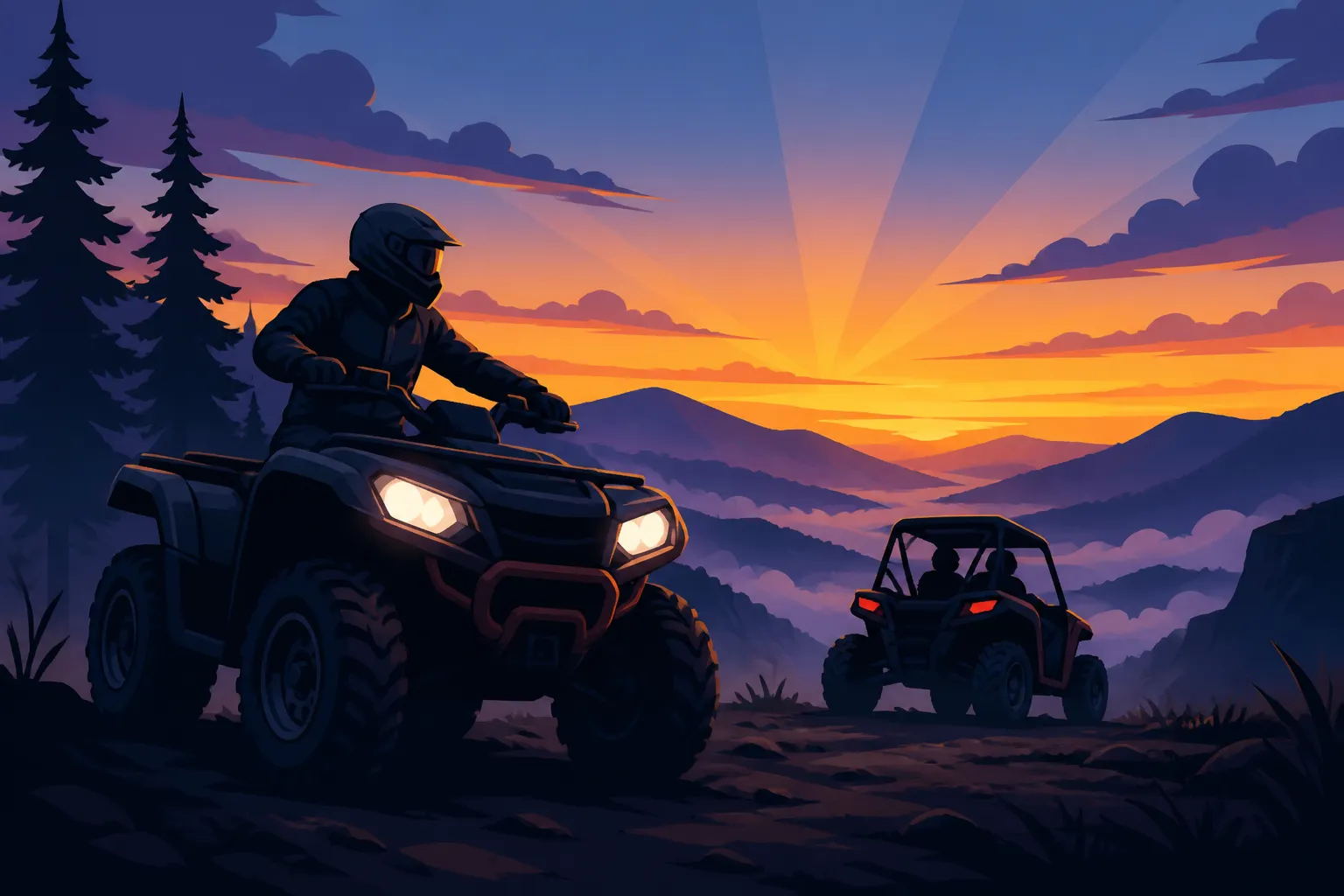
Sunrise is a specific time, but useful visibility builds gradually. Before sunrise, the sky may brighten while the trail itself remains dark beneath trees or beside steep slopes. In West Virginia’s narrow hollows, ridgelines can block light long after the open sky has begun to brighten. A rider may also encounter fog, wet leaves, loose rock, or an animal in the trail before headlights can reveal it in time to stop comfortably.
That is why “I can see well enough” is not a substitute for checking the operating rules. Nor does a headlight turn a daylight-only route into an authorized night ride. Lighting helps you see and be seen, but it does not necessarily change when a trail is open. If you are unsure whether a published rule refers to daylight, sunrise, or a set operating schedule, ask the trail authority or operator before the trip.
Even when a route is legally open, darkness and low light add real riding challenges. Depth perception can be poor, and shadows may make a dip, branch, or change in trail surface harder to judge. A familiar route can feel unfamiliar when its landmarks are hidden. If you are riding with a group, the lead rider’s visibility may be better than the last rider’s, especially where dust, fog, or tree cover reduces the light.
Use the early arrival for preparation instead
A 30-minute pre-sunrise arrival can still be useful. Treat it as setup time rather than riding time: park legally, check the machine, organize helmets and eye protection, review the route, and wait until the trail is open. That can reduce the rushed feeling that often leads to forgotten gear or a missed turn once the group gets moving.
A sensible early-arrival routine looks like this:
- Confirm the trail system’s current access information before leaving home.
- Check the local sunrise time for the trailhead area, not just your home town.
- Park in an authorized area without blocking a gate, road, or trail access.
- Inspect tires, brakes, lights, fuel, belts, and visible damage.
- Put on helmets and eye protection, and make sure everyone knows the route and meeting points.
- Begin riding only when the applicable rules allow it and the route is open.
This is also a good time to check the trail map and identify a conservative first section. If visibility is still poor after the permitted start time, waiting longer is the better call. A schedule is not a reason to ride into a shaded, unfamiliar section before you can see it clearly.
Planning an Early West Virginia Ride
Check trail access before you load
Trail access can change because of closures, maintenance, weather, or land-access issues. Check the trail system’s own status and rules close to the trip, rather than relying only on a map saved weeks earlier or a friend’s description of a previous visit. For general trip planning, [Checking West Virginia Trail Status Before You Drive] is a useful companion topic, and [Trail Closures on West Virginia's Trail System] explains why a route may not be available as expected.
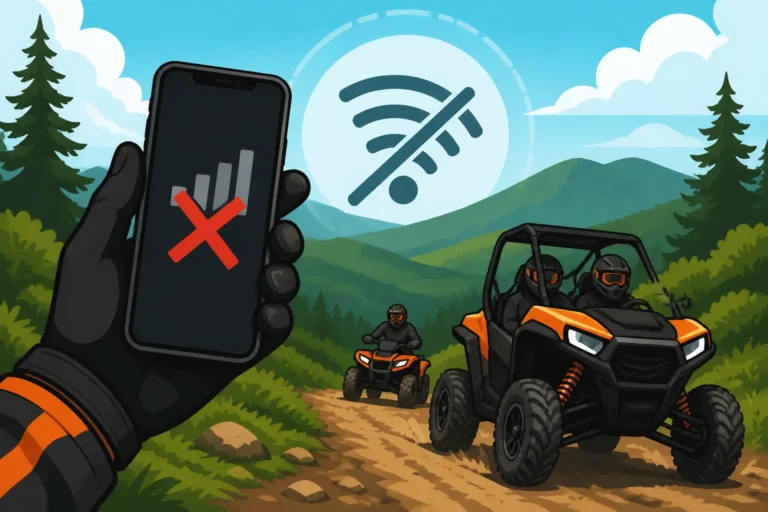
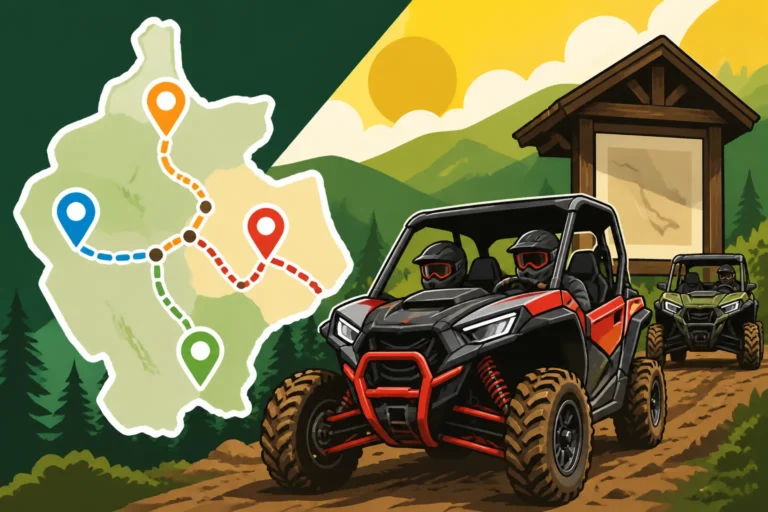
A map can help you understand where you are going, but it should not be treated as proof that a trail is open. onX Offroad can be useful for reviewing routes and preparing offline navigation, particularly where cell service is unreliable. Still, compare any route information with the official trail map and current access notices. A mapped line is not permission to ride it, and a route visible on a device may pass near land or roads where access is restricted.
Before a trip near Rockhouse, Buffalo Mountain, or another trail system, make sure your group agrees on the plan. Choose a turnaround point, identify a place to regroup if riders become separated, and decide what everyone should do if a machine has a problem. For a fuller look at signs, maps, and navigating the network, see [West Virginia Trail Maps and Signage] and [Hatfield-McCoy Trailheads and Where to Start].
Pack for cold, damp, low-light conditions
Pre-dawn conditions can feel much colder than the afternoon forecast suggests, especially when you are moving on an open machine. Bring layers that allow you to adjust once the sun is up, along with gloves that let you operate controls comfortably. Eye protection matters too: wind, dust, insects, and debris can be uncomfortable or dangerous even on a short connector.
A few practical items can make an early start less stressful:
- A charged phone and an offline route map
- A small first-aid kit and basic tool kit
- Water and a snack for a delayed return
- A flashlight or headlamp for setup and breakdown
- A dry layer stored in a sealed bag
- A way to contact your group if riders are separated
A headlamp is for preparing at the parking area; it is not a reason to ride a trail that is closed or unsafe in darkness. If you use onX Offroad, download the map area before losing service and make sure you know how to follow your location on the device. Keep a paper map or written trailhead details as a backup if your phone battery, GPS, or screen becomes unusable.
A Better Start-Time Plan
Compare your options before choosing a departure
The right plan depends on the rules, the weather, how far you have to travel, and whether everyone in your group is comfortable riding in changing light. If the schedule is tight, it may be tempting to treat the first half hour as a small risk. In reality, waiting can protect both your access to the trail and the safety of the group.
| Situation | Safer choice |
|---|---|
| Trail rules specify daylight riding | Wait until the allowed riding period begins |
| The trail’s opening time is unclear | Confirm with the trail operator before riding |
| The route includes public roads | Check the road rules and machine requirements separately |
| Fog or heavy cloud limits visibility | Delay the start until you can see the route clearly |
| Your group is unfamiliar with the area | Begin with a known, easier section after opening |
| A closure or access notice affects the route | Choose an open route or reschedule |
A common example is a group staying near Gilbert and hoping to reach a trail early to make the most of the day. The useful adjustment is not to start riding in the dark; it is to prepare the night before, leave enough time to reach the trailhead, and use the pre-sunrise period to get organized. If the route is open later than expected, adjust the day’s distance instead of trying to make up time at the beginning.
Another example is a rider who knows a trail from a previous summer trip and assumes an early start will be straightforward. Conditions may be different in spring or after rain, and the trail may be shaded or slippery. A familiar name on the map does not guarantee familiar visibility or surface conditions. Start conservatively and leave room in the schedule for a slower pace.
Make the first hour calm and deliberate
Once riding is permitted and visibility is adequate, keep the opening part of the ride measured. Let the group settle into the route before increasing pace, maintain enough distance to respond to a stop, and use agreed regrouping points. If the lead rider needs to stop, make sure the rest of the group can do so safely without crowding a blind corner or narrow section.
If fog rolls in or the trail remains difficult to read, stop in a safe place and reassess. The same applies if a rider is tired, cold, or struggling with visibility. It is better to wait or turn back than to press on because the group has already driven a long way. For more preparation on remote rides, read [What to Carry on a Remote West Virginia Ride] and [West Virginia Trail Etiquette on Shared Routes].
A half-hour-before-sunrise arrival can be a smart way to get ready for a full day outdoors. The key is to treat that time as preparation, not automatic permission to ride. Confirm the rules for the specific trail system, separate trail access from road access, and wait until both the rules and the actual conditions support a safe start.
Disclaimer
This article is for general informational purposes only and does not constitute professional advice. Laws, prices and regulations vary by location and change over time. Consult a qualified professional for guidance on your specific situation.