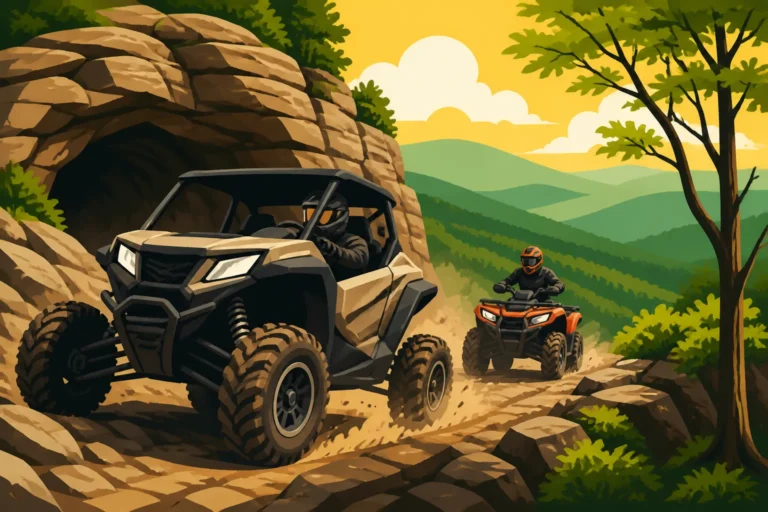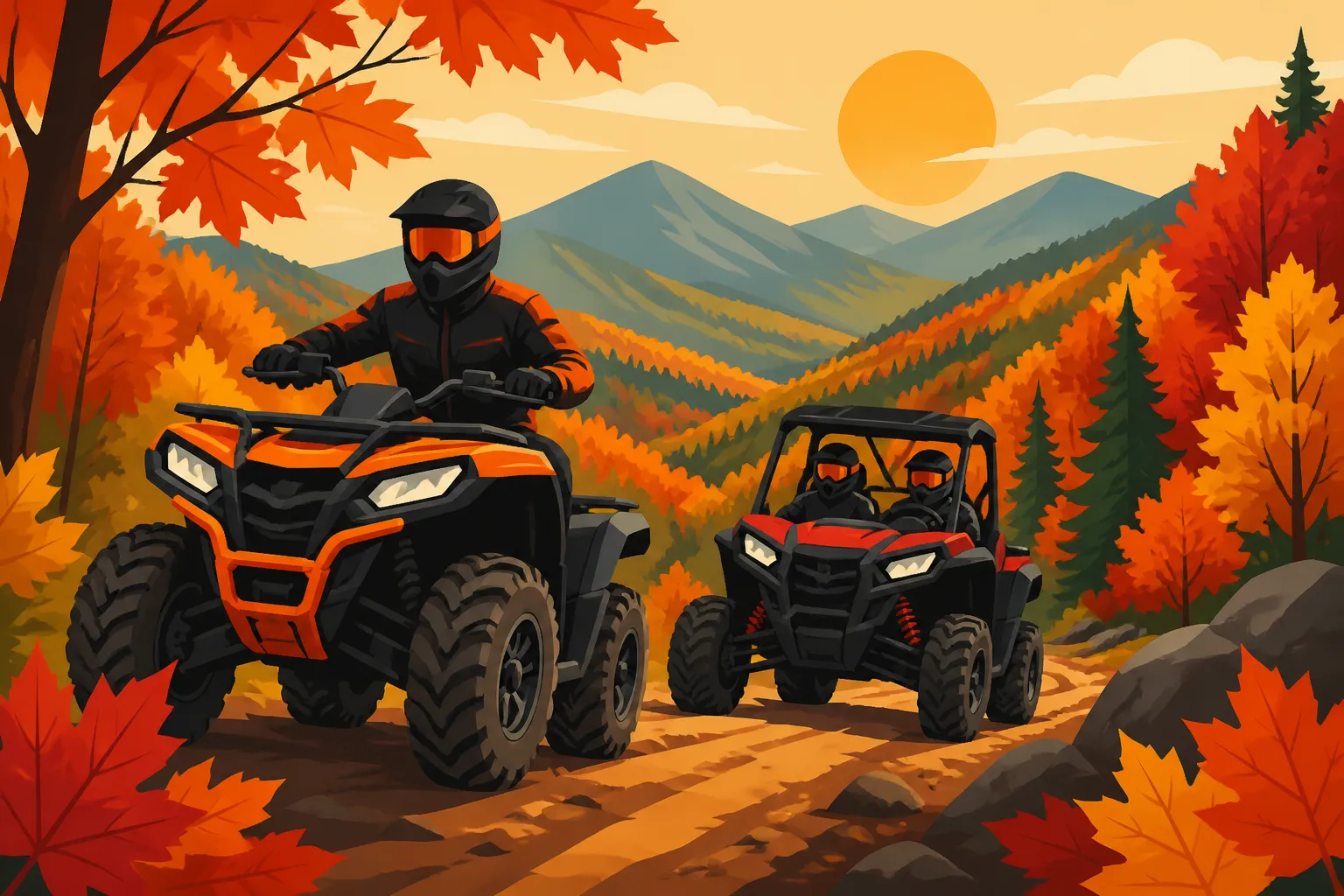
Fall Color Rides in West Virginia
Fall is a beautiful time to ride West Virginia’s mountains, but colorful leaves can also hide rocks, ruts, and muddy patches. A little planning helps you enjoy the scenery without being caught out by changing trail conditions, shorter daylight, or a route that isn’t open to your machine. This guide covers where to ride, how to prepare, and what to check before you leave.
Where to Ride for Fall Color in West Virginia
Choose a trail system that matches your ride
Southern West Virginia’s Hatfield-McCoy trail systems offer a mix of forested routes, mountain views, and access to nearby trail towns. Rockhouse, Bearwallow, Pinnacle Creek, and Pocahontas are among the systems riders may consider when planning a fall trip. The best fit depends on your experience, machine width, and preferred terrain—not just which trailhead sounds closest to the brightest foliage.
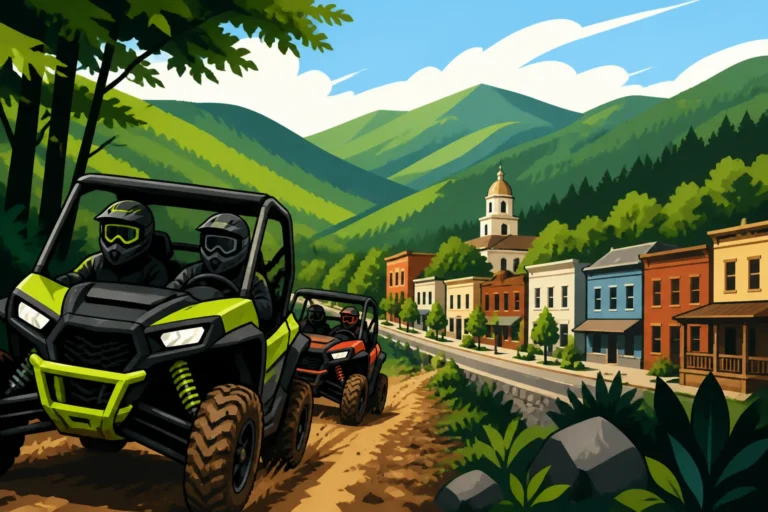
Rockhouse is a popular option for riders staying near Gilbert, while Bearwallow is associated with the Logan area. Pinnacle Creek offers access near Pineville, and Pocahontas is a possibility for riders planning around Bramwell. These places can work as starting points for a weekend, but don’t assume a route between trail systems or towns is open just because it appears connected on a map. Check the trail authority’s current information before setting out.
If you’re new to the area, start with the system that best fits your group rather than trying to cover as much ground as possible. A shorter ride with time for breaks and a meal in town can be more enjoyable than a rushed loop that leaves you navigating unfamiliar trails near sunset. For a closer look at the options, see [West Virginia's Thirteen Hatfield-McCoy Trail Systems] and [Which Hatfield-McCoy System to Ride First].
Plan for scenery without assuming a precise peak date
West Virginia’s fall color doesn’t arrive everywhere at once. Elevation, weather, and local conditions can make one ridge look vivid while a nearby valley is still mostly green. That means a trip planned around a specific weekend may bring beautiful color, but the exact look of the landscape is hard to guarantee.
Rather than treating a forecasted “peak” as a promise, plan for a good ride even if the leaves are early or late. Build in time to stop at overlooks or viewpoints where stopping is safe and permitted, and avoid blocking a trail while taking photos. On narrow or busy routes, pull fully clear of the travel path before letting the group gather.
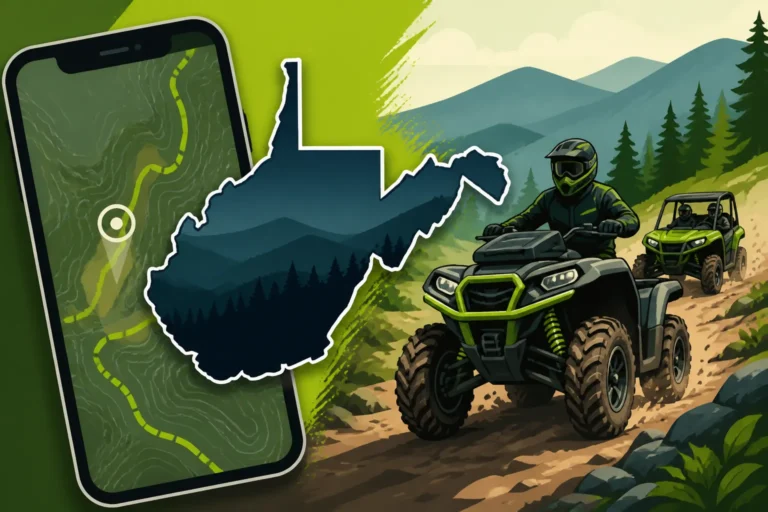
A map app such as onX Offroad can help you review routes and terrain before the ride, but don’t treat it as a substitute for official trail maps, posted signs, or closure notices. Save useful map information for offline use when possible, and check [West Virginia Trail Maps and Signage] and [Checking West Virginia Trail Status Before You Drive] as part of your pre-trip routine.
| Trail area | Nearby place to plan around | What to consider for a fall ride |
|---|---|---|
| Rockhouse | Gilbert | Check route difficulty and allow time for stops |
| Bearwallow | Logan | Review current access and trail conditions |
| Pinnacle Creek | Pineville | Confirm the intended route suits your machine |
| Pocahontas | Bramwell | Plan fuel, food, and daylight around your ride |
Prepare for Fall Trail Conditions
Treat fallen leaves as a visibility and traction issue
A carpet of leaves can make a trail look smooth when it isn’t. Leaves may cover rocks, holes, roots, washouts, and changes in slope. In damp hollows, they can also make a surface slick. Ride at a speed that gives you room to react, especially on blind turns, steep descents, and shaded sections where the ground may stay wet longer.
Keep more space between machines than you might on a clear, dry trail. The rider ahead can kick leaves into the air, reducing visibility, while a sudden stop can be difficult to anticipate on a winding route. If someone in the group is riding a less familiar machine or is new to the terrain, choose a pace that lets everyone maintain control rather than trying to keep up with the fastest rider.
Rain can change a trail quickly, and a dry-looking entrance doesn’t tell you what conditions are like farther along. Before leaving, check for closures or advisories and be willing to adjust plans. For guidance on trail conditions after wet weather, read [West Virginia Trail Conditions After Rain] and [Mud, Rock and Creek Crossings in West Virginia].
Pack for shorter days and cooler temperatures
Fall rides can begin comfortably and turn chilly when clouds roll in or the sun drops behind a ridge. Wear layers that you can add or remove, and bring gloves that keep your hands warm without interfering with your controls. A spare dry layer can make a real difference after a damp ride or an unexpected delay.
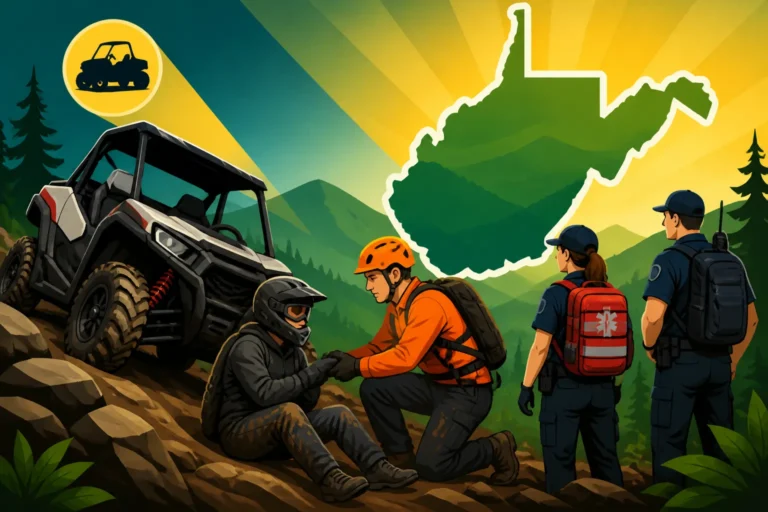
Pack water, snacks, a basic first-aid kit, and any tools or recovery gear that make sense for your machine and route. Carry a charged phone, but don’t assume you’ll have reliable service throughout a remote ride. Let someone outside the group know where you plan to ride and when you expect to be back. For a more complete checklist, see [What to Carry on a Remote West Virginia Ride].
Daylight becomes more limited as the season progresses. Set a turnaround time that gets the group back with a comfortable margin, not at the moment the light is fading. Trail access and operating rules can vary by location, so verify the applicable hours before the trip; [West Virginia's Daylight-Only Trail Riding Rule] is useful context for riders planning around shorter autumn days.
Plan the Ride Around Your Group and Machine
Match the route to experience and machine width
A route that looks manageable on a screen can feel different when it’s steep, rocky, wet, or crowded with fallen leaves. Choose trails that fit the least experienced rider in your group, and check posted difficulty ratings before you commit. Riders on a wider side-by-side should confirm that the intended trails allow their machine’s width; don’t assume every route accommodates every UTV.
If your group includes children or first-time riders, keep the day simple. Pick a suitable system, agree on regrouping points, and avoid splitting up unless everyone knows the plan. A slower pace can make the ride more relaxed and gives younger riders time to respond to changing terrain. These resources can help you plan: [West Virginia Trail Systems Best Suited to Side-by-Sides] and [Riding West Virginia Trails With Kids].
The same rule applies to mixed groups of ATVs and UTVs. A large machine may need more room to turn or pass, while a smaller ATV may move differently over uneven ground. Talk about pace and spacing before leaving the trailhead. If someone is uncomfortable, stop somewhere safe and choose a less demanding route rather than pressuring them to continue.
Check permits, rules, and trail access before you travel
A scenic ride still requires the right access and paperwork. Confirm what permits apply to your specific destination, machine, and rider group, and make sure every rider understands the rules for the trails you intend to use. Trail permits, vehicle titles, and road-use requirements are separate matters, so having one form of paperwork does not automatically cover the others.
Read the current rules from the relevant trail authority and follow signs at the trailhead. Stay on marked routes, respect barriers and closures, and don’t use private roads or land as an unofficial connector. For background on trail access, see [West Virginia's Hatfield-McCoy Trail Permit Explained] and [Trail Rules Every West Virginia Rider Signs Up To].
Use onX Offroad as a planning aid for reviewing mapped terrain and organizing a route, then compare what you see with official trail maps and on-the-ground signs. The app’s map view can help your group discuss the plan before the ride, but posted directions and closure information should guide decisions once you’re on the trail. Keep a backup plan in case a route is closed or conditions make it unsuitable.
Make the Day Enjoyable From Trailhead to Town
Build in practical stops and a flexible schedule
A fall-color ride doesn’t need to be an all-day push. Decide how long your group wants to ride, then leave room for breaks, photos, and delays. A rough plan can prevent the common problem of spending too long on a scenic section and rushing the return as daylight fades.
Think through fuel, food, and parking before you arrive. Trail towns such as Gilbert, Logan, Pineville, and Bramwell can help orient a trip, but services and access arrangements vary. Check where you can legally park and whether your chosen lodging or trailhead has space for your truck and trailer. A quick stop in town is not permission to ride on public roads; road access has separate rules and may be restricted to designated areas.
If you’re riding with friends who have different expectations, agree on the day’s priorities in advance. One person may want challenging terrain, while another is there for a relaxed foliage ride. A route with a clear turnaround point and an optional shorter loop can help the group stay together without making anyone feel they have to ride beyond their comfort level.
Keep the scenery—and the trail—safe
Stop only where you can get fully out of the way of other riders. Before taking a photo, check for oncoming traffic and avoid stopping just beyond a blind corner, on a steep grade, or near a narrow crossing. If your group needs to regroup, choose a wide, visible place where everyone can wait safely.
Leave gates and signs as you find them, and don’t ride around a closure. Wet leaves and soft ground can tempt riders to detour onto the shoulder or an unmarked path, but doing so can damage the trail and create a safety problem. When conditions are uncertain, turn back or choose another marked route.
Finally, keep expectations flexible. The leaves may be at their brightest on a different ridge, a forecast may shift, or a trail may be closed after weather. The trip can still be worthwhile: a steady ride, a good meal in town, and a safe return are better than forcing a route for the sake of a perfect photo. Planning around official access information, daylight, and your group’s abilities is what makes an autumn ride memorable for the right reasons.
Disclaimer
This article is for general informational purposes only and does not constitute professional advice. Laws, prices and regulations vary by location and change over time. Consult a qualified professional for guidance on your specific situation.