A West Virginia ATV Title With a Missing Seller Signature
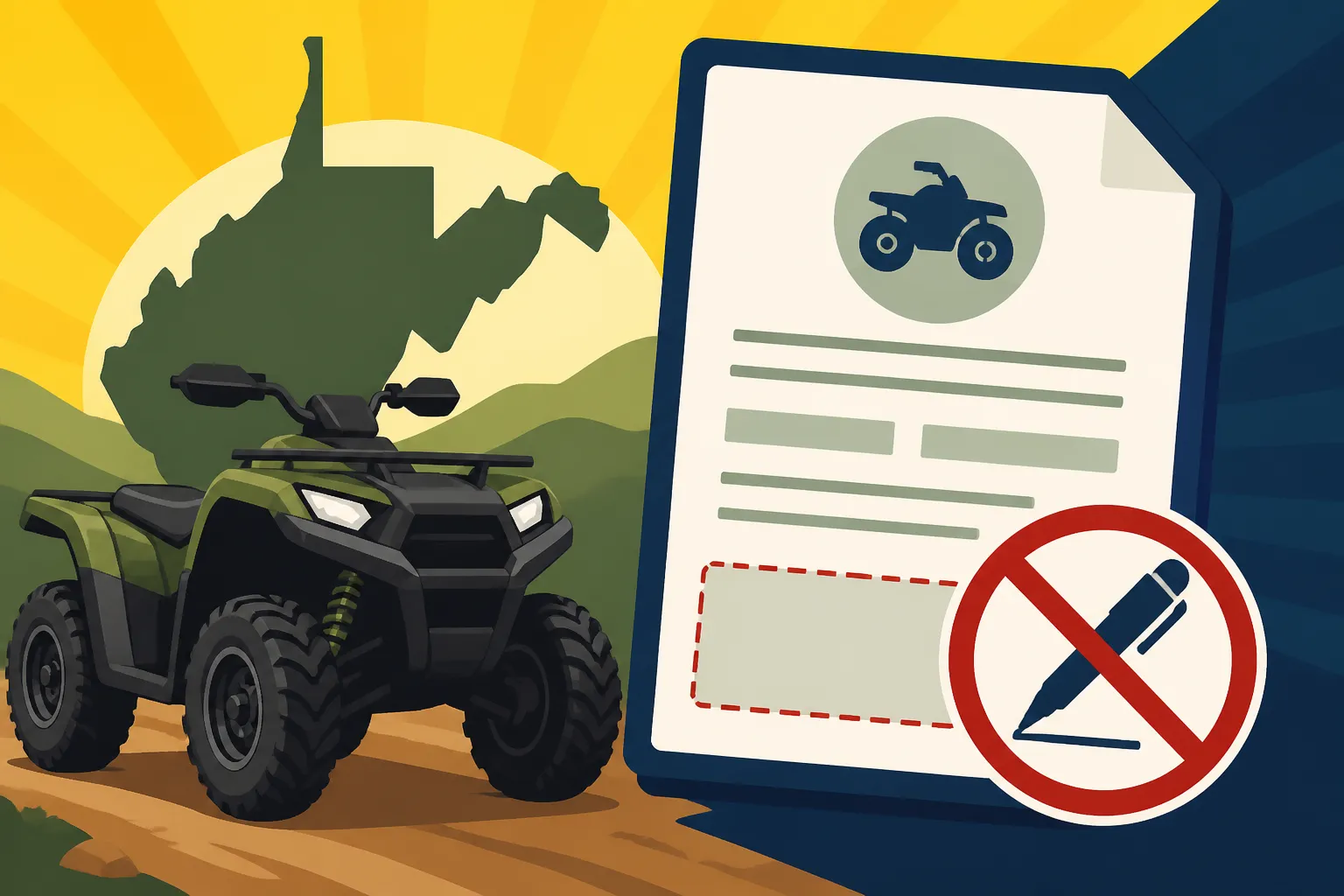
Oh, the classic West Virginia ATV title saga! You've just found your dream quad, the money has changed hands, you have the physical title in your hand, but then you notice it: the seller forgot to sign it. Or maybe they signed it in the wrong spot, or the signature looks off, or worse, you can't get hold of them anymore. It's a frustrating situation that many riders in our Mountain State have faced, turning the excitement of a new machine into a paperwork headache. This guide is here to walk you through exactly what happens when you have a West Virginia ATV title with a missing seller signature and what steps you can take to make that machine officially yours.
The Critical Role of the Seller's Signature on a West Virginia ATV Title
Let's get right to it: that signature isn't just a formality. It's a crucial legal component that the West Virginia Division of Motor Vehicles (DMV) absolutely relies on to officially transfer ownership. Without it, you might as well have a blank piece of paper where the ownership transfer should be.
Why the DMV Cares So Much About That Signature
Think of an ATV title as the deed to a house, but for your off-road machine. When you sell a house, the previous owner signs it over to you. The same principle applies here. The seller's signature on the designated line of the West Virginia ATV title is their sworn declaration that they are relinquishing ownership to you, the buyer. This signature confirms that they had the legal right to sell the ATV, that they received payment (or gifted it), and that they agree to the transfer.
The DMV is essentially playing gatekeeper against fraud and ensuring proper chain of ownership. They need to see a clear, unbroken line of ownership transfers. If that seller's signature is missing, it creates a break in that chain. The DMV can't verify that the previous owner truly intended to transfer the title, nor can they be sure there aren't outstanding liens, disputes, or even that the ATV wasn't stolen. They are protecting themselves, and future owners, from potential legal issues. It might seem like a small detail to you, especially if you know you legitimately bought the machine, but to the state, it's a giant red flag.
The Legal Implications of an Incomplete Title Transfer
Beyond the DMV's processing requirements, an incomplete title transfer has significant legal implications for you. Until the title is properly signed over and processed by the DMV, you are not the legal owner of the ATV. You might have paid for it, it might be sitting in your garage, and you might be riding it on the trails, but legally, it's still registered to the previous owner.
This can lead to a host of problems:
- Inability to Insure: Many insurance companies will want proof of legal ownership before providing full coverage. If you get into an accident, you might find yourself without coverage because you weren't the legal owner. [Insuring an ATV in West Virginia] often hinges on clear title.
- Selling the ATV: You can't legally sell an ATV that you don't legally own. If you try to sell it later, you'll run into the exact same problem you're facing now, but on the seller's side. No buyer will want to touch a machine with a messy title history.
- Recovery After Theft: If your ATV is stolen, having the title correctly in your name is crucial for reporting it to the authorities and for any potential recovery through insurance. Without it, proving it's yours becomes incredibly difficult.
- Liability Issues: Imagine the previous owner gets a parking ticket for the ATV, or it's involved in some incident, and since their name is still on the title, they could be held liable. While less common for ATVs than cars, it's still a risk.
Essentially, until that signature is there and the title is transferred, you're operating in a legal gray area, and that's not a place anyone wants to be with a valuable possession like an ATV.
Common Scenarios Leading to a Missing Signature and Your Initial Steps
Life happens, and sometimes, a missing signature is an honest mistake. Other times, it's a much more complicated situation. Let's look at the most common ways this happens and what you should immediately try to do.
The Seller Was Just Forgetful (and is Reachable)
This is by far the best-case scenario. You bought the ATV, exchanged money and the title, and then later realized the seller simply forgot to sign the "seller's signature" line on the physical title certificate. Perhaps they were in a rush, or maybe they're just not familiar with the West Virginia title transfer process.
Your Initial Steps:
- Immediate Contact: As soon as you discover the missing signature, contact the seller. A polite phone call or text message is usually the fastest way to get their attention. Explain the situation clearly: "Hey, I was just looking over the ATV title, and it looks like the seller's signature line was accidentally left blank. The DMV will need it signed to transfer ownership to my name."
- Arrange a Meeting: If they're local, ask to meet up quickly so they can properly sign the title. Be flexible and offer to meet them at a convenient location for them. Bringing a copy of the [West Virginia ATV Bill of Sale: What Belongs in It] can help remind them of the transaction if they've forgotten.
- Mail the Title (If Needed): If the seller has moved or lives far away but is still responsive, you might need to mail them the title with clear instructions on where to sign. Include a self-addressed, stamped envelope for them to return it to you. This carries a small risk, so consider sending it via certified mail with a return receipt requested for tracking.
- Confirm the Signature: Once you get the signed title back, double-check that it's signed correctly in the designated seller's signature field, not in a lienholder spot or anywhere else.
Most private sellers are honest people who just want the transaction to be complete and will be happy to rectify an oversight. This is the least complicated path to getting your title perfected.
The Seller Has Vanished or Is Deceased
Now we're moving into more challenging territory. What if you can't reach the seller at all? Maybe their phone number is disconnected, emails bounce back, or they've moved without leaving a forwarding address. Or, unfortunately, the seller may have passed away since the sale. These scenarios require a more involved approach, as simply getting a signature is no longer an option.
Your Initial Steps (if seller is unreachable):
- Exhaust All Contact Options: Try every avenue you can think of: old phone numbers, email addresses, social media, mutual friends, even old addresses to send a certified letter. Document all your attempts, noting dates and methods. This evidence might be useful if you need to pursue a bonded title later.
- Gather All Existing Paperwork: Collect every piece of documentation related to the sale: the bill of sale (even if it's just a handwritten one), receipts, canceled checks, bank statements showing payment, text messages, emails, or even online listings for the ATV. This documentation is your [Proof of Ownership for a West Virginia ATV Title], even if the official title is incomplete.
- Investigate Previous Owner: If you have the VIN, you might be able to do a quick online search to find public records associated with the last registered owner, which could lead to new contact information.
- Deceased Seller Specifics: If the seller is deceased, the situation becomes an estate matter. You'll need to contact their personal representative or the executor of their estate. They will be the legal authority to sign the title over to you. This might involve legal documents like a death certificate, letters of testamentary, or a small estate affidavit, depending on the complexity of the estate. You can also research [Transferring a West Virginia ATV Title After a Death] for more detailed guidance on this specific situation.
What to Bring to the DMV (Even Without the Signature)
Even if you don't have that perfect, signed title, it's often a good idea to visit your local [West Virginia DMV Offices That Handle ATV Titles] with everything you do have. While they won't be able to issue a clean title on the spot, they can advise you on your specific options and the next steps.
Documents to Prepare:
| Document | Purpose | Importance |
|---|---|---|
| Original Title | Even with the missing signature, it's the official document. | Crucial |
| Bill of Sale | Proves the transaction occurred, who bought/sold, and the price. | Essential |
| Proof of Payment | Canceled check, bank transfer receipt, or dated cash receipt. | Very Important |
| Photo ID | Your driver's license or state ID. | Required |
| ATV Details | VIN, make, model, year. | Required |
| Contact Attempts Log | Dated notes of phone calls, emails, letters to seller (if applicable). | Helpful for Bonded Title Pathway |
| Any Correspondence | Texts, emails with the seller about the sale. | Helpful for Bonded Title Pathway |
| Title Application Form | Though incomplete, you can start filling it out for your information. | Required for eventual transfer |
When you go to the DMV, be prepared to explain the situation clearly and concisely. They've seen it all, so don't be embarrassed. They are there to guide you through the process, even if it's a complicated one like [Titling an ATV in West Virginia Without the Previous Owner].
Navigating the Path to a West Virginia Title Without the Seller's Signature
If contacting the seller directly to get the signature isn't an option, you're looking at a more complex journey. The West Virginia DMV isn't going to just hand you a new title without a clear legal pathway. Your main options will likely involve either a bonded title or, in rare cases, legal action.
The Bonded Title Route: A Potential Solution
For many folks in West Virginia who find themselves with a machine but no clear title due to a missing signature, a bonded title is often the most practical, albeit more involved, solution. A bonded title is essentially a title backed by a surety bond. This bond acts as an insurance policy, protecting previous owners or lienholders if they come forward later with a legitimate claim to the ATV. It basically says, "We're issuing this title, and if someone else proves they own it, this bond will pay them back."
How a Bonded Title Generally Works (in West Virginia):
- DMV Application and Review: You'll start by applying for a bonded title through the West Virginia DMV. They'll require all the documentation you've gathered (bill of sale, proof of payment, evidence of attempts to contact the seller). They'll review your case to ensure it's a legitimate claim and that there's no obvious fraud.
- Determine Bond Amount: The DMV will typically determine the value of the ATV and require a surety bond for a certain percentage (often 1.5 to 2 times) of that value. This bond amount ensures there's enough coverage if a claim arises.
- Purchase a Surety Bond: You'll then need to purchase a surety bond from a licensed bond company. These companies are usually listed by insurance agencies. The actual cost to you will be a small percentage of the total bond amount (e.g., a few hundred dollars for a bond covering several thousand). For example, if your ATV is valued at $5,000 and the bond needs to be for $7,500, you might pay a premium of $150-$250 for the bond.
- Submit Bond and Documents: Once you have the surety bond, you'll submit it along with all your other documentation and the appropriate application forms to the West Virginia DMV. They will then process your request and, if everything is in order, issue you a bonded title.
- Waiting Period: There's usually a waiting period (often around three years) during which the bond remains active. If no one comes forward with a claim during that time, the bond expires, and the title typically converts to a standard, clear West Virginia title.
This process sounds complicated, and it certainly requires more steps than a simple title transfer. However, it's a legitimate pathway to legal ownership when the traditional route is blocked. You can find more specific details on [Bonded Title for an ATV in West Virginia] to understand the exact requirements and timelines.
Seeking Legal Recourse or Alternative Proof of Ownership
For most ATV transactions, going to court over a missing signature isn't practical due to the cost and time involved. However, in specific, high-value cases or if there's a clear legal dispute, it might be an option.
Legal Recourse:
- Small Claims Court: If the seller is refusing to sign or causing intentional problems, you might be able to pursue a case in small claims court to compel them to sign the title or to recover your money. However, this is usually a last resort, especially for an ATV.
- Attorney Consultation: If the value of the ATV is significant, or if you suspect outright fraud, consulting with an attorney experienced in property law might be advisable. They can explore options like a court order for specific performance, where a judge orders the seller to fulfill their part of the contract (signing the title). However, be mindful of legal fees.
Alternative Proof of Ownership:
While a bill of sale isn't a substitute for a signed title for DMV purposes, it is crucial for establishing your ownership claim in other contexts. If you had the seller sign a robust bill of sale (perhaps one drafted using resources like LawDepot, which offers templates for various legal documents), that document, combined with your proof of payment, strengthens your claim considerably. You might use these documents to support your bonded title application or in any legal dispute.
In some rare instances, if an ATV has been abandoned on your property for an extended period, West Virginia law might provide a mechanism for you to claim the title, but this is a very different and more complex process usually involving public notices and specific timelines.
When All Else Fails: Understanding Your Limits
Sometimes, despite your best efforts, getting a title for an ATV with a missing seller signature simply isn't feasible or worth the trouble. If the ATV's value is very low, the cost of a bonded title or legal fees might outweigh the machine's worth.
Considerations:
- Parts Machine: If you truly cannot get a title, and the ATV is older or low value, you might consider using it strictly as a "parts machine." This means you would not register it, title it, or ride it on public lands. It would be confined to private property, essentially broken down for its components. This isn't ideal, but it's an honest assessment of what you're left with.
- Selling for Parts: You could potentially sell the machine for parts to recoup some of your investment, but you must be transparent with any buyer about the lack of a title. This usually means a significantly reduced price. Be aware that [Selling an ATV With No Title in West Virginia] can also pose challenges.
- Penalties: Remember, riding an untitled ATV on public land in West Virginia can lead to [Penalties for an Untitled ATV in West Virginia]. It's not just about the trail permit; it's about having that foundational proof of ownership.
The takeaway here is that while a missing seller signature is a major hurdle, there are definite pathways to overcome it in West Virginia. Persistence, good documentation, and understanding the options available through the DMV are your best tools. Before you throw in the towel, make sure you've explored every legitimate avenue to make that machine legally yours.
Disclaimer
This article is for general informational purposes only and does not constitute professional advice. Laws, prices and regulations vary by location and change over time. Consult a qualified professional for guidance on your specific situation.