Busiest Weekends on West Virginia Trails
West Virginia’s trail weekends can feel very different depending on when and where you ride: a quiet weekday on a remote route may become a slow-moving line of machines near a popular trailhead on a holiday. This guide explains which weekends tend to draw the biggest crowds, what gets congested first, and how to plan around busy conditions without sacrificing your ride.
When West Virginia trails tend to be busiest
Holiday weekends and long weekends
Holiday weekends are among the most predictable times to expect heavier traffic. Riders have an extra day to travel, unload, and explore, so popular areas can fill up earlier than they do on an ordinary Saturday. The biggest pressure is often on access points and services rather than every mile of trail: parking areas, fuel stops, restaurants, and lodging may all feel busier at once.
A busy weekend can change the rhythm of a ride. You might wait longer to unload, meet more groups at trail intersections, or need extra time to stop for fuel and food. If your group includes new riders or children, that added activity can make an otherwise simple outing feel more demanding. Build in time for breaks and keep the group together when you encounter a queue or crowded junction.
The exact level of traffic varies by trail system, weather, events, and lodging availability. Before choosing a destination, check the trail authority’s current notices and contact local businesses about access or parking details. For practical expectations, [Holiday Weekend Crowds at West Virginia Trailheads] offers a useful companion topic.
Fall color weekends and popular seasonal trips
Autumn weekends can draw riders who want to combine trail time with mountain scenery, cooler temperatures, and a seasonal getaway. A clear, comfortable day may bring more visitors than a wet or cold forecast, particularly to destinations with nearby cabins, campgrounds, and town access. That does not mean every fall weekend will be packed, but it is wise to make reservations and check trail conditions before setting out.
Fall weather can also make planning less straightforward. A sunny afternoon may follow a chilly morning, while rain can leave some routes slick or muddy. Carry layers, allow extra time, and avoid assuming that a familiar route will ride the same way it did on your last visit. Check [West Virginia Trail Conditions After Rain] if recent weather might affect your plans.
For a group traveling from outside the region, the crowd level is only one piece of the decision. Consider how far you will drive, where you will park, and whether you need to stage a trailer or pick up a rental. A popular weekend is easier to enjoy when those details are settled before you leave home.
Trail events and local gathering weekends
Organized rides and community events can concentrate visitors around a particular system or trail town. Even when the event itself is limited to one area, it can affect nearby lodging, restaurants, parking, and rental availability. If a destination has a calendar of rides or festivals, ask the local visitor center, lodging provider, or trail authority what to expect before booking.
A large event does not necessarily mean every trail is crowded. Traffic may cluster around the event’s starting point, a specific trailhead, or a route that connects riders to town. If you would rather avoid the busiest areas, ask about alternate access points and whether they are suitable for your machine, trailer, and experience level.
When you are deciding where to ride, [West Virginia Trail Towns You Can Ride Into] can help you think through the mix of trail access and town services. For a broader overview of the state’s major riding options, see [The Hatfield-McCoy Trails, West Virginia's 1,200-Mile Network]. Always confirm that a route is open and permitted for your machine before heading out.
Where crowds are most noticeable
Trailheads, parking areas, and unloading zones
The first bottleneck is often the trailhead, not the trail itself. On a busy Saturday, several groups may arrive close together, and unloading a trailer takes time. A narrow access road or small parking area can make the process feel crowded even when there is plenty of room farther into the system. Arriving early can help, but it is also important to have your equipment ready so you are not blocking other people while you prepare.
Before you travel, find out what kind of parking is available and whether it can accommodate your trailer or toy hauler. Do not assume a roadside shoulder is an acceptable overflow area. If your group is meeting separately, agree on a legal and practical meeting point rather than trying to coordinate by phone while everyone is arriving.
For an idea of how access logistics can differ by location, review [Hatfield-McCoy Trailheads and Where to Start]. If Rockhouse is on your itinerary, look into [Parking at the Rockhouse Trailhead] before setting off. A few minutes spent checking access details can prevent a frustrating start to the day.
Town access, fuel, and food stops
When trails connect with communities, the busiest moments may happen off the trail. A group ride heading into Gilbert, Man, Matewan, or another trail town can bring several machines to the same fuel station or restaurant at once. Roads and parking areas that feel easy to navigate with one machine may take more patience with a large group, especially when other customers are arriving by car.
Plan fuel and meal stops with the whole group in mind. If you are riding several machines, agree on where to park and how to regroup before anyone heads inside. Keep access lanes clear, follow posted instructions, and remember that an ATV-friendly town still has residents, local traffic, and businesses operating alongside visiting riders.
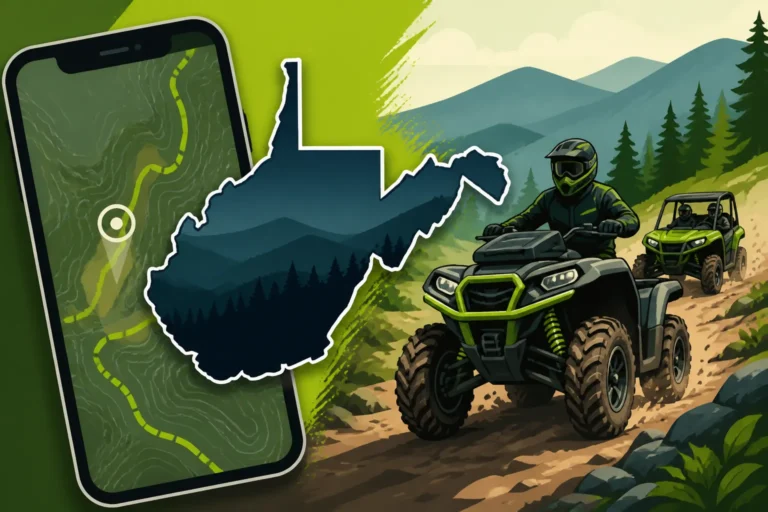
Use a map to identify likely services, but verify that a business is open and accessible to riders before relying on it. onX Offroad can help you review route context and nearby map features while planning, but it should not replace posted trail signs or official closure information. Keep a paper or offline backup if you expect poor cell service.
Popular routes and narrow connectors
Crowds do not always spread evenly across a system. A scenic route, well-known connector, or trail that leads toward a town can see more traffic than a less familiar loop. Narrow sections can slow down when riders meet in opposite directions, and a steep or technical spot may create a short queue as machines work through one at a time.
Stay patient when you encounter other groups. Give riders room to finish a maneuver, avoid crowding someone who is negotiating a difficult section, and do not leave marked routes to pass or turn around. If your group is large, choose a safe place to pull over where the trail allows it, then let faster riders pass rather than stretching the group across a junction.
Maps can help you understand the shape of a route and spot places to pause, but conditions on the ground matter. onX Offroad may be useful for reviewing your planned ride and saving map information before you lose service. Still, follow the system’s markers and current guidance; a digital map is a planning aid, not permission to ride beyond an open, signed route.
How to choose a less crowded weekend
Compare dates, locations, and ride styles
If your schedule is flexible, compare more than just the calendar date. A holiday Saturday at a highly popular access point is likely to feel different from a regular weekend at a less central trailhead. Weather, local events, lodging occupancy, and the size of your group all influence the experience.
| Planning factor | What it can mean for crowd levels | A practical adjustment |
|---|---|---|
| Holiday or long weekend | More visitors may arrive over several days | Reserve lodging and parking arrangements early |
| Local event weekend | Crowds may gather near one system or town | Ask which access points are affected |
| Good-weather Saturday | More riders may choose the same day | Start early or consider a weekday |
| Recent heavy rain | Some routes may be difficult or closed | Check official conditions before travel |
| Large group trip | Staging and regrouping take longer | Set a meeting plan and ride in smaller groups |
| Popular trailhead | Parking can become the main delay | Confirm capacity and arrive prepared |
If quieter riding matters more than a particular destination, consider changing the day of the week, the trail system, or the time you start. A weekday can mean less congestion at access points and services, though availability and operating arrangements still need checking. [Weekday Riding at Hatfield-McCoy] is a helpful place to explore that option.
A quieter route is not automatically the right route for every rider. Match the terrain and trail rating to the least experienced person in your group, and make sure the route allows your machine’s width and type. Less traffic cannot compensate for a route that exceeds a rider’s comfort or equipment limits.
Make reservations and confirm details early
On a busy weekend, lodging and machine rentals can be the hardest pieces to arrange at the last minute. Contact the provider directly to confirm what is included, where you can park, how close you are to trail access, and what happens if conditions or closures change. If you are bringing your own machines, ask whether your lodging has trailer space and whether the route from the property to the trail is actually permitted.
For renters, do not assume every package handles permits, helmets, fuel, or trail access in the same way. Get those details in writing before you travel, and ask about check-in times so you can plan around a crowded arrival window. [Booking a West Virginia Rental in Advance] provides additional planning context.
A sensible backup plan helps too. Choose a second place to eat, identify another legal parking option, and know how you will respond if your intended trail is closed. The plan should be flexible without encouraging riders to improvise onto unmarked roads or private property.
A practical plan for riding a busy weekend
Prepare before leaving home
A little preparation makes a crowded weekend much easier. Confirm that your machine is ready, your paperwork and permits are in order, and everyone knows the meeting place. Share the route plan with the group, including where you expect to stop and what to do if someone gets separated. For navigation, download or save the information you may need before you reach areas with weak reception.
onX Offroad can be one tool for reviewing route options and preparing offline maps. Use it alongside official trail maps, current closure notices, and on-the-ground signs. Before the trip, tell someone who is not riding where you plan to go and when you expect to return, particularly if your route includes remote sections.
Pack for delays as well as riding. Bring water, food, basic repair supplies, warm or rain layers, and any medication your group may need. If a trailhead is busy, you may spend longer than expected unloading or waiting for everyone to regroup. Having essentials accessible can prevent a minor hold-up from becoming a bigger problem.
Ride considerately when the system is crowded
Busy trails call for extra patience and clear communication. Keep a controlled pace, leave space between machines, and slow down where visibility is limited. At intersections, pause long enough to check signs and confirm that the whole group is following the correct route. Avoid stopping in a blind corner or blocking a connector while deciding where to go.
Before the ride, agree on a simple regrouping rule. For instance, the lead rider can wait at safe junctions, while the last rider confirms that everyone has made the turn. Make sure the group knows not to leave a marked route to catch up. If someone has a mechanical issue, move to a safe location where possible and contact the group rather than creating a hazard on a narrow trail.
Crowds are easier to handle when riders treat shared space respectfully. Yield where appropriate, keep noise and speed under control near homes and businesses, and follow posted restrictions. A considerate group helps protect access for everyone and makes a busy weekend less stressful for local residents and fellow riders.
Check for closures and changes before riding
Trail access can change because of weather, maintenance, landowner needs, or other conditions. A route shown in an older saved map may not be open when you arrive. Check the system’s official status information before departure and again near your riding time, then obey signs and barriers on site. [Trail Closures on West Virginia's Trail System] explains why it is important to keep this step in your plan.
If your preferred route is closed, do not assume a nearby road or unofficial connector is a legal substitute. Ask the trail authority or local staff about open alternatives that fit your machine and ability. This is especially important when you are unfamiliar with the area or traveling with a group that includes less experienced riders.
For a complete trip-planning checklist, [Planning a West Virginia Riding Weekend] can help you pull together lodging, access, and ride-day details. A busy weekend may involve more waiting and more people, but good preparation gives you room to enjoy the trails rather than spending the day solving avoidable logistics.
Disclaimer
This article is for general informational purposes only and does not constitute professional advice. Laws, prices and regulations vary by location and change over time. Consult a qualified professional for guidance on your specific situation.