One Permit for Every Trail System
A single permit may cover every Hatfield-McCoy trail system, but that does not mean it opens every off-road trail in West Virginia. The key is knowing which network issued the permit, which machine it applies to, and whether your planned route crosses into a separately managed area. Here’s how to avoid arriving at a trailhead with the wrong permit.
What “one permit for every trail system” means
Hatfield-McCoy is a managed trail network with multiple named systems. A permit for that network is generally intended to let the permitted machine ride across its participating systems, rather than requiring a separate permit just because you move from one Hatfield-McCoy system to another.
That is the useful meaning of “one permit.” It refers to access within the network covered by the permit, subject to its terms and the trails open for riding. It is not a universal West Virginia off-road pass.
Before you plan a route, confirm that both your starting point and destination are part of the same managed network. A nearby trail, off-road park, public forest road, or route in another state can have a different owner and separate access rules. Physical proximity does not mean permit reciprocity.
| Where you plan to ride | Does one Hatfield-McCoy permit generally cover it? | What to confirm |
|---|---|---|
| Another participating Hatfield-McCoy system | Generally, yes, under the permit’s current terms | That the system and connecting route are open |
| A separate private off-road park | No, not automatically | The park’s own admission and riding rules |
| A public forest road or trail | Not automatically | Whether motorized use is allowed and what authorization applies |
| A trail network in another state | No, not automatically | The other network’s permit and reciprocity rules |
| A town street or public road | A trail permit alone is not enough | Road-use, equipment, insurance, and local requirements |
If your trip stays within Hatfield-McCoy, one network permit may be all you need for trail access. But a permit does not erase closures, size restrictions, age rules, safety requirements, or rules against leaving marked routes. Review Trail Rules Every West Virginia Rider Signs Up To before heading out, and check West Virginia’s Thirteen Hatfield-McCoy Trail Systems to make sure your intended systems are part of the network.
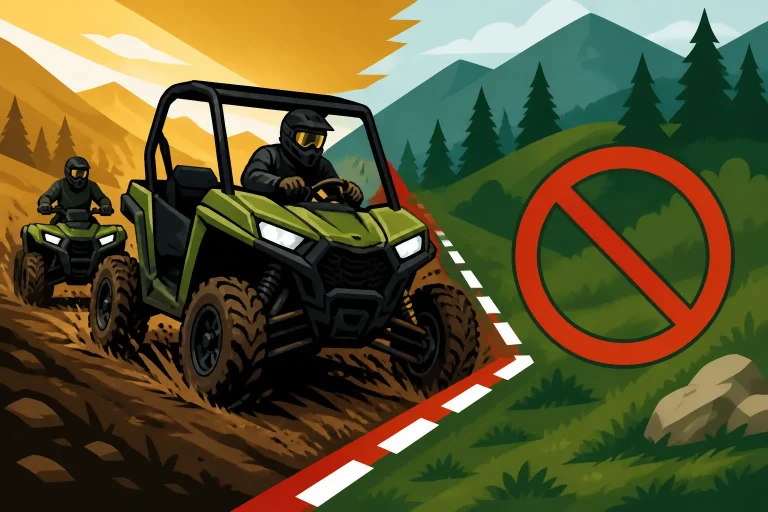
What one permit does not cover
Separate parks and trail networks
A permit for one managed network does not normally grant entry to a separate park just because it is close by, connected by local roads, or popular with the same riders. Each land manager can set its own access requirements.
For example, do not assume a Hatfield-McCoy permit covers Burning Rock or a trail network in Virginia. Check the destination’s official rules before you add it to the itinerary. For a trip involving Virginia, Spearhead Trails Versus Hatfield-McCoy Permits explains why riders should treat them as separate systems rather than presume one permit works for both.
Public land needs a separate check, too. A forest road may be open to certain motor vehicles while a nearby trail is closed to them, or a route may have seasonal or vehicle-specific restrictions. A Hatfield-McCoy permit should not be treated as permission to ride on any public land in the state. If you are considering forest routes, start with Permits for Riding Public Forest Roads and verify access with the land manager.
Roads, connectors, and town access
A trail permit is for the trail system it covers. It does not by itself make a machine street legal or authorize travel on every road between trail sections. Road riding has separate rules, and a town may allow some ATV or UTV use under local conditions while another does not.
That distinction matters when a map appears to show a short road connection. Check whether the route is an authorized trail connector or a public road, and confirm the rules for the exact section. West Virginia Rules for Riding Trail to Trail is a useful starting point for understanding the difference.
A permit also does not replace vehicle paperwork. Title, insurance, and road-use requirements depend on how and where you ride. For example, a machine used only on trails and one being operated on public roads can raise different questions. See [Do Out-of-State Riders Need a West Virginia Title?] for the title issue, and check road requirements separately if you plan to leave the trail.
Closures and restrictions
A valid permit does not guarantee that every trail is open on the day you arrive. Land access, maintenance, weather, and safety concerns can lead to temporary closures. Nor does a permit mean every machine can ride every route; width and other restrictions may apply.
Check current trail status before leaving home and again before riding. Look for the system’s official closure notices and follow signs, gates, and barriers at the trail. If your planned route includes a narrow section or a machine with a wider stance, review Wide Machine Restrictions on West Virginia Trails rather than assuming the permit grants access to all routes.
Does one permit cover every machine and rider?
A permit that covers access across a trail network should not be assumed to cover every vehicle in your group. Treat the permit as tied to the machine or machines specified by the issuing program, and confirm the exact requirement before buying. If you are taking two ATVs or UTVs, do not assume one sticker or permit covers both. Check West Virginia Trail Permits for a Second Machine for the multiple-machine question.
Passengers and drivers are another separate issue. The person riding as a passenger may not need a separate machine permit in the same way the vehicle does, but age, supervision, safety equipment, and passenger rules still apply. Verify the permit program’s current terms for your setup, and review Does a Passenger Need a West Virginia Trail Permit? rather than making a group-wide assumption.
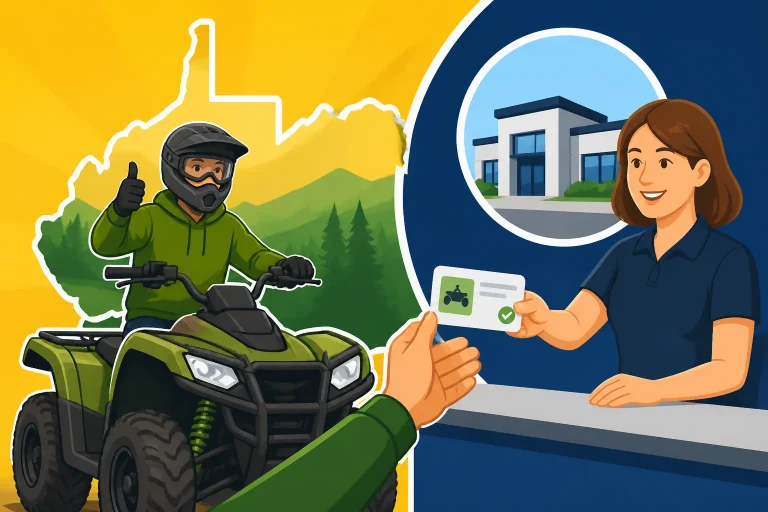
The same caution applies when a machine is rented or supplied as part of a lodging package. Some businesses may handle permit paperwork or bundle access with a rental, while others may leave it to the customer. Ask what is included, which specific machine the permit applies to, and whether you need to display a sticker or carry proof. Does a West Virginia Rental Include the Trail Permit? covers the questions to ask an outfitter.
A practical check before you pay is to write down:
- The exact trail network you intend to ride.
- The number of machines in your group.
- Whether any machine is rented.
- Whether your route includes a different park, public land, or road section.
- What proof of authorization must be displayed or carried.
Then compare those details with the current instructions from the permit issuer. If something is unclear, ask the issuer or the trailhead vendor before riding. Sorting it out at home is easier than discovering a gap in coverage after you have unloaded.
How to check coverage before a ride
Use the permit name and issuing organization, not just the word “trail pass,” to verify where it works. A seller, rental shop, or lodging host may use informal wording, but the official terms determine the covered network and conditions.
A reliable pre-ride routine looks like this:
- Identify the network. Confirm the official name of the trail system on your itinerary. If you are combining systems, check whether each belongs to the same network.
- Confirm the permit’s scope. Ask whether the permit grants access across the network or only to a particular park or location. Check its validity dates and any vehicle-specific conditions.
- Check every machine. Verify whether each ATV or UTV needs its own permit, including rented machines.
- Check the route. Confirm that connectors are authorized and that you are not relying on a trail permit for road access or entry to separate land.
- Check current status. Review closures and restrictions shortly before riding. A permit cannot authorize travel on a closed trail.
- Keep proof accessible. Follow instructions for displaying the permit or carrying documentation. A clear phone photo or paper copy can help you keep records, but it does not replace any required visible sticker.
If you like having a backup copy of your confirmation, save it offline on your phone or put a paper copy in a waterproof pouch. A small document sleeve from an outdoor retailer or Amazon can help protect paper from rain and mud, but the important part is that your proof matches the permit program’s instructions.
For out-of-state riders, do not assume a registration, sticker, or permit from home is accepted as a substitute. Reciprocity is specific to the network and the type of authorization involved. Confirm what applies to your machine and trip with the destination trail authority. Do Other States’ Registrations Work in West Virginia? addresses the registration question, but it does not turn a permit for one trail network into a pass for another.
The safest takeaway is simple: one permit may cover multiple systems within the same managed network, but it is not a statewide pass. Match the permit to the network, machine, and trip; then verify current closures and any separate road or land-access rules before you ride.
Disclaimer
This article is for general informational purposes only and does not constitute professional advice. Laws, prices and regulations vary by location and change over time. Consult a qualified professional for guidance on your specific situation.