Permits for Guided Trips in West Virginia
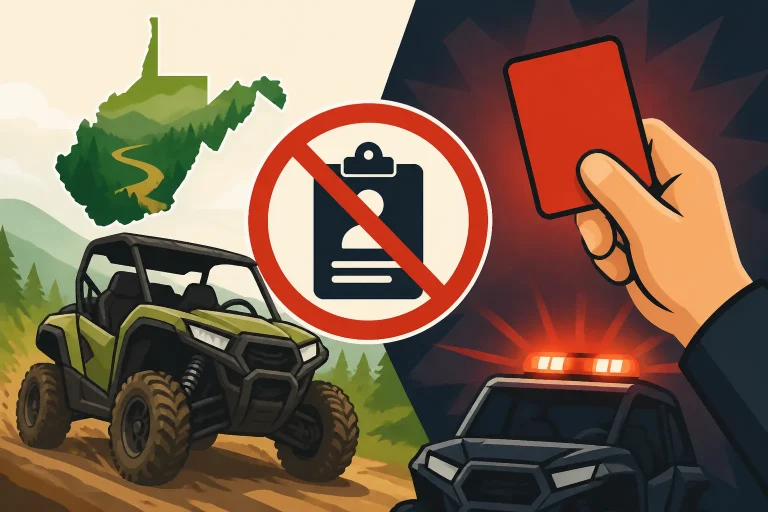
A guided ATV or UTV trip can make West Virginia’s trail network easier to navigate, but booking a guide does not automatically settle every permit question. Requirements depend on where you ride, what machine you use, and what the outfitter includes. Before paying a deposit, confirm which access permit is needed, whether it is included for each machine, and what rules still apply to your group.
Start with the riding area, not the tour package
“Guided trip” describes who leads the ride; it does not identify the land or trail system where you will ride. West Virginia has managed trail systems, private off-road parks, public land, and routes that connect with roads or pass near private property. Each can have different access terms. A permit accepted in one place should not be assumed to work somewhere else.
Ask the outfitter to name the exact trail system, park, or riding area included in the itinerary. If a trip visits more than one area, ask whether one permit covers the whole route or whether separate permissions are needed. Some guided tours stay within a single managed network; others may use different access arrangements. The distinction matters even if the machines and guide are the same.
Managed trail systems and separate parks
For trips on the Hatfield-McCoy Trails, riders generally need the trail authority’s permit for the machine being used. The permit is tied to trail access, not to the fact that the ride is guided. Start with West Virginia’s Hatfield-McCoy Trail Permit Explained to understand the purpose of the pass, then have the outfitter confirm how it handles permits for its particular tour.
Do not assume that an outfitter’s commercial authorization, guide credentials, or reservation includes every rider’s trail access. Those arrangements may allow a business to operate or lead trips, but they do not necessarily replace a customer’s individual machine permit. The practical question is simple: Will every machine in your booking have valid access for the trail system on the date of the ride, and who is responsible for arranging it?
A private off-road park may use its own admission or access process rather than a Hatfield-McCoy permit. The park’s rules can also differ on where machines may travel, what equipment is allowed, and whether a guide must accompany visitors. Confirm the park’s current terms with the operator or venue rather than relying on a permit from another system.
Public land and forest roads require their own careful checks. A tour operator may know which routes are available, but that does not mean all nearby roads or trails are open to ATVs and UTVs. Ask whether the planned route stays within an authorized riding area and whether any separate permission, vehicle qualification, or route restriction applies. A guide cannot make an unauthorized road or trail legal simply by leading the group onto it.
A permit is not a general riding license
A trail permit usually grants access under the rules of a particular riding system. It is not a blanket license to ride anywhere in West Virginia, and it does not automatically provide road-use authorization, insurance, or permission to cross private property. The limits are important when a route passes between trails, communities, or different land managers.
For a clearer picture of what access passes do not cover, read What a Trail Permit Does Not Cover. If the trip includes riding on public roads, ask the operator to explain which sections are authorized and what equipment or eligibility rules apply. Trail access and road legality are separate questions.
A permit also does not replace a driver’s license when one is required for a particular use, machine requirements, age rules, helmet and eye-protection requirements, or the operator’s safety briefing. The guide can help you follow the route, but riders remain responsible for obeying applicable rules and the tour provider’s instructions.
| Trip location or setup | What to confirm | Why it matters |
|---|---|---|
| Hatfield-McCoy Trails | Whether each machine has the required trail permit and who obtains it | A guided booking does not automatically establish that access is included |
| Private off-road park | The park’s admission or permit process and machine restrictions | A permit for another trail system may not be accepted |
| Public land or forest roads | Whether the planned route is open and what permissions or vehicle rules apply | Nearby roads and trails may have different access rules |
| More than one riding area | Whether separate permits or permissions are needed for each area | One pass may not cover the entire itinerary |
| Road sections | What route is authorized and what road-use requirements apply | Trail access does not itself authorize public-road riding |
What to ask before booking
The best time to sort out permits is before you pay a deposit. A clear answer should identify the riding area, the access document or fee involved, and whether the outfitter or customer handles it. If the answer is only “everything is included,” ask what that means for each machine and each person in your group.
A useful first question is: “What permit or access pass does this exact trip require?” Then follow up with questions about the number of machines, trip dates, and route. A guide may book several activities, but the access arrangement can differ by location and itinerary.
Confirm what “included” means
If the operator says the permit is included, ask whether that applies to every machine in your reservation, whether the permit is valid for the planned date, and whether you need to display a sticker or carry a document. Confirm whether the cost is already part of the booking or will be collected separately. Providers’ packages and current charges can change, so check the terms directly with the business.
For a rental, ask whether the permit is included with the machine or whether you must buy it separately. The answer may depend on the trail system and the rental package. The distinction is covered in Does a West Virginia Rental Include the Trail Permit?, but the rental shop should confirm the arrangement for your booking.
If you are bringing your own machine, do not assume a rental package’s permit arrangement applies to you. Ask whether the operator can arrange access for privately owned machines, whether you need to purchase a pass yourself, and what details they need from you. Some providers may require advance information to coordinate a group ride.
Ask who is responsible if plans change
A trip may be rescheduled, shortened, or moved because of weather, trail closures, mechanical problems, or other conditions. Find out how the outfitter handles permits if the date or route changes. Ask whether a permit can be transferred, whether the operator will help with a replacement, and what happens if the trail system is closed. Do not assume that a reservation refund also means a permit refund; those may be handled separately.
It is also sensible to check the trail system’s status before traveling, especially if your group has booked lodging or hauled machines a long distance. Ask where the operator posts closure updates and who will contact you if the route changes. If you are buying access directly, review the permit provider’s current terms rather than relying only on the tour’s cancellation policy.
Make sure the group details match the booking
A permit plan should match the actual trip. Tell the outfitter how many machines you expect to use, whether any machine has a passenger, and whether your group includes children or riders who are new to off-road driving. If you add a machine after booking, ask whether its access is covered before it joins the ride.
Do not treat a passenger as a separate permit question without checking the provider’s rules. Access requirements can be structured around machines, while passenger eligibility and safety requirements are separate. For example, the outfitter may need to know the number of machines even when the number of riders is higher. Confirm both the access arrangement and the passenger rules.
For organized club rides, charity outings, or large private groups, ask whether the organizer has arranged the necessary event permissions and whether each participant still needs an individual machine pass. Event arrangements do not necessarily replace the regular access requirements. The operator or trail authority should explain what applies to the particular event.
Safety and eligibility rules still apply
A permit does not confirm that every rider is eligible for every machine or route. Before booking, check age requirements, supervision rules, helmet and eye-protection requirements, passenger limits, and any restrictions set by the outfitter. These details matter especially when children, first-time riders, or passengers are part of the group.
West Virginia’s managed trails have safety requirements that may differ from rules for other kinds of riding. The operator should tell you what applies to the trip and what to bring. For background on the course requirement and the managed-trail question, see Who Needs the West Virginia Safety Course and Why Managed Trails Are Exempt From the Course. Confirm current requirements rather than assuming a course is always required or always waived.
Children and young riders
If a minor is riding or riding as a passenger, give the outfitter the child’s age and the machine they will use. Ask whether the child may operate that size and type of machine, whether direct adult supervision is required, and whether the route is appropriate for their experience. The provider’s minimum booking age may be more restrictive than the minimum allowed under a general rule.
A child who meets a minimum age requirement may still be too small or inexperienced for a particular machine or trail. A guided group can move at the pace of the route, not necessarily at the pace that is safest for a new rider. Ask whether the trip offers a suitable machine, a family-appropriate route, and a plan for a rider who needs to stop.
For a passenger, confirm that the machine is designed to carry one and that the operator allows a passenger of that age and size. A child should not be placed on a single-rider ATV simply because a guide is present. The tour company’s passenger policy and the machine manufacturer’s requirements both matter.
Protective gear and ride briefing
Ask what protective equipment is supplied and what you must bring. Even when a rental includes a helmet, you may need to bring properly fitting eye protection or other gear. Confirm whether the equipment is appropriate for each rider, including children. If you prefer your own helmet or goggles, ask whether the operator allows them and whether they must meet a particular standard.
Before departure, expect the guide or outfitter to explain the route, hand signals or group procedures, riding distances, stopping points, and what to do if someone becomes separated or has a mechanical problem. Listen closely and ask questions before the group moves. A permit gives access under a set of rules; it does not substitute for knowing how the trip is managed.
The operator should also explain the consequences of leaving the marked route. Riders should stay within the authorized area and follow signs, gates, and guide instructions. Straying off a permitted trail can create safety risks and may result in loss of access or other consequences. Review Staying on Marked Trails in West Virginia for the broader access principle.
Insurance and damage responsibility
Permit access is not insurance. Ask whether the outfitter’s booking includes any protection for injury or damage, what the rental agreement makes you responsible for, and whether your own policy applies to the activity. If you are using a personal machine, ask your insurer what coverage applies to off-road use and to the specific trip. Do not assume that auto insurance or a credit card benefit covers an ATV or UTV ride.
For rented machines, read the agreement before signing. Ask about damage, recovery, towing, and what happens if a machine becomes stuck or breaks down. These costs and responsibilities are separate from the trail permit. The operator should explain the contract, but it is your responsibility to understand the terms before accepting the machine.
Out-of-state riders and permit reciprocity
Visitors often wonder whether a registration, permit, or safety card from their home state is enough. The answer depends on what the document is for. A home-state title or registration may establish ownership or registration status, but it does not automatically provide access to a West Virginia managed trail system. Similarly, a safety certificate and a trail permit serve different purposes.
If you are traveling from another state, tell the outfitter where your machine is registered and whether you are bringing your own ATV or UTV. Ask whether the trail system requires its own access permit regardless of out-of-state registration. For the distinction between out-of-state documents and West Virginia trail access, see Out-of-State Riders on West Virginia Trails and Do Other States’ Registrations Work in West Virginia?.
Your machine’s paperwork is separate from trail access
A guide service may ask for information about your machine, such as its type or identifying details, to confirm it is suitable for the route or to complete the provider’s process. That does not mean the trail permit replaces ownership paperwork. Keep your documents secure and ask what you should carry while riding. Avoid handing over original documents unless the provider has a clear reason and you understand how they will be handled.
Do not assume an out-of-state plate makes a machine eligible for every road connection or public route. If the trip includes a road section, ask what legal status and equipment the machine must have for that specific section. The requirements for riding a managed trail and traveling on a public road are not interchangeable.
A visitor should also distinguish between riding under an outfitter’s arrangement and independently riding after the tour. A permit or permission arranged for a guided itinerary may not authorize unrelated riding later, or access to a different trail system. Check the permit terms and route limits before using the machine outside the guided trip.
Reciprocity does not mean universal access
“Reciprocity” can refer to one authority accepting another jurisdiction’s documents, but it should not be treated as a general promise that every out-of-state permit works in West Virginia. A state registration, safety course card, or trail pass may be recognized for one purpose and irrelevant for another.
Ask the trail authority or outfitter a specific question instead of asking only whether your paperwork “works.” For example: “Does this document satisfy the access requirement for this trail system?” or “Do I still need the local trail permit for this machine?” Specific questions reduce the chance of confusing vehicle paperwork with trail access.
If a tour operator tells you that no additional permit is needed because of an out-of-state registration, ask which rule or trail policy that conclusion is based on. Get the answer in writing if it affects the cost or eligibility of your booking. If the explanation remains unclear, confirm directly with the managing trail authority before you travel.
A practical checklist for guided-trip bookings
A short written checklist can prevent last-minute surprises. Keep the outfitter’s answers with your reservation details, especially if the trip involves multiple machines, children, a rental, or more than one riding area.
- Name the riding area. Confirm the exact trail system, park, or land manager for the planned route.
- Identify every access requirement. Ask whether a trail permit, admission pass, event permission, or other authorization applies.
- Confirm coverage by machine. Ask who obtains access for each machine and whether your own machine is treated differently from a rental.
- Check the current terms. Confirm how the permit is displayed or carried, whether it is date-specific, and whether charges are included or separate.
- Verify group eligibility. Tell the operator the ages of riders and passengers, their experience levels, and the number of machines.
- Ask about safety gear and briefing. Find out what is supplied, what you must bring, and what rules apply to helmets, eye protection, passengers, and children.
- Clarify route and road sections. Ask whether the trip includes public roads or multiple areas, and what additional requirements apply.
- Review cancellation and closure terms. Ask what happens to the tour and permit if the date changes or the trail closes.
- Check insurance and liability. Understand what the booking covers and what the rider or machine owner remains responsible for.
- Reconfirm before departure. Check the operator’s instructions and current trail status shortly before leaving.
If the operator is clear and specific about these points, you can make a more informed booking and arrive prepared. If the response is vague, especially about which trail system the trip uses or whether machine permits are included, pause before paying. A few direct questions are easier to resolve before the ride than at a trailhead.
For more detailed planning, Guided ATV Tours in West Virginia can help you think through the tour format, while Questions to Ask a West Virginia Rental Shop is useful when the trip includes a rental. For a general view of permits and rider obligations, also review Trail Rules Every West Virginia Rider Signs Up To.
Frequently Asked Questions
Does a guided West Virginia ATV trip include the trail permit?
Not automatically. Some providers may include access in a package, while others require customers to arrange or pay for it separately. Ask whether every machine in your booking has valid access for the exact riding area and date.
Can an out-of-state trail permit replace a West Virginia permit?
Do not assume so. Out-of-state registration, safety documents, and trail access permits serve different purposes. Confirm directly with the trail authority or outfitter whether your specific document is accepted for the specific trip.
Does a guide make it legal to ride outside marked trails?
No. A guide does not turn an unauthorized route into an authorized one. Stay on the permitted route, follow signs and closures, and ask the operator to clarify any route boundary before the ride begins.
Should I bring my own helmet and eye protection?
Ask the outfitter what it supplies and what standards or fit requirements apply. If you plan to use your own equipment, confirm it is acceptable and suitable for the machine and riding conditions.
Disclaimer
This article is for general informational purposes only and does not constitute professional advice. Laws, prices and regulations vary by location and change over time. Consult a qualified professional for guidance on your specific situation.