Helmet Requirements on West Virginia Trails
Helmet Requirements on West Virginia Trails
A helmet can be legally required even when you are riding off-road, and a trail operator may set stricter rules than the state’s minimum. The practical challenge is knowing which standard applies to adults, young riders and passengers—and choosing gear that fits and works with eye protection. Here’s how to check the rules before you unload.
When a Helmet Is Required on West Virginia Trails
West Virginia’s rules for ATV and UTV helmet use depend on factors such as the rider’s age, where the machine is operated and the rules of the trail system or property owner. A trail ride is not automatically exempt from helmet requirements just because it is off a public road.
For young riders, helmet use is a legal requirement in many situations, and a managed trail system can also require helmets for everyone, including adults. Those are separate requirements: state law sets a legal baseline, while a trail operator may impose rules riders must follow to access its trails. The operator’s current rules can be stricter than the minimum state law.
Before setting out, check the rules for the specific place you plan to ride. This matters if your trip includes more than one trail network, a private off-road park or a connector road. Requirements can differ between locations, and an adult who is not covered by a particular age-based state requirement may still have to wear a helmet under trail rules.
| Situation | What to check | Practical approach |
|---|---|---|
| Rider under 18 | Applicable West Virginia requirements and the trail system’s rules | Plan for a compliant helmet and eye protection |
| Adult on a managed trail | The operator’s current rider rules | Do not assume adults are exempt from trail requirements |
| Passenger | Rules for the rider’s age, passenger eligibility and trail access | Confirm the passenger can ride legally and has properly fitting gear |
| Private park or other property | The owner’s or operator’s rules, along with applicable law | Ask before riding; rules can vary by property |
| Ride involving a road connector | Road-use requirements as well as trail rules | Check the rules for both parts of the route |
The Helmet and Eye Protection Rules in West Virginia can help explain how helmet requirements fit into the broader riding rules. For a trip on a managed trail system, also read the operator’s own rules rather than relying on a general summary of state requirements.
Hatfield-McCoy riders should check the current trail rules before the trip and plan to have a helmet for every rider and passenger. Other systems may set their own access conditions. If you are unsure whether a helmet is mandatory for a particular adult rider, contact the trail operator instead of making the decision based on what other riders happen to be wearing.
A helmet requirement is not the only age-related rule to check. Young riders may also be subject to supervision, machine-size or passenger restrictions. Review West Virginia Age Rules on the Trails and Manufacturer Age and Size Requirements before deciding that a particular ATV or UTV is suitable for a child.
What Kind of Helmet to Bring
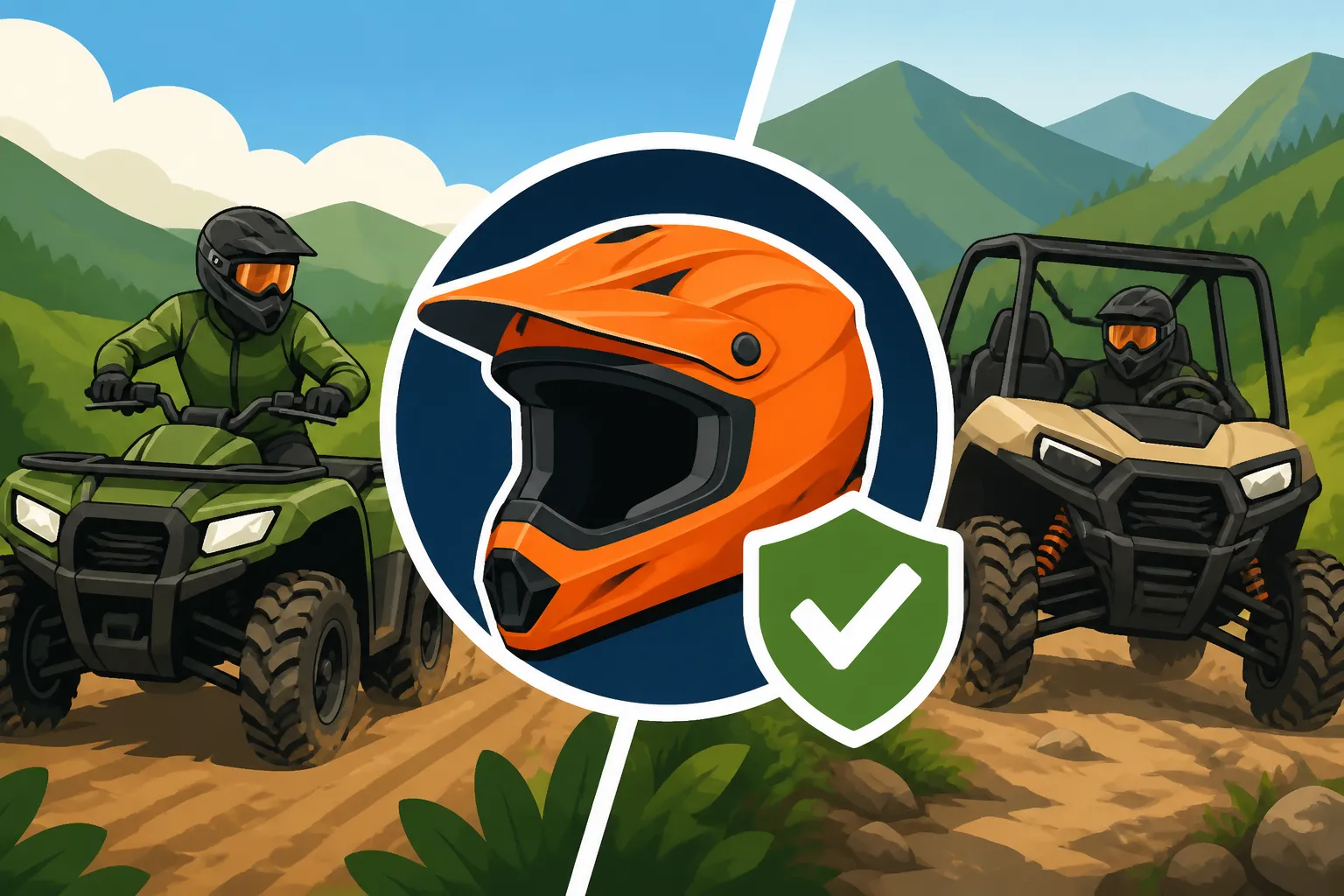
A helmet that satisfies a legal or trail-system rule is not necessarily the same thing as any helmet that covers the head. For a road-certified motorcycle-style helmet, riders commonly look for a label showing compliance with the applicable U.S. Department of Transportation motorcycle helmet standard. A novelty helmet, bicycle helmet or shell with no verifiable certification may not meet the rule that applies to the ride.
Read the requirements for your location carefully. A trail operator may specify an approved helmet type or certification. If the rule does not explain what qualifies, ask the operator before riding. Do not rely on a seller’s informal description, a decorative sticker or the helmet’s appearance as proof of compliance. Certification markings should be attached and presented as required by the applicable standard, and the helmet should come from a reputable source.
The choice between a full-face and open-face helmet is another practical consideration. A full-face design covers more of the head and face, which can be useful on a route with dust, branches, rocks or flying debris. An open-face helmet can feel more ventilated but leaves more of the face exposed, so it needs suitable eye and face protection. Neither design makes it safe to skip protective eyewear.
A snug, stable fit matters as much as the label. A helmet should sit level, feel secure and stay in place when the chin strap is fastened. It should not wobble freely or press painfully on one spot. Follow the manufacturer’s fitting instructions, and try it on with any eyewear you expect to use. Goggles that fit poorly around a helmet can leave a gap for dust or make it difficult to see clearly.
When buying a helmet, use this checklist:
- Confirm the applicable rule. Check the requirements for the trail, the rider’s age and the type of ride.
- Inspect the certification information. Look for the required label or documentation, not just a seller’s claim.
- Choose a size by fit. Measure and fit the helmet according to the manufacturer’s directions.
- Check the retention system. The chin strap should fasten securely and keep the helmet stable.
- Try it with goggles or glasses. Make sure the eyewear fits comfortably and does not interfere with the helmet.
- Inspect the condition. Avoid a helmet with cracks, damaged straps, missing parts or a history you cannot verify.
A low-cost helmet is not a bargain if it is the wrong size, lacks the required certification or has been damaged. If shopping online, including through Amazon, check the exact model and manufacturer information, and inspect the helmet when it arrives. A product listing alone is not a reliable substitute for verifying the certification and fit.
For a closer look at standards and labels, see DOT Versus Snell Helmet Approval. Those terms can help you compare helmets, but the important question for compliance is whether the helmet meets the requirement that applies to your ride.
Eye Protection, Fit and Passenger Gear
A helmet and eye protection solve different problems. The helmet protects the head; goggles or another suitable eye-protection option helps shield the eyes from dust, mud, insects, branches and debris. A helmet does not automatically provide eye protection, especially if it is open-face or has no properly fitted shield.
Check whether the trail system specifies a particular kind of eye protection. A rule may distinguish between goggles, a face shield or other protective eyewear, and an option that works for one rider may not suit another. The Eye Protection Requirements on West Virginia Trails and Goggles Versus a Face Shield on the Trail cover the choices in more detail.
Fit is important because poorly fitting eyewear can fog, shift or leave the eyes exposed. Try the goggles with the helmet you intend to wear. The strap should sit securely around the helmet, and the frame should seal comfortably without creating painful pressure. If you wear prescription glasses, check whether the goggles fit over them or whether you need a different approved option.
Passengers need their own appropriate equipment. They should not be expected to borrow a helmet that is too large, too small or damaged. A child’s helmet should fit that child, not simply be the smallest adult size available. Check the helmet manufacturer’s sizing guidance and confirm that the rider or passenger can keep it secured while seated and moving.
Also check whether the machine is designed to carry a passenger and whether the passenger meets the applicable age and seating requirements. A helmet does not make an otherwise ineligible passenger ride permissible. For children in particular, review Do Passengers Need Eye Protection? and the relevant age and supervision rules before departure.
Before riding, check each person’s gear rather than checking only the driver’s. A quick pre-ride review can catch a loose strap, missing goggles or a helmet that has shifted out of position. On a group ride, make sure passengers understand how to secure their gear and tell the driver if something moves or becomes uncomfortable.
Choosing and Maintaining a Helmet for Trail Riding
Trail conditions can be hard on riding equipment. Dust, water, mud, branches and repeated handling can damage a helmet or interfere with its fit. Take a moment to inspect each helmet before a ride, especially if it has been stored for a long period or has been shared among family members.
Look for cracks, dents, loose parts, damaged padding, worn straps or a buckle that does not close correctly. Do not assume that a helmet is safe because the outside looks clean. Follow the manufacturer’s care and inspection guidance, and replace a helmet after an impact if the manufacturer says it should be replaced. Some impact damage can be difficult to see from the outside.
Use manufacturer guidance for storage and cleaning. High heat, harsh cleaners or solvents can damage materials or affect a helmet’s protective components. Store helmets where they will not be crushed, dropped or left in conditions the manufacturer advises against. Do not hang a helmet by a strap if that could stretch or damage the retention system.
Keep the following points in mind:
- A shared helmet must fit the person wearing it. Adjust the fit for each rider and check the strap every time.
- A helmet with an unknown history deserves caution. If you cannot tell whether it has been in a crash or suffered damage, replacing it is safer than guessing.
- A loose chin strap is not a secure fit. Fasten and adjust it according to the manufacturer’s directions.
- A visor does not replace eye protection. Confirm that the eyewear or shield meets the ride’s requirements.
- A damaged helmet should not be patched for continued use. Follow the manufacturer’s replacement instructions.
Comfort is relevant because riders are more likely to keep properly fitted gear on. If a helmet is too hot, unstable or painful, address the fit and ventilation before riding. Do not remove or modify protective parts to make a helmet more comfortable unless the manufacturer allows it. A proper fit should feel secure without causing sharp or concentrated pressure.
For families, helmets are worth checking at the start of each riding season and whenever a child has outgrown a size. Children can grow quickly, and a helmet that fitted last season may now be too tight or sit incorrectly. Have the child try it on with the same goggles they will use on the trail.
A Pre-Ride Check for West Virginia Riders
A short check before departure can prevent a helmet problem from turning into a denied trail entry or an unsafe ride. Start with the trail system, not the gear: confirm where you are riding, review the current rules and identify whether the route includes public-road sections or another property with separate requirements.
Then check every rider and passenger. Make sure each person has a helmet that meets the applicable rule, fits securely and is in good condition. Confirm that required eye protection is available and works with the helmet. If any rider is a minor, check the relevant age, supervision and machine requirements as well.
Use this simple sequence:
- Identify the riding area. Confirm the trail system, park or property where you will operate.
- Read current rules. Check the operator’s requirements and applicable state rules, especially if your route crosses between areas.
- Check every rider’s eligibility. Review age, supervision, passenger and machine-size restrictions.
- Fit each helmet. Confirm that it is the right size, stable and fastened correctly.
- Pair helmet and eye protection. Check that goggles or a face shield fit securely and provide the protection required.
- Inspect the gear. Look for damage, missing parts, worn straps or a helmet with an uncertain history.
- Keep a backup plan. If a rider’s helmet fails inspection or does not meet the rules, do not ride until you have a suitable replacement.
A helmet question can also be a sign that other rules need checking. Riders planning a road connector should review Helmet Requirements on West Virginia Trails alongside road-use rules, because trail access and public-road operation can have different conditions. Riders who need a broader overview of equipment should see Helmet and Eye Protection Rules in West Virginia.
Do not assume that a registration, permit, safety card or trail pass replaces protective gear. Those documents address different requirements. Check West Virginia’s Hatfield-McCoy Trail Permit Explained for permit basics, and verify the helmet and eyewear rules separately with the trail operator.
If a rule is unclear, ask the organization that controls access before traveling. That is more reliable than a forum comment or a guess based on another rider’s setup. Keep the answer with your trip notes, especially if a group includes children, passengers or machines used on more than one trail system.
Frequently Asked Questions
Do adults have to wear helmets on West Virginia trails?
It depends on the location and its current rules. State requirements may depend on the rider’s age and circumstances, while a managed trail system can require helmets for adults as well. Check the rules for the specific trail before riding.
Does a UTV passenger need a helmet?
A passenger should expect to need a helmet if required by state law or the trail operator. Confirm the passenger’s age eligibility and the machine’s passenger capacity, and provide a helmet that fits that person.
Is a DOT label enough for every West Virginia trail?
Not necessarily. Check the specific trail system’s requirements and confirm that the helmet meets the applicable standard. Do not assume that an unfamiliar label or a seller’s description is sufficient.
Can I use a face shield instead of goggles?
That depends on the rules and whether the shield meets the eye-protection requirement. Check the operator’s policy, make sure the shield works with the helmet and keep it in good condition.
Can I ride if my helmet is damaged?
Do not ride with a cracked, damaged or poorly fitting helmet. Follow the manufacturer’s instructions after an impact, and replace the helmet if its history or condition is uncertain.
Disclaimer
This article is for general informational purposes only and does not constitute professional advice. Laws, prices and regulations vary by location and change over time. Consult a qualified professional for guidance on your specific situation.