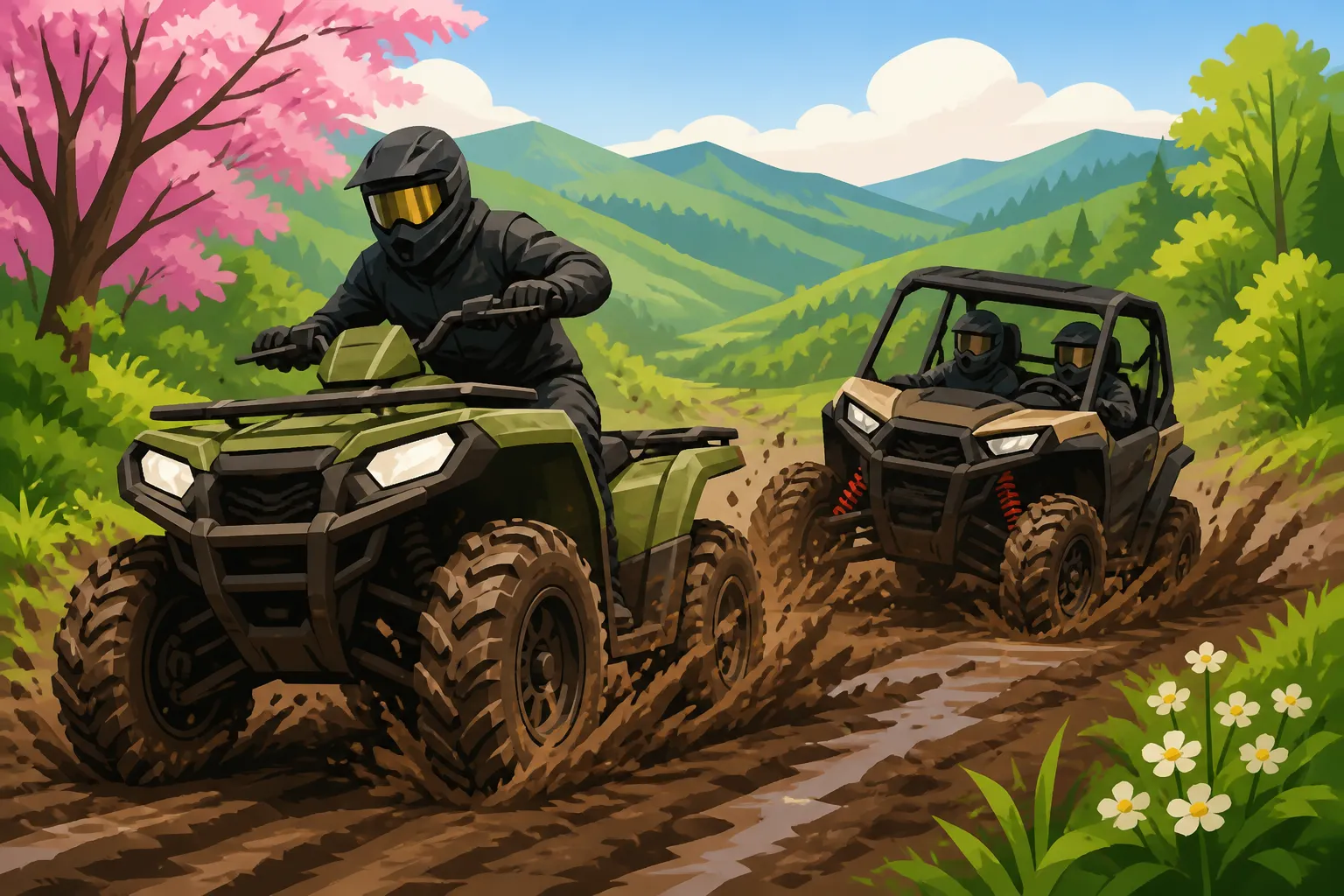
Spring Mud on Southern West Virginia Trails
Spring mud can turn a familiar Southern West Virginia trail into a slow, slippery ride with deep ruts, hidden rocks, and creek crossings that look easier than they are. The safest approach is to check conditions before leaving, choose routes that match your machine and experience, and be willing to turn around. This guide covers how to prepare, ride responsibly, and adjust when the ground gets soft.
What spring mud is like on Southern West Virginia trails
Why conditions can change so quickly
Spring riding conditions are rarely uniform across an entire trail system. A sunny stretch may dry out while a shaded hollow stays wet, and a ridge can feel entirely different from a low section near a creek. Rainfall, drainage, shade, traffic, and the trail’s surface all affect how much traction you have. Even a route that felt manageable earlier in the day can become more difficult after another shower.
That variability matters on systems such as Rockhouse, Buffalo Mountain, Bearwallow, and Pinnacle Creek. Their terrain includes slopes, turns, and changing elevations, so a short muddy stretch can affect more than your speed: it can change how you approach a climb, where you can stop safely, and whether you have enough room to turn around. Conditions can also differ between nearby trail sections, so a report from one location does not necessarily describe the whole system.
Check for recent updates before you drive, then keep checking while planning your route. [West Virginia Trail Conditions After Rain] offers more context on how wet weather can affect a ride, while [Checking West Virginia Trail Status Before You Drive] is a useful reminder to confirm access information rather than rely on an old trip plan. For general route context, [Hatfield-McCoy Trailheads and Where to Start] can help you think through where to begin and how to plan around a trailhead.
What mud, ruts, and water can hide
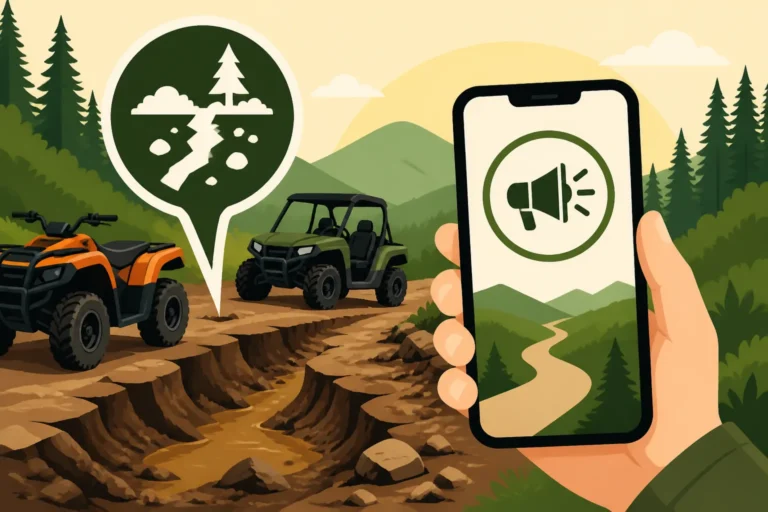
Mud changes the shape of the ground beneath your tires. A shallow-looking rut may be deeper than it appears, especially when water or soft soil hides its edges. Loose rocks can shift under a tire, and a slick slope may offer less grip than the same slope on dry ground. Treat dark, churned-up patches with caution rather than assuming they are simply wet versions of familiar terrain.
Creek crossings deserve special care. Water can obscure the surface, making it difficult to judge depth, traction, or the condition of the exit bank. A crossing that looks passable from the seat may have a soft approach, a slippery rock bed, or a steep bank on the far side. If you cannot see a safe line and a clear way out, do not let the group’s momentum make the decision for you.
Mud, rocks, and water can also make trail markings harder to notice. Slow down near bends, junctions, and places where runoff crosses the route. [Mud, Rock and Creek Crossings on West Virginia Trails] is relevant when you are weighing these obstacles, and [West Virginia Trail Difficulty and How It Is Marked] can help riders understand why choosing a route by its rating is only part of the planning process. A marked rating is not a promise that conditions will stay the same after rain.
Prepare your machine and your group
Check the vehicle before you leave
A spring ride puts extra demands on the tires, brakes, steering, and drivetrain. Before loading up, inspect tire condition and pressure according to the machine manufacturer’s guidance. Check that the brakes feel normal, the steering responds as expected, and the throttle returns properly. Look for loose parts or damage that could become a bigger problem once the machine is covered in mud or working through uneven terrain.
Pack basic recovery and repair supplies that suit your vehicle and experience. A tow strap, gloves, a small first-aid kit, drinking water, and a way to communicate can be useful, but gear only helps if you know how to use it safely. Avoid improvised recoveries that put someone in the path of a moving machine or stretch a strap around an unsafe attachment point. If you are unsure how to recover a stuck ATV or UTV, waiting for qualified help is safer than creating a second emergency.
Clean mud from the machine after the ride, paying attention to areas where buildup can hide damage or interfere with moving parts. Do not assume that a quick rinse is enough if mud has packed around the brakes, radiator, or other components. Follow the manufacturer’s cleaning and maintenance instructions, and arrange service if anything feels or sounds wrong after the ride.
Set expectations before the first muddy section
Agree on a simple group plan before setting off. Decide who will lead, who will ride at the back, how you will regroup after junctions, and what everyone should do if the group gets separated. Make sure each rider knows the route plan and has a way to contact the others. In a group, the least experienced rider’s comfort and the most capable machine do not automatically set the right pace for everyone.
Think through the machine’s size and clearance when choosing a route. A wide side-by-side may have fewer comfortable options than a smaller ATV on a narrow or rutted section. A passenger changes how the vehicle handles and how much room you need to maneuver. If the route looks beyond your group’s ability, turning back early is a sound decision—not a failure to finish the ride.
Carry a paper map or another offline navigation option in case your phone loses service or battery. onX Offroad can help you review mapped routes and orient yourself, but a mapping app should not replace trail signs, current closure information, or judgment on the ground. Download or prepare what you need before you reach the trailhead, and avoid assuming a digital route line proves that a route is open or suitable today. [What to Carry on a Remote West Virginia Ride] can help you build a practical packing list.
| Before the ride | Why it matters in spring | What to do |
|---|---|---|
| Check trail status | Closures and conditions may change after wet weather | Review current system updates before departure |
| Inspect the machine | Mud and uneven ground can expose existing problems | Check tires, brakes, steering, and visible components |
| Plan the route | Wet sections may take longer or require turning back | Choose a route that fits the group’s skill and machine size |
| Prepare navigation | Service and battery life may be unreliable | Carry a backup map and prepare digital maps in advance |
| Agree on group roles | Riders may spread out or encounter different obstacles | Set a leader, a sweep rider, and regrouping points |
| Pack for delays | A short ride can become a long one if a machine gets stuck | Bring water, basic supplies, and communication options |
Ride carefully when the trail is wet
Use steady inputs and leave room to stop
Reduce speed before a muddy turn, slope, or crossing rather than waiting until you are already in it. Smooth throttle, braking, and steering make it easier to respond if a tire slips. Sudden acceleration can spin tires and deepen ruts; abrupt braking or sharp steering can unsettle the machine on a slick surface. Leave more space than usual between riders so the person ahead can slow, stop, or change direction without being crowded.
Look ahead for a safe line, but do not treat another rider’s tracks as proof that the same path is suitable for your machine. The first vehicle may have changed the surface, and the track may lead into a deeper rut or a difficult exit. If you are not confident about the line, stop somewhere safe and assess it before proceeding. Do not stop in a place where another rider could come around a blind bend and meet you unexpectedly.
On climbs and descents, choose a route only if you have room to maintain control and stop safely. A muddy incline can be hard to climb and just as challenging to descend, especially if the surface is rutted. If you lose traction, avoid a rushed attempt to power through. Make sure the group is clear, reassess the route, and use a safe alternative if one is available. [West Virginia Trail Etiquette on Shared Routes] is worth reviewing when several groups are using the same trail.
Turn around before a small problem becomes a big one
A safe turn-around point is part of a good route plan. If the trail becomes more technical than expected, water is rising, visibility is poor, or a machine is struggling, pause and talk through your options. Do not let sunk time, a planned lunch stop, or pressure from the group persuade someone to take a line they do not feel comfortable riding.
If a vehicle gets stuck, first check that everyone is safe and that the machine is stable. Keep bystanders away from the tires, tow strap, and likely recovery path. Avoid standing downhill of a vehicle on a slope or placing hands near moving parts. If the recovery looks uncertain, the machine is in an unstable position, or the group lacks appropriate equipment, contact qualified assistance rather than improvising.
A phone map can help you understand where you are, but it cannot assess the ground under the tires. onX Offroad may be useful for checking your position against a saved route, especially if you prepared the map before service became unreliable. Still, follow posted signs and current access guidance first. [Trail Closures on West Virginia's Trail System] is a useful topic to keep in mind: a route that appears on a map may not be available for riding at the moment.
Protect the trails and finish the day safely
Avoid making trail damage worse
It is tempting to power through a soft section, but spinning tires can dig deeper ruts and make the route harder for the next rider. If a section is too muddy to cross without excessive wheel spin or damage, turn around or take an authorized alternative route. Do not create a bypass around a muddy spot. Riding around the trail edge can widen the route, damage vegetation, and lead riders onto land or paths that are not open to them.
Stay on marked routes and respect gates, barriers, and closure notices. Do not assume a closed section is safe to use just because you see tracks through it. Closures may protect a damaged surface, address a safety problem, or reflect access changes that are not obvious from the trail. [West Virginia Trail Etiquette on Shared Routes] also applies to the land and trail itself: slowing down, staying in bounds, and avoiding unnecessary wheel spin help preserve access for others.
Be considerate of riders who are moving slowly through difficult sections. Give people space to finish an obstacle, communicate calmly at a safe stopping point, and avoid crowding a machine that is being recovered. If you see a hazard or damage, note the location as accurately as you can and report it through the appropriate trail authority or system channel.
Clean up, check in, and learn from the ride
Before leaving the trail area, make sure your group is together and all machines are accounted for. Check for loose gear, damage, or warning signs that appeared during the ride. If someone is shaken or tired, take time to regroup rather than rushing straight into the drive home. Mud can make it easy to overlook a minor issue until the vehicle is back on pavement or being loaded.
Afterward, clean the machine carefully and inspect it again when the mud is gone. Note which sections were manageable and where the group had to slow down or turn back. That record can make the next outing more realistic: you may choose a shorter route, bring different recovery gear, or set an earlier turnaround time. Keep the lesson practical rather than treating a difficult ride as a reason to push harder next time.
For future trips, check the route information again instead of assuming last week’s conditions still apply. onX Offroad can be one part of your route-planning setup, alongside current trail updates and on-site signs. A successful spring ride is not measured by how much mud you crossed. It is measured by whether everyone returned safely, respected the trail, and still wants to ride again.
Disclaimer
This article is for general informational purposes only and does not constitute professional advice. Laws, prices and regulations vary by location and change over time. Consult a qualified professional for guidance on your specific situation.