West Virginia Trail Rangers and What They Check
West Virginia trail rangers help keep managed off-road systems safe and open, but a stop can still catch riders off guard. Knowing what they may check—from your machine’s trail permit to helmets, age rules and where you ride—makes it easier to prepare and avoid preventable problems on the trail.
What trail rangers may check
A ranger’s first concern is usually whether you and your machine are allowed on that trail system. On the Hatfield-McCoy Trails, that commonly means checking for a valid trail permit displayed on the machine and confirming that you are using the system according to its rules. A permit for one machine does not automatically cover every machine in your group, so check the permit conditions before setting out.
Keep the permit visible and securely attached as directed. A sticker tucked in a storage compartment may be hard for a ranger to verify, and one that peels off or becomes covered in mud can create an avoidable delay. If you are unsure where the sticker belongs, see Mounting a Hatfield-McCoy Permit Sticker. Keep any receipt or digital confirmation available as a backup, but do not assume it substitutes for a required visible permit.
Rangers may also look at the machine itself: whether it is the type allowed on the route, whether it fits applicable width limits, and whether you are following posted trail restrictions. Some routes have limits that can exclude wider side-by-sides or restrict certain vehicle types. Don’t rely on the fact that a machine fits on one trail as proof it fits every trail in the system. Review Wide Machine Restrictions on West Virginia Trails and the posted information at the trailhead before choosing a route.
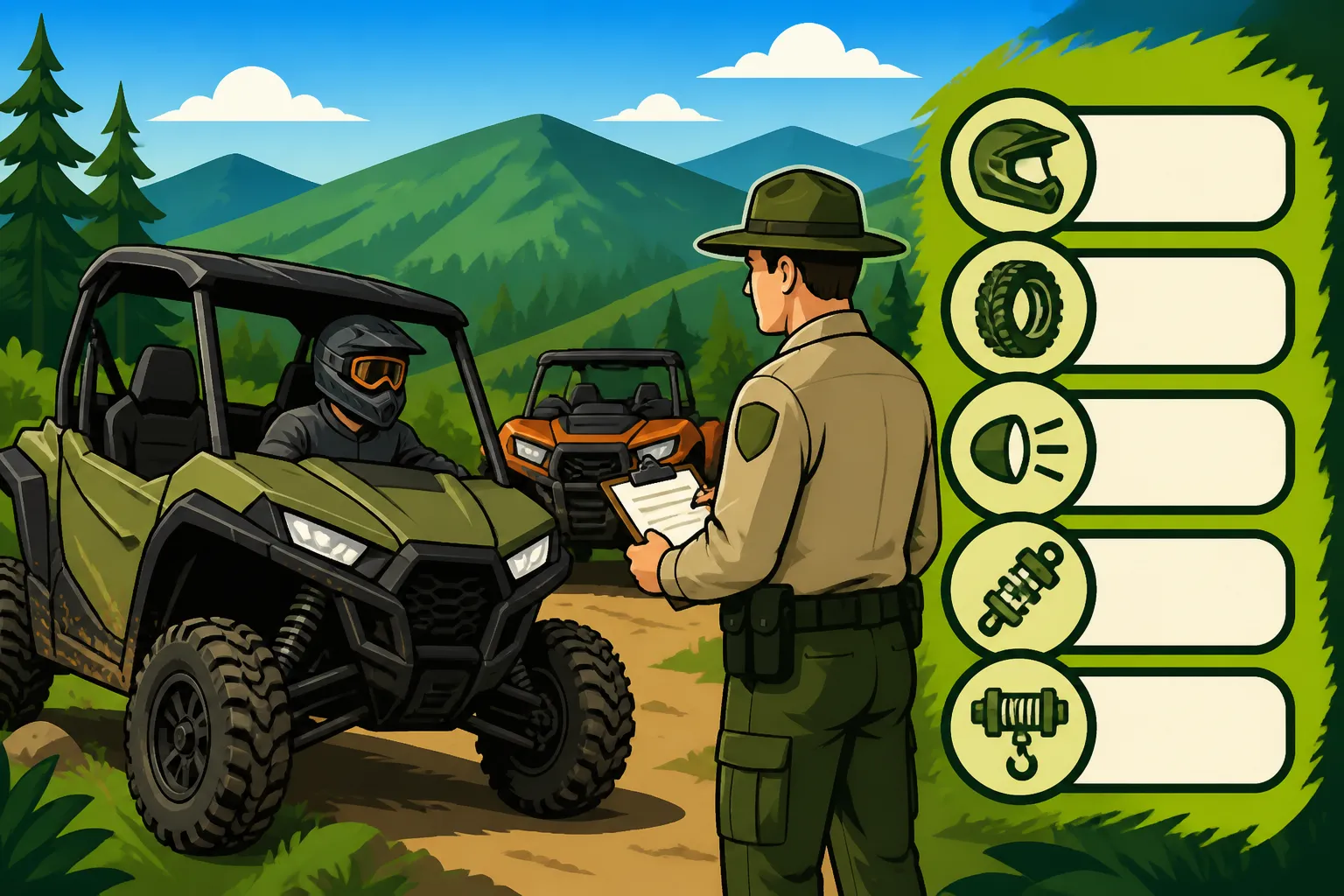
A stop may involve a quick check of safety equipment or rider eligibility, too. The details can depend on the rider’s age, the machine and the particular trail rules in effect. A ranger may ask about helmets, eye protection, supervision of young riders or completion of a safety course when those requirements apply. The safest approach is to prepare for the rules that apply to your entire group, not just the driver.
| What may be checked | What to do before you ride |
|---|---|
| Trail permit | Buy the required permit for each machine and display it as instructed |
| Machine eligibility | Check width, vehicle-type limits and trail-specific restrictions |
| Helmet and eye protection | Make sure each rider has equipment that meets applicable rules |
| Age and supervision | Confirm the rules for the youngest rider and who must supervise |
| Trail choice | Use open, marked routes that match your machine and skill level |
| Conduct | Stay in control, follow signs and avoid alcohol while riding |
| Road connectors | Know when you are leaving a trail and entering a public road |
A trail ranger’s inspection is not necessarily a full mechanical inspection. Still, a machine with unsafe equipment, a leaking fluid, a damaged tire or a nonfunctioning light can make a ride riskier and may cause trouble if it violates a specific rule. A quick pre-ride check is sensible even when you expect a short trip. For permit details and the broader rules riders agree to follow, read West Virginia’s Hatfield-McCoy Trail Permit Explained and Trail Rules Every West Virginia Rider Signs Up To.
Permits, safety requirements and rider eligibility
A trail permit is permission to use a managed trail system under its conditions. It is not the same as a vehicle title, road registration, insurance policy or general permission to ride anywhere in West Virginia. Confusing those documents can leave a rider prepared for the wrong thing.
Before leaving home, check the official trail-system information for current permit requirements, purchase options and sticker instructions. Rules can differ between managed systems, and the requirements for a public road or another riding area may be different from those for Hatfield-McCoy. The overview in Permits West Virginia Riders Actually Need can help separate trail access from other paperwork.
Rangers may check permits for the machines in a group, so make sure every ATV or UTV has the required authorization. A passenger does not generally operate a separate machine, but whether a passenger needs anything beyond the driver’s permit depends on the system’s rules. Review Does a Passenger Need a West Virginia Trail Permit? rather than assuming that a group purchase covers every person or vehicle.
Rider age matters, particularly when children are along. West Virginia has age-related safety rules, and managed trail systems can have their own requirements involving minimum age, supervision and suitable machine size. A child’s ability to operate a machine safely is not the only consideration; the machine must also be appropriate under the applicable rules. Use West Virginia Age Rules on the Trails and Direct Supervision Rules for West Virginia Riders Under 16 to plan for younger riders.
Helmet and eye protection are practical essentials as well as possible compliance checks. Bring properly fitting helmets for all riders and passengers, and eye protection that works with the machine’s setup. Open-cab machines can expose riders to dust, grit, branches and insects even when the weather is clear. Check Helmet and Eye Protection Rules in West Virginia and Eye Protection Requirements on West Virginia Trails for the applicable details.
Safety-course requirements can be easy to misunderstand. They may depend on the rider’s age and the location where the machine is being operated, and managed trails may have specific exceptions. Don’t assume that a card, sticker or exemption applies everywhere just because it was accepted at another riding area. Confirm current requirements with the trail authority and check Who Needs the West Virginia Safety Course and Why Managed Trails Are Exempt From the Course.
Rangers may also address behavior that creates a risk for other riders or threatens trail access. That can include riding too fast for conditions, operating in an unsafe manner, carrying or consuming alcohol while riding, or taking a machine onto a closed or unmarked route. A permit does not give permission to ignore trail signs, gates or boundaries. If a section is closed, do not ride around a barrier or assume the closure is optional because the route looks passable.
What rangers may ask for—and what a trail permit does not prove
A rider may wonder whether a ranger will ask for a title, proof of ownership, insurance or driver’s license. The answer depends on the circumstances and the rules that apply to the place where you are riding. A routine trail-permit check is not the same as a road-side vehicle inspection, and the documents needed for a trail are not automatically the documents needed to operate on a public road.
For a managed-trail ride, make sure you can show or verify the permit and follow the system’s equipment and rider rules. Carrying a copy of ownership paperwork can be useful when you are traveling, particularly if you are borrowing or renting a machine, but do not treat the title as a substitute for a trail permit. West Virginia’s title rules are covered in Titling an ATV in West Virginia.
A title establishes ownership records; it does not by itself authorize road use. Likewise, a trail permit generally does not make an ATV or UTV street legal, satisfy public-road equipment requirements or replace any insurance requirement that applies on a road. If your route uses a public-road connector, you need to understand the separate rules for that road and the machine’s legal status. See Do You Need Paperwork on the Trail in West Virginia? and Riding an ATV on the Road in West Virginia before planning a route that leaves the managed trail.
This distinction matters for riders visiting from another state. An out-of-state title or registration may help establish the machine’s paperwork, but it should not be assumed to replace a West Virginia trail permit or meet every local requirement. Check Out-of-State Riders on West Virginia Trails and Do Other States’ Registrations Work in West Virginia? if you are bringing your own machine.
If you are riding a rental, ask the rental company what it provides and what remains your responsibility. A rental package may include some arrangements, but don’t presume that the permit, safety gear or other requirements are covered unless the provider confirms it. Does a West Virginia Rental Include the Trail Permit? explains the question to settle before booking.
A calm, practical response during a stop helps. Stop in a safe place, follow the ranger’s directions and have the permit information ready. If you don’t understand a request, ask politely what is needed. Avoid arguing on the trail or continuing to ride while a question is unresolved. If the issue concerns a citation or a disputed interpretation of a rule, keep your documents and notes and use the appropriate official process afterward.
How to prepare before you reach the trailhead
A little preparation can make a ranger check quick and keep your group from losing riding time. Use this routine before each trip, especially when the group includes children, borrowed machines or riders who have not used the system before.
- Check the current trail status. Look for closures, alerts and route restrictions from the trail authority before you drive to the trailhead. Conditions and access can change, and a route that was open on an earlier trip may not be open now. See Checking West Virginia Trail Status Before You Drive.
- Confirm permits for every machine. Verify that each ATV or UTV has the correct permit for the system and that the sticker is mounted where required. Keep the purchase confirmation available in case you need to resolve a permit question.
- Match the route to the machine. Check posted width and vehicle restrictions, then choose only trails open to that machine. Pay attention to signs at junctions; a route’s difficulty rating does not tell you whether your vehicle is permitted.
- Check the riders, not just the driver. Make sure everyone has required protective equipment and that the plan complies with age, supervision and passenger rules. Choose a machine and route that suit the least experienced rider in the group.
- Review boundaries and conduct rules. Tell everyone to remain on marked routes, obey closures, respect gates and avoid alcohol while riding. Make a plan to stop if someone becomes separated or the group reaches an unclear junction.
- Separate trail riding from road riding. If the route may use a public road, verify in advance that the machine and driver meet the applicable road requirements. Do not assume a trail permit covers that part of the trip.
For a smooth inspection, keep permit information easy to access without blocking the rider’s view or interfering with safe operation. A phone can be useful for a receipt or trail-status check, but reception may be unreliable in remote areas. Save essential information before you ride, and consider carrying a paper copy of key confirmations. A paper map can also help if a phone battery dies or the signal drops; Carrying a Paper Trail Map in West Virginia covers that backup.
If a ranger points out a problem, treat it as a reason to pause and clarify the rule before continuing. A permit that is missing or unreadable, an age or equipment question, or uncertainty about a closure is easier to address at the trailhead than after riding farther into the system. When the issue requires an official answer, contact the trail authority rather than relying on another rider’s recollection.
The main takeaway is straightforward: expect rangers to verify that you have permission to ride, that your machine and group fit the rules, and that you are respecting the marked route. A visible permit, suitable safety gear and a quick check of current restrictions are the best ways to arrive prepared.
Disclaimer
This article is for general informational purposes only and does not constitute professional advice. Laws, prices and regulations vary by location and change over time. Consult a qualified professional for guidance on your specific situation.