Direct Supervision Rules for West Virginia Riders Under 16
A rider under 16 may be allowed on a West Virginia trail, but “an adult is somewhere nearby” is not a safe assumption about supervision. The rules depend on where the child rides, who is responsible for them, and whether the machine is on a managed trail or a public road. Here’s how to plan supervision, permits, and a ride that stays within the rules.
What direct supervision means in practice
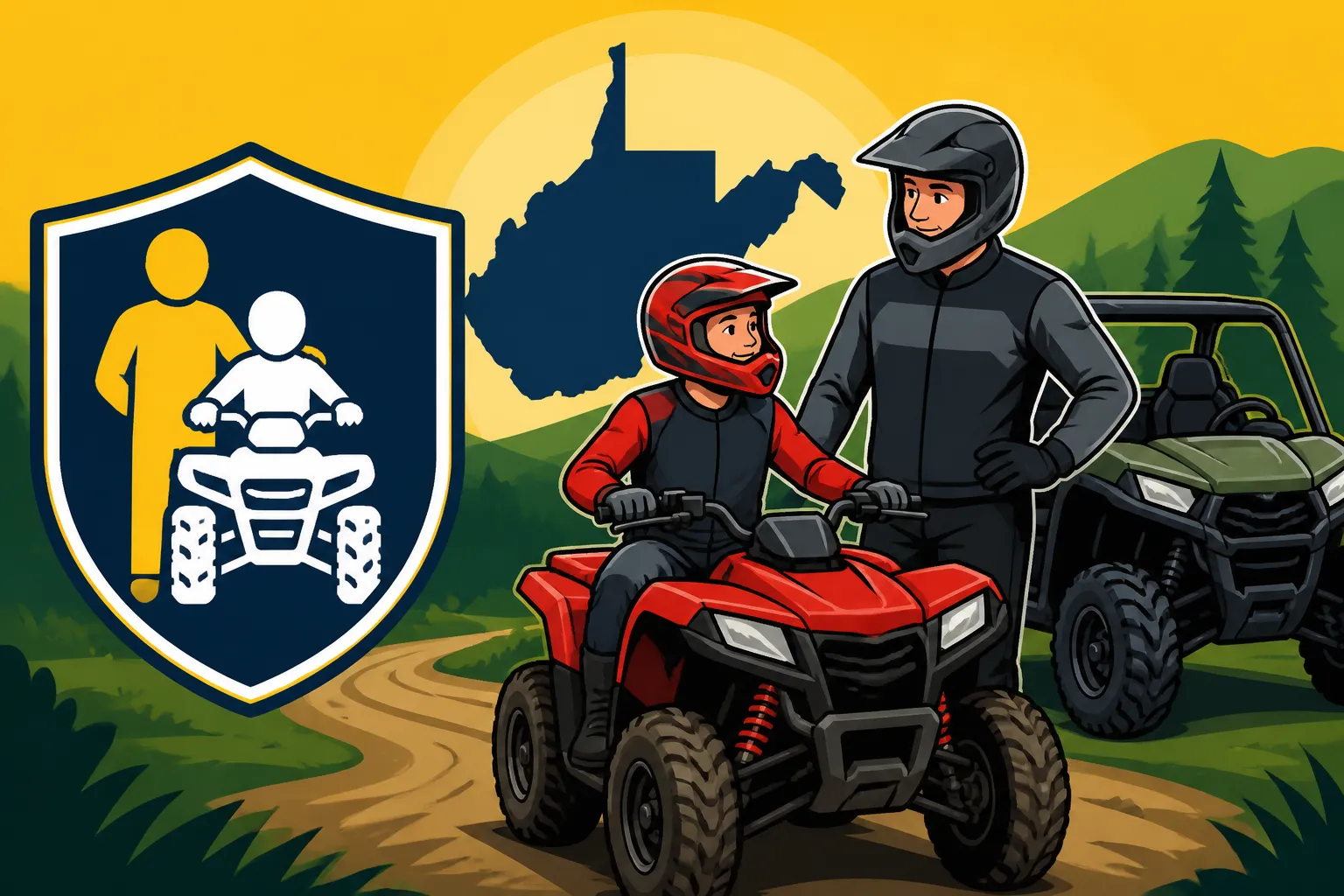
For a rider under 16, direct supervision means an adult is actively overseeing the ride, not merely staying in the same town or being reachable by phone. The adult should be close enough to keep track of the young rider, notice a problem, and intervene or get help promptly.
That is a useful practical standard even when a trail operator or applicable rule describes supervision in more specific terms. Do not treat “I can see the group on the map” or “the child knows the route” as a substitute for adult oversight. Before riding, check the current rules for the exact trail system and ask the operator what it expects when it uses the phrase “direct supervision.”
Supervision also involves more than keeping a child in sight. A responsible adult should be able to:
- Confirm the child is using a machine suited to their size and ability.
- Set a pace the child can safely maintain.
- Choose trails and road crossings that match the child’s experience.
- Stop the group if visibility, fatigue, weather, or trail conditions worsen.
- Help if the child’s machine stalls, tips, or becomes stuck.
- Keep the group together and make sure no one rides beyond the planned route.
The adult’s role is especially important on a mixed group ride. A child who can handle a quiet, familiar route may struggle when faster riders set the pace or when an unexpected obstacle appears. Plan around the least experienced rider, not the fastest adult machine.
Supervision is not the same as riding together
An adult and child do not necessarily have to ride on the same machine for supervision to be effective. But being on separate machines creates more responsibility: the adult needs to stay close, maintain a clear view where possible, and avoid letting the child get separated at turns, intersections, or trail junctions.
If the route is narrow, steep, dusty, or crowded, a child may disappear from view quickly. In those conditions, ride in a controlled order, use agreed stopping points, and do not let the group stretch out. A child riding behind the adults can be hard to monitor if dust or terrain blocks the view; a child riding well ahead can be just as difficult to supervise.
For a young rider with limited experience, a sensible setup is to have the adult directly ahead or behind, with another capable adult positioned to help if the group is larger. Agree on a simple rule: if the child loses sight of the adult, they stop in a safe place rather than trying to catch up at speed.
Name the supervising adult before the ride
Do not assume everyone in a group has the same understanding of who is responsible. Before starting, identify the adult supervising each child. If the group changes machines, splits into smaller groups, or stops at a junction, confirm that the child still has an assigned adult.
A parent or guardian may be the most natural choice, but a group outing can involve relatives, family friends, or other adults. Confirm that the responsible adult is willing and able to supervise, understands the route, and knows the child’s riding ability. If the relevant trail rule or event policy sets a specific requirement for who may supervise, follow that requirement rather than relying on an informal arrangement.
A group leader is not automatically supervising every child just because they are at the front. The leader may be focused on navigation, while another adult is responsible for staying with the young rider. Make those roles clear.
Where the rules apply and why location matters
West Virginia riding rules are not identical everywhere. A managed trail system, a public road, private property, and a forest road can each have different operating rules. A rider’s age does not become irrelevant just because the machine is allowed on a particular route.
For riders under 16, check the requirements for the specific place where the ride will happen. The West Virginia Age Rules on the Trails explains the broader age context, while West Virginia Rules for Riders Under 18 on Roads covers a different setting. Do not use a rule for one location to assume what is allowed in another.
Managed trails
Managed trail systems set rules for access, permits, rider conduct, and safety. Those rules may include an age minimum and a direct-supervision requirement for riders under 16. The Hatfield-McCoy system, for example, is not simply an open network where any machine can enter any route; riders must follow system rules and stay on marked, open trails.
Review the applicable age and supervision requirements before you travel. Start with Trail Rules Every West Virginia Rider Signs Up To and West Virginia’s Hatfield-McCoy Trail Permit Explained. If you plan to ride a different managed system, check that system’s own requirements rather than assuming they match Hatfield-McCoy.
A trail permit does not make a young rider eligible if they do not meet the system’s age or supervision rules. Likewise, meeting the age rule does not authorize a rider to ignore trail closures, machine restrictions, or helmet requirements. Treat these as separate conditions that all need to be satisfied.
Public roads and town streets
Road riding is a different question from trail riding. A route that connects two trail sections may include a public road, and a child who is allowed on a managed trail is not automatically allowed to operate on that road. Road rules can set their own limits for age, equipment, licensing, supervision, and where an ATV or UTV may travel.
Check the route before the ride, including any street or road connector. The articles Which West Virginia Roads Allow ATVs and West Virginia ATV Road Rules for Young Riders can help you identify the separate issues to check. If the route enters a town, review local rules as well; permission to ride in one town does not establish permission in another.
Do not improvise a road segment because a trail map appears to come close to a street. Confirm that the connector is authorized for the machine and rider, and know where the group must stop or cross. An adult supervising a child does not turn an otherwise prohibited road ride into a permitted one.
Private property and other riding areas
Private property can have different access arrangements, but landowner permission does not automatically remove safety obligations or other applicable rules. Ask the landowner what routes are approved, whether there are age limits, and whether the child may ride independently or must remain with an adult.
Public land, parks, and forest roads may also have their own motorized-access restrictions. A trail that appears usable on a map may be closed to ATVs, limited to certain machines, or subject to seasonal closures. Check the authority responsible for the land before riding. When in doubt, do not assume that a route is open just because another rider has used it.
Permits, safety requirements, and out-of-state riders
Supervision is only one part of legal trail access. Riders and families may also need to address trail permits, machine eligibility, safety requirements, and equipment. These requirements work together, but one does not replace another.
A permit does not replace adult supervision
A permit is permission to use a particular trail system under its terms. It is not proof that a young rider may ride unsupervised, and it is not a substitute for required safety equipment or other age rules.
Before departure, verify what the permit applies to: the machine, the rider, or both. Do not assume a parent’s permit covers a child’s machine, or that a passenger and an operator have identical permit obligations. The rules can vary by permit type and trail system. Does a Passenger Need a West Virginia Trail Permit? explains why it is worth checking the distinction rather than guessing.
For Hatfield-McCoy, read the permit conditions and trail rules for the machines in your group. If more than one machine is going, confirm each one is covered as required. Keep the permit visible or available in the manner the system requires, and make sure the supervising adult knows where the group’s permit information is.
A safety course or card is a separate requirement
West Virginia has ATV safety-awareness requirements, and managed trails may have specific provisions that differ from general rules. Do not assume that a trail-system exception to a course requirement removes the obligation to supervise a rider under 16. A course, where required, supports safe operation; it does not make an inexperienced child ready for any terrain.
Check Who Needs the West Virginia Safety Course and Why Managed Trails Are Exempt From the Course for the distinction between general course rules and managed-trail treatment. Confirm current requirements with the relevant authority before riding, particularly if the child is visiting from another state or has completed a course elsewhere.
Even if a course is not required for the planned route, a young rider benefits from learning basic controls, safe stopping, hand signals, hazard awareness, and what to do after a breakdown. An adult should review those skills before the first ride and observe the child in a low-pressure setting before moving onto a more demanding trail.
Out-of-state plates do not settle trail access
A family visiting from another state may have a titled or registered machine at home. That paperwork does not automatically provide access to a West Virginia managed trail system, and it does not exempt a young rider from local trail rules. Check both the machine’s documentation and the system’s access requirements.
The articles Do Other States’ Registrations Work in West Virginia? and Out-of-State Riders on West Virginia Trails address the separate questions of vehicle paperwork and visitor access. Verify whether your specific machine can use the intended system and whether the young rider meets its age and supervision conditions.
For a family trip, resolve these details before loading the trailer. If a machine is not eligible, or the young rider does not meet the trail’s requirements, discovering that at the trailhead can disrupt the entire outing.
Use the following pre-ride check
- Identify every place the group will ride: managed trail, public road, town street, or private land.
- Check the rules for each place, including age, supervision, machine, and access requirements.
- Assign a responsible adult to each rider under 16 and agree on how the group will stay together.
- Confirm the permit and any required safety documentation for the machine and riders.
- Check helmet, eye protection, machine condition, and weather.
- Review the route and closures, then choose a shorter or easier alternative if the child is not ready.
Choosing a safe machine, route, and riding plan
Legal eligibility is a minimum, not a recommendation that a child is ready for every machine or trail. The best plan matches the machine and route to the rider’s physical size, skill, confidence, and attention span.
Match the machine to the rider
A machine that is too large or powerful can be difficult for a child to control, especially on uneven ground or when stopping on a slope. Check the manufacturer’s age and size guidance, not just engine size. The child should be able to reach and operate the controls properly, steer without strain, and stop the machine with control.
Use Manufacturer Age and Size Requirements and Minimum Size Requirements for Young Riders as part of the decision. For family purchases, Buying an ATV for a Child: Whose Name Goes On It may help with the paperwork side, but ownership and riding suitability are separate questions.
Do not allow a child to “try” a larger machine on a challenging trail just because an adult can operate it. A child may have enough strength to move the controls but not enough experience to make quick decisions when traction changes or another rider stops suddenly. If they cannot demonstrate controlled starts, turns, and stops in a safe area, they are not ready for a demanding route.
For a UTV, consider who will drive and who will ride as a passenger. A child passenger still needs appropriate restraint and protective equipment, and the operator must follow the machine’s seating and passenger rules. A passenger seat should not be treated as an informal place for a child who is too small to ride safely on their own machine.
Choose a route that leaves room for mistakes
A young rider’s first route should be manageable, with a clear turnaround option and room to stop safely. Avoid choosing a route based on the most experienced adult’s preferences. Steep grades, loose rock, narrow sections, creek crossings, deep mud, and blind corners can turn a short ride into a stressful one for a novice.
Review trail difficulty and route conditions before setting out. The article West Virginia Trail Difficulty and How It Is Marked can help with planning, but a rating is not a guarantee that conditions will suit every rider. Rain, traffic, erosion, and temporary closures can change what a trail feels like on the day.
Keep the first ride shorter than the child’s maximum possible endurance. Fatigue can make a rider less attentive and less able to react, even if they were comfortable earlier. Build in stops, water, and a clear plan for returning before the child becomes tired.
Set group rules before engines start
A family or mixed-age group should agree on basic riding rules in advance. This avoids trying to explain them during a difficult section, when everyone is focused on the terrain.
Useful rules include:
- No passing the lead adult unless told to do so.
- Stop at every junction or designated regrouping point.
- If separated, stop in a safe place rather than speeding up.
- Do not leave the marked route to bypass mud, rocks, or a closed gate.
- Signal when slowing or stopping, and make sure the rider behind has seen it.
- Tell the adult immediately about a mechanical problem, fatigue, fear, or injury.
An adult should also make clear that the child can ask to stop without being pressured to continue. A child who is anxious may try to keep up rather than admit that the trail is too difficult. A good plan includes a way to turn back without making the child feel responsible for spoiling the outing.
Prepare for visibility and protective gear
Dust, trees, changing light, and bends can make it hard to see a young rider. Use a predictable formation and keep enough space to avoid collisions, but not so much that the adult loses track of the child. On a road crossing or a busy junction, regroup before proceeding.
Helmets and eye protection matter on trails as well as roads. Check that the helmet fits securely and meets the applicable standard, and that the child can see clearly through the eye protection. If shopping on Amazon or elsewhere, inspect the helmet’s labeling and fit carefully; a product listing alone does not establish that it meets the standard required for the ride.
Have each rider wear clothing and footwear appropriate to the terrain and weather. Gloves can improve grip, while sturdy footwear helps protect feet and ankles. Avoid loose items that could catch on the machine. Keep protective equipment in good condition and replace damaged gear rather than relying on it for another ride.
Common supervision mistakes to avoid
Families often understand that an adult should be present but disagree about what “present” means. These common mistakes can create avoidable risk or lead to problems at a trail entrance.
Treating nearby as supervised
An adult at the cabin, parking area, or another part of the trail system is not actively supervising a child riding elsewhere. A phone connection does not let an adult respond to a hazard in time. If the child is operating, the supervising adult should be with the ride and able to monitor it.
Letting a child ride beyond the group
A child who gets ahead may encounter a junction, a blocked route, or an unfamiliar obstacle without help. A child who falls behind may feel pressure to accelerate to catch up. Keep the group compact enough that the adult can monitor the child, and stop to regroup whenever sightlines disappear.
Assuming an older sibling can supervise
A capable teenager may be a strong rider, but that does not automatically make them an acceptable supervising adult under a trail system’s rules. Follow the rule’s stated age and relationship requirements. If the operator is unclear, ask before riding rather than relying on an assumption.
Using the same route for every rider
A route that is appropriate for adults can be too difficult for a young rider. Don’t interpret a child’s willingness to continue as proof that they are comfortable or in control. Check in frequently and be ready to turn around or choose an easier trail.
Assuming a permit, registration, or safety card covers everything
Paperwork has different purposes. A title establishes ownership; a trail permit addresses trail access; a safety card addresses a course requirement; and a road plate or registration relates to a separate form of use. None should be treated as a blanket exception to age, supervision, or safety rules.
Frequently Asked Questions
Can a rider under 16 ride alone on a West Virginia managed trail?
Do not assume so. Managed trail rules can require direct supervision for riders under 16. Check the current rules for the exact system and keep a responsible adult actively with the ride.
Does direct supervision mean an adult must ride on the same ATV?
Not necessarily. The important point is active oversight, but the trail system may define who can supervise and how close they must remain. Confirm the applicable rule before the ride, and do not rely on a distant adult or phone contact.
Does a trail permit let a child ride without supervision?
No. A permit and a supervision requirement address different conditions. Having a permit does not remove age or supervision rules, and it does not authorize riding on a closed or prohibited route.
Do out-of-state riders follow different supervision rules?
A visitor should check the West Virginia trail system’s rules, even if their home state permits a different arrangement. Out-of-state registration or a safety certificate does not automatically replace West Virginia trail access and supervision requirements.
Is trail supervision enough to ride on a public road?
No. Public-road operation has separate rules. Confirm that the road segment is allowed for the machine and rider, and check the applicable age, equipment, and operator requirements before using it.
Disclaimer
This article is for general informational purposes only and does not constitute professional advice. Laws, prices and regulations vary by location and change over time. Consult a qualified professional for guidance on your specific situation.