What Happens If You Are Caught Without a Permit
A permit problem can turn a planned ride into an early trip back to the trailhead. In West Virginia, the consequences depend on where you are riding, whether the permit is missing or invalid, and what the trail rules require. Here’s what enforcement may check, what can happen if you ride without authorization, and how to handle a permit problem safely.
What counts as riding without a permit
“Permit” can mean different things depending on the land and trail system. On the Hatfield-McCoy Trails, riders need the trail permit required for the machine and ride they are planning. Other parks, public lands, and private trail systems may have their own access rules. A permit for one place does not automatically authorize riding somewhere else.
A West Virginia ATV title, an out-of-state registration, or proof that you own the machine is not a substitute for a trail permit. Those documents address different issues. The distinction matters for visitors, too: an out-of-state machine may be legally owned and titled while still lacking the permit needed to ride a managed trail. For more on that difference, see [Do Out-of-State Riders Need a West Virginia Title?] and Do Other States’ Registrations Work in West Virginia?.
A rider may be treated as lacking valid authorization if:
- No required permit was purchased for the ride.
- The permit belongs to a different machine or does not cover the current trip.
- The permit has expired or is otherwise not valid for that ride.
- The permit is not displayed or available in the way the trail operator requires.
- A permit sticker is damaged, missing, or hard to verify.
- The rider has left the permitted trail area or crossed a closure, gate, or boundary.
The exact permit and display rules can vary, so check the trail system’s current instructions before unloading. The Hatfield-McCoy permit requirements are not the same thing as an annual state registration, and a permit does not give permission to ride on every road, trail, or piece of private property.
| Situation | What may be wrong | Practical next step |
|---|---|---|
| No permit was purchased | The machine may not be authorized for the managed trail | Do not enter; contact an authorized permit seller or the trail authority |
| Permit is for another machine | The permit may not cover the vehicle being ridden | Confirm whether the machine needs its own permit before continuing |
| Sticker is missing or unreadable | An officer may be unable to verify authorization | Stop in a safe place and ask how the permit can be verified or replaced |
| Permit is expired or for different dates | The ride may fall outside the permit’s validity | Check the permit record and buy the correct authorization before riding |
| Rider has crossed a gate or boundary | The issue may involve trespass or a closure, not just a permit | Turn back where safe and follow posted instructions |
The table is a general guide, not a substitute for the current terms for a specific trail system. If you are unsure what a permit covers, check the system’s official information or ask an authorized vendor before riding. West Virginia’s Hatfield-McCoy Trail Permit Explained covers the basic role of the permit, while One Permit for Every Trail System can help clarify why permissions do not necessarily carry over between systems.
What may happen if an officer finds you without one
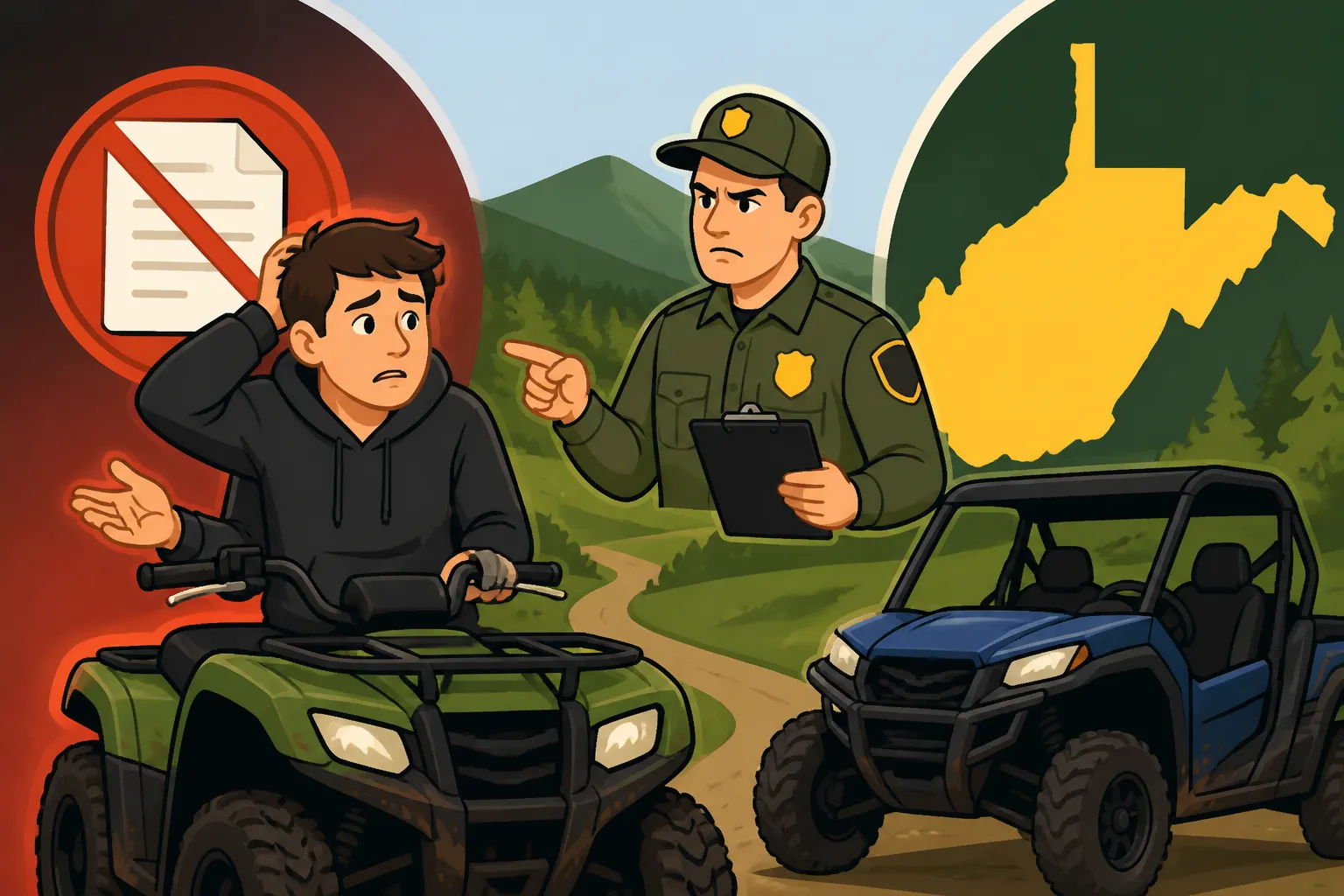
A trail ranger or other authorized enforcement officer may stop a rider and ask to see proof of permission. The officer may check the machine, permit sticker or documentation, and whether the rider is on an open, authorized route. If the permit cannot be confirmed, the officer may direct the rider to stop and leave the trail system, and may issue a citation or report the violation under the applicable rules.
The exact response depends on the trail system, the circumstances, and the rules in force. A missing sticker that can be verified may be handled differently from having no permit at all. Riding through a closed gate, continuing after being told to leave, or entering private land may raise additional issues beyond the permit itself. Do not assume that buying a permit after a stop cancels a citation or makes the earlier ride authorized.
A stop can also disrupt the rest of the group. If the machine without a valid permit is part of a convoy, the group may need to pull over, wait, or return together. On a narrow route, stopping abruptly can create a safety hazard, so move to a suitable place if directed and follow the officer’s instructions.
If you receive a citation or written notice, read it carefully. Note what rule or condition it identifies, the response deadline or process stated on the document, and any instructions for contacting the trail authority. Keep the citation, permit receipt, and any messages about the permit together. If you believe the permit was valid or the machine was misidentified, use the stated process to explain that; arguing roadside or continuing to ride is unlikely to resolve the issue.
Possible outcomes may include:
- Being told to stop riding and leave the authorized area.
- Receiving a citation or other formal notice.
- Having the incident recorded by the trail operator.
- Losing access or facing additional consequences for repeated or serious violations, depending on the applicable rules.
There is no single outcome that applies to every permit issue. Do not rely on an old ticket amount or a story from another rider to estimate what will happen. Rules and enforcement procedures can change. Check the current official trail rules and the terms provided with your permit. For issues involving a citation, Fines for Riding Hatfield-McCoy Without a Permit and What Happens If You Are Caught Without a Permit address related questions, but the notice you receive and the current rules are the ones to follow.
What to do if you discover the problem during a ride
If you realize you forgot a permit, cannot find the sticker, or are unsure whether it is valid, stop before riding farther. Do not keep going in the hope that no one will check. Find a safe place off the travel line, keep the machine out of the way, and confirm the rules for that specific trail system.
Use this sequence:
- Stop riding safely. Avoid stopping on a blind curve, steep slope, or narrow section where other riders cannot see you. Move only as far as needed to reach a safe stopping place.
- Check what you have. Look for the permit confirmation, receipt, sticker, or other proof the system instructed you to carry. Make sure it applies to the machine and dates in question.
- Contact an authorized source. Ask the trail authority or an authorized permit seller whether the permit can be verified, replaced, or purchased at that location. Do not assume that a screenshot, emailed receipt, or purchase from a different system is enough.
- Follow the instructions you receive. If the permit cannot be confirmed, do not resume the ride until the issue is resolved. You may need to return to a permitted access point or leave the trail area.
- Keep a record. Save the receipt and any written confirmation. If an officer has already spoken with you, follow any directions or paperwork provided.
A lost or damaged sticker is not the same as permission to continue riding without verification. The system may have a replacement process, but the process and what counts as temporary proof can vary. See Replacing a Lost West Virginia Trail Permit and Mounting a Hatfield-McCoy Permit Sticker before your trip so you know where the sticker belongs and what to do if it comes loose.
If you are riding with a group, tell the other riders what is happening. Do not split up and leave a rider alone on a remote trail unless that is the safest option and everyone understands the plan. A permit problem can quickly become a navigation or safety problem if the group keeps moving while one machine is stopped.
How to avoid a permit problem before unloading
The easiest way to prevent a stop is to verify the permit before the machine reaches the trail. A quick check at home or at the trailhead is more useful than trying to sort out eligibility once you are already on the route.
Before leaving, confirm:
- The right system. Make sure the permit covers the specific trail network you intend to ride. A permit for Hatfield-McCoy does not automatically cover a different park or trail system.
- The right machine. Check whether each machine needs its own permit and whether the permit details match the machine you will ride. Do not assume a group purchase covers every vehicle.
- The right dates and conditions. Verify that the permit is valid for the planned ride and that the route is open. Permit validity and trail status are separate checks.
- The required display or proof. Mount the sticker or carry documentation exactly as instructed. Keep a receipt or confirmation available if the system provides one, but do not treat it as a replacement for required display rules.
- The rider requirements. Check age, supervision, safety-course, helmet, and other rules that apply to the riders in your group. A permit alone does not waive those requirements.
- The route boundaries. Stay on marked, open trails and respect gates and closure notices. A valid permit is not permission to cross onto private land or ride a closed route.
If buying a permit at the trailhead, check in before riding and confirm that the machine is authorized before entering. If a rental, cabin, or guided package is involved, ask directly whether the permit is included and which machines or riders it covers. A verbal assumption can leave a gap; ask for the details and keep the confirmation. Does a West Virginia Rental Include the Trail Permit? and Trail Permits Bundled With a Rental or Cabin explain what to clarify when booking.
Finally, keep permit compliance separate from road legality. A trail permit does not make an ATV or UTV street legal, and a street-legal plate does not automatically provide access to a managed trail. Public-road use has its own rules, while trail access depends on the land manager and the permit required there. If your trip includes both roads and trails, confirm each set of requirements before you ride. Riding an ATV on the Road in West Virginia explains the separate road-use question.
A permit check takes only a moment, but it can prevent a citation, a forced return to the trailhead, or a dispute about whether the machine was authorized. When in doubt, pause and confirm with the trail operator before entering.
Disclaimer
This article is for general informational purposes only and does not constitute professional advice. Laws, prices and regulations vary by location and change over time. Consult a qualified professional for guidance on your specific situation.