Losing Trail Privileges in West Virginia
West Virginia trail access depends on following the rules tied to the trail system and permit you use. A violation can mean more than a warning or citation: it may put future riding privileges at risk. Knowing what can trigger restrictions, how to respond to a notice, and what to confirm before returning can help you avoid turning one bad ride into a longer problem.
What losing trail privileges can mean
Losing trail privileges means you may be prohibited from riding on a managed trail system for a period of time or until certain conditions are met. The restriction can affect access beyond the ride where the incident happened. It is separate from whether your ATV or UTV is titled, insured, or allowed on a public road.
The exact consequence depends on the trail system, the conduct involved, and the rules in effect. For Hatfield-McCoy Trails, riders agree to follow applicable trail rules when obtaining a permit. Review West Virginia’s Hatfield-McCoy Trail Permit Explained and Trail Rules Every West Virginia Rider Signs Up To before riding. A permit is not permission to use every route, cross every property boundary, or ignore posted closures.
A restriction may apply to a rider, a machine, or both, depending on the notice and the applicable rules. Don’t assume another person can use your permit or ride the same machine while a case is unresolved. Equally, don’t assume a restriction at one managed system automatically applies to every riding area in the state. Ask the authority named in the notice exactly what access is affected.
Trail privileges are also different from a ticket or other legal consequence. A rider could face a trail-system response and, separately, law-enforcement action if the incident involves conduct covered by state or local law. A citation does not by itself tell you whether a trail restriction has been imposed; read the written notice and check directly with the relevant authority.
| Situation | Why it can put access at risk | What to clarify |
|---|---|---|
| Riding without a valid permit or with an improperly displayed permit | The system may treat the ride as unauthorized | Whether a citation or access restriction was issued, and what permit status is required |
| Leaving a marked route or crossing a barrier | The rider may enter a closed area or land outside the authorized trail | Which location and rule are identified in the notice |
| Riding on a closed trail | Closures can protect riders, landowners, and trail conditions | Whether the closure was active and how to check future notices |
| Unsafe or prohibited conduct | The rules may address behavior that endangers others or damages property | What conduct is alleged and what response process applies |
| Ignoring an earlier warning or restriction | Repeated or unresolved conduct can make the situation more serious | Whether the new notice refers to a prior case or condition |
This table is a practical overview, not a schedule of automatic penalties. The rules and consequences can vary, so use the written notice and current official trail information rather than relying on another rider’s account.
Conduct that can put access at risk
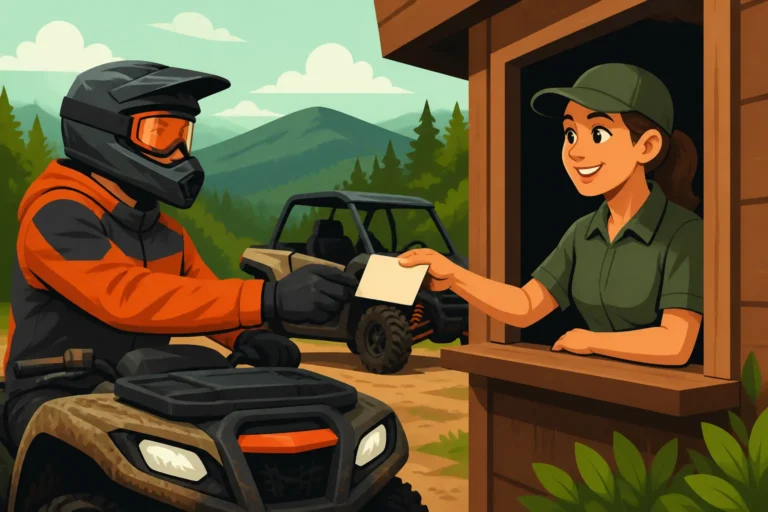
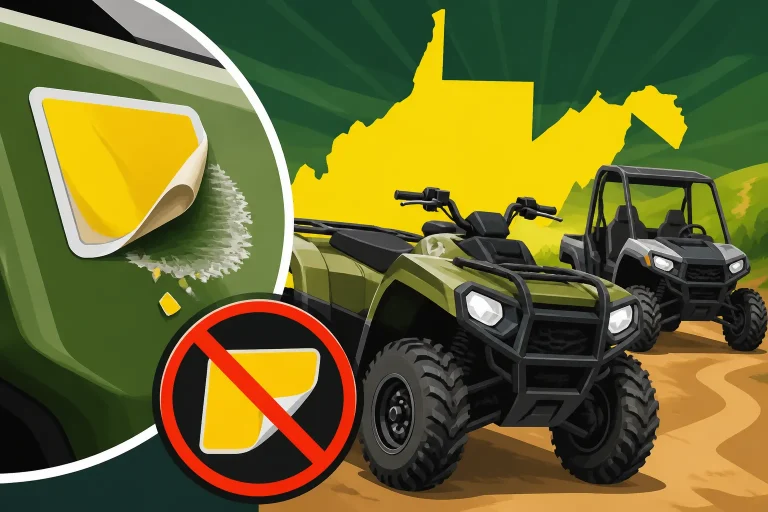
Permit problems are an avoidable source of trouble. Before riding, confirm that each machine has the required permit for the system and that the permit is visible and valid under the current rules. If you’re unsure whether your permit covers a particular rider, passenger, or machine, verify it before leaving the trailhead. What a Trail Permit Does Not Cover explains why a permit should not be treated as a general authorization for unrelated roads or land.
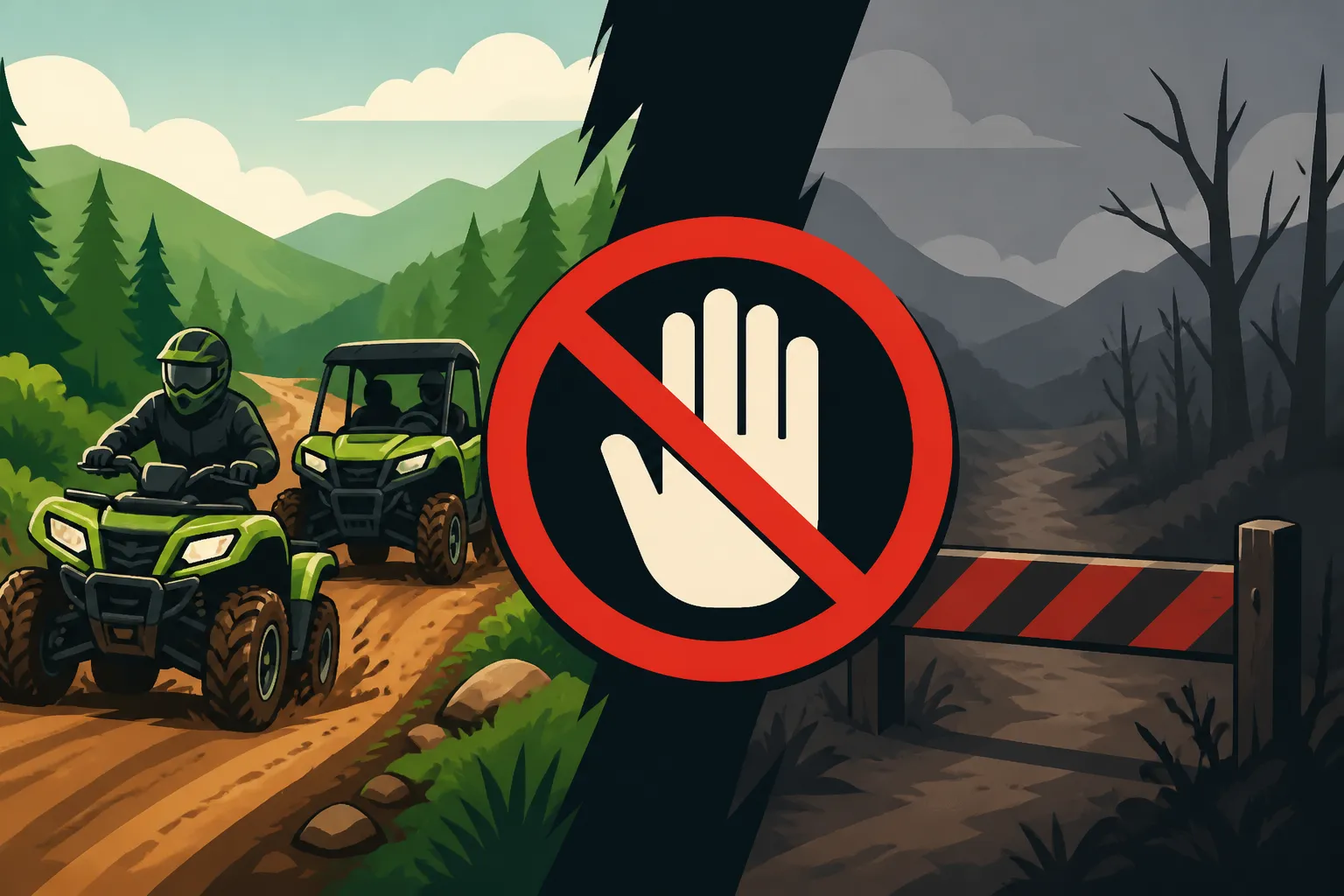
Riding outside the authorized route is another serious risk. A trail may look passable while still being closed, private, or beyond the system boundary. Do not go around a gate, ride through a barrier, or treat a missing marker as proof that a route is open. Follow signs and closure instructions, and check Riding Off a Marked Trail if you need a closer explanation of that issue.
Other problems can include damaging property, disregarding trail instructions, or operating in a way that puts other users at risk. The relevant rule may depend on what happened and where. Don’t decide that an action is permitted just because you saw another rider do it; the other rider may have had permission, may have been on a different route, or may also have been breaking a rule.
Trail staff may check permits, machine identification, and whether riders are following posted requirements. Their presence is one reason to carry out the simple checks before heading out. See West Virginia Trail Rangers and What They Check for more on the role of trail enforcement. For specific permit issues, Fines for Riding Hatfield-McCoy Without a Permit covers the separate question of riding without the required authorization.
A violation report does not necessarily mean a restriction has already been imposed. It may lead to a warning, a citation, a request for information, or another response under the system’s rules. The outcome depends on the facts and the authority’s process. Ask whether the notice is a final decision or an initial report, and whether you must take action by a particular date.
What to do after a warning, citation, or restriction notice
Take any written notice seriously, even if you believe it is mistaken. Keep the original, take clear photos or scans, and note when and how you received it. If an officer or trail representative gave you only verbal instructions, write down what was said, where it happened, and who was present while the details are fresh.
Then take these steps:
- Identify the issuing authority. Check the notice for the trail system, department, or contact person responsible for the case. The right contact is usually the authority named on the document, not a general social media page.
- Read the allegation carefully. Note the date, location, machine, permit information, and rule cited. If anything is unclear, ask for clarification in writing.
- Check for a deadline or required response. Don’t assume that silence will close the matter. Ask how to submit documents, request review, or dispute an allegation, and keep a record of your communication.
- Preserve relevant evidence. Keep permit records, receipts, photos, videos, GPS tracks, messages, and names of witnesses. Do not edit or delete original files. Record your own account of the ride, including where you entered and the route you took.
- Follow any temporary instruction while the case is pending. If the notice says not to ride, or says your access is suspended, don’t test the boundary by returning to the trail. Confirm the restriction’s scope and status with the issuing authority.
- Ask what must happen before riding again. Get a clear answer about whether the restriction is still active, whether a permit must be renewed or corrected, and whether any other condition applies.
If you believe the notice is wrong, stay factual and organized. Explain what you dispute and why, and attach evidence that directly addresses the allegation. Avoid sending an angry reply, guessing at facts, or making admissions you do not intend to make. If a legal citation or substantial financial or safety issue is involved, consider asking a qualified professional for advice.
Use the process stated in the notice. Where a review or appeal is available, follow its stated method and timing; do not assume an informal conversation replaces a required written submission. Appealing a Hatfield-McCoy Citation addresses the appeal question specifically. A trail citation and a separate court matter may follow different procedures, so confirm which process applies to each.
If the incident involved a machine with no permit, a missing sticker, or a permit that could not be verified, resolve that paperwork issue before planning another ride. What Happens If You Are Caught Without a Permit explains what to consider in that situation. Keep proof of any correction, but don’t assume fixing the paperwork automatically lifts a separate restriction.
Confirming when you can ride again
Do not rely on the passage of time, a new permit purchase, or another rider’s interpretation as proof that your privileges have been restored. Ask the authority named in the notice for written confirmation. A useful request is direct: “Is my restriction still active, and what must I do before I may ride this system again?” If the decision applies only to one machine or one trail area, ask that the limits be stated clearly.
Before returning, check the system’s current status and make sure the trail you plan to use is open. Closures can change, and permission to ride a system does not override a closure on a particular route. Checking West Virginia Trail Status Before You Drive can help with the pre-trip check.
A practical return-to-ride review includes:
- Confirming that any suspension or other restriction has ended.
- Checking that your permit is valid, properly displayed, and associated with the correct machine or rider under the current rules.
- Reviewing the rule involved in the original incident.
- Checking for trail closures, barriers, and route-specific directions.
- Making sure everyone in your group understands that they must stay on authorized routes and follow signs.
For a group ride, tell the other riders the applicable rules before setting out. A group leader should not assume that one person’s permit or decision covers everyone. Riders remain responsible for following the requirements that apply to them and their machines.
If you’re traveling from outside West Virginia, don’t assume an out-of-state registration or permit substitutes for the trail system’s requirements. Check the rules for the specific system and your planned ride. Reciprocity questions are different from trail discipline: having paperwork accepted for one purpose does not guarantee access or resolve a restriction. Confirm both issues with the relevant authority.
The safest way to protect future access is to treat each permit and trail rule as specific to the system you are using. Verify requirements before the ride, respect closures and boundaries, and keep records when something goes wrong. If you receive a notice, respond through the stated process and get confirmation before riding again.
Disclaimer
This article is for general informational purposes only and does not constitute professional advice. Laws, prices and regulations vary by location and change over time. Consult a qualified professional for guidance on your specific situation.