Selling an ATV for Parts in West Virginia
So, you've got an ATV or UTV that's seen better days, maybe even its last good trail ride, and you're contemplating selling it off for parts in West Virginia. This is a common situation many riders face, especially when a machine sustains severe damage or just reaches the end of its useful life, leaving you wondering how to legally and safely offload it without a full title transfer or a lengthy repair bill. This guide will walk you through the ins and outs of selling a machine for parts in the Mountain State, focusing on the documentation, legalities, and practical steps to ensure a smooth process.
When Selling an ATV for Parts Makes Sense in West Virginia
It's a tough call when your beloved quad or side-by-side finally gives up the ghost. You've poured hours into riding it, maybe even wrenching on it, and now it's just sitting there, taking up space. For many West Virginia riders, reaching the decision to part out a machine comes after careful consideration, often when the cost of repair simply outweighs its value.
Why a Machine Might Be Deemed "Parts Only"
There are countless reasons why an ATV or UTV might be relegated to "parts only" status. Perhaps you had a major mishap on the Hatfield-McCoy Trails, leading to a bent frame that's simply too expensive or complex to straighten out safely. Maybe the engine seized completely, and sourcing a new one or rebuilding the old one is financially out of reach. We've all seen those sad machines with cracked cases, destroyed transmissions, or electrical systems that defy all logic to fix. Sometimes, it's a combination of age, wear, and multiple failing components that makes a full repair impractical. If the machine is older, finding compatible parts can be a nightmare, making it even less appealing to invest in a full restoration. The labor costs alone for a major repair can quickly skyrocket beyond the vehicle's market value, even for a classic model.
Deciding Between Repair and Parting Out
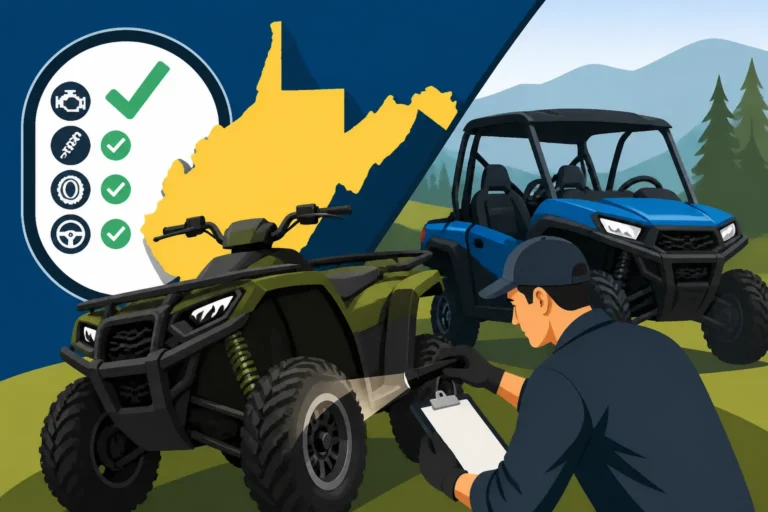
This is often the hardest part. You love your machine, and the thought of breaking it down for scrap or individual components can feel like a betrayal. But sometimes, it's the most sensible financial decision. Start by getting a few repair estimates. Be honest with yourself about the machine's overall condition beyond the immediate problem. Does it need new tires, suspension work, or brakes soon anyway? Add those potential costs into the equation. Compare this total potential repair bill against what a similar, running machine would sell for in West Virginia. If the repair cost is approaching or exceeding the market value, or if you simply don't have the time, space, or mechanical inclination to do the work yourself, then parting it out becomes a very attractive option. You can often recover a significant portion of the machine's value by selling good individual components rather than struggling to sell a non-running whole.
Navigating the Title for a Parts-Only ATV in West Virginia
The word "title" often brings a shiver down the spine of anyone dealing with ATVs in West Virginia, especially when the machine isn't going to be ridden again. It's easy to assume that if you're just selling parts, the title doesn't matter much. However, that assumption can lead to serious headaches down the road.
The Importance of the Title, Even for Parts
In West Virginia, like many states, an ATV or UTV sold after 1989 is required to have a title. This document proves ownership and is a critical paper trail. Even if you're selling the machine for parts, having a clear title is still crucial, particularly if you're selling the entire frame or major components like the engine that still carry a Vehicle Identification Number (VIN) or serial number. If you sell a significant part of the machine, say the frame, to someone who intends to rebuild it, they will eventually need a clean title to register and use that machine. Without it, they could run into major issues trying to [Titling an ATV in West Virginia Without the Previous Owner]. Furthermore, you want to protect yourself from any future liability or claims of selling stolen property. A signed-over title, even if marked "for parts only" or noting the damage, legally transfers ownership of the core machine and its components, absolving you of future responsibility. It's a key step in legally severing your connection to the machine. You can find more details on general title requirements in [West Virginia Title Rules for ATVs Sold After 1989].
What if Your ATV Has a Salvage or Missing Title?
If your ATV has a salvage title, this actually clarifies the situation quite a bit. A salvage title indicates that the machine has been declared a total loss by an insurance company, usually due to significant damage. This is essentially a giant red flag saying, "Hey, this machine isn't meant for regular road or trail use as is." Selling a machine with a salvage title for parts is perfectly legitimate, and the salvage title itself serves as proof of ownership and the machine's damaged status. You should explicitly state that the machine has a salvage title in any advertisements or sale documents. [Salvage and Rebuilt ATV Titles in West Virginia] offers more insight into this process.
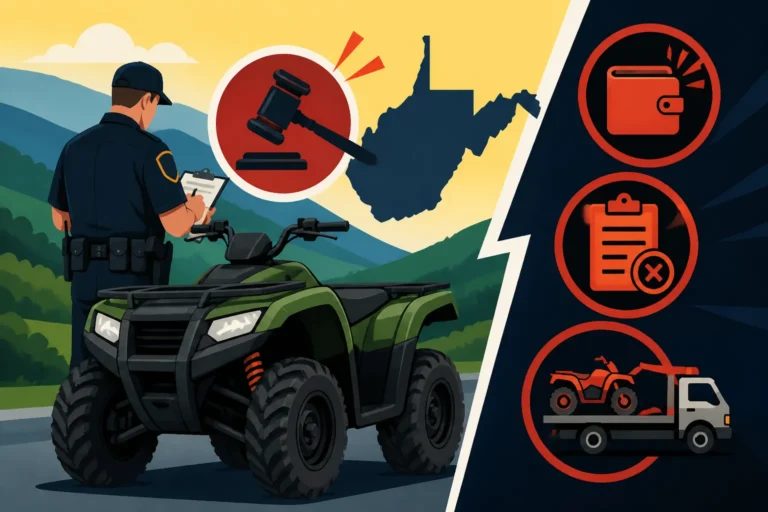
Now, if your title is outright missing, that's a different challenge. You cannot simply sell an entire frame with a VIN attached without a title, even for parts, if that machine was originally titled. This could open you up to legal complications, including potential [West Virginia Penalties for an Untitled Machine]. Your best bet is to apply for a replacement title from the West Virginia DMV before attempting to sell any major components. This process involves filling out the proper forms and often requires proof of ownership, such as previous registration cards or a bill of sale from when you acquired it. You can learn more about this in [Replacing a Lost West Virginia ATV Title]. If you absolutely cannot get a replacement title, your options become much more limited, usually requiring you to scrap the frame and only sell components that do not carry the VIN. In such cases, thoroughly document everything to protect yourself, and consider if you truly need to go down the path of [Selling an ATV With No Title in West Virginia].
Essential Documentation for Selling ATV Parts in West Virginia
Even when you're selling an ATV for parts, the importance of proper documentation cannot be overstated. This isn't just about being a good citizen; it's about protecting yourself from legal headaches and ensuring a clear transfer of ownership, even for a machine that's essentially scrap.
Crafting a Rock-Solid Bill of Sale for Parts
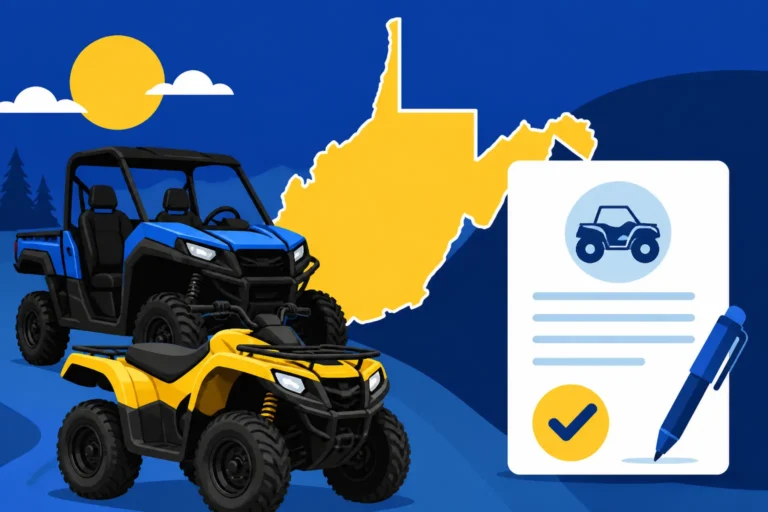
A bill of sale is your best friend when selling anything, and especially for a parts machine. It's a legal document that proves the transaction occurred and details exactly what was sold. For an ATV being sold for parts, your bill of sale should be incredibly specific. It's not enough to just write "ATV parts." You need to clearly state that the machine or components are being sold "as-is, for parts only, with no warranty expressed or implied." Include the full VIN (if selling the frame or a significant portion of the machine), the make, model, and year of the ATV. If you're only selling certain components, list those components clearly (e.g., "one (1) Polaris RZR 900 XP engine, serial number XXXX"). Both you and the buyer should sign and date the document, and it's a good idea to have a copy for both parties. Websites like LawDepot offer customizable bill of sale templates that can be easily adapted for this specific scenario, ensuring you don't miss any critical details. They provide legal-grade templates that help solidify the terms of the sale. For more general advice on what belongs in this document, consult [West Virginia ATV Bill of Sale: What Belongs in It].
Here's a quick look at key elements for a parts-only bill of sale:
| Section | Details to Include |
|---|---|
| Seller Information | Full legal name, address, contact information |
| Buyer Information | Full legal name, address, contact information |
| Item Description | Make, Model, Year of ATV/UTV (if whole machine), VIN (if applicable) |
| Parts Specificity | Clear statement: "Sold as-is, for parts only, no warranty." |
| List of specific components if not the whole frame (e.g., engine, transmission, suspension). | |
| Purchase Price | The agreed-upon amount |
| Date of Sale | When the transaction took place |
| Signatures | Both seller and buyer's signatures |
| Witness (Optional) | Signature of an independent witness for added validity |
| Title Status | Clearly state if a title is provided (and if it's salvage), or why it's not. |
Protecting Yourself from Future Liability
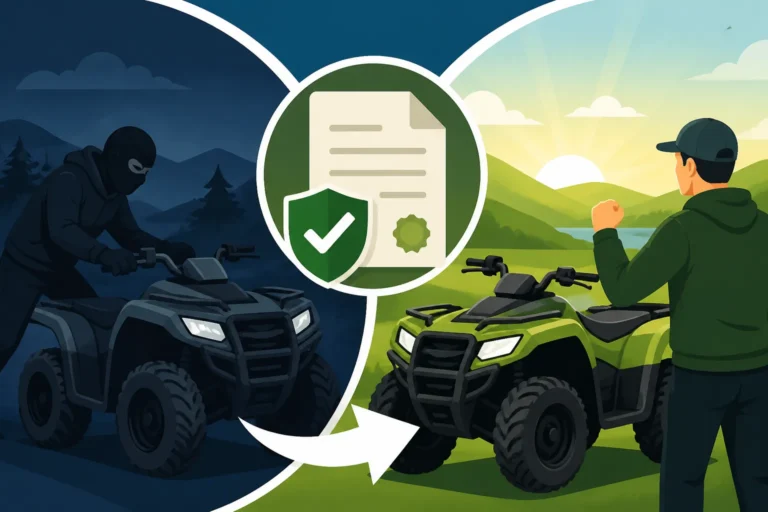
This is arguably the most crucial reason for thorough documentation. When you sell a machine, even for parts, you want to sever your legal ties to it completely. Imagine selling a damaged frame with the VIN still attached, and the buyer uses it illegally or is involved in an accident. Without a clear bill of sale stating "for parts only" and ideally a signed-over title (even a salvage one), you could potentially be dragged into a legal mess. The bill of sale, especially one drafted with care (like those found on LawDepot), demonstrates that you've transferred ownership of a non-operational or parts-only item. It acts as proof that you sold the item in its current condition and that the buyer understood its limitations.
Another protective measure is to remove the license plate if the machine ever had one, and return it to the DMV if required, or destroy it. Also, consider removing the VIN tag if you are selling only specific, untagged parts and scrapping the frame. However, be very cautious here; intentionally removing or altering a VIN is illegal. Only remove the VIN tag if you are completely destroying the frame yourself and are absolutely certain no part of that VIN will ever be re-used. Generally, if you're selling the frame, the VIN should remain. Having a copy of the signed title with "for parts" written on it and a detailed bill of sale is the strongest defense. It’s always a good idea to [Running a VIN Check Before You Buy] when acquiring any ATV, even for parts, to avoid inadvertently dealing with stolen goods, and this vigilance should extend to your selling process as well. Using a platform like LawDepot to generate legal documents helps ensure you're covered.
Practical Steps for Selling Your ATV for Parts
Once you've made the decision and understand the paperwork, it's time to actually get your parts machine sold. This involves thinking about how you want to sell it and how to present it.
Selling the Whole Machine for Parts vs. Individual Components
You have two main paths when selling an ATV for parts:
- Selling the entire machine "as-is, for parts only": This is often the easier option if you don't want to spend time disassembling it. You sell the whole non-running machine, often at a lower price, to someone who either wants specific parts from it or plans to salvage components and scrap the rest. This method is cleaner from a legal standpoint because you're transferring ownership of the entire physical unit. Your bill of sale and title (if applicable) will cover the whole ATV. This is especially good if the frame itself is bent or the engine is seized, but many other components are still good. You might attract buyers looking for a donor machine.
- Parting out individual components: This typically yields more money overall but requires a significant time investment. You'll need to disassemble the machine, clean the parts, photograph them, list them individually, and deal with separate buyers and shipping. Good candidates for individual sales include strong engines (if still running or easily rebuildable), good condition suspension components, undamaged plastics, wheels, tires, seats, fuel tanks, and electronics. Each component sale should still have some form of written agreement, even a simple receipt stating "as-is, for parts." Remember to clearly identify the VIN for parts like the engine or frame if they carry one. This is where knowing how to find the VIN on different machines, such as [Finding the VIN Stamp on an ATV Frame], becomes crucial for accurate listing.
The decision often comes down to how much effort you're willing to put in versus how quickly you want the machine gone. If you have the space and time, parting it out piece by piece will likely maximize your return.
Advertising and Pricing Your ATV Parts
When it comes to advertising, honesty is absolutely the best policy. Be upfront about the machine's condition, stating clearly that it is "for parts only" or detailing the specific condition of each component you're selling. Take clear, well-lit photos of the entire machine (if selling whole) or individual parts from multiple angles. Highlight both the good and the bad; for example, if a fender has a crack, show it. This transparency builds trust with potential buyers and prevents disputes later.
For whole machines, list the make, model, year, and the primary reason it's being sold for parts (e.g., "blown engine," "bent frame"). For individual parts, be specific about the part name, its condition, and what model years and brands it's compatible with. Online marketplaces, local classifieds, and even specialized ATV forums are great places to advertise.
Pricing can be tricky. For a whole machine, research what similar non-running machines are selling for. For individual components, check online retailers and other used part listings to get an idea of market value. Remember that used parts will always sell for less than new, often significantly less. Be prepared to negotiate, but also know your bottom line. Always meet buyers in a safe, public place if possible, especially if they're coming to pick up smaller parts. If they're coming to your property for a whole machine, ensure you have assistance and are comfortable with the arrangement. Before you finalize any sale, ensure you've got your [West Virginia ATV Title Application Form] ready if you're seeking a replacement title, or a completed bill of sale, especially if using a trusted template from a provider like LawDepot.
Disclaimer
This article is for general informational purposes only and does not constitute professional advice. Laws, prices and regulations vary by location and change over time. Consult a qualified professional for guidance on your specific situation.