The 25 mph Cap on a West Virginia Road Ride
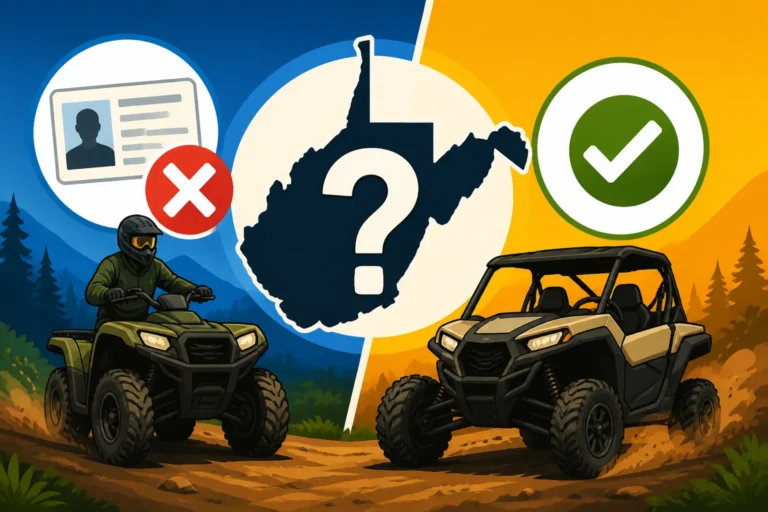
Oh, the age-old question that causes so much confusion and, let's be honest, frustration for ATV and UTV riders in our beautiful Mountain State: "How fast can I actually go on these West Virginia roads without getting in trouble?" It's a valid concern, especially when you're just trying to connect from one trail section to another or grab a bite in a trail-friendly town. This guide is going to deep dive into that often-misunderstood 25 mph speed cap, helping you understand where it applies, why it's there, and how to stay on the right side of the law while still enjoying your ride.
Understanding West Virginia's ATV Road Rules
Riding an ATV or UTV on public roads in West Virginia is a privilege, not an inherent right, and it comes with very specific rules designed for safety and to manage traffic flow. The 25 mph cap is one of the most prominent, and frequently asked about, regulations that riders encounter. It's easy to misunderstand, especially with the rise of "street legal" machines and dedicated trail systems.
Why the 25 mph Limit Exists
The primary reason for the 25 mph speed limit on certain public roads for ATVs and UTVs boils down to safety and the fundamental design of these machines. Most ATVs and UTVs are not engineered for sustained, high-speed road travel. Their suspension, tires, and braking systems are optimized for off-road conditions – dirt, rocks, mud – not smooth, hard pavement. When these vehicles operate at higher speeds on asphalt, their handling characteristics can become unpredictable, increasing the risk of rollovers, loss of control, and serious accidents, especially when encountering other motor vehicles.
Think about it: your typical trail machine has knobby tires that grip dirt like a champ but can feel squirrely on pavement, especially when turning sharply or braking hard. The suspension, built to soak up rough terrain, might feel too soft or bouncy on a paved road, leading to a disconnected feeling. This speed restriction is a legislative attempt to mitigate these inherent design limitations, to reduce the speed differential between off-road vehicles and cars, and ultimately, to make those brief road connections as safe as possible for everyone. It's a way for the state to allow limited access while acknowledging the machines aren't cars.
The Specific Law and Where It Applies
West Virginia law is quite clear about when and where an ATV or UTV can legally use public roads. Generally, the 25 mph cap applies to machines that are not registered as "Special Purpose Vehicles" (SPVs) and are making limited movements on public roadways. This usually covers:
- Crossing a public road: If you're on a trail and need to cross a paved road to get to another trail section, you can do so, but you must yield to traffic and proceed directly across. That 25 mph limit is in effect for that brief crossing.
- Connecting trail segments: Many of West Virginia's famed trail systems, like the Hatfield-McCoy Trails, utilize short stretches of public road to connect one trail section to another. These designated connector roads are where you'll most often encounter the 25 mph limit. The idea is to allow you to get from point A to point B on the trail map without trailering, but not to open up the entire road network for high-speed ATV travel.
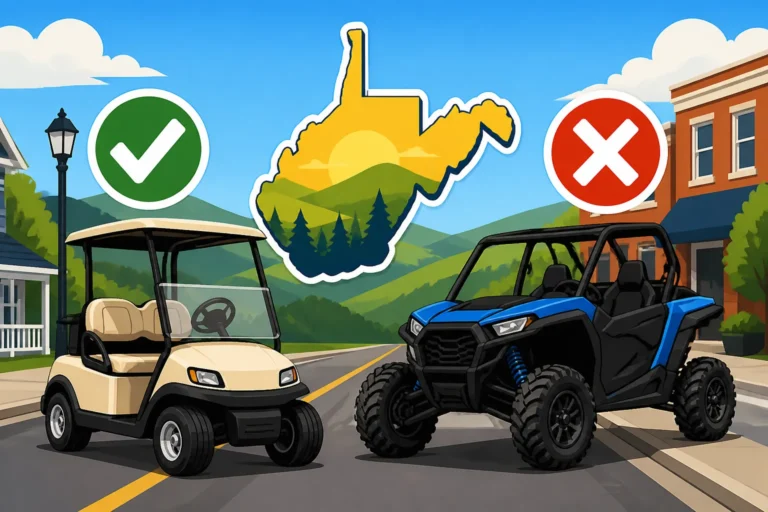
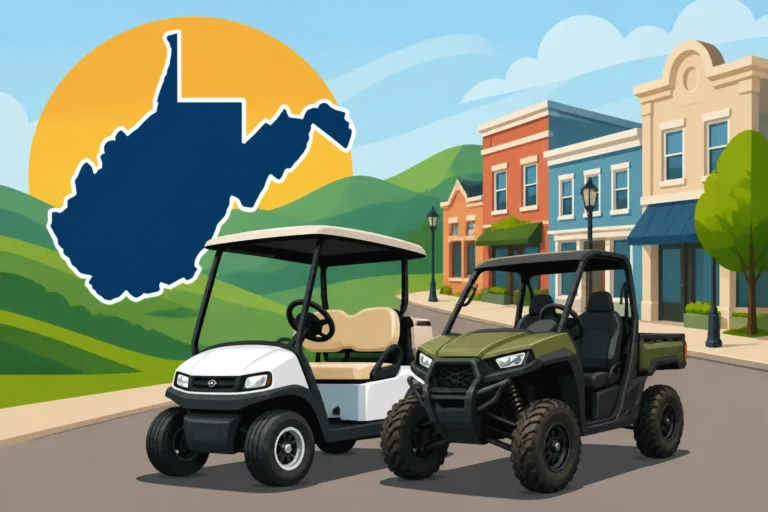
- Accessing services in trail towns: In specific ATV-friendly towns throughout the state, you might be permitted to ride your machine on certain municipal streets at or below 25 mph to access gas stations, restaurants, or lodging. These towns have local ordinances that complement state law, often within designated "ATV zones."
It's absolutely critical to understand that this 25 mph rule is not a blanket permission to ride your non-street-legal ATV on any public road, anywhere, at 25 mph. It's for very specific, limited circumstances. For deeper detail on this, you might want to read [West Virginia's 10-Mile, 25 mph Road Rule], which outlines these connection allowances.
Navigating the 25 mph Cap on Public Roads
Adhering to the 25 mph speed limit when permitted on West Virginia roads is about more than just avoiding a ticket; it's about being a responsible rider and ensuring your safety and the safety of others. While it might feel slow, especially on a machine capable of much higher speeds, it's a non-negotiable aspect of legal road use.
How to Safely Maintain the Speed Limit
Staying at or below 25 mph might sound easy, but it requires conscious effort, especially if you're accustomed to open trails. Here are a few tips to help you maintain that legal speed:
- Monitor your speedometer: This seems obvious, but many riders get caught up in the moment. Keep an eye on your speed. If your machine doesn't have a reliable speedometer, consider an aftermarket one. Some riders even use GPS apps on their phones or dedicated GPS devices, though these might have a slight lag. Being aware of your speed is the first step.
- Use higher gears: If your ATV or UTV has a manual transmission, shifting into a higher gear (like third or fourth) will naturally keep your engine RPMs lower at 25 mph, making it easier to hold that speed without constantly riding the brakes or feathering the throttle. For automatic transmissions, a light, consistent throttle hand is key.
- Practice in a safe, controlled environment: Before you hit a public road, even a short connector, get a feel for what 25 mph feels like on your machine. Practice maintaining that speed in an open field or a private drive. This builds muscle memory and helps you gauge your speed more accurately without constantly staring at your dash.
- Anticipate and plan: When you know you're approaching a road section, start slowing down well in advance. Don't wait until you're already on the pavement to adjust your speed. Smooth transitions are safer and more respectful of other drivers.
Remember, you're sharing the road with vehicles that can travel much faster. Maintaining a consistent, legal speed helps other drivers anticipate your movements and pass safely if necessary.
Equipment That Helps You Stay Compliant
While the core of compliance comes from the rider, certain equipment can certainly assist in making your limited road excursions safer and more lawful.
- Accurate Speedometer: As mentioned, a functional and accurate speedometer is paramount. Many factory ATVs and UTVs come with one, but if yours is broken, or you have an older machine, an aftermarket solution is a smart investment. Brands like SuperATV offer a range of digital speedometers and dashes that can be integrated into most machines, providing precise speed readings.
- Proper Lighting: Even at 25 mph, visibility is key, especially if you're riding near dawn, dusk, or in inclement weather. Ensure your headlights, taillights, and brake lights are all in perfect working order. Many states, including West Virginia, have specific requirements for lights when operating on public roads, even for short distances. You can learn more in [Equipment West Virginia Requires on a Road Ride].
- Mirrors: While not always strictly enforced for casual road crossings, having at least one rearview mirror, and ideally two, is a huge safety advantage. It allows you to monitor traffic behind you without constantly turning your head, which can affect your steering, especially at slower speeds. SuperATV, for instance, has various mirror options from side-view to rear-view mirrors that can greatly enhance your situational awareness.
- Turn Signals (for SPVs or dedicated road sections): For the 25 mph cap, turn signals aren't always mandated on standard ATVs/UTVs making brief connections, but they are a must-have for street-legal Special Purpose Vehicles. Even for short road sections, clear hand signals are always a good practice to indicate your intentions to other drivers.
Investing in these items isn't just about meeting a checklist; it's about increasing your safety and confidence when you're momentarily sharing the asphalt with other vehicles.
The "10-Mile" and "20-Mile" Rules in Context
West Virginia's ATV laws can be a little like deciphering an ancient map – lots of lines and arrows, and you need to know which ones apply to your journey. The 25 mph speed cap is intricately linked with other distance restrictions, primarily the "10-mile rule" and, for certain street-legal machines, the "20-mile centerline rule." It's easy to get these mixed up, but understanding their differences is vital.
Differentiating Short Crossings from Longer Routes
The 25 mph speed limit we're discussing primarily applies to what are essentially limited duration and limited distance movements on public roads for ATVs and UTVs that are not registered as street-legal Special Purpose Vehicles (SPVs).
- The 10-Mile Rule: This rule allows an ATV or UTV to operate on a public road or highway that has a posted speed limit of 25 mph or less for a distance not exceeding ten miles to connect to another trail, or to access a business or service. The key here is the "25 mph or less" road speed limit and the "not exceeding ten miles" distance. Critically, your machine's speed cannot exceed 25 mph on these segments, regardless of the road's posted speed limit. It’s designed for those rural, low-traffic roads or specific segments within trail towns. This is where the 25 mph cap really comes into play for your standard off-road machine.
- Crossing Rule: Separate from the 10-mile rule, a standard ATV/UTV can simply cross a public road or highway with a speed limit of 55 mph or less, provided it's done safely and directly, yielding to traffic. Again, during this crossing, your speed should not exceed 25 mph.
These rules are about providing minimal road access to facilitate off-road riding, acknowledging that many trail systems are bisected by roads or that local services are just a stone's throw away. They are not an invitation to joyride on county roads. For more on this, check out [West Virginia's 10-Mile, 25 mph Road Rule].
How Speed Limits Interact with Distance Restrictions
It's crucial to understand that the 25 mph cap is generally a maximum speed for non-SPV ATVs and UTVs on any public road they are permitted to be on, even if the road's posted speed limit is higher (up to the 25 mph road limit for the 10-mile rule, or up to 55 mph for simple crossings). You should never exceed 25 mph when your standard ATV/UTV is making these permitted movements.
Let's illustrate with an example: Imagine you're riding the Rockhouse Trail System and need to cross a two-lane county route with a 35 mph posted speed limit to reach the next section of trail. While the road itself allows cars to travel at 35 mph, your ATV is still restricted to 25 mph for that brief crossing. The same applies if you're using a designated 10-mile connector route that happens to have a 30 mph speed limit for cars; your ATV's maximum speed is still 25 mph.
This can feel counterintuitive, and perhaps a bit slow when other vehicles are zipping by, but it's the law. The state aims to strike a balance: allowing limited road access for off-road enthusiasts while maintaining a reasonable level of safety for all road users. Ignoring this interaction can lead to tickets and endanger yourself and others.
Consequences of Exceeding the 25 mph Limit
Nobody wants a run-in with law enforcement, especially when you're out trying to enjoy a relaxing trail ride. Ignoring the 25 mph speed cap, even for a short burst, can quickly turn your fun day into a costly and regrettable experience. The consequences extend beyond just a monetary fine, potentially impacting your future riding privileges and even your safety.
Penalties and Citations You Might Face
Exceeding the 25 mph limit while operating your ATV or UTV on a public road in West Virginia is a traffic violation, pure and simple.
- Fines: The most immediate consequence will be a monetary fine. Like any speeding ticket, the exact amount can vary depending on how far over the limit you were going and the discretion of the officer. These fines can range from moderate to substantial, especially if coupled with other violations. It's not uncommon for tickets to be several hundred dollars once court fees and other charges are factored in.
- Points on Your Driver's License: While you might be riding an ATV, if you hold a valid driver's license, points can be assessed against it for traffic violations, including speeding on an ATV. Accumulating too many points can lead to increased insurance premiums, or even suspension of your driver's license. For specific details, you might want to look into [West Virginia ATV Ticket Costs].
- Machine Impoundment: In more egregious cases, or if you're cited for multiple violations (like speeding combined with riding in an unauthorized area, no helmet where required, or an unregistered machine), law enforcement has the authority to impound your ATV or UTV. Getting your machine back from impound can be a lengthy, expensive, and frustrating process, involving towing fees, storage fees, and proof of ownership/rectification of the original offense.
- Loss of Trail Privileges: While not a direct legal penalty, a history of reckless riding or repeated citations in a trail town could lead to less favorable views from local authorities or even restrictions on future trail access, particularly if the violations contribute to noise complaints or safety concerns within the community.
It’s always better to adhere to the speed limit and be a good ambassador for the sport. The few minutes you might save by speeding are rarely worth the headache and expense of a citation.
Safety Risks and Liabilities
Beyond the legal and financial penalties, the most serious consequences of exceeding the 25 mph limit are the increased safety risks for yourself, your passengers, and other road users.
- Increased Accident Risk: As discussed earlier, ATVs and UTVs are not designed for high-speed road travel. Going over 25 mph significantly compromises their stability and handling on pavement. A sudden turn, an unexpected pothole, or even debris on the road can lead to a loss of control much more easily than in a car. Rollovers are a real danger for ATVs at speed, especially on hard surfaces.
- Longer Stopping Distances: At higher speeds, it takes much longer to bring any vehicle to a complete stop. For an ATV with knobby tires designed for traction on loose surfaces, braking effectively on pavement at speeds over 25 mph can be significantly more challenging, increasing the risk of rear-ending another vehicle or failing to stop for a pedestrian or unexpected obstacle.
- Severe Injuries: In the event of an accident at higher speeds, the likelihood of severe injuries or fatalities dramatically increases. ATVs offer little to no crash protection compared to enclosed vehicles. Riders are exposed, making head injuries, broken bones, and internal injuries far more probable. [West Virginia Helmet Rules for Riders Under 18] highlights some safety requirements, but even adults should consider full protective gear at all times, especially on roads.
- Legal Liability: If you cause an accident while speeding on your ATV, you could face significant civil liability lawsuits in addition to criminal charges. This could mean paying for property damage, medical bills for injured parties, and pain and suffering. Your personal insurance may not cover accidents that occur while you're breaking the law, leaving you personally responsible for potentially massive costs.
The 25 mph limit isn't just an arbitrary number; it's a critical safety measure. Respecting it protects not only your wallet and driving record but, more importantly, your life and the lives of those around you.
Special Purpose Vehicles (SPVs) and Speed
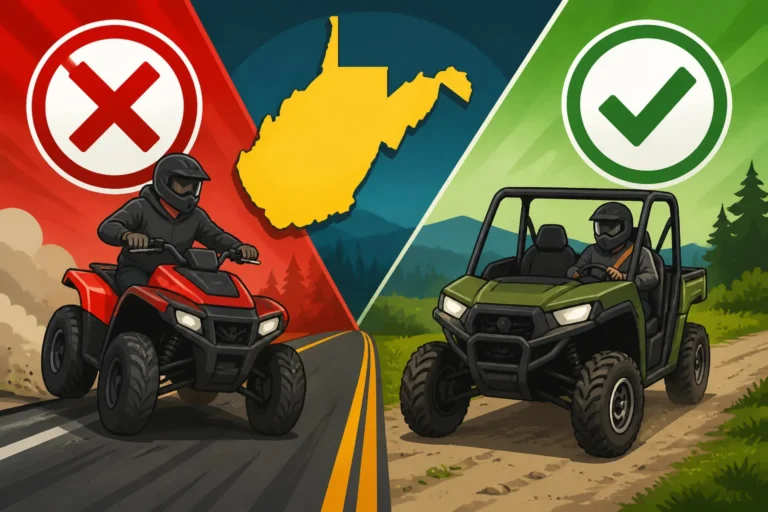
This is where a lot of the confusion regarding speed limits often comes into play. West Virginia has a specific category for "Special Purpose Vehicles" (SPVs), which are essentially ATVs or UTVs that have been legally modified and registered to be street legal. These machines operate under a different set of rules than your typical off-road machine making a brief road connection.
Does the 25 mph Limit Apply to SPVs?
Generally, no, the 25 mph limit does not apply to fully street-legal Special Purpose Vehicles (SPVs) in the same way it applies to standard ATVs/UTVs making limited road excursions. When an ATV or UTV is properly titled and registered as an SPV with a West Virginia SPV plate, it is considered a legitimate motor vehicle on public roads, and therefore, it is typically permitted to travel at the posted speed limit of the road, up to a certain maximum.
The standard maximum speed for an SPV on a public road in West Virginia is often 55 mph, provided the road's posted speed limit allows for it. This means if you're driving your SPV on a county road with a 45 mph limit, you can legally travel at 45 mph. If you're on a road with a 35 mph limit, you can go 35 mph. The 25 mph restriction is specifically for non-SPVs making those short, designated crossings or connections.
However, there's a critical caveat: while SPVs generally aren't capped at 25 mph, there can still be local ordinances within specific towns or municipalities that might impose lower speed limits or other restrictions on SPVs, even if state law allows for higher speeds. Always pay attention to local signage, especially in small towns. Furthermore, SPVs are often restricted from higher-speed divided highways or interstates. For more information on SPVs, check out [West Virginia's Street-Legal Special Purpose Vehicle Plate].
Equipment and Requirements for Higher Speeds
To be legally registered as an SPV and enjoy the privilege of higher road speeds, your ATV or UTV must meet a stringent list of equipment requirements, transforming it from a purely off-road machine into a road-worthy vehicle. This is far more involved than just adding a speedometer.
Here's a general overview of what an SPV typically needs:
- DOT-Approved Tires: Your knobby off-road tires are usually not DOT-approved for street use. SPVs require tires designed and rated for road travel.
- Headlights, Taillights, Brake Lights: All must be functional and meet DOT standards for brightness and visibility.
- Turn Signals: Both front and rear turn signals are mandatory for indicating your intentions to other drivers.
- Horn: A working horn is essential for safety.
- Rearview Mirrors: At least one, but often two, mirrors are required for adequate rearward visibility. Many riders opt for aftermarket options from companies like SuperATV that provide robust, vibration-resistant mirrors suitable for both road and trail.
- Windshield: A safety glass windshield is often required, or if an open-cab design, eye protection is strictly enforced.
- Seatbelts/Restraints: For UTVs, factory seatbelts are usually sufficient, but they must be functional.
- Roll Cage/ROPS: UTVs come with Rollover Protective Structures (ROPS) from the factory; these are critical for occupant safety.
- License Plate Mount and Light: A designated spot for your West Virginia SPV license plate, illuminated after dark.
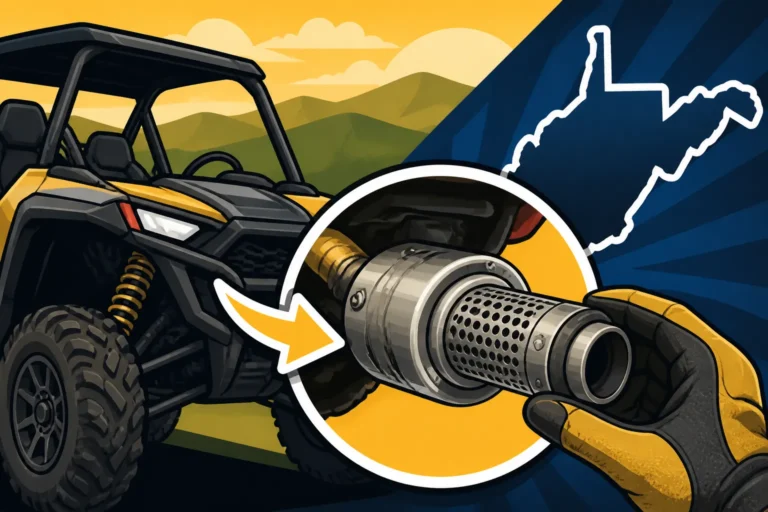
- Muffler/Spark Arrester: Must meet noise regulations and have a spark arrester.
This is not an exhaustive list, and requirements can be updated, so always check the latest West Virginia DMV guidelines for SPV conversion. The cost and effort to convert a machine to an SPV are significant, but they grant you the freedom to ride at legal road speeds, dramatically expanding your riding possibilities beyond the 25 mph cap.
West Virginia ATV/UTV Road Speed Limits at a Glance
To help clarify the various speed limits we've discussed, here's a quick reference table. Remember, always consult the most current West Virginia DMV regulations and local ordinances for precise, up-to-date information, as laws can change.
| Vehicle Type / Registration | Road Access Type | Speed Limit | Notes / Conditions |
|---|---|---|---|
| Standard ATV/UTV | Road Crossing | 25 mph | For direct, safe crossing of public roads (55 mph or less) to connect trail segments. Must yield to traffic. |
| Standard ATV/UTV | Designated 10-Mile Connector / Trail Town Access | 25 mph | On public roads with a posted speed limit of 25 mph or less, for up to 10 miles, to connect trails or access services. You cannot exceed 25 mph even if the road's limit for cars is slightly higher. |
| Special Purpose Vehicle (SPV) | General Public Roads | Posted Speed Limit (up to 55 mph) | For machines with a valid WV SPV plate, meeting all street-legal equipment requirements. Must adhere to the road's posted speed limit, generally up to 55 mph. May have restrictions on divided highways/interstates. |
This table should give you a good overview, but again, your responsibility as a rider is to know the specific rules for your machine and the roads you intend to ride. Being informed is your best defense against accidents and citations.
Disclaimer
This article is for general informational purposes only and does not constitute professional advice. Laws, prices and regulations vary by location and change over time. Consult a qualified professional for guidance on your specific situation.