West Virginia Road Rules Riders Get Wrong
Many ATV and UTV riders in West Virginia hit the pavement assuming they know the rules, only to find themselves scratching their heads or, worse, facing an unexpected ticket. The truth is, while our state is incredibly friendly to off-road enthusiasts, the specific laws for riding your machine on public roads are often misunderstood and can be surprisingly nuanced. This guide will walk you through the most common road rule misconceptions, helping you understand exactly what you can and cannot do to keep your rides legal and stress-free.
The Core Misconception: Not All Roads Are Created Equal
This is where many riders stumble right out of the gate. They hear "West Virginia is ATV-friendly" and interpret it as "I can ride anywhere." While it's true that West Virginia has made tremendous strides in opening up road access for ATVs and UTVs, especially within our beloved trail towns, there are very distinct limitations that apply to the vast majority of public roads. It's not a free-for-all, and understanding the difference between a designated trail connector and a state highway is absolutely crucial.
Public Road Access Versus Designated Trail Connectors
You see signs in towns like Gilbert, Man, or Williamson that practically welcome your side-by-side onto Main Street. This is fantastic and a huge part of what makes our trail system so unique and enjoyable. However, those specific town ordinances and designated trail connector roads operate under different permissions than a random stretch of state highway out in the county. A lot of the confusion comes from not differentiating these two. On designated trail connector roads, often within approved trail towns, you typically have broader access and can often ride directly from your lodging to the trailhead, or to grab a bite to eat. These are the exceptions, not the rule, for the state as a whole.
When you venture outside these clearly marked areas, the general West Virginia Code regarding ATVs on public roads kicks in, and it's far more restrictive. The assumption that because you can ride in a trail town, you can ride on any county or state road to get from point A to point B often leads to trouble. Always verify local ordinances and stick to designated routes. Riding on state-maintained roads, outside of specific low-speed, short-distance exemptions or designated trail connectors, is generally prohibited for conventional ATVs and UTVs. This means that scenic route you found on a map might be off-limits even if it looks like a quiet backroad.
The Myth of the "10-Mile Rule" and Where It Applies
Here’s a big one that causes a lot of headaches: the "10-mile rule" is frequently misunderstood. Many riders believe they can just hop on any road and ride for 10 miles, no questions asked. In reality, the specific rule allowing an ATV or UTV on a public road for a limited distance (and speed) is quite precise. It generally applies to county or secondary roads, not primary state routes or divided highways. And even then, it's typically for the purpose of getting to or from a trail, a hunting area, or for agricultural use. It's designed for short, practical transitions, not for joyriding across the county. [West Virginia's 10-Mile, 25 mph Road Rule] details these specific conditions. It’s also often limited to roads without a centerline. If a road has a painted centerline, it’s usually considered a primary or more heavily trafficked route, and those 10-mile exemptions rarely apply. People often confuse the general access with the very specific conditions under which these exemptions apply.
Demystifying the "Road Legal" Equipment Checklist
Another common pitfall for riders venturing onto West Virginia roads is the assumption that their machine, as it sits, is "road legal." It’s easy to think a basic set of headlights and a taillight are enough, especially if you’ve only ever ridden trails during the day. However, when you cross onto a public thoroughfare, even for a short distance, your ATV or UTV is subject to many of the same equipment requirements as other vehicles, with some specific nuances. Skipping these can lead to fines, or worse, make you a safety hazard.
Essential Equipment You Might Be Missing
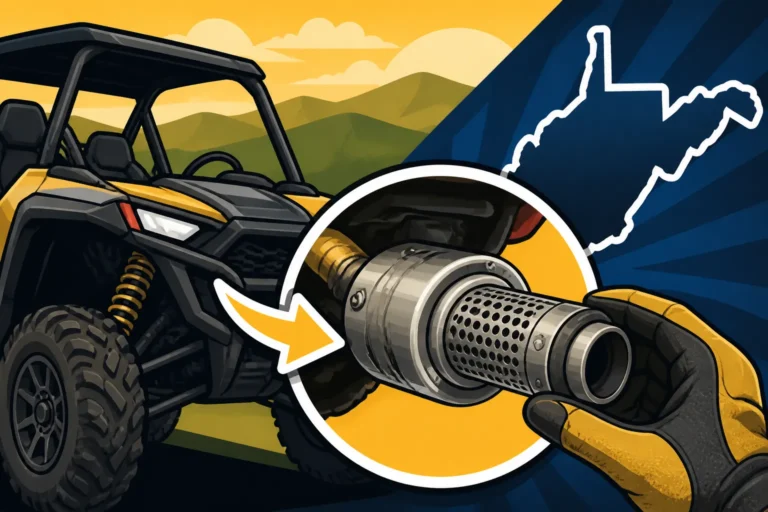
For any road use beyond an immediate crossing, West Virginia law often requires a range of safety equipment that many off-road machines don't come with stock, or that riders simply overlook. This isn't just about avoiding a ticket; it's about making yourself visible and safe amongst other traffic. We’re talking about things like turn signals, a horn, brake lights, and even mirrors. Many riders believe that hand signals are sufficient, but official road use requires proper signaling equipment. [Equipment West Virginia Requires on a Road Ride] covers this in detail. Without these, you're not just risking a fine; you're creating a dangerous situation when merging or turning, especially in areas with blind spots or higher traffic.
Visibility is also paramount. Beyond headlights and taillights, many riders forget about reflectors. Your machine might have some small reflectors, but often they are not sufficient for road-legal operation, especially if you plan to ride anywhere near dusk or dawn. Sometimes, an amber flashing beacon is required for certain uses, or if you're operating at very low speeds. Investing in a good street-legal conversion kit, perhaps from a brand like SuperATV, can help ensure you have all the necessary components, from DOT-approved tires to proper lighting and signaling. Don't just assume your existing trail lights cut it; check the specifics.
Special Purpose Vehicles SPVs and Their Unique Rules
This is where some of the deepest confusion lies. West Virginia offers a "Special Purpose Vehicle" (SPV) plate, which allows UTVs to be made fully street-legal, not just for limited road crossings or trail connectors. Many riders confuse the general road access rules with the requirements for an SPV. Getting an SPV plate is a comprehensive process that requires a full suite of modifications and inspections, essentially turning your UTV into a low-speed vehicle that can legally operate on most roads, with a few exceptions. [West Virginia's Street-Legal Special Purpose Vehicle Law] outlines this detailed process.
The key difference is that an SPV is essentially re-classified for extensive road use, whereas a standard ATV/UTV only has limited road access under very specific conditions. If you've modified your UTV with a windshield, wipers, turn signals, mirrors, a horn, and DOT-approved tires, you might be halfway to an SPV, but without the actual plate and registration, you're still subject to the more restrictive general ATV road rules. People often think adding a few accessories makes them "street legal," but it's the official SPV registration that makes the real difference for widespread road use. The [West Virginia's 20-Mile Centerline Limit for an SPV] is a good example of the specific rules an SPV enjoys compared to a non-SPV machine.
Beyond Equipment: Driver Behavior and Roadway Specifics
Even with the right equipment and a clear understanding of where you can ride, the way you operate your machine and the specific type of road you're on can still lead to trouble. West Virginia has specific rules regarding speed, how you navigate different types of roads, and, crucially, who can actually be behind the controls. These are often where riders, especially those accustomed to trail riding, inadvertently break the law.
Speed Limits, Road Types, and How Far You Can Go
It’s not just about if you can ride on a road, but how. Even on roads where ATVs are permitted, there's often a strict speed limit – typically 25 mph. This is a crucial point that many riders miss or ignore, especially when they're used to higher speeds on trails or open land. Exceeding this limit, even on a short stretch, can net you a ticket. Beyond speed, the type of road matters immensely. Riding on a county route with no centerline is vastly different from attempting to cross a major four-lane highway. [West Virginia Rules for Divided Highways] clearly outlines these restrictions. You cannot simply ride across an interstate or a busy multi-lane highway; specific, designated crossings are usually required, or it might be entirely prohibited.
Riders also get confused about the intent of road access. The short-distance rules (like the 10-mile limit) are for connecting trails or accessing immediate points of interest, not for long-distance travel. Trying to stretch that 10-mile limit by weaving through different roads can quickly put you outside the law. It’s also important to remember that riding the shoulder of a state highway is almost universally illegal. Your machine needs to be in the lane of traffic (if permitted), not on the shoulder, and even then, you must adhere to the 25 mph limit and other traffic laws.
Driver Age, Licensing, and Alcohol Restrictions
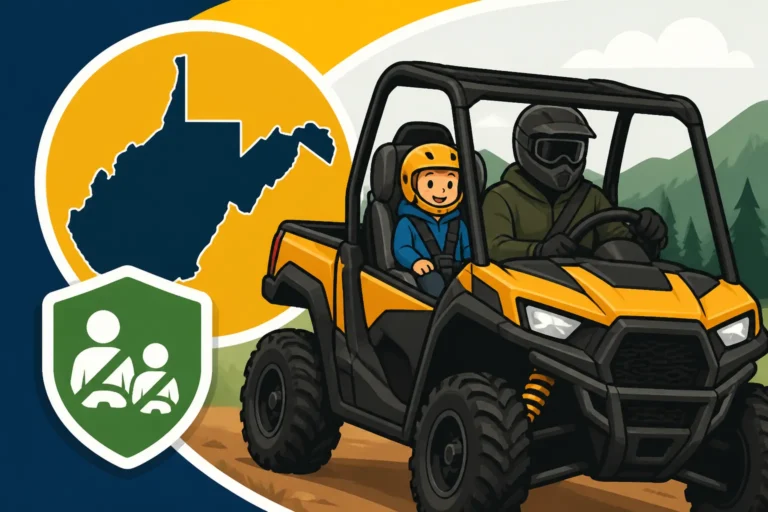
This area is another hotbed of misunderstanding, particularly concerning younger riders. While minors can ride on private property or designated trails under supervision, putting them on a public road is a different ball game. [West Virginia ATV Road Rules for Young Riders] are very specific: generally, you need a valid driver's license to operate an ATV or UTV on any public road. This means even if a 15-year-old is a highly experienced trail rider, they cannot legally operate an ATV on a public road, even a short connection, without being licensed and meeting other criteria. [Driver's License Rules for West Virginia Road Riding] clarifies this. The rules are designed for safety and adherence to standard traffic laws. And don't forget the helmet rules – [West Virginia Helmet Rules for Riders Under 18] are non-negotiable on public roads, regardless of whether you're driving or a passenger.
Perhaps one of the most dangerous and commonly overlooked areas is alcohol consumption. Just like driving a car, operating an ATV or UTV on a public road while under the influence is illegal and carries severe penalties. [Alcohol Limits for West Virginia ATV Operators] are the same as for any motor vehicle driver. The "it's just a short ride back to the cabin" mentality can lead to a DUI, significant fines, loss of driving privileges, and even jail time. Don't ever assume that because it's an off-road machine, the alcohol laws are more lenient; they are not when you're on public asphalt.
Real-World Penalties and What You Risk
Getting the rules wrong in West Virginia isn't just about a slap on the wrist. Law enforcement in our trail towns and across the state is well-versed in ATV and UTV regulations, and they take violations seriously, particularly when public safety is at stake. Ignoring the nuances of road riding can lead to significant financial penalties, legal trouble, and even the loss of your riding privileges. It's not worth cutting corners when the consequences can be so steep.
Fines, Citations, and Vehicle Impoundment
The most immediate consequence of violating West Virginia's ATV road rules is, of course, a ticket. Fines for operating an unregistered, improperly equipped, or illegally ridden ATV on a public road can quickly add up. These aren't usually minor infractions; they can easily run into the hundreds of dollars. Beyond the financial hit, repeated or serious violations, especially those involving reckless operation or endangerment, can lead to your machine being impounded. [West Virginia ATV Ticket Costs] can be a rude awakening for those who thought the rules were lax. Imagine being on a riding trip, getting your machine impounded, and having to figure out how to recover it from a local impound lot while also dealing with fines. It can quickly ruin a vacation, and your wallet will certainly feel it.
Even seemingly minor infractions, like not having proper turn signals or riding on a prohibited road, can result in a citation. Law enforcement officers are often patrolling areas where riders are known to push the boundaries, and they're looking for compliance. It's far better to invest in the right equipment (like those sturdy mirrors or a full lighting kit from SuperATV) and know the rules than to face the frustration and expense of a roadside stop.
Legal Repercussions and Safety Hazards
Beyond direct fines, more serious violations can lead to legal repercussions. Operating an ATV under the influence on a public road, for example, is a DUI and carries the same legal weight as a DUI in a car. This can mean court appearances, a criminal record, and long-term impacts on your driver's license and insurance. [West Virginia Penalties for Reckless Riding] also highlight that dangerous operation isn't just a fine; it can escalate to much more severe charges, especially if it leads to an accident or injury.
The biggest risk, of course, is safety. The road rules are in place for a reason: to prevent accidents. When you ride an ATV or UTV on pavement, you're interacting with much heavier, faster-moving traffic. Your machine handles differently on asphalt than on dirt, especially when braking or turning at speed. By ignoring equipment requirements like mirrors or proper lights, or by riding on roads you shouldn't be on, you're not only breaking the law but putting yourself, your passengers, and other motorists at extreme risk. It's a critical reminder that understanding and following these rules isn't just about avoiding legal trouble, but about ensuring everyone gets home safely.
| Misconception | West Virginia Reality | Risk if Wrong |
|---|---|---|
| "Any road is fair game, especially backroads." | Limited access: only designated trail connectors, specific county roads, or SPV-plated machines. Most state highways are prohibited. | Fines, impoundment, accident risk. |
| "The 10-mile rule means I can ride anywhere for 10 miles." | Specific conditions: applies to certain county/secondary roads, often without a centerline, for limited purposes (e.g., trail access), with a 25 mph speed limit. | Tickets for exceeding distance/speed/road type. |
| "My machine is fine as-is for road use." | Requires specific equipment: turn signals, horn, mirrors, brake lights, DOT tires, reflectors. SPVs need even more. | Fines, safety hazard, potential liability. |
| "Kids can ride on roads with supervision." | Operators on public roads generally need a valid driver's license. Age restrictions are strict. | Fines, guardian liability, endangering youth. |
| "Alcohol rules are relaxed for ATVs." | DUI laws apply the same as for cars on public roads. No open containers. | DUI charges, license suspension, criminal record. |
Disclaimer
This article is for general informational purposes only and does not constitute professional advice. Laws, prices and regulations vary by location and change over time. Consult a qualified professional for guidance on your specific situation.