Measuring the 10-Mile Limit in West Virginia
Navigating West Virginia's roads with your ATV or UTV can feel like walking a tightrope, especially when you're trying to figure out just how far you can legally ride. Many riders grapple with the anxiety of staying within the notorious 10-mile limit, constantly wondering if they're about to cross an invisible line that could lead to a citation. This guide is here to untangle that confusion, offering practical advice and clear explanations on how to understand, track, and adhere to West Virginia's specific regulations for riding your machine on public roads.
Understanding West Virginia's 10-Mile ATV Road Rule
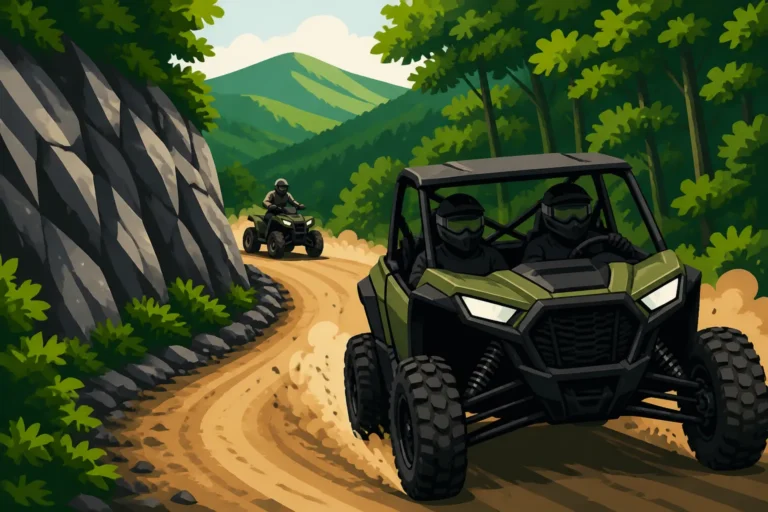
The Mountain State offers some of the best off-road riding in the country, but getting to those trails often involves a stretch of pavement. That's where the 10-mile rule comes into play, a regulation that causes a fair bit of head-scratching among even seasoned riders. It's not just a casual suggestion; it's a specific legal framework designed to balance rider access with public safety.
What the Law Actually Says
West Virginia law permits ATVs and UTVs to operate on certain public roads for a limited distance, primarily to connect trail systems or access services. The key here is "limited distance" and "certain public roads." Specifically, the law allows for a maximum travel distance of 10 miles on roads that are not divided highways and that have a posted speed limit of 35 mph or less. Critically, when you're on these roads, your machine cannot exceed 25 mph. This isn't a free pass to cruise down main street; it's a very specific allowance. You're generally supposed to stick to the far right side of the roadway, maintaining maximum visibility and allowing other traffic to pass safely. The intention is clearly for brief transitions, not extended road travel. It's easy to get this mixed up, especially when you see folks riding through trail towns, but the distinction between a state road and a town street with specific ordinances is absolutely crucial.
Why This Limit Exists
The 10-mile, 25 mph rule isn't arbitrary; it's a compromise. Lawmakers recognized the economic benefit of ATV and UTV tourism, particularly in the southern coalfields where trail systems like the Hatfield-McCoy Trails are a massive draw. They wanted to provide a legal means for riders to connect different trail systems, access gas stations, grab a bite to eat, or reach their lodging without having to load and unload their machines onto a trailer repeatedly. Imagine riding the Devil Anse Trail system and wanting to link over to Rockhouse; without this rule, those short connecting road sections would be illegal unless you had a full street-legal Special Purpose Vehicle (SPV) plate. However, they also had to consider the safety of other motorists and the riders themselves. ATVs and UTVs, by their nature, aren't designed for high-speed road travel. Their suspension, tires, and general stability are optimized for off-road terrain, not asphalt. The 25 mph cap and 10-mile limit are a direct reflection of this safety concern, aiming to minimize potential hazards on public roads. It's about enabling access while mitigating risk.
Who This Rule Applies To
This specific 10-mile, 25 mph rule applies to unlicensed ATVs and UTVs that are otherwise legal to ride on designated trails. If your machine isn't titled as a "Street-Legal Special Purpose Vehicle" (SPV) by the West Virginia DMV, then you are subject to these restrictions when you venture onto public roads. The important distinction here is between a standard off-road machine and an SPV. An SPV has gone through a conversion process, been inspected, and received a proper license plate, effectively making it legal for much broader road use, often without the 10-mile or 25 mph limitations, though other specific rules still apply. For the vast majority of riders pulling into a trailhead, their machine is not an SPV, and therefore, they must adhere to the 10-mile and 25 mph limits when on applicable public roads. Ignoring this distinction can lead to immediate trouble, as deputies in trail towns are very aware of the differences. It's vital to know which category your machine falls into before you even think about hitting the pavement.
Practical Ways to Track Your Mileage on the Road
Figuring out how far you've actually traveled on a public road within that 10-mile limit can be a real headache. Nobody wants to be pulled over because they misjudged a distance, especially when you're just trying to get from your cabin to the trailhead. Thankfully, there are several tools and methods you can use to keep a close eye on your mileage, ranging from your machine's built-in features to high-tech gadgets.
Relying on Your Machine's Odometer
Most modern ATVs and UTVs come equipped with an odometer, which tracks the total distance your machine has traveled since it was new. More importantly for our purposes, many also have a trip odometer function. This allows you to reset a secondary mileage counter to zero, making it perfect for tracking specific segments of your ride.
The beauty of using your machine's trip odometer is its simplicity and convenience. It's always there, integrated into your dash, and doesn't require any extra batteries or signal. Before you pull onto a public road, you can simply reset your trip meter to zero. As you ride, you can glance down and see exactly how many miles you've covered on the pavement. This method is fantastic for quick, straightforward point-to-point road sections, like heading from your campground to the entrance of the Hatfield-McCoy Trails.
However, there are downsides. It's easy to forget to reset it, especially when you're excited to hit the trails or distracted by your riding buddies. If you make multiple short road trips throughout the day without resetting, you'll lose track of individual segments. Plus, some older machines might not have a trip odometer, or it might be less precise. You also have to remember that your odometer might not be perfectly calibrated, especially if you've changed tire sizes without recalibrating the speedometer. While generally reliable for these purposes, it's not foolproof and requires diligent attention on your part.
Using GPS Devices and Apps
In today's world, technology offers some of the most accurate and convenient ways to track your mileage. Dedicated GPS units and smartphone apps can be invaluable tools for staying within West Virginia's 10-mile road limit.
Many riders invest in rugged, off-road specific GPS units from brands like Garmin, or use mapping apps such as onX Offroad, Gaia GPS, or even Google Maps on their smartphones. These tools offer several advantages. First, they provide highly accurate mileage tracking, often more precise than a standard machine odometer. You can usually set waypoints, track your route in real-time, and see exactly how far you've traveled on a particular segment. Many apps allow you to pre-plan your route, visually identifying road sections and measuring their distances before you even leave your starting point. This pre-planning feature is gold, allowing you to confirm that a necessary road connection is indeed within the 10-mile limit. You can even save routes and share them with your group, ensuring everyone is on the same page. Companies like SuperATV offer a range of mounting solutions, from simple clamps to elaborate dash kits, making it easy to securely attach your GPS device or smartphone to your UTV's dash, keeping it visible and protected as you ride.
The main drawbacks are battery life for smartphones (always carry a charger or power bank!), potential signal loss in remote areas (though GPS relies on satellites, not cell towers, for basic positioning), and the initial cost of a dedicated unit or a premium app subscription. For example, if you're riding deep in the hollers of southern West Virginia, a cell signal might be spotty, but a standalone GPS unit will still track your route effectively. Despite these minor hurdles, GPS is arguably the most reliable method for accurately measuring road mileage and ensuring you don't accidentally overstep the law. [West Virginia Trail Maps and Signage] can be seamlessly integrated with these digital tools, making route planning even easier.
Manual Tracking and Trip Planners
Sometimes, the simplest methods are the best, or at least a good backup. Manual tracking and detailed trip planning can complement your odometer or GPS, providing a clear roadmap for your limited road travel. This is particularly useful when you're exploring new areas or if your electronics decide to fail.
Before you even start your engine, get out a map (paper or digital) and trace your intended route. Identify every section where you'll be on a public road that isn't part of a designated trail system. Use the mileage markers on the map or the distance tools in a mapping app to estimate the length of each road segment. Jot these down in a small notebook or on a laminated card you can carry with you. For example, if you know it's 2.3 miles from your cabin to the gas station, and then another 4.5 miles to the trailhead, you know you're looking at 6.8 miles total for that leg, well within the 10-mile limit.
When you're actually riding, be mindful of landmarks. "Okay, we turn onto Route 52 at the old general store, and the trailhead is just past the second creek crossing." Resetting your machine's trip odometer at the start of each road section and cross-referencing with your pre-planned notes can provide extra confidence. This method encourages proactive planning, reducing the stress of guessing your mileage on the fly. It's about being prepared and having a clear understanding of your route before you even put your tires on the pavement.
Common Scenarios and How the 10-Mile Rule Applies
The 10-mile limit isn't just an abstract number; it's a practical consideration that comes into play in many real-world riding situations across West Virginia. Knowing how it applies to typical rider activities can save you a lot of grief and ensure your trip stays on the right side of the law.
Connecting Trailheads and Lodging
One of the most frequent reasons riders utilize the 10-mile rule is to connect from their lodging directly to a trailhead, or to jump between different trail systems. Imagine you're staying in a rental cabin in Gilbert, a well-known trail town. You've unloaded your UTV and want to ride directly to the Rockhouse Trailhead, which might be a few miles away on a county road. This is precisely the kind of scenario the 10-mile rule is designed for.
In this instance, you'd pull out of your cabin driveway, reset your trip odometer, and head down the public road. You're legally allowed to travel up to 10 miles, at or below 25 mph, to reach that trailhead. The key is that this entire journey—from leaving your private property to entering the designated trail system—must be continuous road travel and stay within that limit. If you have to take a longer route, say 12 miles, you would technically be in violation. This is why pre-planning your route using a GPS or map is so important, especially for those longer connections. You need to verify that your lodging or the next trail system is genuinely within a 10-mile stretch of allowable road. [Riding Home From the Trailhead Legally] outlines the return trip, which, of course, faces the same constraints.
Crossing Roads and Short Transitions
Sometimes, you're not riding on a road for an extended period, but merely crossing one, or traversing a very short stretch between two distinct trail segments. Does this count towards the 10-mile limit? Generally, yes, any time your wheels are on a public road, it contributes to your total.
However, there's a practical distinction. A quick, perpendicular crossing of a highway to get from one side of a trail to the other might be less scrutinized than riding down that highway for several miles. The law permits crossing any highway, except a divided highway, if the crossing is made at an angle of approximately 90 degrees to the roadway. If you have to travel a short distance along a road, say 0.2 miles, to get to the next trail entrance, that 0.2 miles absolutely counts toward your 10-mile total. The spirit of the law implies that these transitions should be as brief and direct as possible. You should always aim for the shortest, safest path and continue your journey on the trail as quickly as possible. Law enforcement officers are keen observers of intent; lingering on the road or making unnecessary detours will certainly draw attention.
Riding to Fuel, Food, or Services
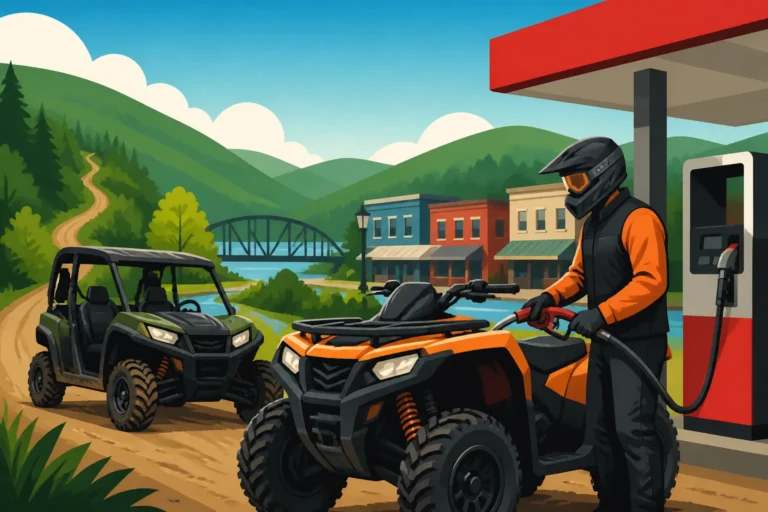
Another common use of the 10-mile road rule is to access essential services while you're out riding. Let's say you're on the Pinnacle Creek Trail system, your fuel gauge is looking low, and you know there's a gas station in the nearest trail town. This is a perfect scenario for utilizing the 10-mile limit.
You would exit the trail system, get onto the public road, and head towards that gas station. The distance traveled from the point you hit the road to the gas pump, and then back to the trail or to your lodging, all counts towards your 10-mile allowance. It's not 10 miles to the gas station and then another 10 miles to the restaurant. It's a continuous 10-mile maximum for any given segment of road travel. This means you need to plan your fuel and food stops strategically. If the closest services are 8 miles away, that leaves you only 2 miles for any other road segments you might need for that particular trip. Some savvy riders might carry extra fuel in approved containers on their machines, like those from SuperATV that are designed for rugged off-road use, especially if they know their intended route has limited services within the 10-mile radius. This reduces the need for extensive road travel, making your ride safer and more compliant.
Avoiding Penalties and Staying Legal
Nobody wants their exciting West Virginia riding trip to end with a costly citation or, worse, a confiscated machine. Understanding the rules is one thing; actively following them and taking steps to avoid common pitfalls is another. Being informed and prepared is your best defense against unintended legal trouble.
The Risks of Exceeding the Limit
The consequences of exceeding the 10-mile road limit, or violating the 25 mph speed restriction, can range from a slap on the wrist to a serious disruption of your trip. Local law enforcement, especially in popular trail towns, are very familiar with these regulations and are actively patrolling. You might face a citation with a fine, which can quickly add up and put a damper on your adventure budget. More severely, repeated violations or particularly egregious acts (like speeding or reckless driving on public roads) could lead to your machine being impounded. Imagine having your UTV towed away in a remote area, leaving you stranded and facing significant recovery fees on top of fines.
Furthermore, if you're involved in an accident while operating illegally on a public road, your insurance coverage might be jeopardized, leaving you personally liable for damages or injuries. This isn't just about avoiding a ticket; it's about safeguarding your finances and ensuring your safety. [West Virginia ATV Ticket Costs] can vary, but any fine is a frustrating expense that could have been avoided with careful planning and adherence to the rules.
Best Practices for Road Riding
Staying within the legal bounds while enjoying West Virginia's roads requires a proactive approach and a commitment to safe riding practices.
First, pre-plan your route meticulously. Use maps and GPS (as discussed earlier) to measure every road segment you intend to use. Confirm that each section is within the 10-mile limit and that the speed limits on those roads are 35 mph or less. Don't assume; verify.
Second, make yourself highly visible. Wear bright clothing, use reflective tape on your machine, and ensure all your lights (headlights, taillights, brake lights) are functioning perfectly. When riding on the road, maintain a single file line, stick to the far right side of the road, and be extremely aware of surrounding vehicle traffic. Signal your turns clearly and avoid sudden movements. Always assume other drivers might not see you.
Third, carry all essential documents. This includes your valid Hatfield-McCoy Trail permit, your driver's license (if you have one and are riding on the road), and any other proof of ownership or insurance that might be required. While you're not required to carry your title on the trail, having proof of ownership handy for a road interaction is always a good idea. [Equipment West Virginia Requires on a Road Ride] details all the mandatory items you need, which are even more critical when operating on public roads.
Finally, set your trip odometer at the start of every road segment and monitor it. Reset it each time you leave private property or exit a trail onto a public road. This simple habit is one of the best ways to ensure you don't inadvertently exceed the limit.
When a Street-Legal SPV is the Better Option
If you find yourself consistently pushing the 10-mile limit, or if your riding plans frequently involve longer stretches of public road travel, it might be time to consider converting your ATV or UTV into a Street-Legal Special Purpose Vehicle (SPV). This is a game-changer for West Virginia riders who want more freedom on the pavement.
An SPV is an ATV or UTV that has been modified to meet specific safety and equipment requirements set by the state, much like a traditional car or motorcycle. These modifications typically include things like DOT-approved tires, a windshield, turn signals, brake lights, a horn, mirrors, and often a license plate light. Once inspected and approved by the West Virginia DMV, your machine receives a special SPV license plate, effectively exempting it from the 10-mile and 25 mph restrictions (though standard road rules like speed limits, traffic laws, and specific highway prohibitions still apply).
This opens up a world of possibilities for riders who want to traverse greater distances between trail systems, explore multiple trail towns without trailering, or even commute short distances on public roads. Companies like SuperATV specialize in providing many of the parts needed for SPV conversions, from full kits to individual DOT-approved components like safety glass windshields, turn signal kits, and rearview mirrors. While there's an initial investment in parts and inspection fees, the peace of mind and expanded riding opportunities often make it a worthwhile endeavor for dedicated riders. If you're tired of constantly worrying about the 10-mile cap, an SPV might be your ultimate solution. [West Virginia's Street-Legal Special Purpose Vehicle Plate] offers a deeper dive into this option.
Specific Rules About the 10-Mile Limit
The 10-mile limit isn't just about distance; it's a package deal that comes with other very specific conditions designed to ensure safety and order on West Virginia's public roads. Ignoring any one of these connected rules can put you in violation, regardless of your mileage.
The 25 mph Cap on a West Virginia Road Ride
This is perhaps the most overlooked aspect of the 10-mile rule, and it's absolutely critical. When you're operating an ATV or UTV on a public road under the 10-mile allowance, your speed cannot exceed 25 mph. It doesn't matter if the posted speed limit for cars is 35 mph or even 55 mph; for your off-road machine in this specific context, the cap is 25 mph.
Why so slow? As discussed, ATVs and UTVs are designed for off-road performance, not asphalt cruising. Their handling characteristics, braking distances, and stability at higher speeds on pavement are significantly different from those of a passenger vehicle. Exceeding 25 mph dramatically increases the risk of losing control, especially on curves or if you encounter unexpected road hazards. It's a safety measure first and foremost, protecting both you and other motorists. Furthermore, adhering to this speed limit makes your presence on the road more predictable for other drivers, reducing the chances of an accident. Deputies and state troopers are very aware of this speed restriction, and exceeding it is an easy way to get pulled over. Always check your speedometer and keep it under that 25 mph mark, no matter how clear the road seems. [The 25 mph Cap on a West Virginia Road Ride] is a rule that sees frequent enforcement.
West Virginia's Rule for Roads Without Center Lines
West Virginia has a lot of rural, winding roads, many of which lack painted center lines. These are often county roads, old logging roads, or simply less-trafficked backroads. The good news for ATV/UTV riders is that the 10-mile rule explicitly allows for operation on these types of roads, provided they are not divided highways and have a posted speed limit of 35 mph or less. This is incredibly helpful for connecting to more remote trailheads or accessing cabins tucked away off the beaten path.
However, just because there's no center line doesn't mean there are no rules. You still must adhere to the 25 mph speed limit and the 10-mile distance cap. When riding on a road without a center line, you are expected to operate your machine as far to the right side of the roadway as safely possible. This ensures you're not impeding traffic and that you can be easily seen by oncoming vehicles, especially around blind curves. While these roads might feel more like trails, they are still public thoroughfares, and you share them with other vehicles, including large trucks. Always be alert and yield to conventional traffic. [West Virginia's Rule for Roads Without Center Lines] highlights this important aspect of the law.
Riding the Shoulder of a West Virginia Highway
Many riders, in an attempt to be courteous and safe, might wonder if they can simply ride on the shoulder of a public road, especially a busier one, to avoid the main traffic lanes. For unlicensed ATVs and UTVs operating under the 10-mile rule, the regulations generally expect you to be on the far right portion of the actual roadway, not necessarily the shoulder, unless doing so is necessary to avoid an immediate hazard.
It's a common misconception that shoulders are fair game. In most cases, riding on the shoulder for an extended period, especially on state highways, can be seen as unsafe or even illegal. Shoulders are often narrower, less maintained, and can have debris that poses a risk to your machine. More importantly, using the shoulder to avoid the 10-mile limit or 25 mph speed cap is not a loophole. The law specifies roads, and while a shoulder is part of the road right-of-way, continuous travel on it is generally not what the statute intends for ATVs/UTVs. The strictest interpretation of the law says you are on the "roadway," not an adjacent area.
Furthermore, absolutely no ATV or UTV is permitted to ride on the shoulder (or main lanes) of a divided highway in West Virginia, even for short distances. These are high-speed, multi-lane roads, and they are off-limits. If your route requires you to cross a divided highway, you must do so at a 90-degree angle, and absolutely not travel along it, even on the shoulder. When in doubt, stick to the main travel lane's far right edge, ensure you have all your proper [Equipment West Virginia Requires on a Road Ride], and adhere strictly to the 25 mph limit.
Local Ordinances and Their Impact
While state law sets the overarching 10-mile limit for ATV/UTV road travel, many West Virginia towns, especially those that cater to riders, have implemented their own local ordinances. These local rules can sometimes seem confusing in relation to state law, but understanding their role is key to enjoying your ride without trouble.
How a West Virginia Town Becomes ATV-Friendly
The concept of an "ATV-friendly town" has transformed riding in West Virginia. These are municipalities that have passed local ordinances specifically allowing ATVs and UTVs to operate on their town streets, often beyond the strict state 10-mile limit, within the town's corporate boundaries. This means you can often ride your machine from your hotel or cabin directly to a restaurant, gas station, or local store, all on designated town streets.
Towns like Gilbert, Man, Logan, Williamson, and Mullens have embraced this model, becoming hubs for off-road tourism. They recognize that allowing riders to freely access their businesses directly on their machines boosts local economies. However, it's critical to understand that these local ordinances only apply within the specific town limits. The moment you cross out of the town's jurisdiction and onto a state-maintained road (like a numbered route, e.g., WV-80 or US-52), the state's 10-mile, 25 mph rule immediately applies again. You can't use a town's ATV-friendly status as an excuse to ignore state law on a longer connecting road segment. Always look for signage indicating where town limits begin and end, and where ATV-friendly rules might transition back to state regulations. [How a West Virginia Town Becomes ATV-Friendly] explores this vital distinction further.
Riding to a Restaurant or Store in Town
This is where the local ordinances really shine and enhance the rider experience. Picture this: you've been on the trails all day, covered in dust, and you're craving a burger and a cold drink. If you're in an ATV-friendly town like Gilbert, you can simply ride your UTV directly from the trailhead (or your lodging within town) to a local eatery or general store.
Within these specific town limits, the usual 10-mile road restriction and often the 25 mph speed cap (though general town speed limits still apply and must be obeyed) are relaxed. You're typically allowed to use the town's street network for access to services. This convenience is a huge draw for riders, making these towns vibrant centers for off-road tourism. You don't have to load your machine onto a trailer, drive your truck into town, and then find parking. You can just ride up, park your machine in a designated spot (or often right on the street like a car, though be mindful of local parking rules), and enjoy the amenities.
However, a word of caution: even within an ATV-friendly town, you are expected to operate your machine responsibly. This means obeying all posted speed limits (which are often low in town, 15-25 mph), stopping at stop signs, yielding to pedestrians, and generally riding with extreme courtesy and caution. While the town permits your presence, reckless behavior will still earn you a citation from local law enforcement, and potentially erode the public support for ATV access. Remember, [West Virginia Sheriff Patrols in Trail Towns] are vigilant, and they're there to ensure everyone, riders and residents alike, stays safe.
Disclaimer
This article is for general informational purposes only and does not constitute professional advice. Laws, prices and regulations vary by location and change over time. Consult a qualified professional for guidance on your specific situation.