Studded Tires for Icy Trail Days
Riding the stunning trails of West Virginia during winter can be an incredible experience, but anyone who's faced slick, icy patches knows the sheer terror of losing traction. It's frustrating when your regular tires just can't grip, turning what should be an exhilarating ride into a white-knuckle crawl. This guide is all about equipping you with the knowledge to conquer those treacherous, frozen trails safely and confidently with studded tires.
Why Regular Tires Struggle on West Virginia's Icy Trails
West Virginia's landscape is absolutely breathtaking, especially when dusted with snow, but that beauty comes with its own unique challenges for ATV and UTV riders. When temperatures drop, our beloved trails transform, often becoming a dangerous mix of frozen mud, slick rocks, and sheer ice. Your standard all-terrain tires, while fantastic for most conditions, simply aren't designed to handle these specific winter hazards, and understanding why is the first step toward staying safe.
The Nature of Winter Terrain in the Mountains
Think about a typical winter day in the higher elevations of the Monongahela National Forest or even along the lower reaches of the Hatfield-McCoy Trails. You might start your ride on a layer of fresh, powdery snow, but as you climb or descend, that snow can quickly give way to packed ice, especially in shaded areas or where water typically collects and freezes. Creeks turn into icy crossings, muddy sections become skate rinks, and even seemingly benign rocks can be covered in a thin, almost invisible glaze of ice. Regular rubber compounds stiffen in the cold, losing their pliability and ability to conform to the terrain. The tread blocks, designed for loose dirt or rocky grip, just slide across these frozen surfaces, offering minimal resistance. It’s not just about snow depth; it’s about the underlying frozen hazards that can catch you completely off guard.
The constant freeze-thaw cycles that are so common in West Virginia winters make the trails particularly unpredictable. A warm spell might melt snow during the day, creating puddles that then refreeze into solid sheets of ice overnight. This means that a trail section that was perfectly fine in the morning could be extremely treacherous by late afternoon or the next day. This variability is why relying solely on standard tires can lead to so many close calls. Even aggressive mud tires, with their deep lugs, struggle to find purchase on a truly icy surface because the rubber itself doesn't have the micro-grip needed, and the lugs simply act like smooth blocks on glass. This challenge is why many riders find themselves looking for a specialized solution to ensure they can enjoy [Riding West Virginia Trails in Winter] without unnecessary risk.
The Dangers of Inadequate Traction
When your tires can't grip, you lose control, and on an ATV or UTV, that can have serious consequences. A sudden slide on an icy downhill can send you careening into trees or over an embankment. Trying to climb a modest incline with insufficient traction means spinning your tires helplessly, potentially sliding backward, or even rolling the machine if it catches awkwardly. It's not just about getting stuck; it's about the very real risk of injury or severe damage to your machine. I've heard countless stories from fellow riders who've had their winter fun cut short by a simple patch of ice that their tires just couldn't handle.
The mental toll of constantly worrying about traction also diminishes the enjoyment of the ride. Instead of soaking in the winter scenery, you're white-knuckling the handlebars, focusing intensely on every inch of ground, and riding much slower than you'd like. This isn't what riding in West Virginia is all about. You want to feel confident, capable, and in control, especially when venturing into remote areas where help might not be readily available. Poor traction also puts undue stress on your machine's drivetrain as you constantly spin tires and fight for grip, potentially leading to premature wear on clutches, belts, and axles. It's a cascade of problems that all stem from that fundamental lack of grip, making the search for better winter solutions like studded tires a priority for serious cold-weather enthusiasts.
The Benefits of Studded Tires for Winter Riding
If you're serious about extending your riding season through West Virginia's colder months, you absolutely need to consider studded tires. They are a game-changer for navigating the challenging, frozen conditions we often encounter. Forget about those frustrating slips and slides; studded tires provide a level of grip and control that regular tires simply cannot match when ice and hard-packed snow are on the menu.
Enhanced Grip on Ice and Hard-Packed Snow
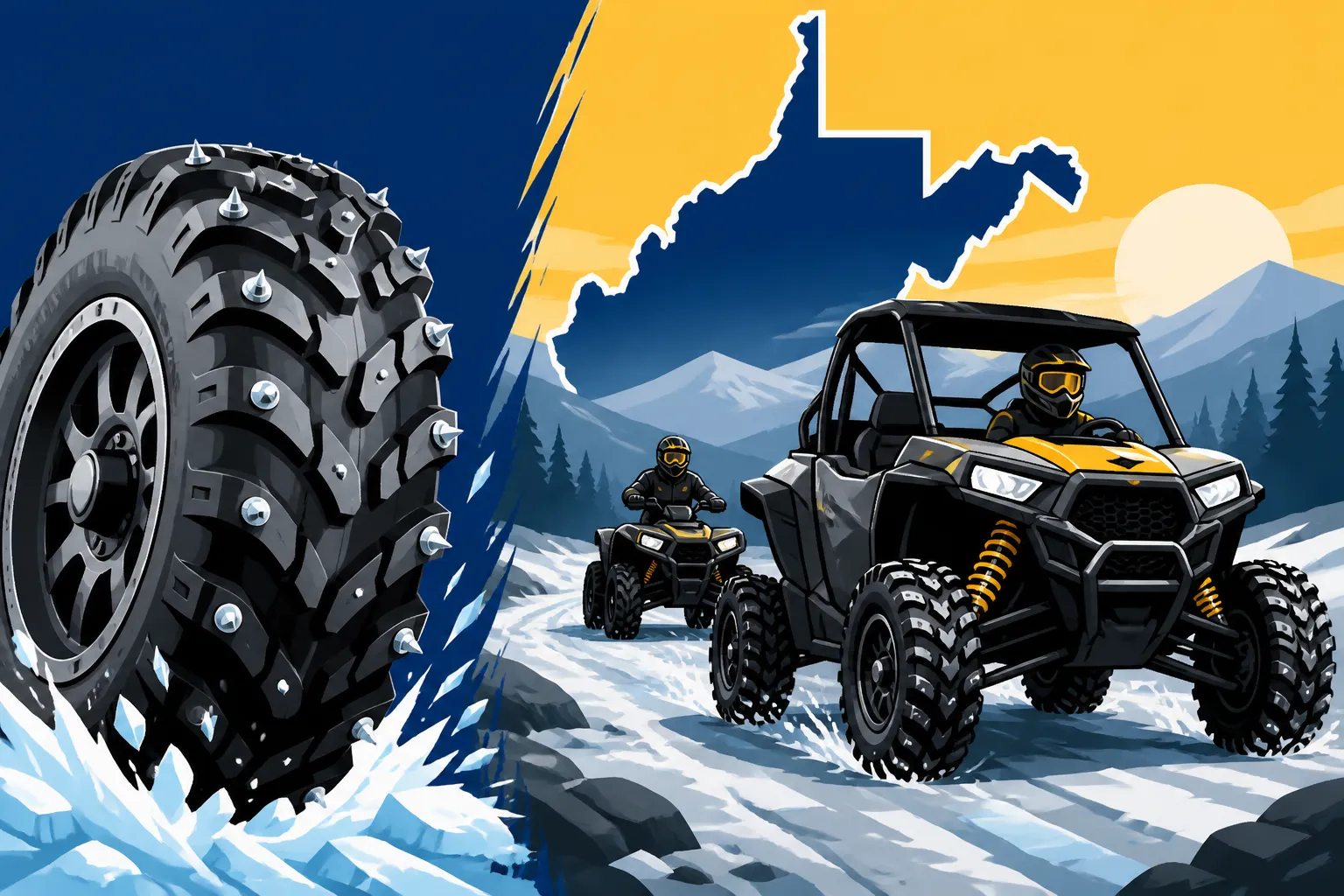
The primary advantage of studded tires lies in their ability to bite into ice. Each stud, typically made of tungsten carbide, acts like a tiny, aggressive claw, digging into the slick surface. This isn't just a minor improvement; it's a fundamental shift in how your tires interact with the ground. Imagine trying to walk across an ice rink in sneakers versus in ice cleats—that's the kind of difference we're talking about for your ATV or UTV. On hard-packed snow, these studs provide additional friction and shear resistance, preventing the tire from merely sliding over the compressed snow layer. This means more effective power transfer from your engine to the ground, translating directly into better acceleration, more confident climbing, and, crucially, significantly improved braking performance. When you're trying to navigate a tricky downhill section where the trail has turned to solid ice, that extra grip from Studded Tires for Icy Trail Days can be the difference between a controlled descent and a terrifying slide.
Many riders, myself included, have found that once they try studded tires, they wonder how they ever rode without them in truly icy conditions. It’s not just about being able to move; it's about moving safely and predictably. This enhanced grip is critical on those shaded, north-facing slopes that never see the sun, where ice can persist for weeks, or when crossing frozen streams. It allows you to maintain momentum, crucial when dealing with varying terrain, and ensures that you can tackle those blue or black diamond trails that might otherwise be impassable due to ice. For serious winter explorers, the investment in studded tires unlocks a whole new dimension of cold-weather adventure on West Virginia’s trails.
Improved Control and Confidence
With enhanced grip comes a dramatic improvement in overall control and, perhaps most importantly, rider confidence. When you know your tires are going to stick, you can focus less on simply staying upright and more on enjoying the ride and navigating the terrain strategically. This translates to better steering response, more stable cornering, and the ability to react more effectively to unexpected obstacles or trail changes. No more guessing if you'll slide out when you turn or hit the brakes; the studs provide a reassuring connection to the frozen ground. This newfound confidence can transform a hesitant, anxious winter ride into a smooth, enjoyable outing. It also helps reduce rider fatigue, as you're not constantly fighting the machine or bracing for a skid.
Beyond personal comfort, improved control is a significant safety factor. Being able to stop quickly and turn precisely can help you avoid collisions with other riders, trail obstacles, or wildlife. When you're [Riding West Virginia Trails in Winter], especially in groups, maintaining predictable control is essential for everyone's safety and adherence to [West Virginia Trail Etiquette on Shared Routes]. This confidence also extends to situations where you might need to recover from a minor slip; the studs help you regain traction much faster than unstudded tires, preventing a small slide from escalating into a major incident. For anyone considering serious winter riding, the peace of mind and enhanced capability offered by studded tires are invaluable benefits that make the season truly enjoyable.
Types of Studded Tires and Installation Considerations
So, you’re convinced that studded tires are the way to go for those icy West Virginia winter rides. Great! Now, let's talk about your options, because not all studs are created equal, and how you approach getting them mounted makes a big difference in performance, longevity, and overall investment.
Factory-Installed Versus DIY Stud Kits
When it comes to studded ATV/UTV tires, you essentially have two main routes: buying tires that come pre-studded from the factory or taking your existing tires and adding studs yourself.
Factory-Installed Studded Tires: These tires are engineered from the ground up with stud retention in mind. They often feature a harder rubber compound in the stud pockets to prevent studs from tearing out, and the studs themselves are typically of a higher quality, such as durable tungsten carbide. Brands like ITP and Maxxis offer specific winter-focused tires that might come pre-studded or are designed to be studded. The main advantage here is reliability and performance. The studs are professionally installed and designed to stay put, offering consistent grip. The downside is often the cost; these can be more expensive than your average ATV tire, and you're buying a dedicated set of winter-only tires, which means you'll need to swap them out when the ice clears. They’re a significant investment, but for those who spend a lot of time on truly frozen terrain, they often pay for themselves in peace of mind and performance.
DIY Stud Kits: This route involves purchasing stud kits, like those offered by SuperATV, and installing them into your existing ATV or UTV tires. These kits usually come with a specialized stud gun and a supply of studs of varying lengths and styles. This can be a more budget-friendly option, as you're leveraging tires you already own. It's also flexible; you can choose how many studs to install and where to place them, tailoring the grip to your specific needs or riding style. The challenge, however, lies in the installation itself and the durability. Proper installation is key to preventing studs from pulling out prematurely. If your current tires aren't designed with deep enough tread blocks or a robust enough rubber compound, studs might not hold as well. You'll need to drill pilot holes and use the stud gun to secure them. While it’s certainly doable for the mechanically inclined, it requires time, patience, and careful attention to detail to ensure effective and lasting results. Many riders find success with DIY kits, especially for occasional icy conditions, but it's important to set realistic expectations for stud retention compared to a factory-studded tire.
| Feature | Factory-Installed Studded Tires | DIY Stud Kits |
|---|---|---|
| Cost | Higher upfront (new dedicated tires) | Lower, as you use existing tires + kit |
| Durability of Studs | Generally excellent; tires designed for stud retention | Varies; dependent on tire type and installation quality |
| Performance | Consistent, reliable grip; engineered for winter | Good, customizable; can be effective |
| Installation | Pre-installed; ready to ride | Requires time, tools (stud gun), and skill |
| Flexibility | Less flexible; dedicated winter setup | More flexible; choose stud quantity and placement |
| Best For | Frequent, serious winter riding on ice | Occasional use, budget-conscious, customizable needs |
When and How to Use Them Responsibly
Studded tires are fantastic for ice and hard-packed snow, but they aren't meant for all conditions. Riding studded tires on dry pavement or bare asphalt can quickly wear down the studs, reduce their effectiveness, and potentially damage the road surface. For this reason, if you're [Riding an ATV on the Road in West Virginia] to connect trails, you need to be mindful of speed and distance on paved sections. They also perform differently on loose dirt or mud; sometimes, the studs can actually reduce traction on these surfaces compared to a traditional aggressive tread because they don't allow the tire to flex and bite into the soft ground as effectively.
The ideal use for studded tires is clearly defined: when you expect significant ice or frozen, hard-packed snow. This is why many riders will have a dedicated set of wheels with studded tires that they swap on specifically for deep winter rides. If you're planning a trip to the Hatfield-McCoy Trails during a cold snap where [Snow and Ice on West Virginia Trails] are predicted, that's your cue to mount the studded set. After the winter season breaks and the trails become predominantly mud and dirt, it's best to remove your studded tires to preserve their life and prevent unnecessary wear on the studs. Proper seasonal storage in a cool, dark place will also help prolong the life of both the tires and the studs, ensuring they're ready for the next icy trail day. Remember, responsible use ensures you get the most out of your investment and keep the trails in good condition for everyone.
Maintaining Your Studded Tires and Winter Riding Gear
Using studded tires is only half the battle; proper maintenance and complementary gear are essential to ensure your winter riding experience is safe, enjoyable, and extends the life of your equipment. Taking a little extra time with post-ride care and equipping yourself correctly makes a world of difference when you're out in the cold.
Post-Ride Care and Storage
After an exhilarating (and likely muddy or slushy) ride on West Virginia's winter trails, proper post-ride care for your studded tires is crucial. Don't just park your machine and walk away, especially if you want those expensive studs to last. First, thoroughly clean your tires and wheels. Mud, salt, and grime can accelerate corrosion on the studs and damage the rubber. A good spray with a pressure washer will remove most of it. Inspect each tire for any missing or damaged studs. If you have DIY installed studs, check that none are backing out. This is a good time to replace any lost studs if you have extras from your SuperATV kit.
Once clean, allow the tires to dry completely before storing them. If you run dedicated winter tires, remove them from your machine and store them in a cool, dark, dry place away from direct sunlight and ozone-generating equipment (like electric motors). Storing them upright or stacked on their sidewalls helps prevent flat spots. For those who keep their studded tires on the machine, ensure the ATV or UTV is parked in a garage or under cover, protected from the elements. Regularly checking tire pressure, even during storage, is also a good habit, as cold temperatures can cause pressure drops. This diligent care ensures your studs remain sharp and ready for the next icy adventure, extending their effective lifespan for many seasons of [Winter Road Riding on an ATV in West Virginia].
Complementary Winter Safety Gear
Studded tires are a game-changer for traction, but they're just one piece of the winter riding puzzle. Your personal gear and machine setup also need to be optimized for cold and icy conditions. First and foremost, proper layering of warm clothing is essential to prevent hypothermia, which can impair judgment and reaction time. Waterproof outerwear is a must, as slush and snow can quickly soak through non-waterproof fabrics. Heated grips and thumb warmers are highly recommended for comfort and maintaining dexterity, which is crucial for operating controls safely.
Beyond clothing, think about crucial safety items. A high-quality, DOT or Snell approved helmet and [Eye Protection on a West Virginia Road Ride] are always non-negotiable, but in winter, consider helmets designed for colder weather or balaclavas that fit snugly under your helmet to protect against frostbite. Carry a [What to Carry on a Remote West Virginia Ride] winter survival kit including extra warm layers, a fire starter, high-energy snacks, a fully charged cell phone (with a portable charger!), and a GPS device or detailed [West Virginia Trail Maps and Signage] since cold weather can drain batteries faster. A winch can be a lifesaver if you get stuck in deep snow or mud, even with the best tires. Finally, remember that winter daylight hours are shorter, so ensure your machine's lights are fully functional and consider additional lighting for those dimmer, late afternoon trail sections, especially since [West Virginia's Daylight-Only Trail Riding Rule] often applies on many trails.
Disclaimer
This article is for general informational purposes only and does not constitute professional advice. Laws, prices and regulations vary by location and change over time. Consult a qualified professional for guidance on your specific situation.