Reflectors on a Road-Ridden Quad
Riding your ATV or UTV on West Virginia's public roads, even for short stretches, can be a bit of a headache when it comes to understanding all the little rules. One area that often leaves riders scratching their heads is exactly what's required for reflectors. It's not just about headlights and taillights; those small, seemingly insignificant pieces of plastic play a huge role in your safety and legality. This guide is here to clear up the confusion, explaining why reflectors are so important, what West Virginia law requires, and how you can make sure your machine is properly equipped.
Why Reflectors Matter on West Virginia Roads
When you take your off-road machine onto paved roads, you're entering a different world with its own set of rules and, more importantly, its own unique hazards. Reflectors aren't just a bureaucratic checklist item; they are a fundamental part of keeping you and others safe, especially in the variable conditions we often see here in the Mountain State.
The Law's Role in Road Safety
Every traffic law, from speed limits to turn signals, is designed with one primary goal: to prevent accidents and protect lives. Reflector requirements for vehicles, including ATVs and UTVs allowed on public roads, are no exception. The core idea is simple: the more visible you are to other drivers, the less likely you are to be involved in a collision. Unlike a car, your quad or side-by-side often has a much smaller profile, making it harder to spot, especially from the side or in dimmer light. The laws requiring reflectors aim to compensate for this, ensuring that even if your electrical system fails or your lights are off, your machine still has a passive way of alerting others to its presence. Think about those moments when you're just dipping your tires onto a paved county route to get from one section of trail to another; it's exactly then that these small details become critical for compliance and safety. [Riding an ATV on the Road in West Virginia] means understanding these nuances.
Visibility for Other Drivers
Imagine you're driving your truck down a winding West Virginia road at dusk, and suddenly, an ATV appears. Your headlights might illuminate its front or rear lights, but what about its side? What if it's pulling out from a drive or crossing an intersection? This is where reflectors really shine – literally. They catch the light from other vehicles' headlights, bouncing it back to the source and making your machine visible from angles where your primary lights might not be effective. This is especially true for the sides of your ATV or UTV, which are often dark and hard to see. A driver approaching from a side street, or even one passing you, needs to be able to judge your machine's position and size accurately. Without side reflectors, your quad can appear almost invisible until it's too late. It’s not just about avoiding a ticket; it’s about providing that split-second warning to a motorist who might not be expecting an off-road vehicle on the pavement.
West Virginia's Specific Reflector Requirements
Navigating the specifics of West Virginia's road rules for ATVs and UTVs can feel like trying to find a black cat in a coal mine on a moonless night. But when it comes to reflectors, the requirements are pretty straightforward, if a little overlooked. The goal is to ensure your machine stands out, regardless of the light conditions, to any vehicle approaching from any angle.
Where to Place Your Reflectors
West Virginia law, like most states, specifies general locations and colors for reflectors to ensure maximum visibility. For any machine deemed road-worthy, even under limited use conditions like [West Virginia's 10-Mile, 25 mph Road Rule] or [West Virginia's 20-Mile Centerline Limit for an SPV], you'll generally need:
- Front Reflectors: Typically, two amber reflectors are required on the front of your machine, visible from the front. These help identify your machine as it approaches, especially if your headlights are off or obscured. Many riders try to place them symmetrically on the fenders or front brush guard.
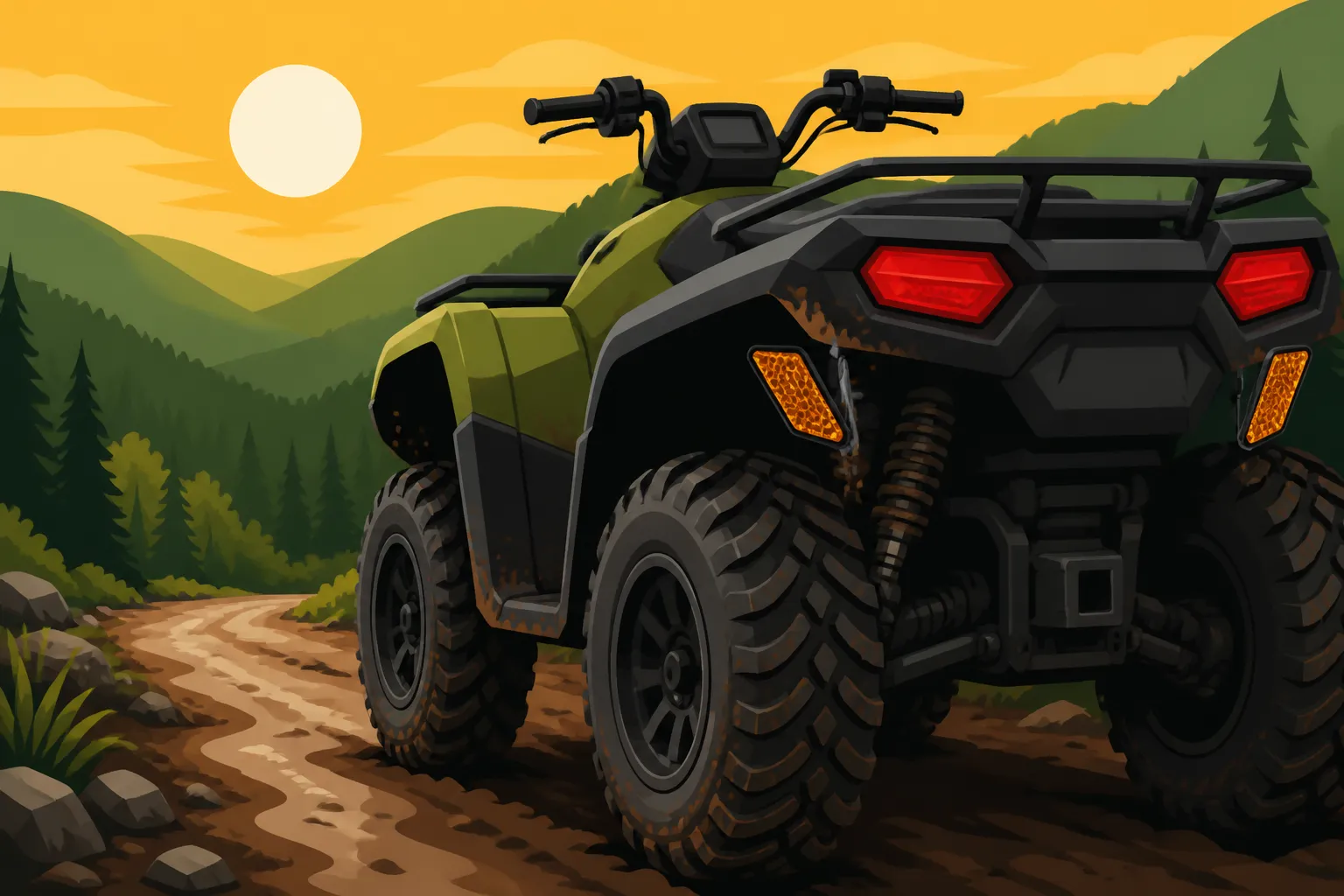
- Rear Reflectors: Two red reflectors are needed on the rear, visible from the rear. These complement your taillights, providing a passive safety measure for anyone following you. These often go on the rear fenders, bumper, or even the rear cargo rack.
- Side Reflectors: This is often the most critical and overlooked area. You need amber reflectors on each side, mounted near the front, and red reflectors on each side, mounted near the rear. These are absolutely vital for visibility at intersections, when merging, or when another vehicle is passing you. Imagine someone pulling out of a side road; they'll see your side profile first. The challenge here is finding suitable flat spots on the often-contoured plastic of an ATV or UTV.
The exact placement often needs to consider factors like height from the ground and how easily they can be seen without being obscured by tires, fenders, or cargo. While the law doesn't typically provide millimeter-specific measurements, the intent is clear: they must be readily visible to other drivers. Many riders find that pre-cut and adhesive kits from brands like SuperATV can simplify this, offering designs that fit common machine types and provide the necessary coverage.
Types of Reflectors and Their Standards
When you're out shopping for reflectors, you'll encounter a few options. The key characteristic for any reflector is its "retro-reflectivity" – meaning it's designed to bounce light directly back to its source, no matter the angle of the light.
- Adhesive Reflectors: These are common and easy to install. They are essentially stickers with a reflective coating. They need a clean, smooth, and relatively flat surface to adhere properly. The quality varies wildly, so look for durable, weather-resistant options that won't peel off after a few mud puddles.
- Bolt-on Reflectors: These are more robust, often housed in plastic frames that can be bolted directly to your machine. They offer superior durability, especially if your machine sees a lot of trail use where branches or debris might scrape against adhesive reflectors. They're a solid choice for longevity and peace of mind.
- DOT Compliance: While reflectors generally don't have the same stringent DOT (Department of Transportation) markings as, say, a helmet or tire, their performance is indirectly regulated. Any reflector you buy that is marketed for road use should meet federal standards for retro-reflectivity. Look for products that specifically state they are intended for automotive or trailer use, as these will generally provide the necessary reflectivity to comply with visibility requirements.
Here's a quick look at the typical reflector needs for a road-ridden machine:
| Location | Color | Number (Min.) | Purpose | Common Placement (Examples) |
|---|---|---|---|---|
| Front | Amber | 2 | Frontal visibility, approaching traffic | Front fenders, brush guard |
| Rear | Red | 2 | Rear visibility, following traffic | Rear fenders, bumper, cargo rack |
| Side (Front) | Amber | 2 (1 per side) | Side visibility, intersections/passing | Side of front fenders, footwells |
| Side (Rear) | Red | 2 (1 per side) | Side visibility, intersections/passing | Side of rear fenders, cargo box |
Practical Tips for Installing Reflectors on Your Quad
Getting your reflectors properly installed isn't just about sticking them on wherever they fit. It's about strategic placement, durable adherence, and thinking beyond the bare minimum to truly maximize your visibility. We want to be seen, not just be legal.
Choosing the Right Reflectors
The West Virginia trails and backroads can be tough on equipment, so choosing the right reflectors is crucial for longevity and effectiveness.
- Durability and Weather Resistance: For adhesive reflectors, look for marine-grade or automotive-specific options that are designed to withstand UV exposure, extreme temperatures, and moisture. Cheaper varieties can fade, crack, and peel quickly, leaving you non-compliant and less safe. If you frequently find yourself splashing through creek crossings or riding in the rain, this becomes even more important.
- Adhesion for Stick-on Types: The adhesive quality is paramount. A 3M VHB (Very High Bond) tape is often a good indicator of quality. Make sure the reflector itself is sealed to prevent water intrusion, which can degrade the reflective surface over time.
- Bolt-on Options for Rugged Applications: For riders who are regularly tackling technical trails before hitting a road connector, bolt-on reflectors offer superior security. They won't get scraped off by brush, torn off by mud, or peeled by high-pressure washers. Many aftermarket companies, including SuperATV, offer robust bolt-on solutions that can be integrated into existing bumper or rack designs, providing peace of mind that your reflectors will stay put, no matter what the terrain throws at you. These are especially useful if you're building out your machine with [Equipment a West Virginia SPV Must Carry] in mind.
Installation Best Practices
Proper installation is just as important as choosing quality reflectors. A high-quality reflector poorly installed is just as useless as a cheap one.
- Surface Preparation is Key: For adhesive reflectors, this is non-negotiable. The surface must be immaculately clean, dry, and free of wax, grease, or dirt. Use an isopropyl alcohol wipe to thoroughly clean the area, then let it air dry completely. This creates the best possible bond.
- Ensure Good Adhesion: Once the surface is prepped, firmly press adhesive reflectors into place for at least 30 seconds. Avoid repositioning them, as this weakens the adhesive. If installing in colder weather, gently warm the surface and the reflector with a heat gun or hairdryer (on a low setting!) to improve the adhesive's bond.
- Proper Alignment and Visibility: Stand back and look at your machine from various angles – front, rear, and both sides, ideally from about 50-100 feet away. Do the reflectors appear evenly spaced? Are they truly visible from these angles? Ensure they aren't tucked away where a fender or luggage might block them. The goal is conspicuousness. You might even consider having a friend shine a flashlight on them at night to confirm their effectiveness.
- Consider Adding Extra Reflectors: While West Virginia law sets minimums, there's no penalty for being more visible. Adding a few extra amber reflectors along the sides or on tall accessories like roll cages (if they don't impede vision) can significantly enhance your safety profile, especially when you're riding in traffic or during twilight hours.
Beyond the Minimum: Enhancing Visibility
Reflectors are a fantastic passive safety feature, but they are just one piece of the puzzle. Combining them with other visibility enhancements can make your road-ridden quad or UTV truly stand out.
- Supplementary Lighting: While not a replacement for legally required lights, auxiliary LED lights, light bars, or even LED whips can dramatically increase your daytime and nighttime visibility. Just be mindful of aiming and brightness so you don't blind oncoming traffic. Remember, [West Virginia Headlight Rules After Sunset] and [West Virginia Taillight and Brake Light Requirements] are still your primary focus.
- High-Visibility Gear: Don't forget the easiest and often most effective safety tool: what you wear! A bright, fluorescent vest, jacket, or even a high-viz helmet can make you much more noticeable to other drivers. This is especially important for [West Virginia Helmet Rules for Riders Under 18], but really applies to everyone.
- Defensive Riding: Ultimately, no amount of reflectors or lights can replace good judgment. Ride defensively, anticipate other drivers' moves, and assume you haven't been seen until you make eye contact. This proactive approach, combined with proper equipment, is your best defense on the road.
Common Pitfalls and How to Avoid Them
Even with the best intentions, riders often fall into common traps when it comes to reflectors. Ignoring these details can not only lead to a citation but, more importantly, can put your safety at risk on West Virginia's roads.
Overlooking Side Visibility
It's easy to focus on the front and rear lights and reflectors, assuming that's where most attention is needed. However, side visibility is arguably the most critical and often the most neglected aspect for ATVs and UTVs on public roads.
- Intersection Danger: Think about an intersection. A car approaching from a cross street will see the side of your machine first. If you only have front and rear reflectors, they might not see you until it's too late to react. Amber reflectors on the front sides and red reflectors on the rear sides literally paint a picture of your vehicle's entire footprint to approaching drivers.
- Passing Zones: When another vehicle is passing you, or you are passing a parked car, adequate side reflectors help them gauge your machine's position relative to theirs. Without them, your lower profile and narrower stance compared to a full-sized vehicle can make you disappear in blind spots. Always make sure your side reflectors are properly placed, clean, and free from obstruction. This is paramount, whether you're just riding [West Virginia Rules for Riding Trail to Trail] or embarking on a longer excursion.
Damaged or Dirty Reflectors
The life of an ATV or UTV in West Virginia is a rugged one. Mud, dirt, dust, branches, and even sunlight can take their toll on reflectors.
- Regular Inspection and Cleaning: Make it a habit to check your reflectors every time you clean your machine or before hitting the road. Mud can completely obscure them, rendering them useless. Scratches, cracks, or fading can significantly reduce their retro-reflectivity. A quick wipe-down with a damp cloth is usually all it takes to restore their effectiveness.
- Wear and Tear: Off-road adventures are fantastic, but they expose your machine to elements that can destroy reflectors. A branch scraping against a fender, a rock flung from a tire, or simply continuous vibration can damage or dislodge them. If you notice a reflector is cracked, faded, or missing, replace it immediately. It's a small investment for a significant safety gain. Some riders opt for reflector mounts from companies like SuperATV that help protect the reflector itself from trail damage, providing a bit of a shield without impeding its function.
- Impact on Safety: A reflector that isn't clean or intact isn't doing its job. It's a false sense of security. Don't assume that just because you have something reflective, it's actually working. Take the extra minute to ensure they are bright and clear.
Enforcement and Penalties
While the primary reason for proper reflectors is safety, there are also legal consequences for non-compliance. Law enforcement in West Virginia trail towns and on county roads takes visibility seriously, especially as more ATVs and UTVs hit the pavement.
- Citations and Fines: Operating a vehicle on public roads without the required safety equipment, including proper reflectors, can lead to a citation. The specific penalty can vary, but it's a hassle you want to avoid. While not as severe as [Fines for Speeding on an ATV in West Virginia] or a DUI, it's still an unnecessary expense and inconvenience.
- Increased Liability: In the unfortunate event of an accident, a lack of proper safety equipment, such as missing or obscured reflectors, could be used to argue negligence on your part. This can have significant implications for insurance claims and legal liability. Remember, [Insurance Required for a West Virginia SPV Plate] is about protecting yourself and others.
- Focus on Prevention: Ultimately, deputies aren't looking to ticket you just to be difficult. They're enforcing laws designed to prevent accidents. By ensuring your reflectors are up to par, you're not just avoiding a fine; you're actively contributing to safer roads for everyone, including yourself and your riding buddies. Be smart, be seen, and enjoy those mountain miles responsibly.
Disclaimer
This article is for general informational purposes only and does not constitute professional advice. Laws, prices and regulations vary by location and change over time. Consult a qualified professional for guidance on your specific situation.