West Virginia Rules for Divided Highways
Riding your ATV or UTV in West Virginia offers some of the most exhilarating experiences in the country, especially with our world-renowned trail systems. However, navigating the rules for connecting those trails, getting to gas stations, or just heading into town can be a real headache, particularly when you encounter major roads. One of the biggest points of confusion, and frankly, frustration, often revolves around West Virginia's rules for riding ATVs and UTVs on divided highways. This guide is here to untangle those complexities, helping you understand where you can and cannot ride, and what steps you need to take to stay on the right side of the law.
What Constitutes a Divided Highway in West Virginia?
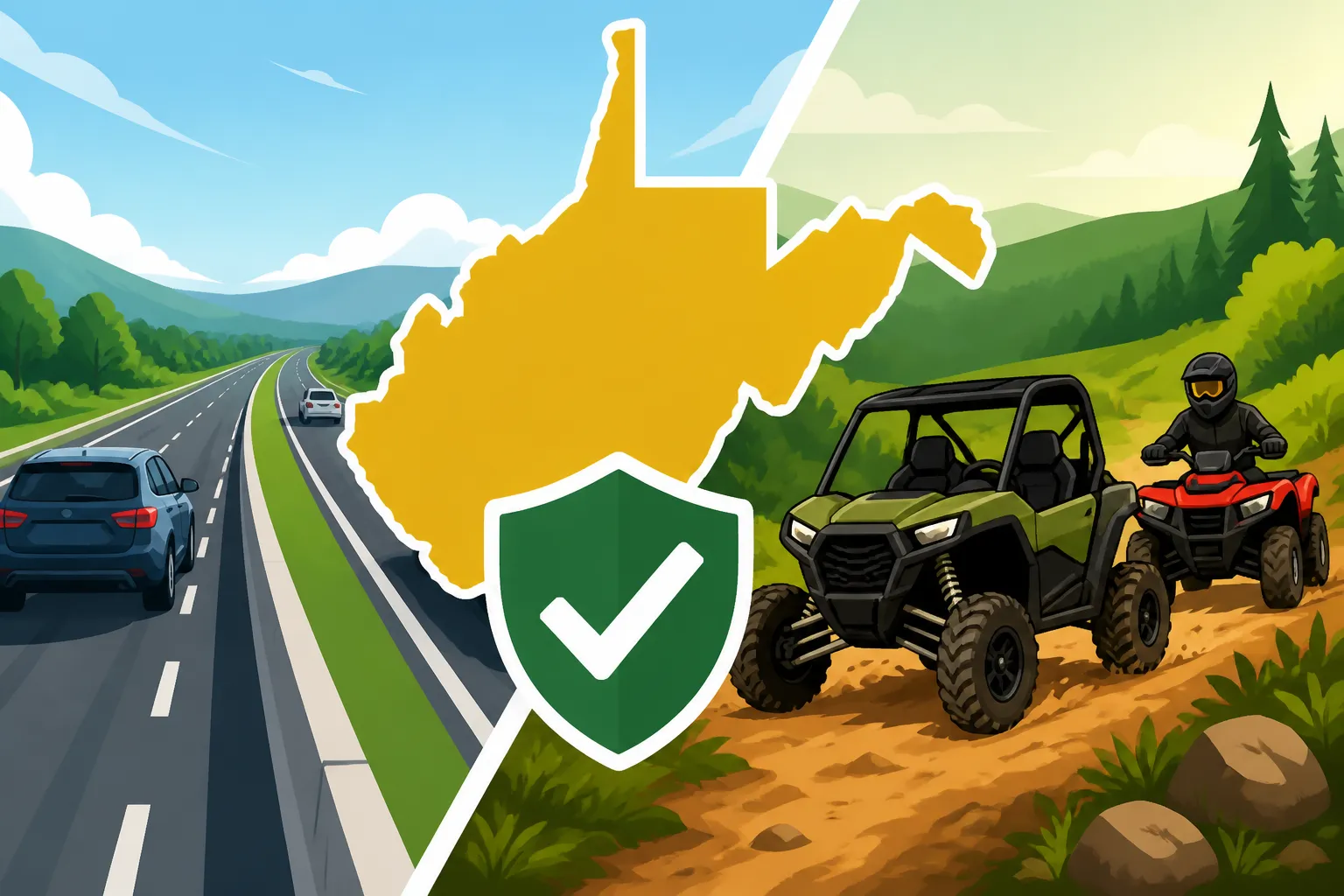
Before we dive into the rules, it's essential to understand what West Virginia considers a "divided highway" when it comes to ATV and UTV usage. It might seem obvious, but the legal definition often has nuances that can catch riders off guard. Essentially, a divided highway is a road that has a physical barrier or median separating opposing directions of traffic. This isn't just a painted line; we're talking about a concrete barrier, a grassy median strip, or a raised island designed to physically prevent vehicles from crossing directly into oncoming lanes.
Physical Separation and Traffic Flow
Think about our major interstates or larger U.S. routes that crisscross the state. Roads like certain sections of US-19 or US-52, which have multiple lanes in each direction and a clear physical divide in the middle, are prime examples. The key here is the physical separation. This design is implemented to improve safety by reducing head-on collisions and making left turns more controlled, but it also creates a significant obstacle for off-highway vehicles that aren't designed for high-speed, multi-lane traffic. The entire intent of a divided highway is to facilitate the smooth, high-speed flow of traffic, which is inherently incompatible with most off-road vehicles.
Implications for ATV and UTV Riders
For ATV and UTV riders, recognizing a divided highway is crucial because these roads typically carry much stricter regulations than a two-lane county route. The design means higher speed limits, greater traffic volumes, and fewer opportunities for safe entry, exit, or crossings. While a regular two-lane road might have stretches where an ATV or UTV could potentially operate under specific local ordinances or for very limited distances, a divided highway generally presents an outright prohibition for standard off-road vehicles. Understanding this distinction is the first step in avoiding serious trouble and ensuring your safety on West Virginia's road network.
General Restrictions for ATVs and UTVs on West Virginia Roads
Let's be blunt: West Virginia is incredibly ATV-friendly on its vast trail systems, but it's largely not ATV-friendly on its public roads, especially its major ones. The general rule of thumb is that ATVs and UTVs are designed for off-road use, and public roads are generally off-limits unless explicitly stated otherwise or if your machine qualifies as a Special Purpose Vehicle (SPV). This can be a tough pill to swallow when you just want to connect two trailheads or run into town for supplies.
Prohibitions on State Highways
The vast majority of state-maintained highways, particularly those with higher speed limits and greater traffic volumes, are strictly off-limits to standard, non-street-legal ATVs and UTVs. This includes interstates, most U.S. routes, and many state routes. These roads are engineered for passenger vehicles, trucks, and other conventional highway-legal traffic. Attempting to ride a standard ATV or UTV on these roadways not only puts you at risk of serious injury due to speed differentials and lack of protective features but also opens you up to significant legal penalties. Law enforcement in West Virginia takes these rules very seriously, especially on busier roads, because the safety risks are so high.
Limited Access on County and Municipal Roads
There's a bit more nuance when it comes to county roads and municipal streets. While state law generally restricts ATVs and UTVs from public roads, West Virginia has provisions that allow counties and municipalities to open certain roads for ATV/UTV use, often to connect to trail systems. This is why you see trail towns like Gilbert, Man, or Mullens where you can ride your machine directly on town streets. However, these are specific, designated exceptions, not a blanket permission. Even in these friendly towns, you still have to adhere to posted speed limits, local ordinances, and often strict rules about where you can and cannot ride within the town limits. You might find a town allows you to ride on a specific main street but prohibits you from venturing onto a connecting state highway, even for a short distance. It’s critical to check local regulations or official trail maps, like those provided by the Hatfield-McCoy Trail system, to understand where these exceptions apply. [West Virginia's ATV-Friendly Towns and What You Can Ride] delves deeper into how these local rules work.
Special Purpose Vehicle (SPV) Rules on Divided Highways
This is where things get a little more complicated, and for many riders, it's the only real path to legal road use beyond very specific local exceptions. West Virginia has a distinct classification for "Special Purpose Vehicles" (SPVs), which are essentially ATVs or UTVs that have been modified and equipped to meet certain street-legal standards and are then titled and registered as such with the DMV. Even with an SPV plate, navigating divided highways still comes with significant limitations and strict rules.
What an SPV Can (and Cannot) Do
An SPV allows your ATV or UTV to operate on many public roads that would otherwise be off-limits to a standard machine. This means you can legally drive on many county and secondary roads, and even some state routes, to connect trails, access amenities, or simply get around. However, even with an SPV plate, you are generally prohibited from operating on interstate highways. When it comes to divided highways that are not interstates (like certain sections of multi-lane U.S. or state routes), the law still imposes significant restrictions.
The intent of the SPV designation is to provide limited road access, not to turn your UTV into a full-fledged highway vehicle. [West Virginia's Street-Legal Special Purpose Vehicle Law] outlines the foundation of these rules. An SPV can only cross a divided highway at a legal crossing point, such as an intersection controlled by traffic signals, or where there's an expressly designated crossing. You cannot drive along the divided highway for any significant distance, even if it's not an interstate. This means no cruising down the right lane of a four-lane divided highway with your SPV; such actions are generally prohibited and extremely dangerous.
The Role of Local Ordinances and Speed Limits for SPVs
While your SPV registration gives you more flexibility, local ordinances and statewide speed limits still apply. If you're on a non-interstate divided highway where SPVs are technically allowed for a crossing, you must adhere to the 25 mph speed limit if the highway's posted limit exceeds that. This creates a massive speed differential with other traffic, making even brief forays onto these roads incredibly risky. [West Virginia's 20-Mile Centerline Limit for an SPV] details another critical distinction for SPVs, particularly on roads with a centerline.
For an SPV to be legal, it also needs specific equipment. We're talking about headlights, taillights, brake lights, turn signals, mirrors, a horn, a windshield, and DOT-approved tires. Many riders look to companies like SuperATV for these types of conversion kits and parts, ensuring their machine meets all the necessary specifications for an SPV plate. Without these crucial components, your SPV registration is effectively invalid, and you're back to square one regarding road legality. [Equipment a West Virginia SPV Must Carry] provides a full breakdown of these requirements.
Understanding the 10-Mile, 25 mph Rule and Divided Highways
West Virginia law includes a specific provision that often causes confusion: the "10-mile, 25 mph" rule. This rule is a narrow exception that allows unregistered ATVs and UTVs (those without an SPV plate) to operate on certain public roads. However, its application to divided highways is severely limited, bordering on non-existent, for safety and legal reasons.
The Original Intent of the Rule
The "10-mile, 25 mph" rule was primarily designed to allow riders to use county or secondary roads for very short distances, typically to connect to a trail system, access a local business, or travel between private properties, provided the speed limit is 25 mph or less. The key restrictions are:
- Distance: You can only ride for a maximum of 10 miles.
- Speed: Your speed cannot exceed 25 mph.
- Road Type: The road must have a posted speed limit of 25 mph or less, or if unposted, the unposted speed limit is assumed to be 25 mph. It generally applies to roads without a center line, or if it has a center line, it must be a two-lane road.
The entire spirit of this rule is to provide minimal, low-speed access on less-trafficked roads. [West Virginia's 10-Mile, 25 mph Road Rule] offers a deeper look into its specific parameters.
Why It Rarely Applies to Divided Highways
Here’s the reality check: it's incredibly rare, almost unheard of, for a divided highway in West Virginia to have a posted speed limit of 25 mph or less, or for it to lack a center line in a way that would make this rule applicable. Divided highways are explicitly designed for higher speeds and greater traffic volume. Attempting to operate a non-street-legal ATV or UTV on a divided highway under the guise of this "10-mile, 25 mph" rule would be a dangerous and almost certainly illegal endeavor.
Even if you were to encounter a highly unusual scenario where a section of a divided highway had a temporary 25 mph limit due to construction, the fundamental safety concerns and the intent of the law would still make it highly improbable that an ATV or UTV could legally or safely operate there. Divided highways are not where you should ever plan to use this limited exception. Riders who misunderstand or willfully ignore this distinction face not only legal consequences but also severe risks to their own lives and the lives of others. It’s far safer and smarter to assume that if a road is divided, your regular ATV or UTV does not belong on it.
Safety Considerations and Best Practices for Road Sections
Even when legally permitted to ride an SPV on certain road sections (and we've established that divided highways are generally out), safety should always be your top priority. The risks of operating an off-highway vehicle on pavement, especially alongside conventional traffic, are significantly higher than on a dedicated trail. Taking proper precautions isn't just about avoiding tickets; it's about staying alive.
Maximizing Visibility and Awareness
The biggest challenge when riding an ATV or UTV on any public road is visibility. Your machine is smaller, often lower to the ground, and lacks the extensive lighting and reflective surfaces of a car or truck. To combat this, always wear bright, highly visible clothing, preferably fluorescent colors, and consider adding reflective tape to your machine, especially if you anticipate riding near dawn, dusk, or in inclement weather. Ensuring your headlights, taillights, and turn signals are fully functional and clean is non-negotiable for an SPV.
Additionally, always assume that other drivers don't see you. Make eye contact if possible, and be extra cautious at intersections, driveways, and when changing lanes (if your SPV is on a multi-lane road where permitted). Use hand signals in conjunction with your turn signals for added emphasis. Many riders consider adding aftermarket mirrors, or even upgrading their factory lighting with brighter LED options from brands like SuperATV, to further enhance their presence on the road.
Defensive Riding and Equipment Checks
Defensive riding is paramount on any public road, but especially so on an ATV or UTV. Expect the unexpected from other drivers. Maintain ample following distance, avoid sudden maneuvers, and always ride predictably. Remember, your machine handles differently on pavement than it does on dirt. Tires designed for off-road use will have less grip on asphalt, especially when wet, and braking distances can be longer.
Before every road section, conduct a quick pre-ride inspection. Check tire pressure, brake function, fluid levels, and ensure all your lights and signals are working. For SPVs, a functioning horn is not just a legal requirement but a vital safety tool. Helmets are mandatory for all riders under 18 in West Virginia when on public roads, and strongly recommended for adults. [West Virginia Helmet Rules for Riders Under 18] provides specific details. Eye protection is also critical to shield you from debris, wind, and sun glare. Even if you're legally riding a converted SPV, remember that its crash protection is minimal compared to a car. Stay alert, stay visible, and ride smart.
Penalties for Non-Compliance on West Virginia Roads
Riding where you shouldn't, especially on major roads like divided highways, comes with a host of consequences in West Virginia. These aren't just minor inconveniences; they can range from hefty fines to impoundment of your machine, and even criminal charges, depending on the severity and danger posed by your actions. The state takes unauthorized road use seriously, both for the safety of ATV/UTV riders and other motorists.
Fines, Impoundment, and Reckless Operation
If you're caught operating a non-street-legal ATV or UTV on a prohibited road, particularly a divided highway, you're looking at significant fines. These can easily run into hundreds of dollars, and often compound with other violations such as not having a valid driver's license (if required for the road), or operating without proper safety equipment. Beyond the financial hit, law enforcement has the authority to impound your machine. This means your pride and joy could be towed away, leaving you responsible for towing fees, storage costs, and the hassle of retrieving it, which can quickly add up to more than the original fine.
In more egregious cases, or if your actions are deemed to endanger others, you could face charges for reckless operation. [West Virginia Penalties for Reckless Riding] describes how these actions are viewed by the law. These aren't just traffic tickets; reckless operation can carry higher fines, potential jail time in extreme circumstances, and could even lead to the loss of your driver's license or riding privileges. Operating an ATV or UTV on a divided highway almost certainly would be considered reckless due to the inherent danger to yourself and other vehicles traveling at highway speeds.
Insurance Implications and Liability
Beyond the immediate legal penalties, unauthorized road use can have severe insurance implications. Most standard ATV/UTV insurance policies are tailored for off-road riding and might not cover incidents that occur on public roads, especially if you were operating illegally. If you're involved in an accident on a divided highway while operating an unauthorized machine, you could be personally liable for all damages, including property damage to other vehicles and medical costs for injured parties. This could lead to devastating financial ruin.
Even with an SPV, it’s crucial to ensure your insurance policy explicitly covers street-legal use. Many insurance providers offer specific endorsements or separate policies for SPVs to cover on-road incidents. Always verify your coverage with your insurance agent before taking your machine onto any public road, even one you believe to be legal. The financial and legal ramifications of an uninsured accident on a public highway are far more severe than any trail-related mishap. It truly pays to know the rules, invest in necessary conversions, potentially with parts from a reputable supplier like SuperATV, and ensure your machine is properly insured before hitting any pavement.
| Road Type | Standard ATV/UTV (Off-Road Only) | Special Purpose Vehicle (SPV) |
|---|---|---|
| Interstate Highways | Absolutely Prohibited | Absolutely Prohibited |
| Divided Highways (Non-Interstate) | Generally Prohibited; extremely limited crossing only at designated points, never along. | Crossing at designated points only; never along, due to speed differential and design intent. |
| State Highways (Non-Divided) | Generally Prohibited; very limited exceptions for crossing, usually with 10-mile, 25 mph rule if speed limit is 25 mph or less. | Permitted, but subject to posted speed limits (or 25 mph cap if faster than machine's design) and local ordinances. |
| County Roads | Allowed for up to 10 miles at 25 mph or less, if road speed limit is 25 mph or less. Also, if designated open by county. | Generally Permitted, subject to posted speed limits. |
| Municipal Streets | Prohibited, unless specifically designated open by local ordinance (e.g., trail towns like Gilbert). | Generally Permitted in designated trail towns and other municipalities, subject to local ordinances. |
Making Your UTV Street Legal for West Virginia Roads
Given the strict limitations on standard ATVs and UTVs, especially on divided highways, many riders opt to convert their machines into Special Purpose Vehicles (SPVs) to gain more freedom on West Virginia's public roads. This isn't just about bolting on a few accessories; it's a specific process governed by state law.
The Conversion Process and Required Equipment
To make your UTV street legal in West Virginia, you need to equip it with a specific list of components to meet the state's safety and equipment standards. These usually include:
- Headlights and Taillights: Must be fully functional, visible from specified distances, and meet brightness requirements.
- Brake Lights: Clear and visible when the brakes are applied.
- Turn Signals: Both front and rear, indicating turns. Many riders find complete turn signal kits from companies like SuperATV to be invaluable for this part of the conversion.
- Mirrors: At least one rear-view mirror is typically required, often two (one on each side) for better visibility.
- Horn: A working horn capable of emitting an audible sound for at least 200 feet.
- Windshield: A safety glass or similar approved material windshield is usually necessary to protect against debris.
- DOT-Approved Tires: Your tires must be marked as Department of Transportation (DOT) approved, meaning they meet certain standards for road use.
- Seatbelts: If your UTV has seats, it must have functional seatbelts for all occupants.
- License Plate Bracket and Light: To display your SPV plate clearly, especially at night.
It’s crucial to understand that simply having these parts isn't enough; they must be installed correctly and be fully functional. [Making a UTV Street Legal in West Virginia] provides a comprehensive checklist and detailed steps for this process.
Titling, Registration, and Insurance for SPVs
Once your UTV is properly equipped, the next step is to apply for a West Virginia SPV title and registration with the DMV. This involves submitting an application, proof of ownership (like your original title or bill of sale), and proof that your machine meets the SPV equipment requirements. There will also be fees associated with the title and registration.
Just like with any other road-legal vehicle, an SPV in West Virginia requires adequate insurance coverage. This typically means liability insurance at a minimum, to cover damages or injuries you might cause to others. As mentioned earlier, standard off-road ATV/UTV insurance likely won't cut it; you'll need a policy that specifically covers your SPV for on-road use. Your insurance agent can help you find the right coverage. [Registering a Street-Legal Special Purpose Vehicle in West Virginia] further details the bureaucratic steps involved, while [Insurance Required for a West Virginia SPV Plate] explains what coverage you’ll need to secure before you hit the blacktop.
Disclaimer
This article is for general informational purposes only and does not constitute professional advice. Laws, prices and regulations vary by location and change over time. Consult a qualified professional for guidance on your specific situation.