Riding a West Virginia Coal Haul Road on an ATV
It's a common dream for many ATV and UTV enthusiasts in West Virginia: the idea of using those expansive, often rugged coal haul roads as a shortcut, a connector, or even a unique riding experience. However, this dream often clashes with a very harsh reality, fraught with legal pitfalls and significant dangers. This guide aims to thoroughly explore the complexities of riding your ATV or UTV on West Virginia's coal haul roads, helping you understand the rules, risks, and responsible alternatives to keep you safe and legal.
The Complex Reality of Coal Haul Roads in West Virginia
Before you even think about putting tires on a coal haul road, it's critical to understand what these roads truly are and who controls them. They aren't public easements or casual backcountry trails. They are, first and foremost, arteries of active industrial operations, designed for heavy machinery and commercial purposes.
Who Owns These Roads?
One of the biggest misconceptions is that if a road isn't paved and doesn't have a state route number, it must be public or abandoned. This is almost never the case with coal haul roads. The vast majority of these roads are privately owned by the coal companies, landholding companies, or other industrial entities that operate in the area. They are integral to the extraction and transportation of natural resources. Think of them as private driveways, but on an industrial scale, winding through vast private property.
This private ownership means that without explicit, written permission from the landowner or the operating company, you are trespassing. Even if a gate is open, or there's no "No Trespassing" sign every hundred yards, the land is still private. This can lead to serious legal consequences, which we'll delve into shortly. It’s a very different situation than exploring public lands or even [Riding a West Virginia Coal Haul Road on an ATV] that might be shared access.
Why They're Not Like Regular Public Roads
Beyond ownership, the very nature of coal haul roads sets them apart from anything you might encounter on a typical trail system or even a county road. These roads are not maintained for light recreational vehicle traffic. They are built and continuously reshaped to support massive, multi-ton haul trucks, excavators, and other heavy equipment.
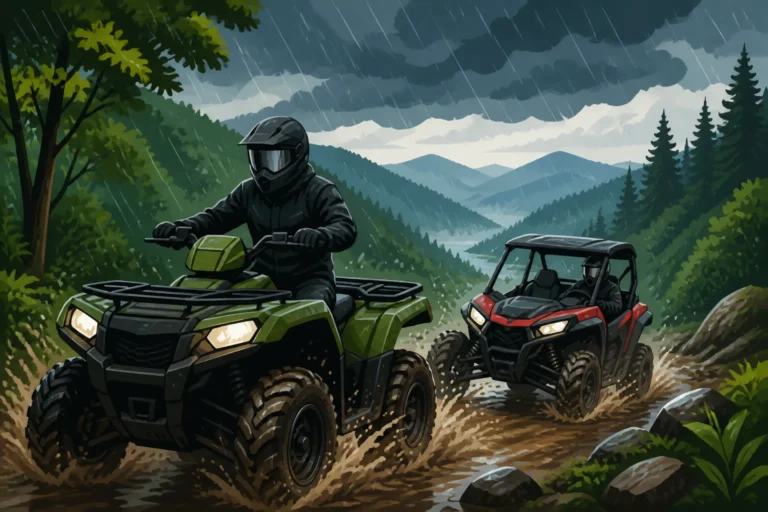
This means the road surfaces can be extremely rough, with deep ruts, sharp rocks, and abrupt changes in elevation. Dust is a constant companion during dry spells, reducing visibility to near zero, while rain turns them into slick, muddy quagmires. The grades can be incredibly steep, designed for the powerful engines and braking systems of industrial vehicles, not necessarily for your recreational machine. When you're considering road riding in West Virginia, you quickly learn there's a world of difference between these industrial arteries and [West Virginia's 10-Mile, 25 mph Road Rule] on public byways.
The Allure and the Danger
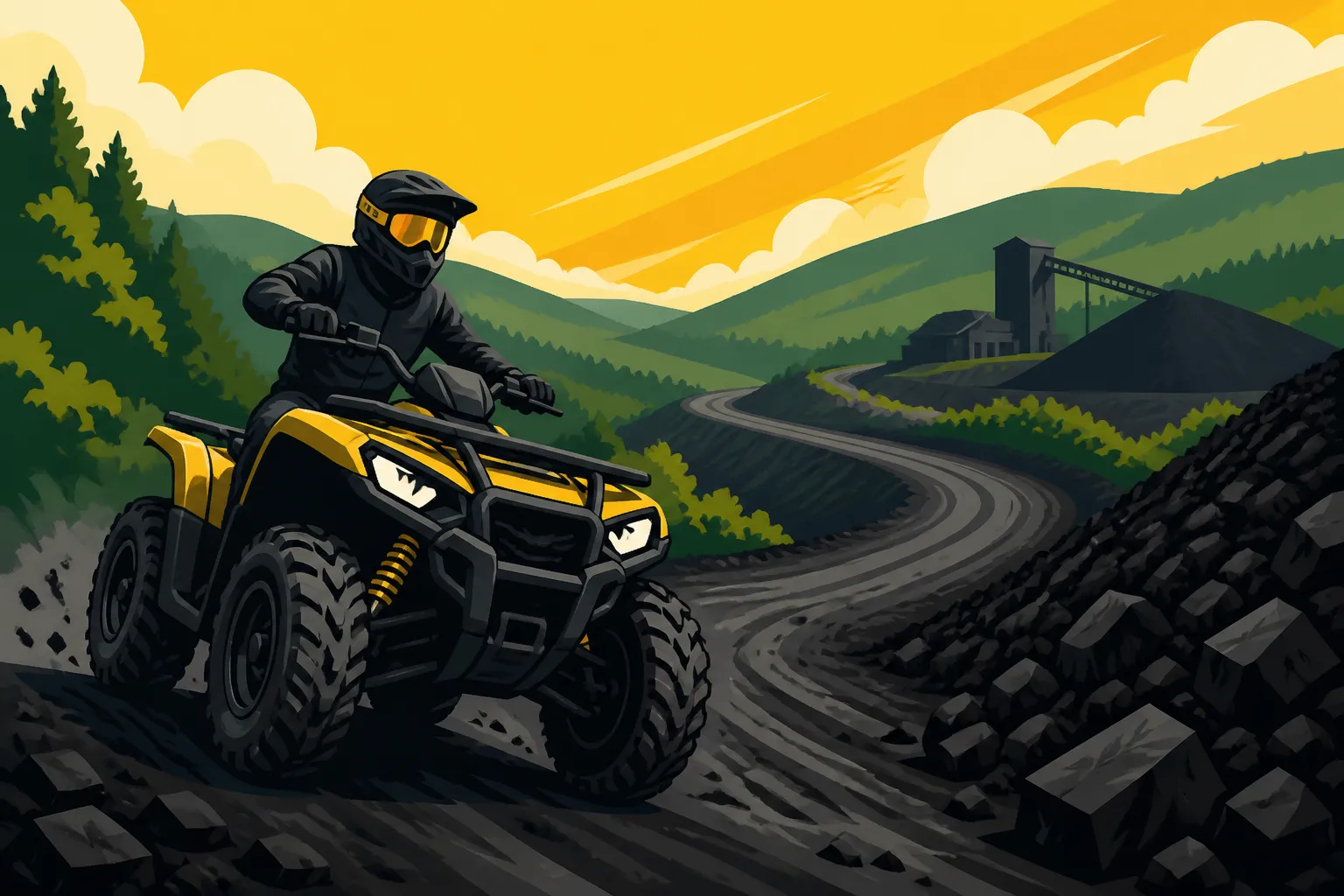
There's no denying the allure. From a satellite map, a coal haul road might look like the perfect shortcut between two trails, or an exciting new area to explore. They often cut through stunning, remote landscapes, offering views and access points that seem unreachable otherwise. The sheer scale can be enticing for those seeking an epic ride.
However, the dangers far outweigh any perceived benefits. These aren't scenic routes. They are active industrial sites. You're sharing the "road" with trucks that can weigh hundreds of thousands of pounds, often moving at speeds that seem unimaginable given their size. These operators have blind spots large enough to swallow an ATV whole, and they expect only other industrial traffic. Collisions with heavy equipment are almost always catastrophic for smaller vehicles like ATVs and UTVs. It’s a stark contrast to the designated routes you find on [The Hatfield-McCoy Trails, West Virginia's 1,200-Mile Network], where rider safety and separation from heavy machinery are paramount.
Navigating the Legalities: Can You Even Be There?
This is where the rubber meets the road, or rather, where your tires might meet a very expensive fine or worse. The legal framework around coal haul roads is pretty straightforward: generally, you don't belong there without explicit permission.
Permission is Paramount
The golden rule for riding on any private land, and especially industrial private land like a coal haul road, is "permission first." This means obtaining express, written permission directly from the property owner or the operating company. Verbal permission isn't usually enough, and implied permission (like an open gate) is a risky assumption.
Getting this permission is often exceedingly difficult. These companies have significant liability concerns. An ATV or UTV rider on their active industrial site presents a huge risk for them. Their insurance policies often strictly forbid unauthorized recreational access. Even if you contact them, the answer is most likely going to be a polite, but firm, "no." They have internal safety protocols, heavy equipment schedules, and environmental regulations that make recreational riding an incompatible activity. This stands in stark contrast to the welcome you receive in [West Virginia Trail Towns You Can Ride Into], where recreational access is encouraged and managed.
Understanding Trespass Laws
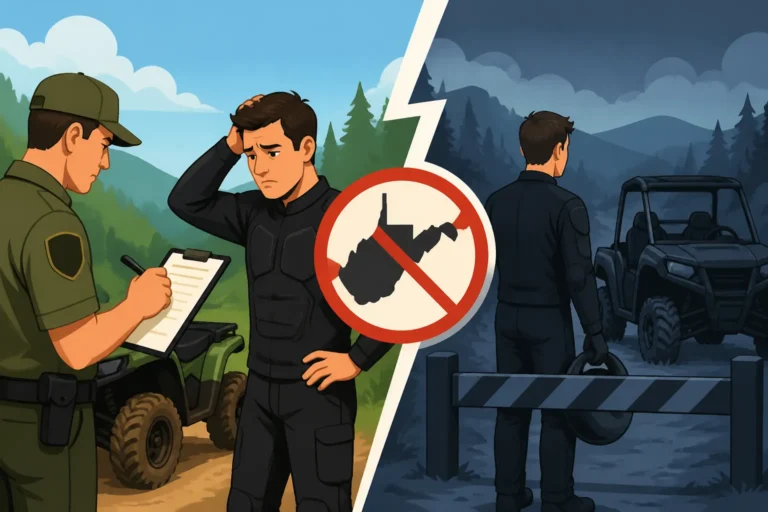
Riding on a private coal haul road without permission constitutes trespassing. In West Virginia, trespassing can range from a misdemeanor to a felony, depending on the circumstances, previous offenses, and whether any damage was done. Penalties can include significant fines, potential jail time, and your vehicle being impounded. The local sheriff's department or state police often have agreements with these coal companies to enforce trespass laws strictly.
Imagine getting pulled over by a deputy deep within a coal company's private property. The questions would start immediately: "Do you have written permission to be here?" If the answer is no, you could be facing not just a ticket but also charges. Beyond the immediate legal trouble, a trespassing charge can impact your record, potentially affecting employment or future opportunities. Understanding [Riding on Posted Land in West Virginia] means understanding that a lack of signage doesn't excuse trespassing.
What About Roads That Seem Abandoned?
It's tempting to look at an overgrown, infrequently used coal haul road and assume it's abandoned, thus fair game. This is another dangerous assumption. "Abandoned" in the recreational sense rarely translates to "public property" in the legal sense. The land is still privately owned, even if active operations have ceased in that specific area. The owner still retains all rights to control access.
Furthermore, even if a road looks unused, it might still be part of a larger, active operation, or used for surveying, environmental monitoring, or occasional equipment movement. The hazards, though perhaps different, don't disappear just because the road seems quiet. Equipment could be left unattended, or the roadbed itself could be unstable. Relying on an assumption of abandonment is a quick way to find yourself in legal trouble or a dangerous situation. It's a key distinction from thinking about [West Virginia Title Rules for Farm ATVs], where private land use might be exempt from certain title requirements, but not from trespass laws.
Safety Considerations Beyond Legal Access
Let's say, purely hypothetically, you could somehow get permission to be on a coal haul road (which, again, is highly unlikely for recreational use). Even then, the safety risks are enormous and go far beyond typical trail riding.
Heavy Equipment: Your Biggest Hazard
The single greatest danger on an active coal haul road is the heavy equipment. These are not pickup trucks or passenger cars. We're talking about machines like:
- Haul Trucks: Enormous, multi-axle trucks designed to carry hundreds of tons of coal or rock. They have massive blind spots in front, behind, and along their sides. Their braking distances are immense, and they often travel faster than you'd expect, especially on downhill grades. A single tire on one of these trucks can be taller than your ATV.
- Dozers, Excavators, Graders: These machines are often working off the main road, but their paths can cross, and they can appear suddenly over a rise or around a blind corner. Their operators are focused on their work, not on recreational riders.
A collision with any of these vehicles is almost certainly fatal for an ATV or UTV rider. There's simply no contest in size, weight, or protection. Even if you equip your machine with all the latest safety gear from SuperATV, like robust bumpers or skid plates, they won't stand a chance against a fully loaded haul truck.
To put it in perspective, consider the scale of these vehicles.
| Feature | ATV/UTV (Typical) | Coal Haul Truck (Typical) |
|---|---|---|
| Weight | 500 – 2,000 lbs | 100,000 – 800,000+ lbs |
| Height | 4 – 6 ft | 12 – 20 ft |
| Max Speed | 40 – 70 mph | 20 – 40 mph (loaded) |
| Visibility from Cab | Excellent (for rider) | Massive blind spots |
| Braking Distance | Short | Very Long |
| Operator Focus | Recreation | Industrial Task |
This table clearly illustrates the massive disparity in scale and operational focus.
Road Conditions: Not for the Faint of Heart
As mentioned, coal haul roads are not designed for comfort or light vehicle safety.
- Rough Terrain: Expect deep ruts from heavy tires, washouts, large rocks, and uneven surfaces that can easily damage your suspension, tires, or even lead to rollovers.
- Dust: During dry periods, the dust stirred up by heavy trucks can create whiteout conditions, obscuring your vision and making it impossible to see oncoming traffic or hazards. This dust isn't just irritating; it's a serious safety hazard for visibility.
- Mud and Slick Conditions: After rain, these roads become incredibly muddy and slick. The clay and shale often used in construction, combined with constant heavy traffic, create treacherous conditions that can quickly bog down even a capable 4×4 UTV.
- Steep Grades: These roads are engineered for industrial power, not recreational climbing. Steep uphill sections can quickly overheat your machine, while steep downhill grades can overwhelm your brakes and lead to runaway situations, especially if the surface is loose or wet.
Even if your machine is outfitted with heavy-duty tires and a lift kit from SuperATV, designed for extreme off-road conditions, the specific combination of industrial traffic and dynamic, changing road conditions on a coal haul road presents a unique and exceptionally high level of risk. Your [Equipment a West Virginia SPV Must Carry] for street legality would be woefully inadequate for this environment.
Visibility and Communication
In any industrial environment, communication and visibility are paramount. On a coal haul road, if you were to somehow be there, you'd need extreme measures:
- Flags: Tall, bright orange safety flags are often required on industrial sites to make smaller vehicles more visible.
- Lights: High-visibility strobe lights, even during the day, would be crucial.
- Radios: Industrial operations often use specific radio frequencies for communication between vehicles. Without one, you'd be completely unaware of oncoming traffic or operational movements.
Without these, you are essentially invisible and unheard. Even with high-quality LED light bars or mirrors, like those available from SuperATV, your small machine will be a tiny speck to a haul truck driver.
Alternatives to Coal Haul Roads for West Virginia Riders
Given the severe legal and safety risks associated with coal haul roads, it's far wiser and more enjoyable to explore the many legitimate and thrilling riding opportunities West Virginia has to offer.
Embracing Designated Trail Systems
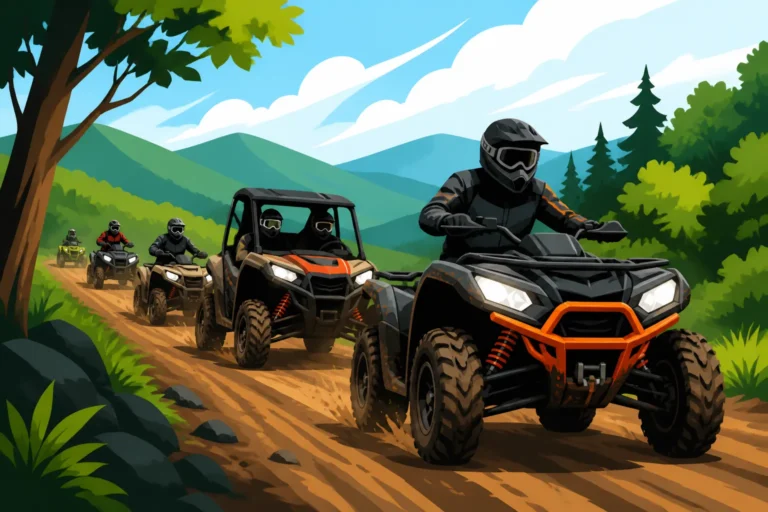
West Virginia is renowned for its world-class trail systems. The Hatfield-McCoy Trails are arguably the crown jewel, offering over 1,000 miles of interconnected, managed, and legally accessible trails. These trails are designed for recreational use, with clear signage, varying difficulty levels, and designated trailheads. Other excellent options include Burning Rock Offroad Park and various state forest trails.
When you ride these systems, you're on legal ground, surrounded by other recreational riders, and away from heavy industrial traffic. You know what to expect, and assistance is available if you run into trouble. It's a far safer and more rewarding experience. Plus, your trail permit fees help maintain these incredible resources. You can learn more about specific systems like [The Hatfield-McCoy Trails, West Virginia's 1,200-Mile Network] to plan your next adventure.
West Virginia's ATV-Friendly Towns and Road Access
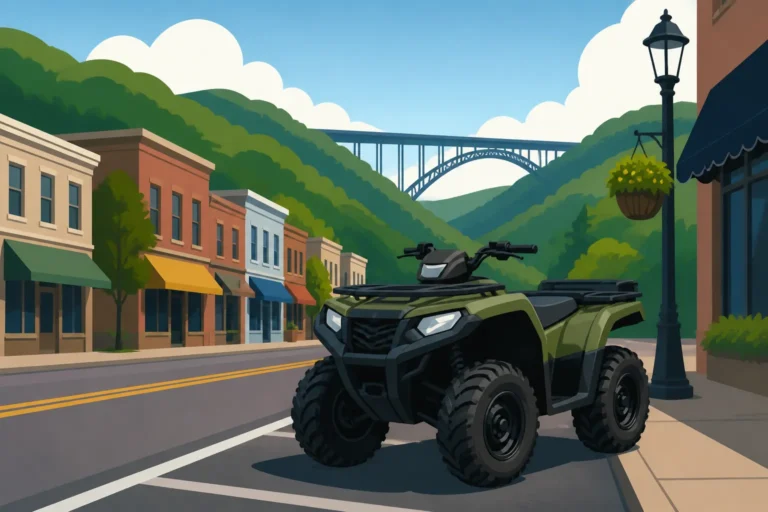
Many towns in West Virginia, particularly in the southern coalfields, have embraced ATV and UTV tourism. These "trail towns" allow legal road access for ATVs and UTVs on designated streets, often marked with clear signage. This means you can ride directly from your lodging to the trailhead, access restaurants, gas stations, and local shops without needing to load up your machine.
These town ordinances are a game-changer for many riders, offering convenience and a unique way to experience local culture. While there are rules, like speed limits and specific roads that are allowed, it's a far cry from the dangers of coal haul roads. Understanding rules like [Riding a West Virginia Coal Haul Road on an ATV] are essential.
Getting Creative with Public Access
Beyond major trail systems and trail towns, West Virginia also has other avenues for legal ATV/UTV use:
- National Forest Roads: While many are restricted, some forest roads within the Monongahela National Forest are open to licensed and registered vehicles, which can include certain street-legal UTVs. Always check with the local ranger district for current regulations and maps, as rules vary.
- Special Purpose Vehicle (SPV) Plates: For UTV owners, West Virginia offers an SPV plate that can make your machine street legal on certain public roads. This involves meeting specific equipment requirements, such as turn signals, mirrors, and DOT-approved tires. This opens up many more possibilities for legal road connections and access to trailheads. You can delve deeper into [West Virginia's Street-Legal Special Purpose Vehicle Plate] to see if it's right for you. For those looking to convert their UTV, SuperATV offers a range of street-legal conversion kits that can help meet these requirements, making the process smoother.
By focusing on these legal and designated riding areas, you not only protect yourself from serious danger and legal trouble but also contribute to the vibrant off-road community and economy in West Virginia. The Mountain State offers incredible riding opportunities; make sure you enjoy them safely and responsibly.
Disclaimer
This article is for general informational purposes only and does not constitute professional advice. Laws, prices and regulations vary by location and change over time. Consult a qualified professional for guidance on your specific situation.