West Virginia Rules on Bridges and Tunnels
It's incredibly frustrating when you're trying to enjoy West Virginia's stunning scenery on your ATV or UTV, only to constantly second-guess whether you're even allowed to be on a particular stretch of road, especially when it comes to crossing bridges or venturing through tunnels. The rules can feel like a maze, and nobody wants to inadvertently break the law or put themselves in a dangerous situation. This guide aims to clear up the confusion surrounding riding your machine on West Virginia's bridges and through its tunnels, offering practical insights and detailed explanations to help you navigate these unique parts of our road system safely and legally.
General Road Riding Rules in West Virginia
Before we dive into the specifics of bridges and tunnels, it's crucial to understand the foundational rules for riding ATVs and UTVs on public roads in West Virginia. Many riders assume that because their machine can handle rugged trails, it's automatically ready for pavement, but the reality is far more nuanced. The state has specific regulations that dictate where, when, and how you can operate these vehicles on roads that aren't part of a designated trail system. Ignoring these can lead to fines, impoundment, and a whole lot of hassle that can ruin your riding trip.
State-Wide Limits for ATV/UTV Road Use
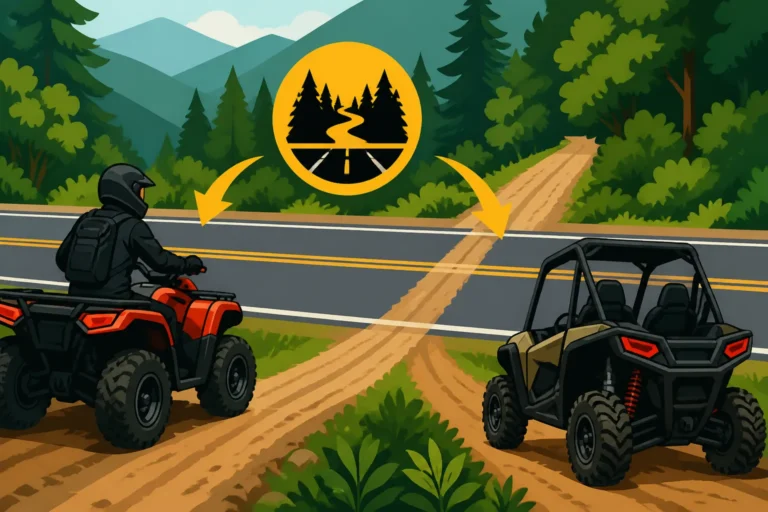
West Virginia generally restricts the use of ATVs and UTVs on public roads, with some very specific exceptions. Primarily, you're looking at limited access on roads that have a centerline and a speed limit above 25 mph. The state permits crossing a highway at a 90-degree angle to get from one section of a trail to another, provided you come to a complete stop and yield to all traffic. You can also ride on the extreme right of a two-lane road without a centerline for a maximum of 10 miles to connect two trails or access services. This [West Virginia's 10-Mile, 25 mph Road Rule] is a critical piece of legislation to understand, as it governs much of our on-road travel.
It's not just about where you can ride, but how you're equipped. Even for these limited road sections, your machine needs to meet certain requirements. Functioning headlights, taillights, brake lights, and a horn are usually non-negotiable. Many riders find themselves scrambling to add these essential items to their machines, sometimes relying on aftermarket parts from companies like SuperATV to ensure they meet the legal standards for visibility and safety. Without these basics, even a brief legal road crossing can become a problem.
Local Ordinances and Designated Trail Town Access
Complicating matters further, many areas of West Virginia, especially those embracing the booming trail tourism economy, have implemented local ordinances that allow greater ATV and UTV access on their streets. These "trail towns" recognize the economic benefits of allowing riders to access restaurants, lodging, and fuel directly from the trails. Towns like Gilbert, Man, Matewan, and Williamson have embraced this concept, and it's a huge convenience for riders. However, even within these towns, there are often specific speed limits, curfews, and designated routes that must be followed.
Always check the local town's specific rules before riding on their streets. What's allowed in Gilbert might be different in Logan, for example. These local rules often supplement or override state-wide restrictions within municipal boundaries, creating designated paths where riders can safely and legally travel through town to grab a bite or refuel. This expanded access is a game-changer for many riders, making multi-day adventures much more practical, but it requires diligence to ensure you're always riding within the bounds of the local law.
Specific Rules for Bridges in West Virginia
Bridges present a unique set of challenges and rules for ATV and UTV riders in West Virginia. They're often critical connectors in the road system, but their design and location can make them particularly hazardous or legally restrictive for off-road vehicles. It’s easy to assume a bridge is just another part of the road, but that assumption could lead to an unexpected encounter with law enforcement or, worse, a dangerous situation.
Crossing Public Road Bridges
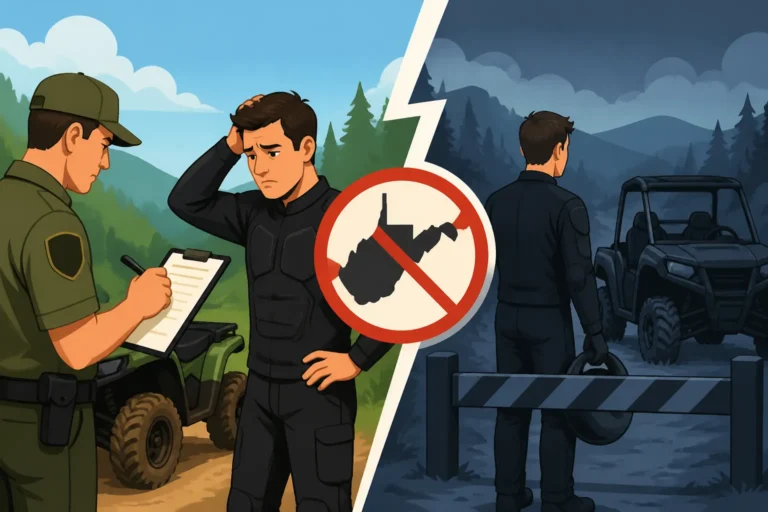
For the most part, if a bridge is part of a public road that prohibits ATVs and UTVs, then you are not allowed to ride your machine across it. This includes most major state routes and federal highways. Even on roads where limited ATV access is permitted (like those 10-mile, 25 mph stretches without a centerline), crossing larger, multi-lane bridges or those with higher speed limits is generally off-limits. The fundamental principle is that if the road leading to or from the bridge is restricted, the bridge itself will be restricted.
However, in designated [West Virginia's ATV-Friendly Towns and What You Can Ride], or on certain county roads where ATVs are allowed, you might find yourself needing to cross smaller bridges. In these cases, you must adhere to the same rules as the road itself: maintain low speeds, stay to the far right, and be extremely aware of other vehicle traffic. Visibility is key, especially on narrower bridges where there's less room for error. Equipping your machine with bright LED lights, often available from brands like SuperATV, can significantly improve your visibility to oncoming traffic, a crucial safety measure on any shared bridge.
Distinguishing Between Public and Private Bridges
One of the biggest areas of confusion comes down to whether a bridge is public or private. Many of West Virginia's extensive trail systems, particularly those like the Hatfield-McCoy Trails, utilize old logging roads, coal haul roads, and even private land agreements that might include crossing private bridges. These are generally open to permitted ATV and UTV use as part of the trail system. However, don't confuse a private trail bridge with a public road bridge.
If you're off the designated trail system and encounter a bridge that appears to be on private property, you still need permission from the landowner to cross it, just as you would for any other private land. Trespassing laws apply, and an unauthorized crossing could lead to charges. Always stick to marked trails and public access points unless you have explicit permission. This distinction is vital, as the freedom you experience on a vast trail network doesn't automatically extend to every bridge you encounter in the wild.
Special Considerations for Rail-Trails and Pedestrian Bridges
West Virginia is also home to a growing network of rail-trails and numerous pedestrian bridges. It's imperative to understand that unless explicitly marked as multi-use trails that include motorized vehicles, ATVs and UTVs are typically prohibited on these. Rail-trails, which convert old railroad beds into recreational paths, are often reserved for hikers, bikers, and sometimes horseback riders. Introducing a motorized vehicle onto these trails can damage the surface, disturb other users, and is illegal.
Similarly, pedestrian bridges are designed for foot traffic and are structurally not meant to handle the weight or impact of ATVs or UTVs. Attempting to cross one could not only lead to legal penalties but also severe damage to the bridge itself or a dangerous collapse. Always look for signage that specifically permits motorized vehicles. If there's no such sign, assume ATVs and UTVs are not allowed. When in doubt, it's always safer to find an alternative route or turn back.
Navigating Tunnels in West Virginia
Tunnels, much like bridges, present unique challenges for ATV and UTV riders, often due to confined spaces, limited visibility, and the potential for exhaust fumes. West Virginia has its share of tunnels, from those on public roads to abandoned mine tunnels and active rail tunnels. Understanding the rules and risks associated with each is crucial for rider safety and legal compliance.
Public Road Tunnels and Restrictions
If a tunnel is part of a public road that prohibits ATVs and UTVs, then you cannot legally ride your machine through it. This is a straightforward extension of the general road rules. Tunnels on major highways, for instance, are definitely off-limits for non-street-legal machines. Even for street-legal Special Purpose Vehicles (SPVs), which have broader road access, tunnels still require extreme caution and adherence to all traffic laws.
Inside a tunnel, visibility is often reduced, and the enclosed space can amplify engine noise and fumes, creating a disorienting experience. If you are operating a legal [West Virginia's Street-Legal Special Purpose Vehicle Plate] through a permitted tunnel, ensuring your headlights and taillights are fully functional and bright is paramount. Adding auxiliary lights, if legal, can further enhance your ability to see and be seen. Always remember that even if you're street-legal, tunnels are shared spaces with fast-moving vehicles, and your smaller profile requires extra vigilance.
Dangers of Unmarked or Abandoned Tunnels
West Virginia's landscape, rich with mining history, is dotted with countless abandoned mine entrances and old rail tunnels. While they might look like tempting shortcuts or exciting exploration opportunities, these tunnels pose extreme dangers and are almost universally illegal to enter. Unmarked or abandoned tunnels can be unstable, prone to collapse, filled with hazardous gases, or home to dangerous wildlife. The darkness can be absolute, hiding deep pits, sharp debris, or even water-filled passages.
Entering these tunnels constitutes trespassing and can lead to severe injury or death. Rescue operations in such environments are incredibly difficult and dangerous for first responders. It’s a strict rule of thumb: if it’s not an explicitly marked and maintained trail tunnel (like some might find on certain private recreational lands, which are rare but do exist), stay out. The thrill is simply not worth the immense risk to your life and the lives of those who might have to come looking for you.
Safety Considerations for Bridges and Tunnels
Whether you're legally crossing a small bridge on a county road or navigating a permitted section of a trail through a tunnel, safety must be your absolute top priority. These structures present unique hazards that demand a heightened level of awareness and preparedness from ATV and UTV riders. It’s not just about avoiding a ticket; it’s about avoiding serious injury or worse.
Enhancing Visibility for Other Traffic
On any shared road or bridge, your smaller ATV or UTV can be harder for larger vehicles to spot, especially in low light or adverse weather conditions. This risk is amplified in the transitional lighting of tunnels or on bridges where sun glare can be an issue. Always ensure your headlights, taillights, and brake lights are clean and fully operational. For UTVs, having turn signals, which are often required for [Equipment West Virginia Requires on a Road Ride], is essential for communicating your intentions.
Consider adding reflective tape to your machine and wearing bright, high-visibility clothing, especially if you anticipate riding during dawn, dusk, or at night. Many aftermarket accessory providers, including SuperATV, offer a wide range of lighting solutions, mirrors, and safety flags designed to make your machine more visible. Don't skimp on these safety upgrades; they are critical investments when sharing the road with cars and trucks that simply won't see you if you blend into the background.
Speed Control and Awareness of Surfaces
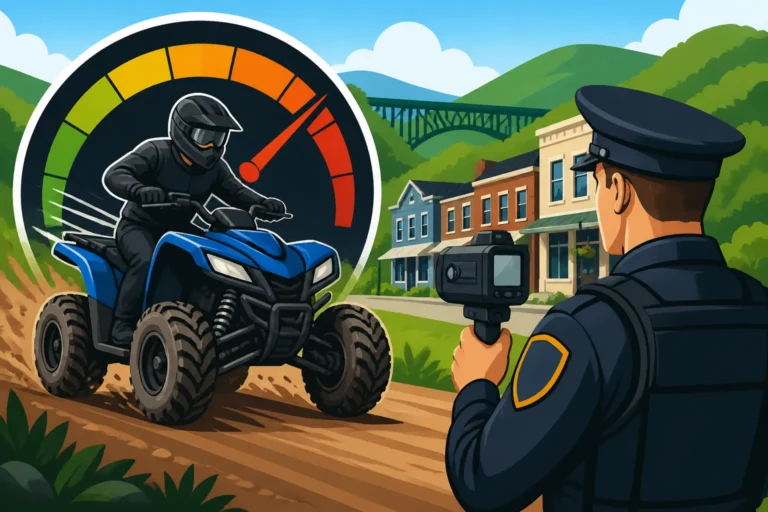
Maintaining appropriate speed is critical when crossing bridges or entering tunnels. On bridges, surfaces can change unexpectedly – from asphalt to metal grates, which can be slick when wet or unsettling under knobby tires. Expansion joints can also catch a wheel unexpectedly. Reduce your speed significantly, especially when approaching these changes. In tunnels, the sudden change in light, combined with the enclosed acoustics, can be disorienting, making high speeds particularly dangerous.
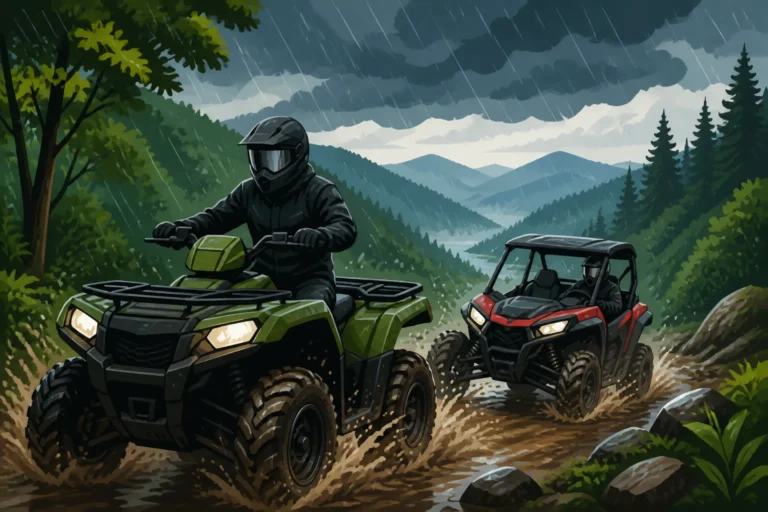
Be vigilant for changes in surface conditions. Water, oil, or debris can accumulate on bridge decks and in tunnels, creating hazardous slick spots. Always keep a safe following distance from other vehicles, allowing plenty of room for braking and reacting to unexpected events. Remember, bridges and tunnels are often high-traffic areas, and defensive riding is your best friend.
Group Riding Etiquette in Confined Spaces
When riding in a group, bridges and tunnels require special etiquette to maintain safety. Don't try to ride side-by-side on a narrow bridge; go single file. Maintain adequate spacing between machines, ensuring that each rider has enough room to react and that exhaust fumes don't overwhelm the rider behind them in an enclosed tunnel. Communicating with hand signals or comms systems is more important than ever, as verbal communication can be difficult due to noise and distance.
Before entering a tunnel or crossing a long bridge, brief your group on how you'll proceed. Discuss spacing, speed, and what to do if someone has a mechanical issue. Remember, group riding is about collective safety, and in these specific environments, the actions of one rider can quickly impact everyone else. Being prepared and disciplined can prevent a minor incident from escalating into a serious problem.
Penalties for Violating Bridge and Tunnel Rules
Ignoring the rules for riding ATVs and UTVs on West Virginia's roads, bridges, and tunnels can lead to serious consequences. These aren't just minor inconveniences; they can result in significant financial penalties, loss of riding privileges, and even the impoundment of your valuable machine. It's a common frustration to see riders disregard these laws, often because they simply don't know them, but ignorance is rarely an excuse in the eyes of the law.
Fines and Court Costs
The most immediate consequence of violating ATV/UTV road rules is usually a traffic citation. Fines can vary widely depending on the specific infraction, but they can quickly add up. For instance, riding where prohibited, speeding, or operating an improperly equipped machine can each carry their own penalties. These fines are often accompanied by court costs, even if you just pay the ticket without appearing before a judge. This means what started as a fun ride can quickly become an expensive mistake.
A single ticket can set you back hundreds of dollars, and multiple violations can escalate that figure dramatically. It’s not just about the monetary cost; it’s the time spent dealing with the legal system, which could mean taking time off work or traveling to a courthouse. To avoid these unwelcome expenses, always make sure you're clear on [West Virginia ATV Ticket Costs] and the specific regulations for wherever you plan to ride.
Impoundment and Forfeiture of Your Machine
Perhaps the most dreaded consequence for any ATV or UTV owner is the impoundment of their machine. If you're caught riding illegally, especially in a dangerous manner or on strictly prohibited public roads, law enforcement has the authority to seize your vehicle. Getting your machine back from impound can be a costly and complicated process, involving storage fees, towing charges, and proving ownership, all while you're still dealing with the legal ramifications of the violation itself.
In severe or repeated cases, a judge might even order the forfeiture of your ATV or UTV. This means you could permanently lose your machine. While this is typically reserved for very serious offenses, the threat alone should be a powerful deterrent. Knowing the penalties, especially something as severe as losing your machine, underscores why understanding rules like [West Virginia Penalties for an Untitled Machine] or riding illegally on specific roadways is so vital.
Loss of Driving Privileges and Insurance Implications
While most ATV/UTV violations are handled separately from your standard driver's license, some serious offenses, particularly those involving reckless operation or alcohol, can indeed impact your regular driving privileges. A DUI on an ATV, for example, is treated with the same severity as a DUI in a car and can lead to the suspension of your driver's license. This adds another layer of consequence to improper riding.
Furthermore, getting into an accident while riding illegally on a public road can have devastating insurance implications. Most standard ATV insurance policies might deny coverage if the incident occurred while you were violating state or local laws. This means you could be personally liable for damages, medical bills, and legal fees, which could easily amount to tens or even hundreds of thousands of dollars. Always check your policy and be aware of how riding legally impacts your coverage.
Making Your ATV/UTV Street Legal for Expanded Access
For riders who regularly wish to use their ATVs or UTVs to connect trails, access services in towns, or traverse short stretches of public road, pursuing a street-legal Special Purpose Vehicle (SPV) plate in West Virginia is often the best solution. While it requires an investment in modifications and paperwork, it significantly broadens your legal riding options, making those bridge and tunnel crossings less of a legal headache.
Essential Equipment for Street-Legal Conversion
To obtain a [West Virginia's Street-Legal Special Purpose Vehicle Law], your ATV or UTV must meet a specific list of equipment requirements, transforming it from an off-road-only machine into something closer to a low-speed road vehicle. This isn't just about adding a few lights; it's a comprehensive upgrade. Key components typically include:
- Headlights and Taillights: These must be DOT-compliant, bright enough for road use, and always on.
- Brake Lights: Clearly visible and functioning.
- Turn Signals: Front and rear, allowing you to signal intentions like a car.
- Horn: An audible warning device.
- Mirrors: At least one rearview mirror, often two, to see traffic behind you.
- Windshield: Made of safety glass or an equivalent material.
- DOT-Approved Tires: Your knobby off-road tires won't cut it on the street. Companies like SuperATV offer excellent [DOT Tires for a Street-Legal Side-by-Side] that meet these requirements.
- Speedometer: A functioning speedometer is necessary.
- License Plate Light: To illuminate your SPV plate after dark.
Meeting all these requirements can be a project, but aftermarket companies specialize in providing comprehensive kits and individual components for [Making a UTV Street Legal in West Virginia].
| Feature | Standard ATV/UTV (Limited Road Use) | Street-Legal SPV (Expanded Road Use) |
|---|---|---|
| Road Access | Very restricted (e.g., 10 miles on centerline-less roads, trail crossings) | Significantly expanded (more roads, bridges, tunnels, higher speed limits) |
| Required Lights | Headlight, taillight, brake light (functional) | DOT-compliant headlights, taillights, brake lights, turn signals, plate light |
| Mirrors | Not typically required for limited road use | At least one rearview mirror (often two) |
| Horn | Often required for limited road use | Required |
| Windshield | Not typically required | Safety glass or equivalent required |
| Tires | Any off-road tires | DOT-approved street-legal tires required |
| Speedometer | Not typically required | Required |
| Insurance | Optional for off-road; liability for limited road use | Mandatory liability insurance, higher limits recommended |
| Helmet | Required for riders under 18 (and often recommended for all) | Required for riders under 18 (and often recommended for all) |
| DMV Registration | Title only (if sold after 1989) | Title and SPV registration/plate required |
Registration and Insurance for an SPV
Once your machine is properly equipped, the next step is to apply for the SPV plate through the West Virginia DMV. This process involves submitting an application, providing proof of ownership (your ATV or UTV title), and demonstrating that your vehicle meets all the necessary safety standards. An inspection may be required to verify the installed equipment.
Crucially, operating a street-legal SPV on public roads requires specific insurance coverage. Standard off-road ATV insurance might not be sufficient, as you'll be operating in environments with higher liability risks. You'll need to obtain a policy that meets the state's minimum liability requirements for on-road vehicles. This typically includes bodily injury and property damage coverage. Be sure to discuss your specific needs with your insurance provider to ensure you have adequate protection. [Insurance Required for a West Virginia SPV Plate] is not just a suggestion, it's a legal mandate.
Benefits and Limitations of an SPV
The primary benefit of converting your machine to an SPV is the freedom it provides. You can legally ride on most public roads with a posted speed limit of 55 mph or less, including many bridges and tunnels, though divided highways and interstates remain off-limits. This makes connecting trails, running errands in trail towns, and simply enjoying the scenery from the pavement much more accessible and stress-free.
However, being street-legal doesn't mean you can throw caution to the wind. You are still operating a powerful off-road machine in an environment with cars, trucks, and other larger vehicles. All traffic laws apply, including speed limits, stop signs, and signals. You must also adhere to [West Virginia Helmet Rules for Riders Under 18], and eye protection is always a smart choice for all riders. Even with an SPV plate, responsible riding and constant vigilance are paramount to ensuring a safe and enjoyable experience on West Virginia's roads, bridges, and tunnels.
Disclaimer
This article is for general informational purposes only and does not constitute professional advice. Laws, prices and regulations vary by location and change over time. Consult a qualified professional for guidance on your specific situation.