West Virginia Taillight and Brake Light Requirements
It's no secret that riding your ATV or UTV in West Virginia offers some of the most breathtaking scenery and exhilarating trails in the country. But when you start thinking about taking your machine beyond the dirt and onto public roads, even for a short hop, suddenly things get complicated. You're left wondering if your stock taillights and brake lights cut it, or if you need to make upgrades. This guide is here to untangle the specific West Virginia requirements for taillights and brake lights, ensuring you stay safe and legal on those stretches of pavement.
Why Taillights and Brake Lights Matter on West Virginia Roads
Let's be honest, when you're tearing up the trails, a fancy taillight might not be top of mind. But the moment those tires touch asphalt, the rules of the road kick in, and with them, a whole new level of responsibility. The reason for these regulations isn't to make your life difficult; it's fundamentally about safety for everyone sharing the road.
Visibility is Key to Safety
Imagine you're cresting a blind hill on a winding mountain road in West Virginia. The sun is starting to dip, casting long shadows, and suddenly you see an ATV ahead. If that machine doesn't have clearly visible taillights, you might not spot it until you're uncomfortably close, especially if your vision is compromised by glare or fog. This isn't just a hypothetical; it's a real danger on our state's beautiful, but often challenging, roadways. Taillights provide a continuous signal of a vehicle's presence, while brake lights scream "I'm slowing down!" This simple visual cue gives following drivers precious seconds to react, preventing rear-end collisions that can turn a fun ride into a nightmare. Without proper illumination, your machine blends into the background, becoming a much higher risk, particularly for drivers who might not expect to encounter an off-road vehicle on the road.
Beyond just preventing accidents, good visibility is also crucial for your own peace of mind. You want to be seen, right? Being confident that other drivers can easily spot you, whether you're making a quick dash across a paved county route or navigating a small town street, allows you to focus on the ride itself, rather than constantly worrying about what's coming up behind you. It's about proactive safety, not just reactive caution.
Meeting the Legal Standard for Road Use
West Virginia's legal landscape for ATVs and UTVs on public roads can feel like a patchwork quilt, with different rules for different situations. However, one consistent thread across nearly all permissible road uses – whether it's for limited access under the 10-mile, 25 mph rule or for a fully street-legal Special Purpose Vehicle (SPV) – is the requirement for functional lighting. The state's vehicle code doesn't magically forget about your machine just because it's an ATV; it simply applies appropriate standards. [Riding an ATV on the Road in West Virginia] means you're entering a different legal arena.
The moment your wheels hit a public road, your ATV or UTV is treated much like any other vehicle in terms of basic safety equipment, particularly concerning visibility during low-light conditions. Failing to meet these standards isn't just a minor oversight; it can lead to citations, fines, and even invalidate your insurance coverage in the event of an accident. Law enforcement officers are trained to spot non-compliant vehicles, and an absent or dim taillight is an easy catch. It's not just about what you can do, but what you must do to legally operate on shared roadways.
Specific Requirements for Taillights in West Virginia
When it comes to taillights, West Virginia's requirements are fairly straightforward, mirroring those for other types of vehicles. The goal is consistent, clear visibility from the rear. Getting these details right is crucial for anyone considering road use.
Color, Brightness, and Placement
In West Virginia, the law specifies that taillights must emit a red light visible from a minimum distance. While the exact candela (brightness) isn't usually listed in plain legislative text for private citizens, the expectation is that they are bright enough to be clearly seen from at least 500 feet under normal atmospheric conditions. They must be mounted on the rear of the vehicle, typically at a height that allows them to be readily observed by following traffic. This means no lights tucked away so low they're obscured by mud, or so high they blend into the skyline.
Most ATVs and UTVs come from the factory with at least one taillight, but for legal road use, especially with a [West Virginia's Street-Legal Special Purpose Vehicle Law] plate, often two symmetrically mounted taillights are expected. The light emitted must be steady, not flashing, unless it's part of a dedicated brake light or turn signal system. If your existing setup isn't up to par, or you're adding an aftermarket solution, ensure the red hue is distinct and the light output is robust. You don't want to be guessing if you're visible enough.
Consider the practical implications: a single, dim factory taillight might be fine for the trail, but on a busy county road, it's easily lost amidst other vehicle lights or the general ambient light. Upgrading to a brighter, more defined LED taillight system can dramatically improve your visibility. Brands like SuperATV offer a range of aftermarket LED taillight options that are often much brighter and more durable than stock units, making them a popular choice for riders looking to enhance safety and meet road requirements. This ensures your presence is unmistakably clear to drivers behind you.
When Taillights Must Be On
The "when" is just as important as the "what" for taillights. In West Virginia, as with most states, taillights (and headlights) must be illuminated during specific periods. This primarily includes the time between sunset and sunrise. This isn't just a suggestion; it's a hard and fast rule for any vehicle on a public road, including your ATV or UTV. Even if the sun has just barely dipped below the horizon, or is just starting to peek over the mountains, your lights need to be on.
Beyond the sunset-to-sunrise window, taillights are also legally required any time atmospheric conditions limit visibility to 500 feet or less. This covers situations like heavy rain, fog, sleet, or even blowing snow. It's that moment when you find yourself squinting to see the car a few lengths ahead – that's your cue to turn on those lights. The logic is simple: if you can't see clearly, chances are others can't see you clearly either.
Ignoring these conditions can lead to tickets and endanger yourself and others. Many modern ATVs and UTVs have a combined headlight/taillight switch, making it easy to turn them on. Make it a habit to engage your lights not just when it's dark, but when the weather turns sour. It's a small act that offers a huge boost in safety. Always be aware of [Lights Required After Dark in West Virginia].
Specific Requirements for Brake Lights in West Virginia
While taillights tell others you're there, brake lights actively communicate your intention to slow down or stop. This makes them arguably even more critical for preventing rear-end collisions, especially in situations where quick reactions are needed.
Activation and Illumination
A key distinction for brake lights is their automatic activation. They must illuminate immediately and automatically when the operator applies the brakes. This means no manual switches or delayed responses; the moment you tap that brake pedal or lever, those lights need to glow. This instantaneous feedback is crucial for following drivers to anticipate your deceleration and adjust their speed accordingly. A faulty brake light switch or a slow-to-respond system can negate the safety benefit entirely, leaving drivers behind you in the dark about your intentions.
The illumination must be bright enough to be clearly distinguishable from your regular taillights. While both are red, brake lights are designed to be noticeably more intense, serving as a clear warning signal. If your brake lights are barely brighter than your taillights, they're not effectively doing their job. This often means ensuring your bulbs or LED arrays are designed for dual-intensity operation, with a dimmer setting for running lights and a much brighter setting for braking. This differentiation is what makes them effective safety devices.
When considering the various [Equipment West Virginia Requires on a Road Ride], functional brake lights are always high on the list. A routine pre-ride check should always include pressing the brake pedal and confirming both left and right brake lights (if applicable) illuminate strongly. This simple step can prevent a ticket and, more importantly, a collision.
Brightness, Color, and Number
As mentioned, brake lights in West Virginia must be red and significantly brighter than the taillights when activated. The intensity is what truly makes them effective. You want them to stand out, even in daylight conditions, especially on bright, sunny days when their warning might otherwise be missed. This brightness ensures that a driver scanning the road ahead will instantly notice your braking action.
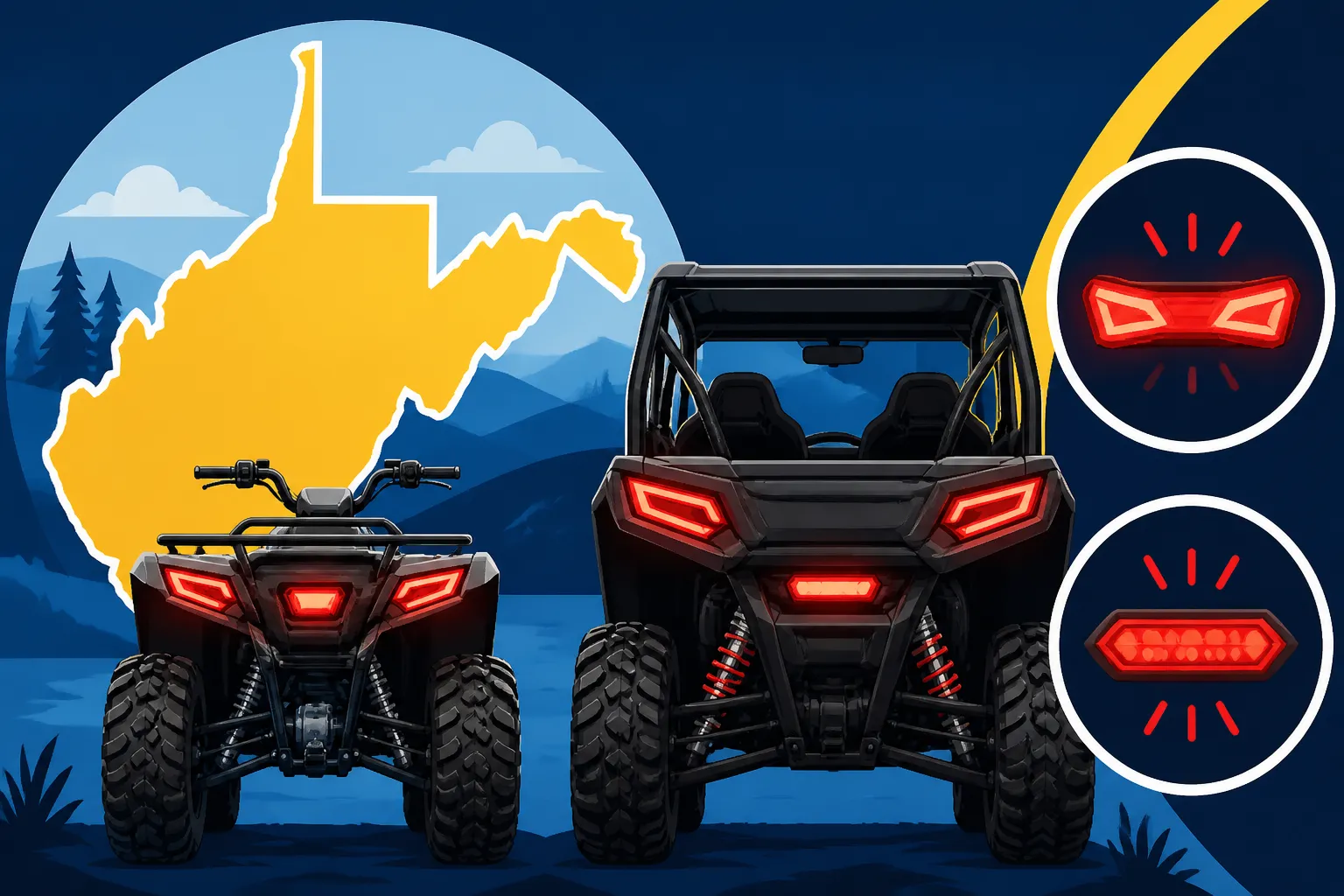
Regarding the number of brake lights, most street-legal vehicles, including SPVs, are expected to have two brake lights, mounted symmetrically on the rear of the vehicle. While some older ATVs might only have a single taillight that also serves as a brake light, this configuration is generally less effective and may not meet the implied standard for comprehensive visibility when operating on public roads. For a fully street-legal conversion, dual brake lights are almost always part of the setup, providing a wider and clearer warning to traffic.
For riders undertaking a street-legal conversion, or even just preparing for limited road use under [West Virginia's 10-Mile, 25 mph Road Rule], upgrading to dual, high-intensity LED brake lights is a wise investment. They offer superior brightness, faster illumination, and greater longevity compared to traditional incandescent bulbs. Many kits, including those from SuperATV, integrate powerful LED brake lights into their turn signal and taillight assemblies, simplifying the upgrade process and ensuring compliance with the state's visibility requirements.
Different Scenarios: Trail Riding vs. Street-Legal Machines
The application of taillight and brake light rules in West Virginia is heavily dependent on where and how you plan to ride your ATV or UTV. What's perfectly fine on a private trail might be a serious violation on a paved road. Understanding these distinctions is crucial.
Trail Riding (Private Land/Designated Trails)
When you're exclusively riding on private property or within the bounds of a designated off-road trail system like the Hatfield-McCoy Trails, the specific requirements for taillights and brake lights are generally much looser. For instance, [West Virginia's Daylight-Only Trail Riding Rule] on managed trails often means that your lights are primarily for internal trail visibility or for very low light conditions, not for informing other public road users. While almost all modern ATVs and UTVs come equipped with factory taillights and some form of brake light, these are primarily designed for basic visibility and safety within the off-road environment itself.
On the trails, the emphasis shifts from communicating with diverse public road traffic to simply being visible to other riders in your group or those you might encounter. If you're riding through dusty conditions, thick woods, or at dawn/dusk on the trails, even basic lights are invaluable for preventing collisions with trees or other machines. There isn't typically a legal mandate for a certain brightness or specific number of brake lights for pure trail use, but most riders would agree that functional lights are a non-negotiable safety feature. In fact, many riders choose to upgrade their stock trail lights to brighter LED versions for improved visibility in challenging terrain, not necessarily for legal compliance, but for enhanced personal safety and enjoyment.
So, while you might not get a ticket on the Hatfield-McCoy for a dim brake light, having bright, reliable lights is still a smart move. They help prevent mishaps within your riding group, signal your presence around blind corners, and assist should you need to ride out in fading light.
Limited Road Use (10-mile, 25 mph rule)
This is where things get interesting and often confusing for riders. West Virginia allows ATVs and UTVs on certain public roads for limited distances – typically up to 10 miles and at a maximum speed of 25 mph – under specific circumstances. This is often to connect trail sections or access services in trail towns. Even though it's a "limited" use, it still falls under the umbrella of public road operation, meaning basic vehicle lighting laws apply. [West Virginia's 10-Mile, 25 mph Road Rule] is very specific, and so are the accompanying equipment requirements.
For these short road stretches, your ATV or UTV must have functional taillights and brake lights that meet the minimum visibility standards discussed earlier. While you might not need the full suite of street-legal equipment like turn signals (though they are highly recommended for safety), clear and effective taillights and brake lights are essential. A West Virginia State Trooper or local deputy encountering you on a paved road will expect these to be operational, especially if it's nearing dusk or the weather is poor. A common mistake is assuming that because it's a short distance, the rules don't fully apply. They do.
Many riders find their factory lights, while present, may not be bright enough for comfortable and safe road use, especially during daylight hours where brake lights need to cut through ambient light. This scenario often prompts riders to consider minor upgrades to ensure their machines are clearly visible to cars and trucks, even for those brief road connections. It's about blending safety with convenience, ensuring you don't attract unwanted attention from law enforcement for something easily fixed.
Street-Legal Special Purpose Vehicles (SPVs)
This category demands the most stringent compliance when it comes to lighting. If you've gone through the process of getting a [West Virginia SPV Plate Requirements List], your ATV or UTV is now considered a Special Purpose Vehicle (SPV) and must meet nearly all the lighting and safety equipment standards of a conventional motor vehicle. This means, without a doubt, you need fully functional, highly visible taillights and brake lights. [West Virginia's Street-Legal Special Purpose Vehicle Law] is robust and comprehensive.
For SPVs, the requirements typically include:
- Dual Taillights: Two red taillights, symmetrically mounted on the rear, visible from at least 500 feet.
- Dual Brake Lights: Two red brake lights, also symmetrically mounted, that illuminate brighter than the taillights when the brakes are applied.
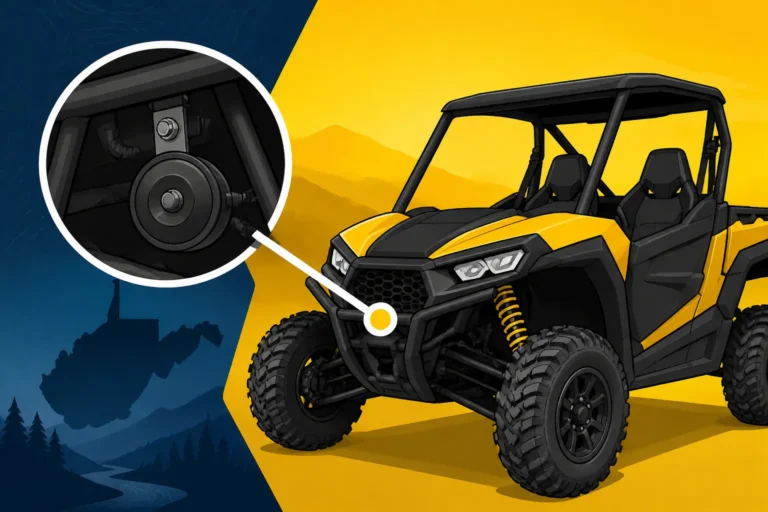
- Turn Signals: Both front and rear amber turn signals are typically required for SPVs. While not taillight/brake light, they often integrate into the same housing. [Mirrors and Horns on a Street-Legal Build] are also part of this conversion.
Many riders opting for an SPV conversion will purchase comprehensive street-legal kits. These kits, often available from reputable aftermarket suppliers like SuperATV, typically include high-quality LED taillight and brake light assemblies, along with integrated turn signals, horn, and mirrors. These kits are designed to ensure your machine meets the letter of the law for full road legality, transforming it from a trail-only machine into a versatile road-and-trail vehicle. When you're [Making a Side-by-Side Street Legal in West Virginia on a Budget], proper lighting is one area where you absolutely cannot cut corners.
Common Issues and How to Ensure Compliance
Even with the best intentions, riders sometimes run into problems with their ATV or UTV lighting. Understanding these common pitfalls and knowing how to prevent them can save you a headache, a fine, and potentially an accident.
Aftermarket Upgrades and DIY Solutions
The aftermarket world for ATVs and UTVs is vast, offering countless options for customizing your machine. When it comes to lights, many riders choose to upgrade from stock. Whether you're adding brighter LED taillights, integrating brake lights into a new bumper, or installing a full street-legal kit, it's crucial to ensure these aftermarket parts still meet West Virginia's legal requirements. Not all "off-road" lighting is designed for "on-road" compliance. A bright red light for the trail might be too dim or too narrow an angle for road use.
When undertaking a DIY lighting project, pay close attention to the wiring. Poorly routed or inadequately protected wiring can lead to short circuits, blown fuses, or intermittent operation – exactly what you don't want when a deputy is behind you. Ensure all connections are secure, waterproofed, and properly insulated. If you're not confident in your electrical skills, it's always best to consult a professional or choose a pre-wired, plug-and-play solution from a trusted manufacturer. Companies like SuperATV specialize in these types of kits, offering robust and reliable lighting solutions that simplify the upgrade process and are often designed with road legality in mind. Remember, the goal isn't just to have a light, but to have a legal and reliable light.
Maintenance and Pre-Ride Checks
This might sound like common sense, but you'd be surprised how many riders get pulled over for a burnt-out bulb or a taillight obscured by mud. Your ATV or UTV lives a tough life, constantly exposed to vibrations, water, mud, and debris. This environment is hard on electrical components. Therefore, regular maintenance and a quick pre-ride check of your lighting system are non-negotiable, especially if you plan any road excursions.
Before every ride that might involve public roads, take a few moments to:
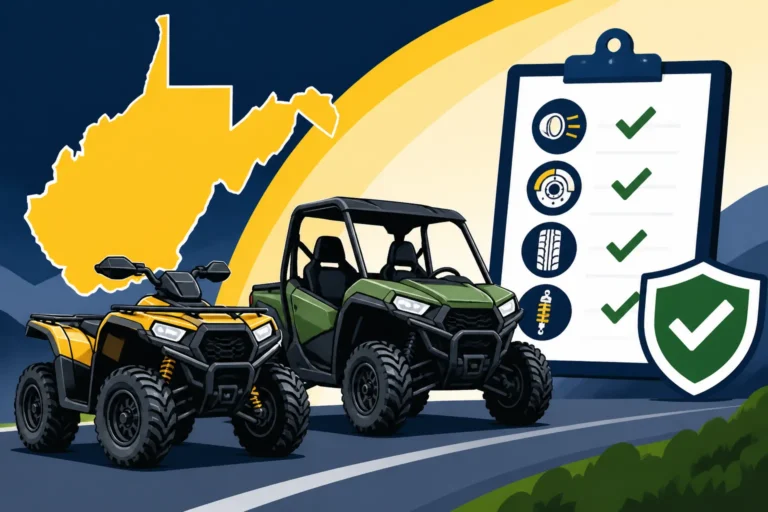
- Check all lights: Turn on your ignition, activate your headlights and taillights, and walk around the machine to confirm they are all working.
- Test brake lights: Have a friend stand behind your machine, or back up to a wall or window, and press your brake pedal. Confirm both brake lights illuminate brightly.
- Inspect for damage: Look for cracked lenses, loose wiring, or excessive mud/dirt obscuring the lights. Clean them if necessary. Even a thick layer of dust can significantly reduce light output.
A non-functional taillight or brake light isn't just a minor inconvenience; it's a safety hazard and a legal violation that could lead to [West Virginia ATV Ticket Costs]. Make these checks a regular part of your routine.
What to Do If Stopped
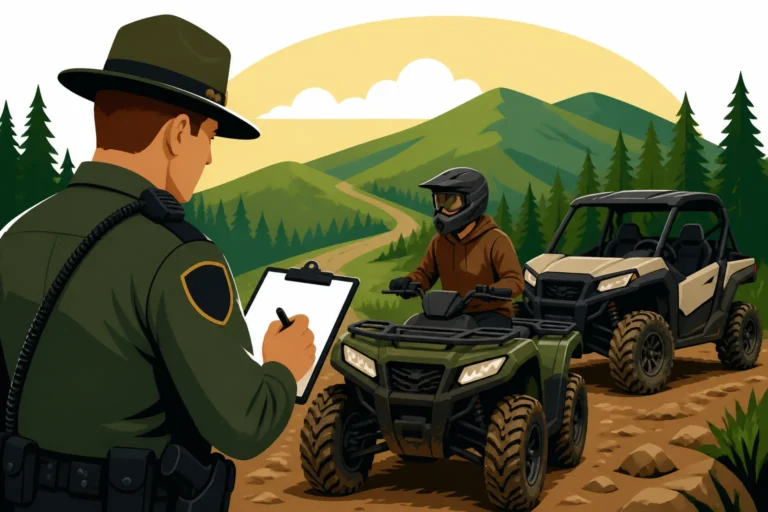
Even with perfectly compliant lights, you might find yourself pulled over by law enforcement. It could be for another reason, or simply because your ATV or UTV stands out on a public road. The most important thing is to remain calm, respectful, and cooperative.
If an officer points out an issue with your taillights or brake lights, acknowledge it politely. If it's something you can quickly remedy (like wiping off mud), offer to do so. If it's a mechanical failure (like a burnt-out bulb), explain the situation and express your intent to fix it as soon as possible. Arguing or becoming defensive will rarely improve the situation. Knowing your machine is in compliance will give you confidence, but even if there's a problem, a polite and understanding approach is always the best course of action. They're enforcing safety rules, after all.
| Scenario | Taillight Requirement | Brake Light Requirement | Typical Placement & Color | Notes |
|---|---|---|---|---|
| Private Trails | Basic functional light | Basic functional light | Rear, Red | Not legally mandated, but highly recommended for safety. |
| Hatfield-McCoy Trails | Basic functional light | Basic functional light | Rear, Red | Similar to private trails; daylight rules apply. |
| Limited Road Use (10/25) | Clearly visible (500 ft), Red | Clearly visible (500 ft), Red & brighter than taillight | Rear, Red | Required for public road use; often overlooked. |
| Street-Legal SPV | Dual, clearly visible (500 ft), Red | Dual, clearly visible (500 ft), Red & brighter than taillight | Rear, Red, Symmetrical | Full motor vehicle standards apply, often integrated with turn signals. |
Disclaimer
This article is for general informational purposes only and does not constitute professional advice. Laws, prices and regulations vary by location and change over time. Consult a qualified professional for guidance on your specific situation.