West Virginia Golf Cart Age Requirement
It's confusing, isn't it? You see golf carts zipping around neighborhoods, campgrounds, and sometimes even small-town streets in West Virginia, and it's easy to wonder who exactly is allowed to be behind the wheel, especially when kids are involved. The rules aren't always clear-cut, and what might be okay on a private lane could land you in trouble on a public road. This comprehensive guide is here to untangle the specific age requirements and general regulations for operating golf carts across the Mountain State, helping you stay safe and legal.
Understanding West Virginia's Golf Cart Rules on Public Roads
The biggest misconception people have about golf carts is that they're automatically exempt from vehicle laws just because they're smaller and slower. While that might be true on a private golf course, the moment a golf cart rolls onto a public road, even for a short distance, it enters a whole new world of regulations. West Virginia has specific distinctions that determine if and when a golf cart can share the pavement, and who can legally drive it. It's not as simple as "if it has wheels, a kid can drive it."
Many families dream of using their golf cart to run quick errands or visit neighbors down the street, enjoying the open-air convenience. However, without understanding the legal framework, that dream can quickly turn into a costly citation or, worse, an accident. The state draws a clear line between an off-road toy and a legitimate, albeit low-speed, vehicle capable of public road use. This distinction is critical when you consider age and licensing.
What Makes a Golf Cart Road-Legal in West Virginia?
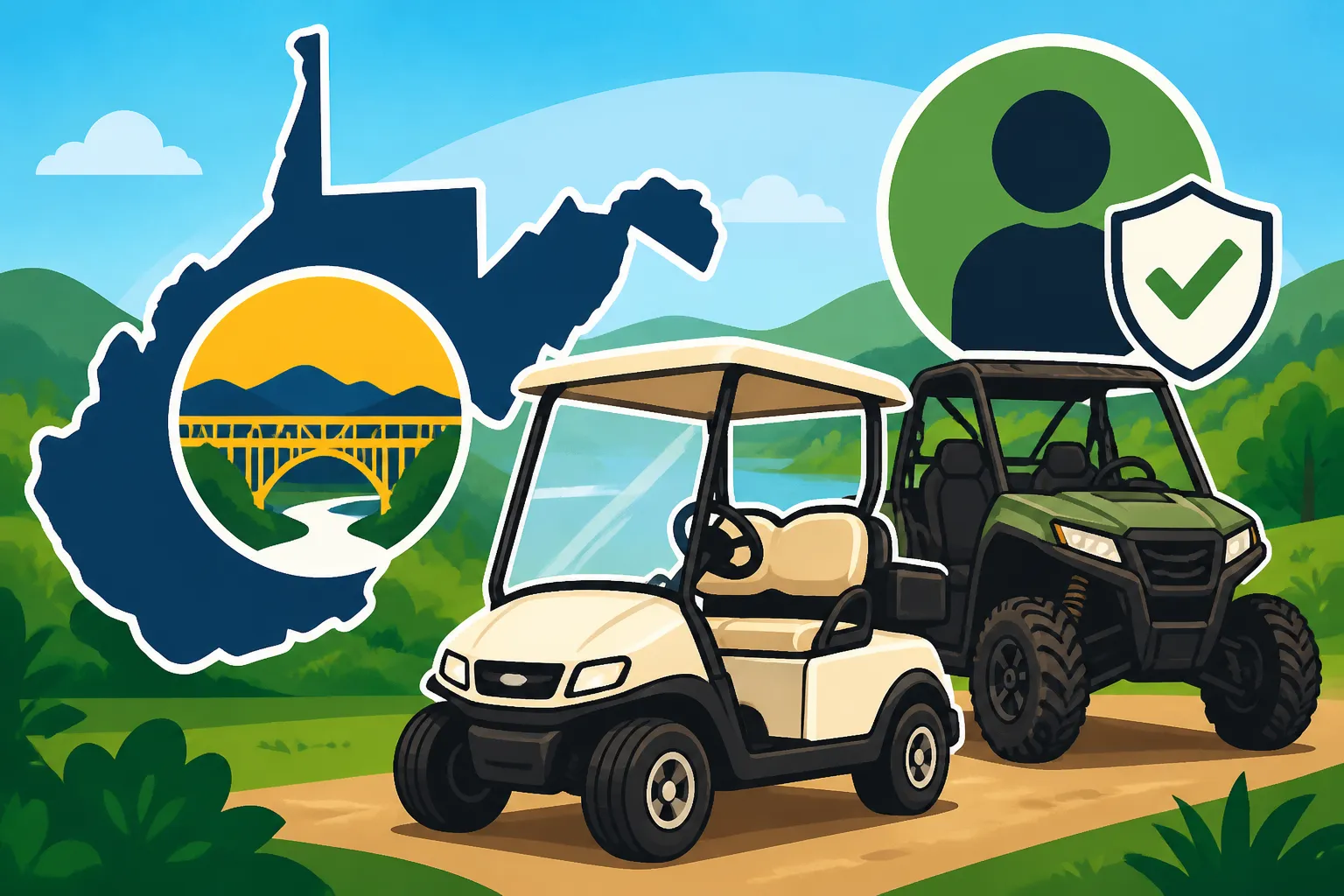
A standard golf cart, the kind you'd typically find on a golf course, isn't inherently legal for public roads in West Virginia. For a golf cart to be considered for limited public road use, it often needs to be converted into what's called a Low-Speed Vehicle, or LSV. This isn't just a fancy name; it involves equipping the cart with specific safety features that bring it closer to traditional vehicle standards.
These essential components include things like headlights, taillights, turn signals, brake lights, a rearview mirror, a windshield, seatbelts, and a Vehicle Identification Number (VIN). The idea is to make the cart visible and safe enough to interact with other traffic, even if it's only at low speeds. Many owners turn to aftermarket suppliers, such as SuperATV, to find the necessary conversion kits and individual components like DOT-approved windshields or robust lighting packages to meet these requirements. It's a significant upgrade from a basic golf course vehicle, and it’s important to research all the necessary components before attempting to register one as an LSV.
Once a golf cart is properly equipped and certified as an LSV, it can be [Registering a Low-Speed Vehicle in West Virginia] with the DMV. This process involves ensuring all the required safety features are present and passing any necessary inspections. Imagine a family living in a small, tight-knit community in West Virginia. They want to use their golf cart to take their kids to the community pool a few blocks away, avoiding the hassle of a full-sized car. For them, converting their golf cart into an LSV and getting it registered is the key to legally making those short, convenient trips on public roads.
General Age and Licensing for Driving on Public Roads
Here's where the age question really comes into play for golf carts on West Virginia's public roads. If your golf cart has been legally converted and registered as a Low-Speed Vehicle (LSV), it essentially becomes a recognized motor vehicle, albeit one with speed restrictions. This means that the person operating it on public roads must hold a valid driver's license.
In West Virginia, the minimum age to obtain a driver's license is 16, following the state's graduated driver's licensing program. So, if an LSV is being driven on any road where regular traffic laws apply, the driver must be at least 16 years old and possess the appropriate licensing. There's no special loophole for LSVs that allows younger drivers, unlike some rules you might find for ATVs on private land. This often surprises people who assume golf carts are treated more like bicycles or toys. A teenager with only a learner's permit, for instance, cannot legally operate an LSV alone on a public road in West Virginia, even if they're just going a block or two.
It's crucial not to confuse LSVs with Off-Highway Vehicles (OHVs) like ATVs or UTVs, which have a different set of road-riding rules in West Virginia, often tied to speed limits and specific types of roads. While an LSV shares some equipment needs with a [Making a UTV Street Legal in West Virginia], the fundamental licensing requirements for the driver remain aligned with traditional motor vehicles. Therefore, for legal operation on public roads, the driver of a West Virginia LSV must be a licensed adult.
Golf Cart Use in Residential Areas and Designated Communities
While state law governs general public road use, things can get a bit more nuanced when it comes to residential neighborhoods, planned communities, or small towns. These areas often have unique characteristics that lead to their own specific rules regarding golf cart operation. This local flexibility can be a blessing for residents but also a source of confusion if you don't do your homework.
It’s easy to assume that because "everyone else" is doing it, a golf cart must be fine to drive anywhere in a residential area. However, that's a risky assumption. What's allowed in one subdivision or municipality might be strictly prohibited just a few miles down the road. Local regulations can sometimes override or add to state statutes, creating a patchwork of rules that demand your attention.
Local Ordinances and Community Regulations
Many West Virginia towns and planned communities have taken it upon themselves to create specific local ordinances governing golf cart use. These ordinances often recognize the convenience and popularity of golf carts for short-distance travel within their boundaries. While they might relax some of the strict LSV conversion requirements for certain streets, they almost always impose their own age restrictions and operational guidelines. For instance, a town might allow golf carts on streets with a speed limit of 25 mph or less, but still require the driver to be at least 16 years old and possess a valid driver's license, even if the golf cart isn't fully registered as an LSV with the state.
These local rules might also stipulate specific hours of operation (e.g., no driving after dark without proper lighting), insurance requirements, or designate which streets are permissible. It’s absolutely essential to check with your specific municipality or homeowners' association for their particular rules. A common scenario involves a family in a charming West Virginia town where neighbors routinely use golf carts to get to the community park or local ice cream shop. The parents might want their 15-year-old, who is responsible and rides ATVs on trails, to drive the golf cart. Without checking the local [Golf Cart Ordinances in West Virginia Towns], they could be unwittingly breaking the law, as many local rules still require a full driver's license, regardless of the cart's speed.
Some communities might have more lenient rules for specific, enclosed areas that are technically private but feel public, such as large campgrounds or resort properties. Even then, those private entities will have their own established age policies. The key takeaway is that you cannot assume the rules of one area apply to another; always verify the local specifics before anyone, especially a younger driver, gets behind the wheel on what appears to be a public-access road.
Private Property and Golf Course Rules
When a golf cart is strictly operated on private property, the formal state laws regarding driver licensing and LSV conversions generally don't apply. This includes places like golf courses, private farms, large industrial sites, or even your own expansive backyard. On your own land, or land where you have permission from the owner, you have much more leeway to set your own rules for who can drive and at what age.
However, even on private property, safety should always be the top priority. While a 12-year-old might legally be able to drive a golf cart around their grandparent's large West Virginia farm without a driver's license, it doesn't mean it's always safe or advisable without proper supervision and instruction. Property owners or managers of private facilities (like golf courses or gated communities) are still responsible for ensuring a safe environment. Therefore, they often implement their own age minimums for operators, especially if the cart is being used in areas with other people or potential hazards. For instance, most commercial golf courses will require drivers to be at least 16 years old with a valid driver's license, primarily for liability reasons and to ensure a basic level of driving competence.
The distinction is clear: public roads fall under state and local motor vehicle laws, while private property is largely governed by the owner's discretion and liability concerns. If you're considering letting a younger individual operate a golf cart, especially without a driver's license, ensure they are doing so exclusively on private land with the owner's express permission, and always prioritize their safety through supervision and appropriate training.
Comparing Golf Carts to ATVs and UTVs for Road Use
It’s easy to lump all small, off-road type vehicles together, but West Virginia has very distinct rules for golf carts compared to ATVs and UTVs, especially when it comes to road use and the age of the operator. Understanding these differences is crucial to avoid fines or accidents, and to ensure you're compliant with the specific laws for each machine. People often get confused because they see similar vehicles on the road, but the regulations behind them can vary significantly.
This section aims to clarify why a golf cart, even one modified for the street, isn't treated the same way as a street-legal UTV, particularly concerning who can drive it. The requirements for equipment, registration, and most importantly, driver qualifications, diverge quite a bit between these vehicle types, and these distinctions are especially important when considering younger drivers.
Key Differences in Road Legality and Age Requirements
The path to road legality for a golf cart (as an LSV) and an ATV or UTV (as a Special Purpose Vehicle, or SPV) in West Virginia involves different sets of rules and, crucially, different age requirements for operators. To drive an LSV on public roads, as we've discussed, a valid driver's license is generally required, meaning the operator must be at least 16 years old.
For ATVs and UTVs, if you want to make them street-legal under West Virginia's [West Virginia's Street-Legal Special Purpose Vehicle Plate] program, the process is typically more involved. While many of the equipment requirements might seem similar (lights, mirrors, turn signals), SPVs usually need a title, registration, and often a more rigorous inspection process. Crucially, like LSVs, driving an SPV on any public road typically requires a valid driver's license, placing the minimum age at 16. [Driver's License Rules for West Virginia Road Riding] are paramount here. However, for youth ATVs not on public roads, there are specific [Youth ATV Size Rules for West Virginia Families] and age limits for trail riding and private land use.
The table below highlights some of the key differences:
| Feature | Golf Cart (as an LSV) | ATV/UTV (as an SPV) |
|---|---|---|
| Primary Use | Golf courses, residential, short-distance transport | Off-road trails, utility, recreational, farm work |
| Maximum Speed | 20-25 mph | Generally higher, but restricted to 25 mph on certain roads |
| Driver Age on Public Rd | 16+ with valid driver's license | 16+ with valid driver's license |
| Registration Req. | LSV registration (if applicable) | Title and SPV registration |
| Safety Equipment | Headlights, tail lights, turn signals, mirrors, seatbelts, windshield | Similar to LSV, plus potentially more robust frame, roll bars |
| Road Access | Limited to certain low-speed roads/communities | Limited by specific SPV laws, usually 10-mile, 25 mph rule, or within trail towns |
A common scenario might involve a rider who owns both an ATV and a golf cart. They might wonder if their 15-year-old, who is permitted to ride the ATV on the Hatfield-McCoy Trails, can also drive the golf cart on a quiet neighborhood street. The answer, if that street is public, is likely no, due to the driver's license requirement for the golf cart acting as an LSV. This clear distinction is a critical piece of information for West Virginia residents and visitors.
Safety Considerations and Best Practices for Young Drivers
Regardless of the legal age minimums, the fundamental priority when anyone, especially a young person, is operating a golf cart or any off-highway vehicle is safety. Even a low-speed golf cart can be involved in serious accidents, particularly when sharing space with pedestrians, bicycles, or full-sized vehicles. Just because a 12-year-old might be allowed to drive a golf cart on private property doesn't mean they possess the judgment, spatial awareness, or reaction time necessary for safe operation, especially if unsupervised.
Parents and guardians play a crucial role in providing thorough instruction and supervision. This includes teaching safe driving practices, understanding vehicle limitations, and strictly adhering to any local rules or property-specific age restrictions. Consider enrolling young drivers in a recognized safety course, such as the [West Virginia DMV ATV Safety Awareness Course], even if it's primarily geared towards ATVs; the core principles of safe vehicle operation apply across the board. Proper safety gear, including [West Virginia Helmet Rules for Riders Under 18] and eye protection, is also important, even in a golf cart, especially if operating near higher speeds or on uneven terrain.
For golf carts being used on public roads, even in communities with relaxed rules, ensuring the vehicle is properly equipped for visibility is paramount. Aftermarket parts from suppliers like SuperATV can help enhance safety features, adding things like louder horns, brighter LED lights, or even better braking systems. It's about more than just meeting the minimum legal requirements; it's about making a conscious effort to prevent accidents. A responsible parent might let their qualified 16-year-old drive the family LSV to a friend's house a few blocks away, but only after extensive practice, clear rules about speed and caution, and ensuring the cart has all its [Equipment West Virginia Requires on a Road Ride], especially if crossing any busier intersections. It's about cultivating a safety-first mindset that goes beyond just checking a box for age.
Disclaimer
This article is for general informational purposes only and does not constitute professional advice. Laws, prices and regulations vary by location and change over time. Consult a qualified professional for guidance on your specific situation.