Hauling Firewood by UTV on a Back Road
There’s nothing quite like the crackle and warmth of a wood fire on a crisp West Virginia evening, especially when that wood came from your own land or a permitted cut nearby. But getting that heavy load from the backwoods to your woodpile often presents a unique challenge, especially if it involves even a short stretch of a public road. You’ve got your trusty UTV, perfect for navigating those rough tracks, but can you actually use it to haul firewood on a county route without running afoul of the law? This guide is here to untangle the complexities of using your UTV for firewood hauling on West Virginia's back roads, ensuring you stay legal and safe.
The Basics of UTVs on West Virginia Roads for Hauling
Let's face it, your side-by-side is often the most practical vehicle for getting deep into the woods to retrieve firewood. It's built for rough terrain, can easily tow a small trailer, and navigate tight spots a full-size truck wouldn't dare. But that convenience comes with a specific set of rules when you start thinking about connecting those private trails to a public thoroughfare, even if it's just for a few hundred feet.
Understanding "Back Roads" and UTV Access
When we talk about "back roads" in West Virginia, we're usually thinking about county routes, secondary state roads, or even private gravel lanes that crisscross our beautiful, rugged landscape. The crucial distinction here is between private and public access. On your own private land, or land where you have explicit permission, you can typically operate your UTV as you see fit for hauling firewood, within safety and environmental considerations. This freedom extends to private logging roads or property access roads that are not maintained by the state or county.
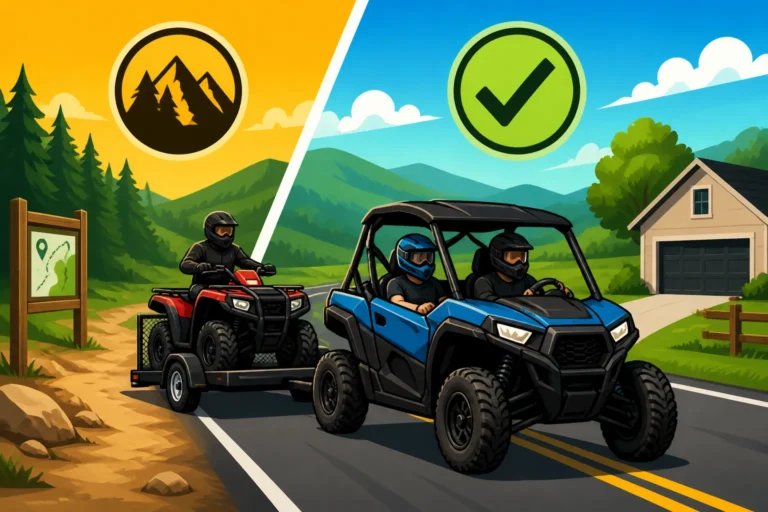
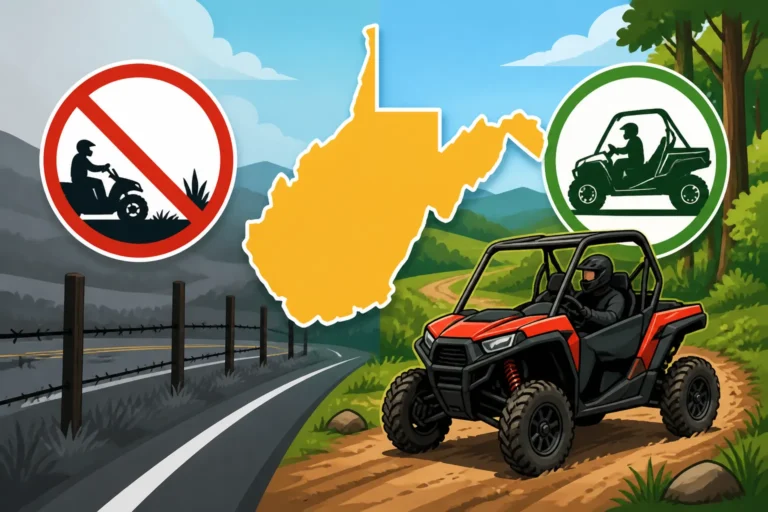
However, the moment your tires touch a road that's open to the general public, even if it's a rarely traveled, unpaved county route deep in a hollow, you enter a different legal arena. West Virginia law does make some allowances for ATVs and UTVs on public roads, but these are specific and limited. Generally, this involves a 10-mile distance limit and a 25 mph speed restriction on designated county or secondary roads, but only in certain jurisdictions that have opted in. It's a patchwork of rules, and what's okay in one county might not be in the next. Always remember that state highways and interstates are almost universally off-limits to UTVs unless they are fully street-legal Special Purpose Vehicles (SPVs).
Essential Equipment for Hauling Firewood Safely
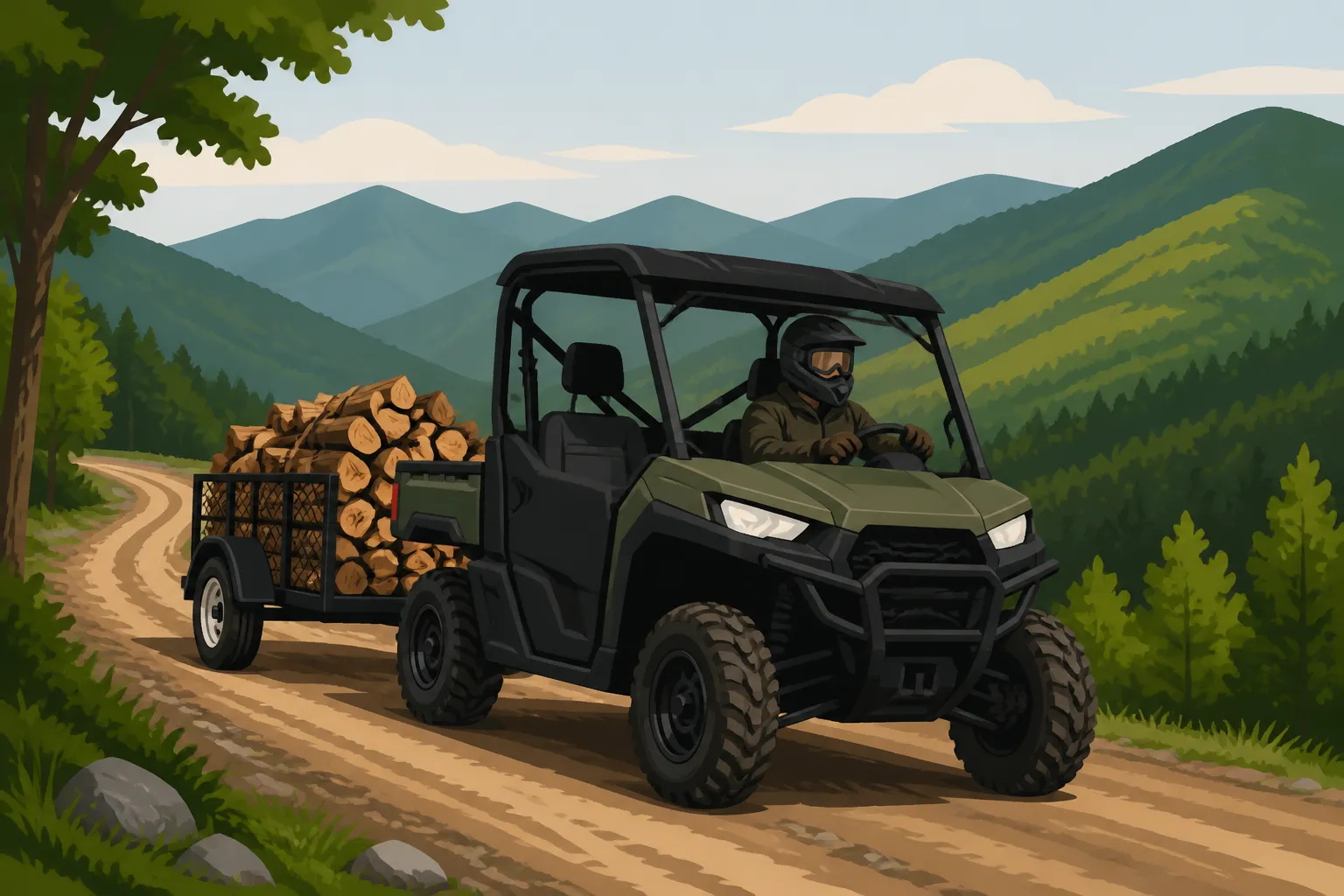
Hauling firewood isn't just about putting logs in a bed or on a trailer. It's about doing it safely and efficiently. Beyond your UTV, you'll need a few key pieces of equipment. A sturdy utility trailer is almost a necessity for any significant amount of firewood, as overloading your UTV's bed capacity can strain the suspension and compromise handling. Make sure your trailer's Gross Vehicle Weight Rating (GVWR) is appropriate for the weight of wet or dry firewood you plan to haul, and always check your UTV's owner's manual for its maximum towing capacity.
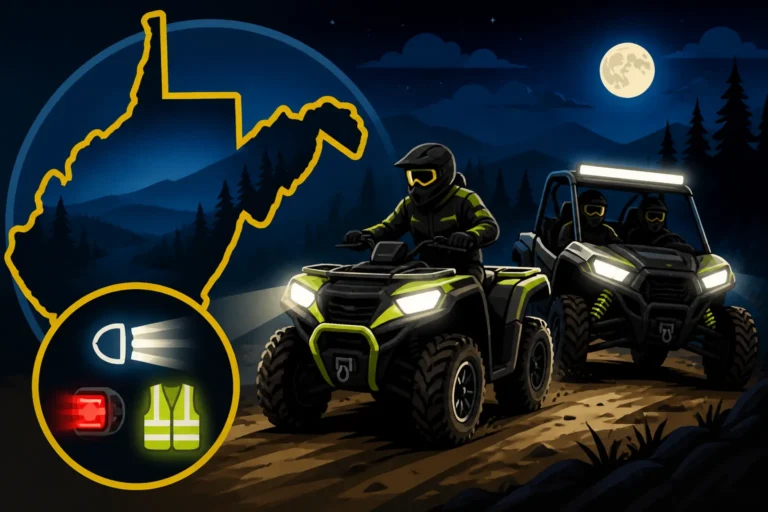
Beyond the trailer, think about how you'll manage the load. Cargo nets or tarps are crucial for securing the wood and preventing pieces from bouncing out, especially on bumpy back roads. A winch on your UTV can be invaluable for dragging larger logs to your loading point or for self-recovery if you get stuck. For those looking to really maximize their hauling efficiency and durability, consider upgrading certain components. Brands like SuperATV offer heavy-duty cargo boxes, bed extenders, and even complete trailing arms or lift kits designed to handle more weight and abuse, which can be a real game-changer if you're frequently tackling heavy hauling tasks. Don't forget basic safety gear for your UTV itself, like working headlights, taillights, brake lights, and ideally a horn and mirrors, especially if you anticipate any public road use, even brief.
Navigating West Virginia's Road Rules with a UTV and Firewood
The desire to use your UTV for practical tasks like hauling firewood is perfectly understandable. It's an agile, capable machine. However, the intersection of private property use and public road regulations is where things can get tricky. Understanding these nuances is key to avoiding fines or, worse, accidents.
Public Road Limitations: Speed, Distance, and Designated Routes
West Virginia law allows for limited public road access for ATVs and UTVs, but it's not a free-for-all. The general rule permits operation on secondary roads (like county routes) or municipal streets for a distance not exceeding ten miles, and at speeds no greater than 25 mph. This is primarily for connecting trails or accessing services, not for extensive travel. Critically, this privilege is only granted in counties or municipalities that have specifically passed an ordinance allowing it. What does this mean for you? Before you even think about putting a wheel on a public road with your firewood, you absolutely must verify if the specific county or town you're in permits such use. You can look into information on [West Virginia's 10-Mile, 25 mph Road Rule] to better understand the nuances.
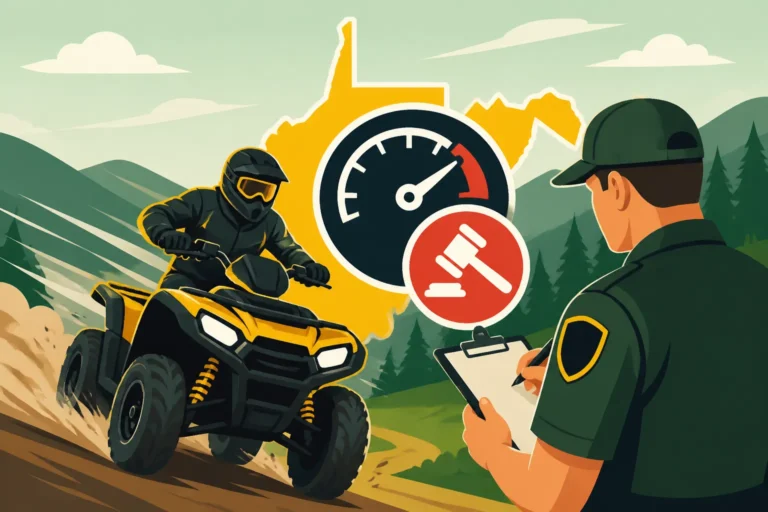
Furthermore, these rules usually stipulate that operators must possess a valid driver's license (or a learner's permit with adult supervision if under 18) and adhere to all traffic laws, including signaling turns and yielding right-of-way. The fine for violating these rules can be hefty, and could even lead to your machine being impounded, which would be a terrible way to end a firewood run. You can find more information about [Tickets West Virginia Deputies Write for Road Riding]. Always err on the side of caution. If you're unsure, it's safer to avoid the public road or find an alternative route.
Necessary Documentation and Safety Gear
Operating any vehicle, including a UTV, on public roads in West Virginia requires certain documentation, even for limited use. Since December 2010, all UTVs purchased in West Virginia are required to be titled, much like a car or truck. This means you should have a valid West Virginia title for your UTV. If you bought your UTV before this rule or out-of-state, there are specific [West Virginia UTV Title Rules Since 2010] that outline how to get it titled here. Without a title, you risk penalties if stopped by law enforcement. Ensure your title reflects accurate information, and if there are any discrepancies, like a wrong VIN, address those proactively.
Beyond the title, you should carry proof of ownership, like a bill of sale, especially if the title isn't immediately transferable or if you're borrowing the machine. While the ATV safety awareness course is primarily aimed at those operating on managed trails, it's always a good idea to be familiar with ATV safety practices. For road use, West Virginia law generally requires riders under 18 to wear a helmet, and eye protection is mandatory for everyone unless the machine has a DOT-approved windshield. It’s a good habit to wear a helmet and eye protection regardless of your age, especially when hauling a heavy, potentially unstable load. Seatbelts, if equipped, must be worn.
| Requirement | Private Land Use | Limited Public Road Use (if permitted) |
|---|---|---|
| UTV Title | Recommended (proof of ownership) | Mandatory (if bought after 2010 or moved here) |
| Driver's License | Not required | Mandatory for operator |
| Helmet | Recommended | Required for riders under 18 |
| Eye Protection | Recommended | Required (unless DOT windshield) |
| Seatbelts | Recommended | Mandatory (if equipped) |
| Working Lights | Recommended | Mandatory (headlights, taillights, brake lights) |
| Horn/Mirrors | Optional | Recommended (often part of street-legal) |
| Trailer Reg. | N/A | Required for some trailers |
Practical Tips for Hauling Firewood with Your UTV
Successfully hauling firewood with your UTV involves more than just loading it up and driving. There's a method to safely transporting heavy, bulky loads over challenging terrain and potentially along public roads.
Choosing the Right Trailer and Load Management
The trailer you choose makes a huge difference. For typical firewood hauling, a small utility trailer, often single-axle, is ideal. Look for one with a dumping feature if possible, as it makes unloading much easier. Ensure the trailer’s weight capacity well exceeds the amount of firewood you plan to haul, as green wood can be surprisingly heavy. Match your trailer's tongue weight and overall capacity to your UTV's towing limits. Overloading can lead to dangerous instability, reduced braking performance, and accelerated wear on your UTV.
When loading, distribute the weight evenly, centering the heaviest part of the load over the trailer axle. Avoid putting too much weight on the front (tongue weight) or the back of the trailer, as both can cause adverse handling. Secure your load thoroughly with high-quality ratchet straps or chains. Logs can shift and roll, especially on rough tracks. A cargo net over the top adds an extra layer of security. For those really pushing the limits of their UTV's utility, a brand like SuperATV might offer heavy-duty springs, A-arms, or even complete suspension kits that can significantly improve your UTV's ability to handle heavier loads without sagging or compromising ride quality. You can also review [Strapping a Side-by-Side Down for the Highway] for general best practices.
Best Practices for Backwoods and Public Road Travel
Before you even start loading, do a pre-ride check. Are your UTV and trailer tires properly inflated? Are your lights, including brake lights on the trailer (if equipped), working? Are your brakes in good condition? Is the trailer hitch securely fastened? These basic checks can prevent major headaches down the trail or road.
When driving with a loaded trailer, remember that your UTV will handle very differently. Braking distances will increase significantly, and acceleration will be slower. Take turns wider and reduce your speed, especially on inclines and declines. On backwoods trails, anticipate bumps and dips, and drive smoothly to prevent the load from shifting violently. If you're using a public road, even for a short stretch, make yourself as visible as possible. Use your headlights, and consider adding an orange safety flag to the UTV. Always be mindful of other vehicles, even on roads you rarely see traffic on. Drivers often don't expect to encounter a UTV, especially one hauling a loaded trailer.
Legal Considerations Beyond Road Use
Beyond the road rules, there are other legal aspects to consider when hauling firewood. The most important is ensuring you have the legal right to cut and remove the wood in the first place. If it's on your own property, that's straightforward. If it's on someone else's private land, you need explicit permission, preferably in writing. Cutting wood on public lands like national forests typically requires a permit and adherence to specific regulations regarding tree species, size, and location. Unauthorized timber removal, even for firewood, can lead to significant fines.
Also, consider the purpose of your UTV. While you're using it for practical work, if your primary use is agricultural on a farm, there might be slightly different titling or registration nuances, though these generally don't exempt you from basic road rules. You can explore [West Virginia Title Rules for Farm ATVs] for more specific information. Always ensure you're respecting private property boundaries, even when traversing trails that feel remote.
Avoiding Pitfalls and Ensuring a Smooth Haul
Hauling firewood with a UTV is a rewarding way to be self-sufficient and enjoy the outdoors, but it comes with potential pitfalls. Being aware of these common mistakes and preparing for them can make all the difference between a successful haul and a frustrating day.
Common Mistakes When Hauling Firewood
One of the most frequent mistakes is simply overloading. It's tempting to try and get "just one more log" in, but exceeding your UTV's or trailer's capacity can lead to premature wear on components like axles, bearings, and suspension. More importantly, it can make the rig dangerously unstable, particularly on rough terrain or when braking suddenly.
Another common issue is inadequate load securing. Firewood is notoriously shifty. Even if it looks secure, a hard bump or a sudden turn can dislodge logs, creating a hazard for you and anyone else on the road or trail. Always use multiple tie-down points and re-check tension periodically, especially after the first few miles, as the load may settle.
Finally, ignoring the road rules is a significant risk. Thinking "it's just a back road" or "I'm only going a quarter-mile" doesn't exempt you from the law. West Virginia deputies patrol rural roads and are familiar with UTV traffic. Getting caught operating an untiled UTV, or driving one on an unauthorized public road, can result in fines and other legal repercussions. Don't let a convenient firewood run turn into an expensive lesson.
When to Consider a Street-Legal Conversion
If you find yourself frequently needing to use public roads for more than the limited 10-mile, 25 mph rule allows—perhaps your property is split by a state route, or you need to access a woodlot further away—it might be time to consider making your UTV truly street legal. West Virginia offers a path for this through its Special Purpose Vehicle (SPV) registration.
Converting your UTV to an SPV involves installing specific equipment to meet road-legal standards. This usually includes DOT-approved tires, a windshield (often with wipers), a horn, rearview and side mirrors, turn signals, and a license plate light. It's an investment, but it grants you far greater freedom on West Virginia's public roads, beyond the highly restricted allowances for non-street-legal UTVs. Many aftermarket companies, including SuperATV, offer comprehensive kits or individual components like DOT-approved tires, mirrors, and turn signal kits designed specifically for popular UTV models. While the initial outlay can be significant, the added convenience and peace of mind can be well worth it if extensive road use is part of your regular routine. Getting an [West Virginia's Street-Legal Special Purpose Vehicle Plate] allows you to operate your machine on roads with far fewer restrictions, though speed limits and highway access still apply.
| Feature | Standard UTV Hauling (Limited Road Use) | Street-Legal SPV Hauling (Extended Road Use) |
|---|---|---|
| Road Access | Highly restricted (10 mi/25 mph, designated routes) | Broader (most public roads, excluding interstates) |
| Required Equipment | Basic lights, seatbelts, helmet (under 18) | DOT tires, windshield, horn, mirrors, turn signals, plate light, etc. |
| Documentation | UTV Title, Driver's License | UTV Title, Driver's License, SPV Registration |
| Insurance | Recommended liability | Mandatory liability for SPV |
| Cost | Lower initial, higher risk of fines | Higher initial conversion, lower road risk |
| Flexibility | Limited to specific routes/distances | Much greater freedom and convenience |
Disclaimer
This article is for general informational purposes only and does not constitute professional advice. Laws, prices and regulations vary by location and change over time. Consult a qualified professional for guidance on your specific situation.